Industrial Mixers
PerMix Vacuum Deaerator
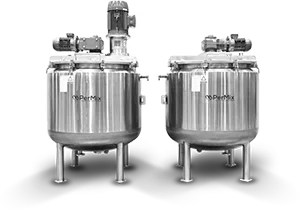
 PerMix Vacuum Deaerator - Superior Quality, Unbeatable Price
Best in Innovation • Best In Performance • Best In Quality • Best In Price • Best In Warranty
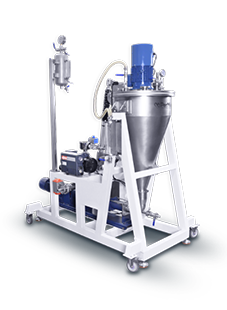
PerMix Vacuum Deaerators can handle numerous processes including (but not limited) the manufacture of food products, cosmetics and chemicals amongst others, need to avoid air oxidation to ensure a correct preservation or application.
End products can be mentioned, such as sauces, fruit pulp, cosmetic creams, syrups, PVC dispersions, lubricants, car polish, shower gels, paraffin and penicillin emulsions, ice creams, adhesives, etc.
A continuous deaerator is a liquid processing system engineered to continuously remove entrained and dissolved gases—most commonly air—from liquids as they flow through the system. Unlike batch vacuum deaeration, a continuous deaerator operates in real time, making it ideal for high-throughput, inline production environments where stopping to deaerate is not an option.
At PerMix, continuous deaerators are designed as process-stability tools, not accessories. They are used when air is a quality defect, not just an inconvenience.
Air enters liquids far more easily than most manufacturers realize. It is introduced during:
Pumping
Inline mixing and emulsification
Ingredient addition
Turbulent agitation
Temperature changes
Once entrained, air causes problems that mixing alone cannot fix:
Foaming
Inaccurate filling by volume or weight
Oxidation and reduced shelf life
Density variation
Inconsistent texture and appearance
A continuous deaerator removes air before it becomes a downstream defect.
A continuous deaerator operates by combining controlled flow, surface area expansion, and vacuum exposure.
In simple terms:
Liquid enters the deaeration chamber under controlled flow conditions
Flow geometry spreads the liquid into thin films or droplets
Vacuum lowers the pressure, allowing entrained and dissolved gases to release
Gas is evacuated continuously
Deaerated liquid exits the system inline
This happens without stopping production.
Batch deaeration:
Requires stopping the process
Increases residence time
Introduces handling steps
Limits throughput
Continuous deaeration:
Operates inline
Matches production flow rates
Eliminates intermediate tanks
Stabilizes downstream processes
For high-volume liquid production, continuous deaeration is not an upgrade—it’s a necessity.
A PerMix continuous deaerator is used to:
Remove entrained and dissolved air
Reduce or eliminate foam
Stabilize liquid density
Protect product appearance
Improve filling accuracy
Reduce oxidation risk
It does not mix, emulsify, or homogenize—it conditions the liquid so those processes remain stable.
Continuous deaerators are widely used for:
Food and beverage liquids
Sauces, dressings, and syrups
Dairy and plant-based beverages
Cosmetic and personal care liquids
Chemical solutions and emulsions
Pharmaceutical liquids
They are chosen when air affects quality, not just aesthetics.
An inline mixer:
Adds energy
Often adds air
Increases turbulence
A continuous deaerator:
Removes energy (gas)
Stabilizes flow
Improves downstream consistency
In many systems, deaeration follows mixing to correct what mixing physics inevitably introduces.
Air-related defects are often blamed on:
Formulation
Packaging
Filling equipment
In reality, they originate upstream in liquid handling and mixing.
A continuous deaerator addresses the problem at its source—before defects propagate through the process.
A continuous deaerator is selected when air is not a cosmetic nuisance but a process-limiting defect—one that disrupts filling accuracy, stability, appearance, or shelf life while the line is running. It is not a universal solution, and using it where it isn’t needed can add unnecessary complexity.
Understanding when continuous deaeration is the correct tool—and when it is excessive—keeps liquid systems lean, stable, and scalable.
A continuous deaerator is typically the correct solution when one or more of the following conditions apply:
High-Throughput, Continuous Production
Processes that cannot stop for batch deaeration or hold tanks.
Air Is Introduced Upstream by Design
Inline mixers, emulsifiers, pumps, and turbulent transfers inevitably entrain air.
Foaming Affects Downstream Equipment
Fillers, capper heads, level sensors, and packaging lines are disrupted by foam.
Density or Volume Accuracy Matters
Entrained air causes inconsistent fill weights and volumes.
Oxidation Reduces Shelf Life or Performance
Oxygen accelerates degradation in foods, cosmetics, and chemicals.
Product Appearance Is Market-Critical
Clear liquids, glossy coatings, and premium formulations cannot tolerate bubbles.
Continuous deaerators are commonly used in:
Beverage and dairy processing lines
Sauces, syrups, and dressings
Cosmetic and personal care liquids
Chemical solutions and emulsions
Pharmaceutical liquid production
In these environments, air removal must keep pace with production, not slow it down.
Despite their value, continuous deaerators are not required in every liquid process.
They may be unnecessary when:
Production Is Batch-Based
Batch vacuum deaeration or tank degassing may be sufficient.
Air Content Is Tolerable
Minor entrainment does not affect performance or appearance.
Throughput Is Low or Intermittent
The system does not justify continuous vacuum operation.
Product Is Not Air-Sensitive
Oxidation, foaming, and density variation are irrelevant.
In these cases, simpler degassing approaches may be more economical.
Batch deaeration:
Requires holding tanks
Interrupts flow
Adds handling steps
Continuous deaeration:
Operates inline
Matches line speed
Eliminates intermediate storage
Batch systems work well for discrete production. Continuous systems dominate flow-driven manufacturing.
Passive degassing:
Requires time
Is inconsistent
Depends on viscosity and temperature
Continuous deaeration:
Actively removes gas
Is repeatable
Works regardless of residence time
Settling is unreliable at production scale.
Using no deaeration where it is required leads to:
Foam-related downtime
Inaccurate filling
Product rejection
Shelf-life loss
Using continuous deaeration where it is not required leads to:
Unnecessary capital cost
Additional maintenance
Increased system complexity
Continuous deaerators are precision stabilizers, not default add-ons.
At PerMix, continuous deaerators are specified based on:
Air sensitivity of the product
Flow rate and residence time
Integration with upstream mixing and pumping
Downstream packaging and quality risks
They are applied where air is a measurable liability, not simply because vacuum is available.
Continuous deaerators look deceptively simple from the outside. In reality, they are carefully engineered pressure–vacuum systems where geometry, residence time, surface exposure, and sealing integrity determine whether air is removed efficiently—or simply redistributed.
At PerMix, continuous deaerators are designed as inline process vessels, not modified tanks with a vacuum port.
Effective deaeration depends on maximizing gas release while maintaining flow stability.
PerMix continuous deaerators are engineered to:
Expand liquid surface area through controlled spreading
Reduce liquid film thickness to shorten gas escape distance
Avoid turbulence that re-entrains air
Maintain consistent residence time across flow rates
The internal geometry is designed to encourage gas to leave, not trap it.
Residence time is critical.
Too short:
Gas does not fully release
Too long:
Unnecessary system volume and footprint
PerMix designs balance:
Inlet velocity
Chamber volume
Liquid viscosity
Target air removal efficiency
This ensures reliable deaeration without throttling production throughput.
Vacuum performance defines deaeration performance.
PerMix continuous deaerators integrate:
Properly sized vacuum pumps matched to gas load
Stable vacuum levels across operating conditions
Condensate traps or separators when required
Controlled venting and pressure protection
Vacuum is applied uniformly across the liquid surface, not locally or intermittently.
Released gas must leave the system cleanly.
PerMix designs include:
Dedicated gas evacuation paths
Separation of liquid carryover from exhaust
Protection of vacuum equipment from contamination
This prevents re-entrainment and protects long-term reliability.
Improper piping defeats good deaerator design.
PerMix systems feature:
Smooth inlet transitions to minimize turbulence
Outlet geometries that prevent air pickup downstream
Integration-friendly flanges or sanitary connections
Deaeration only works if air is not reintroduced immediately afterward.
Continuous deaerators operate in direct contact with finished liquids.
PerMix offers:
304 stainless steel for general liquid processing
316 / 316L stainless steel for food, cosmetic, pharmaceutical, and chemical applications
Surface finishes matched to hygiene and cleanability requirements
Material selection protects both product quality and system longevity.
Vacuum systems fail quietly when seals are compromised.
PerMix designs include:
Vacuum-rated gaskets and seals
Precision-machined mating surfaces
Leak-resistant manways and inspection ports
Maintaining vacuum integrity is essential for consistent air removal.
For hygienic applications, PerMix continuous deaerators can be:
CIP-ready
Fully drainable
Free of crevices and dead zones
Cleanability is engineered into the geometry, not added later.
Continuous deaerators must integrate seamlessly into production lines.
PerMix provides:
Compact, rigid support frames
Inline mounting compatibility
Easy access for inspection and maintenance
They are designed to disappear into the process, not disrupt it.
Every element of a PerMix continuous deaerator is designed to:
Operate continuously
Maintain stable vacuum
Deliver repeatable air removal
Withstand production environments
These are process stabilizers, not experimental equipment.
Continuous deaerators don’t fail loudly. They fail quietly—by leaving just enough air behind to cause foam, oxidation, density drift, or filling errors downstream. Performance and scale-up are therefore about consistency under real production flow, not peak vacuum numbers on a datasheet.
At PerMix, continuous deaerators are scaled by preserving gas-release physics, not by simply enlarging chambers.
Continuous deaerator performance is governed by four tightly linked variables:
Residence time under vacuum
Liquid surface renewal rate
Vacuum stability (not just vacuum level)
Upstream and downstream flow conditions
If any one of these is mis-scaled, air removal efficiency drops—even if the vacuum pump is oversized.
Unlike mixing, deaeration is time-dependent.
As flow rate increases:
Gas release requires more surface exposure
Residence time naturally decreases
Deaeration efficiency can collapse if geometry is unchanged
PerMix scale-up focuses on:
Maintaining effective residence time per unit flow
Preserving thin-film or spread-flow behavior
Avoiding “short-circuiting” where liquid bypasses vacuum exposure
More flow without more exposure equals more air—not more productivity.
Higher vacuum does not automatically mean better deaeration.
What matters more is:
Stable vacuum across the entire chamber
Continuous evacuation of released gas
No pressure oscillation that traps bubbles
PerMix systems are engineered so vacuum:
Remains stable as gas load changes
Is matched to liquid volatility and temperature
Does not induce flashing or product damage
Vacuum is a control variable, not a brute-force lever.
Temperature strongly affects gas solubility.
As temperature increases:
Dissolved gas releases more easily
Foaming risk can increase
Vapor load on the vacuum system rises
PerMix accounts for this by:
Matching vacuum capacity to worst-case temperature
Preventing vapor overload of pumps
Designing condensate handling where required
Thermal conditions must be considered during scale-up—not treated as secondary.
Deaeration behavior changes with:
Viscosity
Surface tension
Presence of surfactants
Emulsified phases
Higher viscosity:
Slows bubble rise
Increases required residence time
Surfactants:
Stabilize bubbles
Make deaeration harder, not easier
PerMix sizes systems based on actual product behavior, not water-based assumptions.
A continuous deaerator cannot fix uncontrolled upstream turbulence.
Common upstream contributors include:
Cavitating pumps
High-shear inline mixers
Poor piping transitions
Excessive velocity changes
PerMix evaluates the entire liquid path, ensuring deaeration is not immediately undone after it occurs.
Scale-up fails if air is reintroduced downstream.
PerMix addresses this by:
Designing outlet geometries that minimize air pickup
Recommending appropriate downstream pumping strategies
Integrating deaeration into the overall line layout
Deaeration is only successful if it stays successful through filling or packaging.
Successful scale-up preserves:
Gas exposure time per unit volume
Surface renewal behavior
Vacuum stability under load
Integration with real production flow rates
PerMix scale-up methodology avoids the most common mistake:
Treating deaerators like tanks instead of mass-transfer devices.
Repeatable deaeration requires:
Stable flow control
Stable vacuum control
Clean internal surfaces
Consistent operating temperature
PerMix systems are designed for continuous, predictable operation, not lab-perfect conditions.
Poorly scaled deaerators lead to:
Inconsistent fill weights
Foam-related downtime
Oxidation complaints
Shelf-life loss discovered months later
These are some of the most expensive liquid processing failures, because they surface late.
Continuous deaerators show their value not in isolation, but in how they stabilize entire liquid processing lines. Wherever liquids are mixed, pumped, heated, or filled at speed, air becomes an invisible disruptor. Continuous deaeration removes that disruption before it propagates downstream.
Below are real-world liquid workflows where continuous deaerators are mission-critical.
Primary challenges:
Foam during filling
Oxidation and flavor degradation
Inconsistent fill weights
Shelf-life instability
Typical workflow:
Ingredient Blending / Inline Mixing
Heating or Pasteurization
Continuous Deaeration
Cooling (if required)
High-speed Filling & Packaging
Common products:
Sauces, dressings, syrups
Juices and concentrates
Dairy and plant-based beverages
Why it works:
Deaeration stabilizes density and eliminates foam before filling—protecting both quality and throughput.
Primary challenges:
Protein-stabilized foam
Air-induced oxidation
Sensitivity to turbulence
Typical workflow:
Hydration & Blending
Homogenization
Continuous Deaeration
Thermal Processing
Aseptic or Cold Filling
Why it works:
Protein systems trap air aggressively. Continuous deaeration prevents foam and improves shelf stability.
Primary challenges:
Visible bubbles in finished product
Density variation
Poor aesthetic quality
Typical workflow:
Liquid Blending / Emulsification
Cooling & Conditioning
Continuous Deaeration
Transfer to Filling
Common products:
Shampoos
Lotions
Cleansers
Liquid soaps
Why it works:
Air removal delivers clear, glossy, bubble-free products that meet premium expectations.
Primary challenges:
Oxidation sensitivity
Measurement inaccuracies
Pump cavitation downstream
Typical workflow:
Solution Preparation
Inline Mixing or Dosing
Continuous Deaeration
Packaging or Further Processing
Why it works:
Deaeration stabilizes physical properties and protects downstream equipment.
Primary challenges:
Air affecting dose accuracy
Oxidation of actives
Validation and repeatability
Typical workflow:
Solution or Suspension Preparation
Filtration (if required)
Continuous Deaeration
Sterile or Controlled Filling
Why it works:
Continuous deaeration improves accuracy, consistency, and compliance without interrupting flow.
Primary challenges:
Foam-triggered downtime
Inconsistent headspace
Sensor errors
Typical workflow:
Upstream Mixing
Continuous Deaeration
Direct Feed to Fillers
Why it works:
Deaeration turns unpredictable filling into a stable, repeatable operation.
Continuous deaerators perform best when:
Integrated inline—not bolted on later
Matched to real production flow rates
Positioned upstream of filling or sensitive processing
Application-driven placement results in:
Higher line uptime
Improved product consistency
Reduced waste and rework
Longer shelf life
At PerMix, continuous deaerators are engineered and applied as:
Process stabilizers, not accessories
Inline systems matched to real production conditions
Solutions to air-related failures—not symptoms
They are specified where air creates measurable risk—not where vacuum simply sounds appealing.


PerMix is here to listen to your needs and provide sustainable solutions. Contact us to discover more.
PerMix Vacuum Deaerator Videos