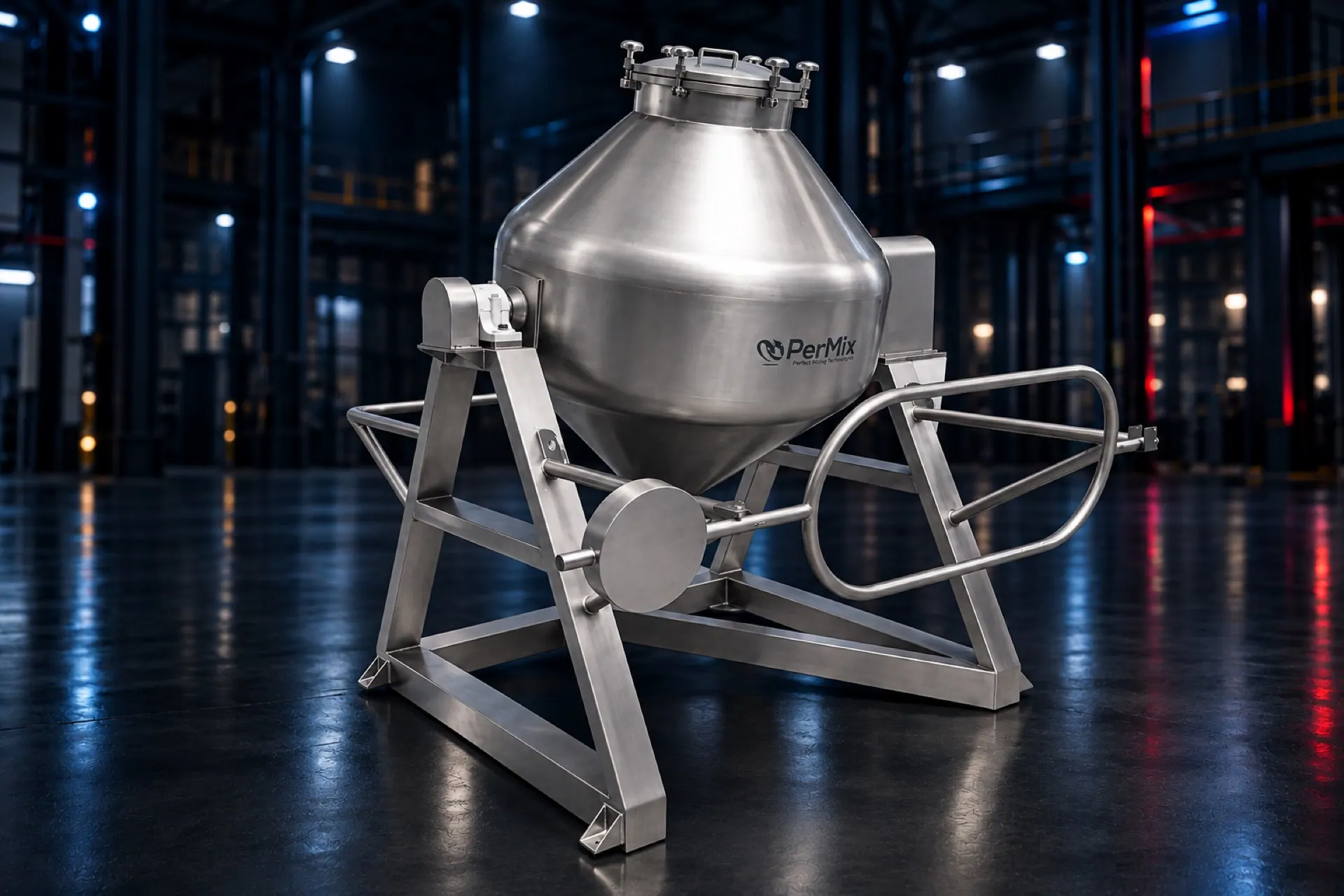
Industrial double cone mixers Gentle tumbling engineered with precision

Double Cone Mixers Engineered for Blend Integrity

PerMix double cone mixers are engineered for applications where product integrity, low mechanical stress, clean geometry and repeatable tumble blending matter more than aggressive mixing intensity.

Cone angle, vessel symmetry, diameter, transition geometry, fill level, rotational speed, tumble path, internal surface finish, discharge position and dynamic balance are evaluated as one complete process system.

The result is controlled, low-shear redistribution of free-flowing powders, granules, crystals and fragile particles—without requiring a conventional internal shaft or continuously driven mixing tool.

Standard double cone mixers use the rotation of the vessel, gravity and vessel geometry to create repeated cascading and recombination of suitable powders and granules. They are strongest when the materials flow freely and have reasonably compatible particle-size and density characteristics.

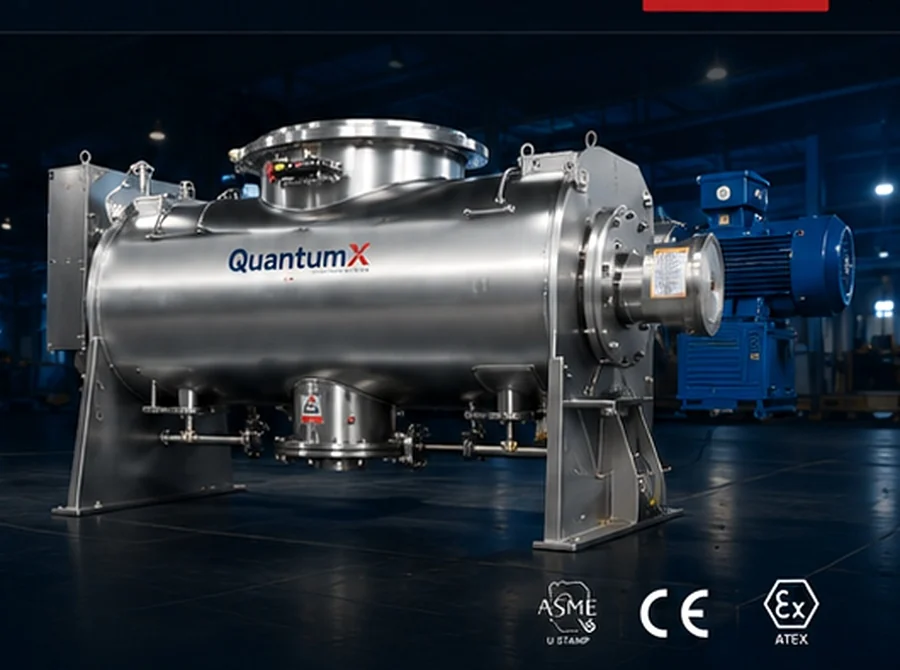
Explore QuantumX Double Cone Vacuum Dryers

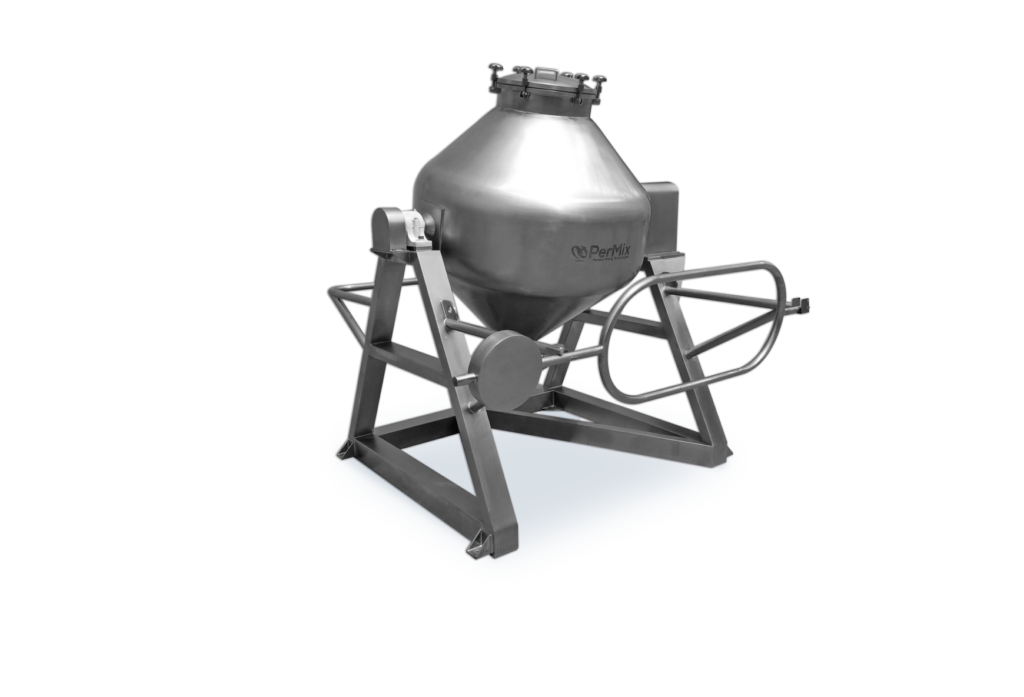
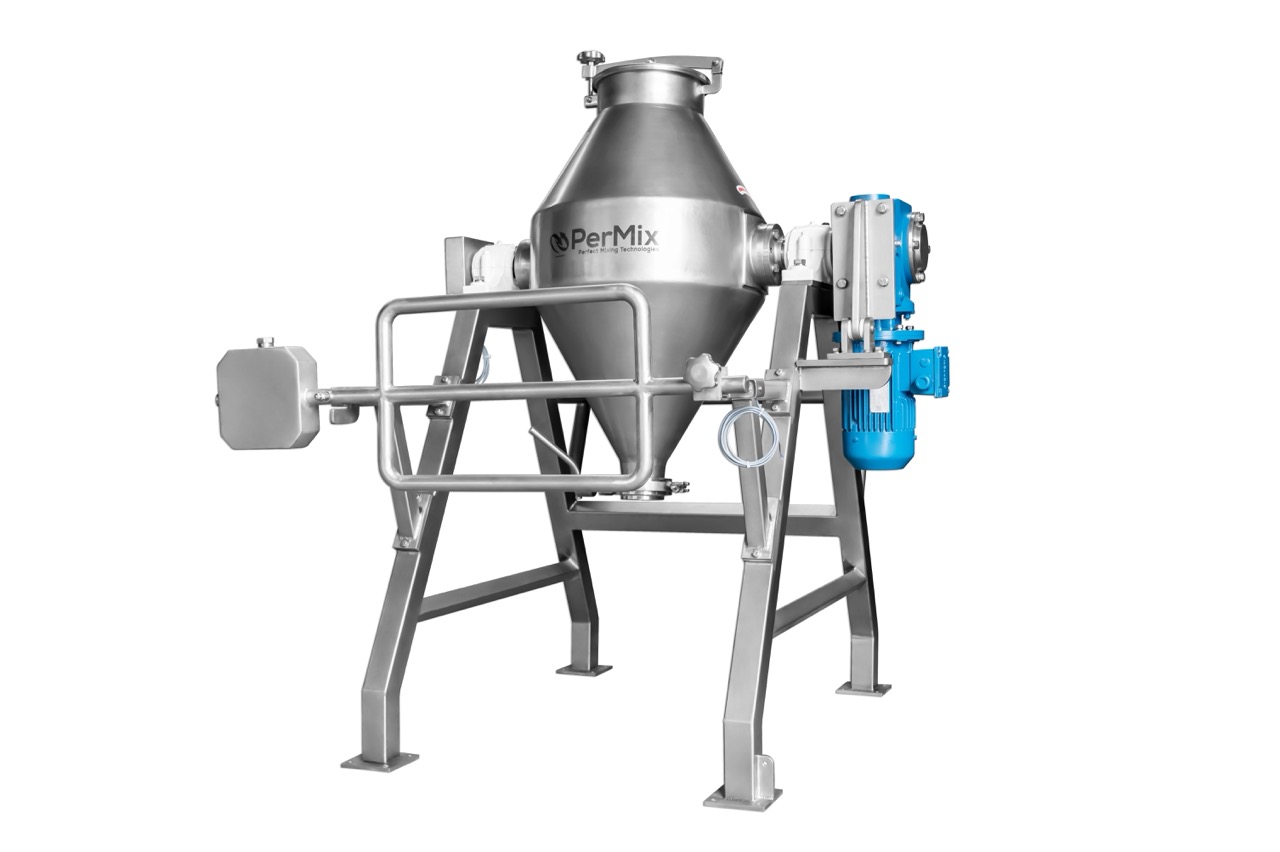
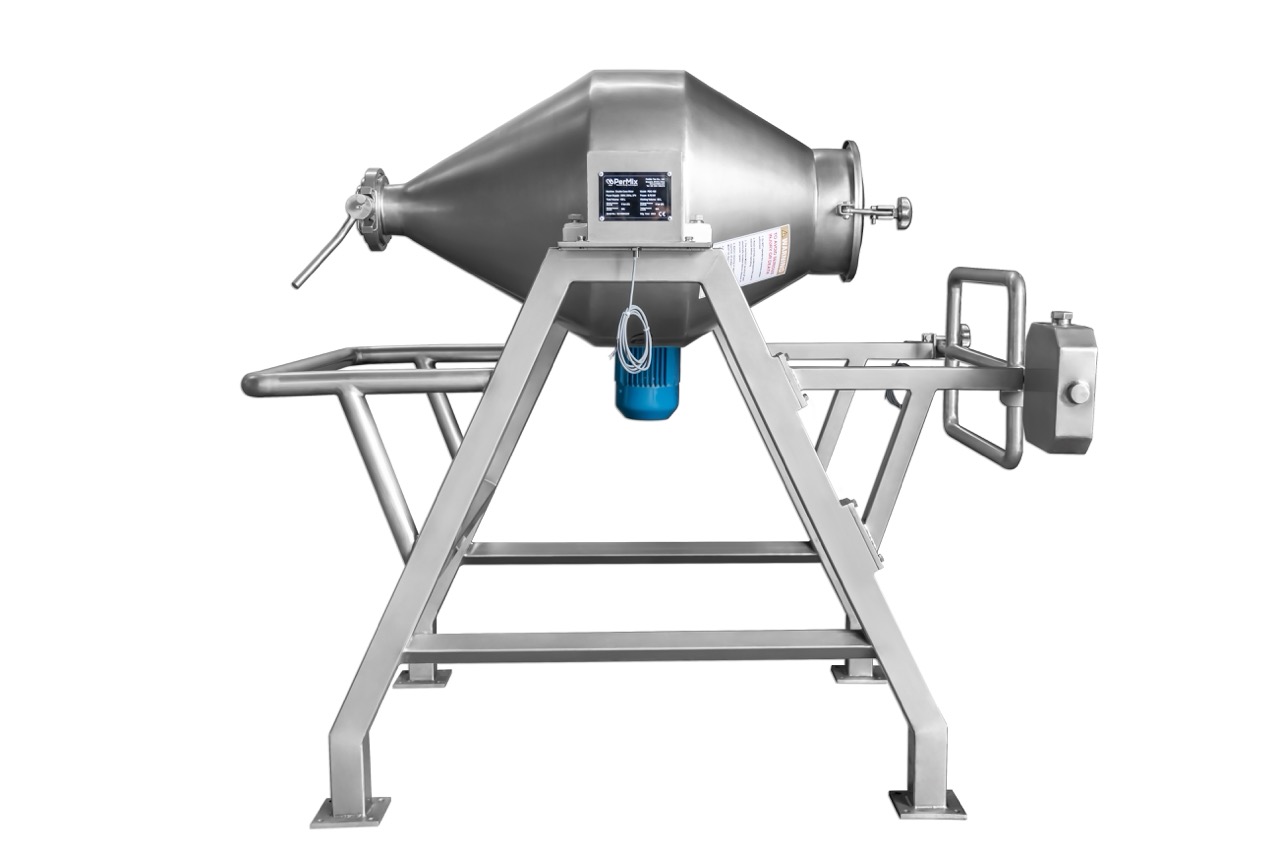
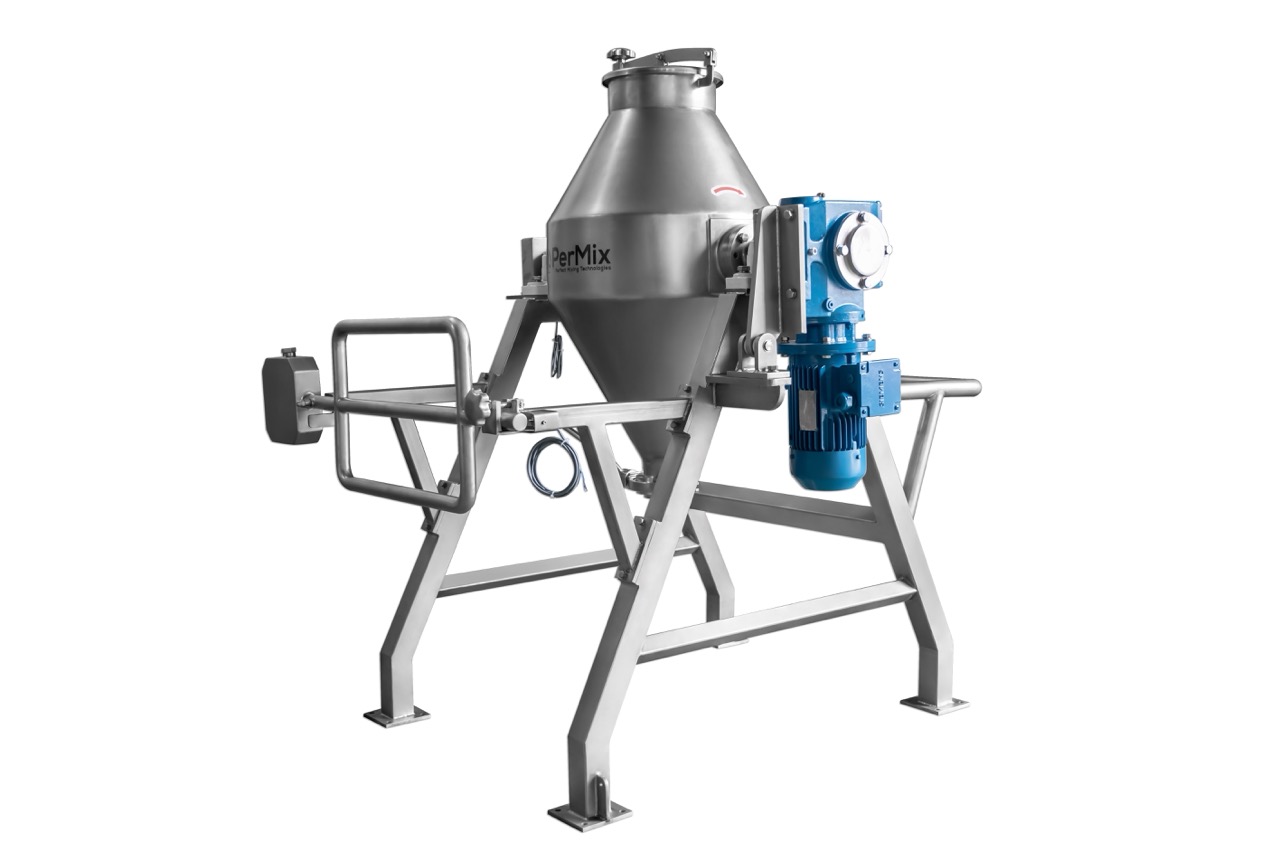
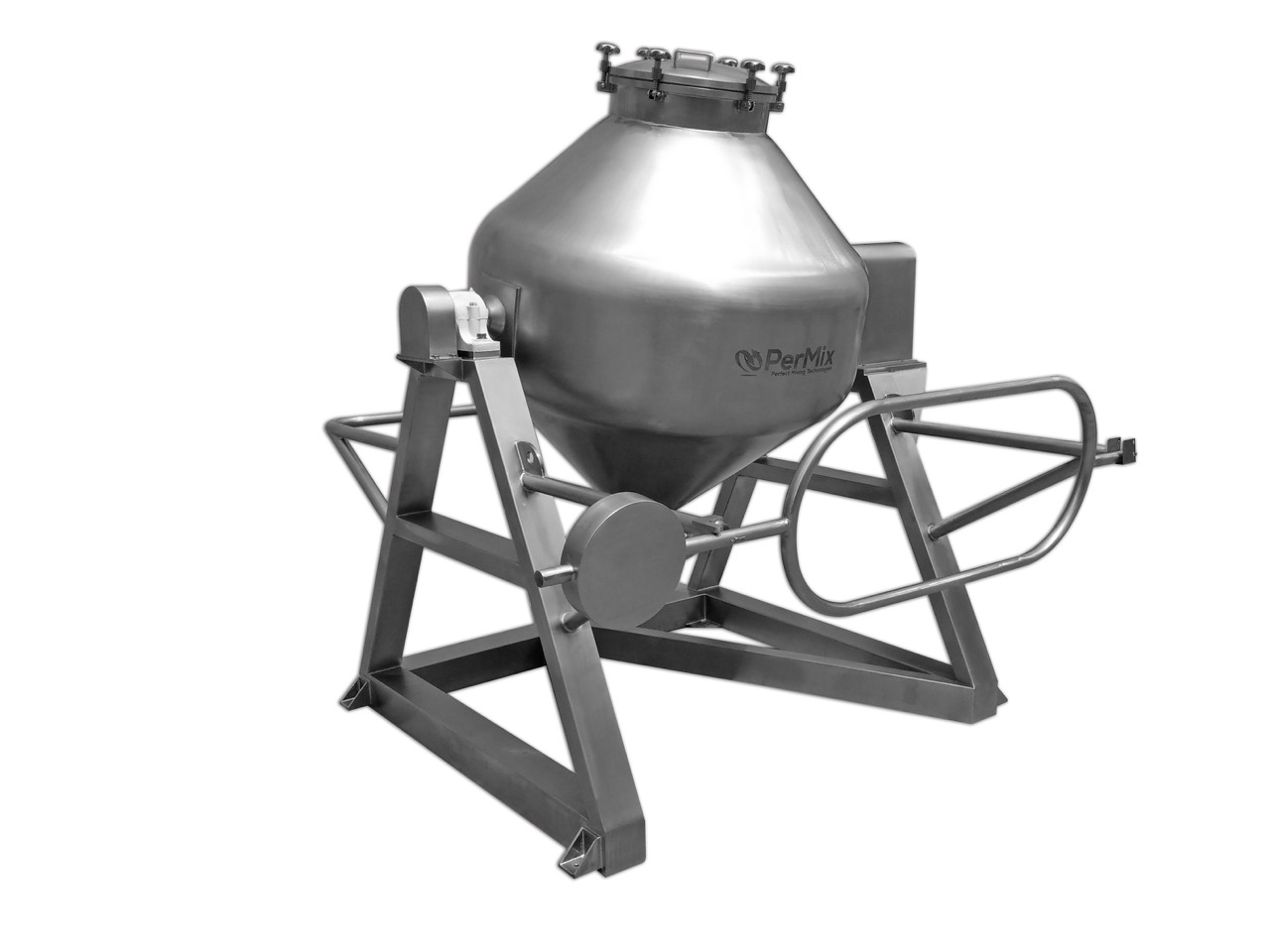
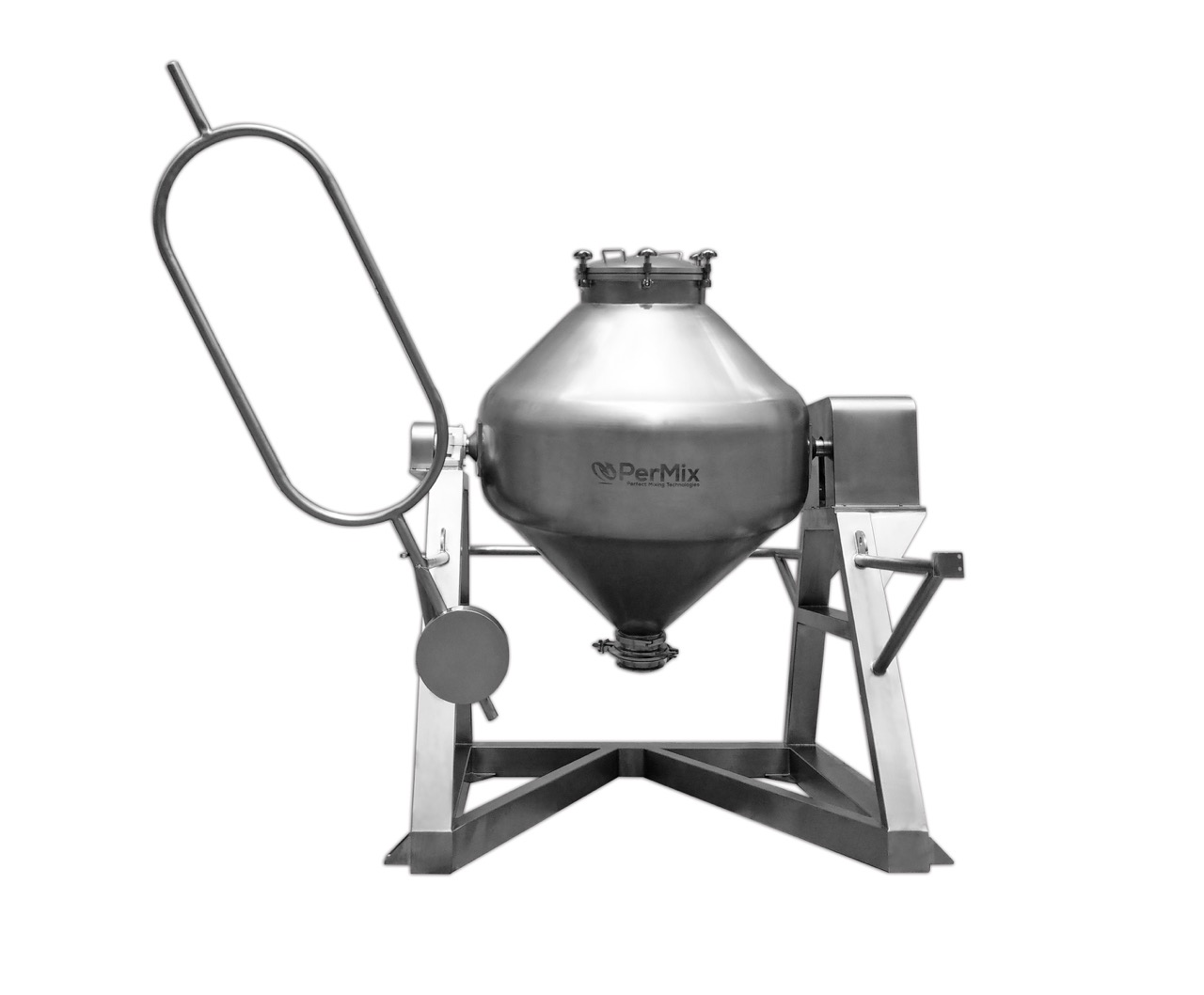
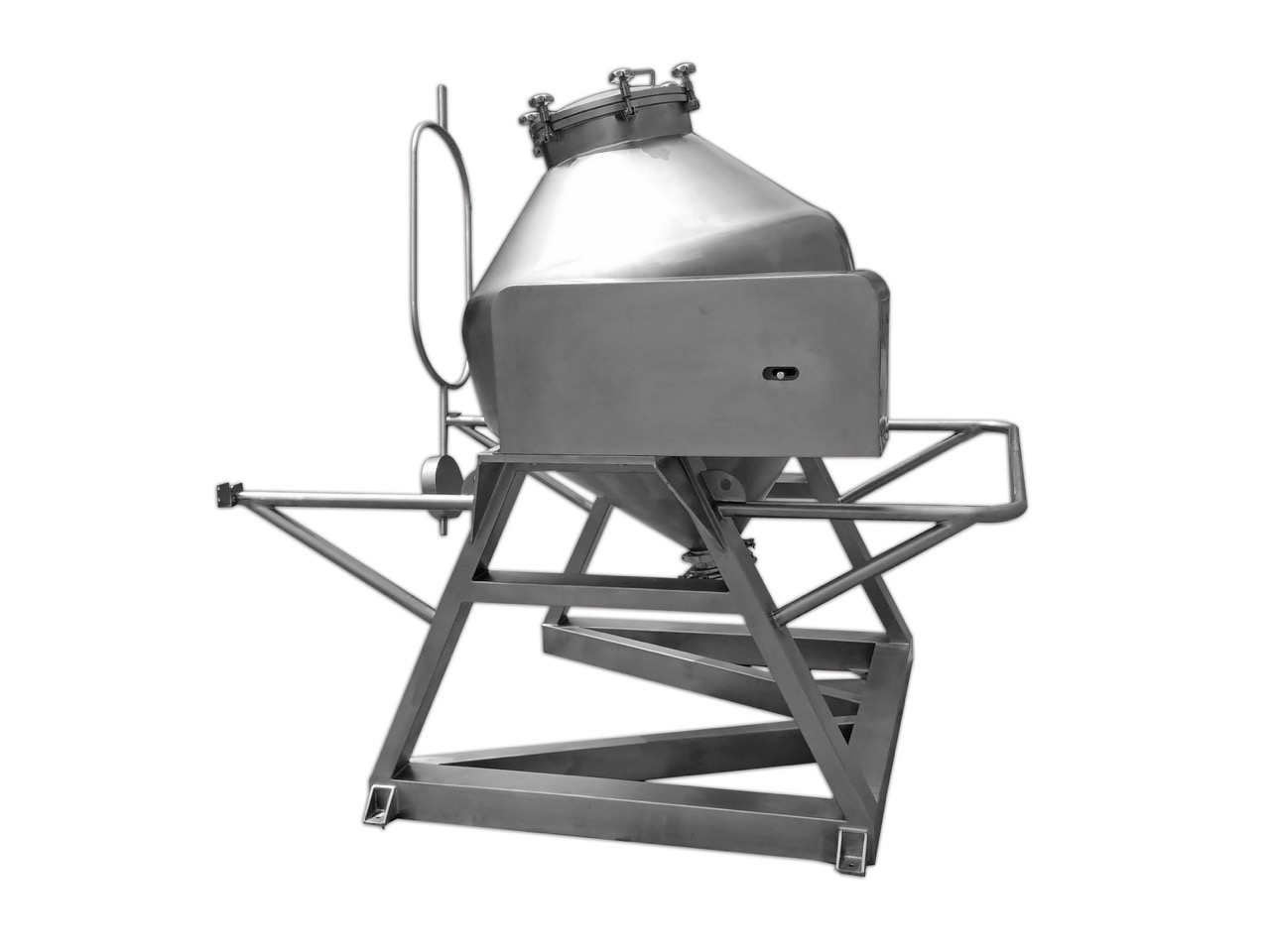
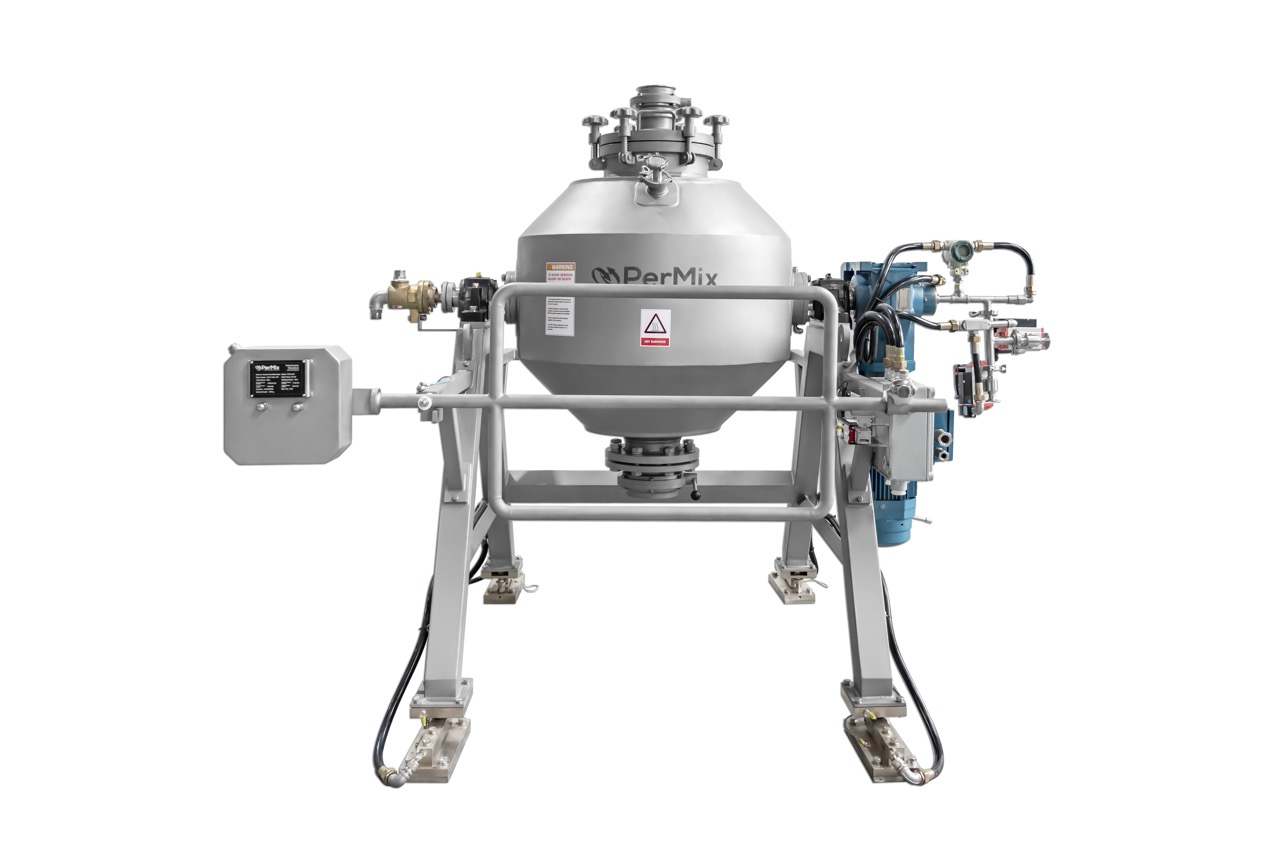
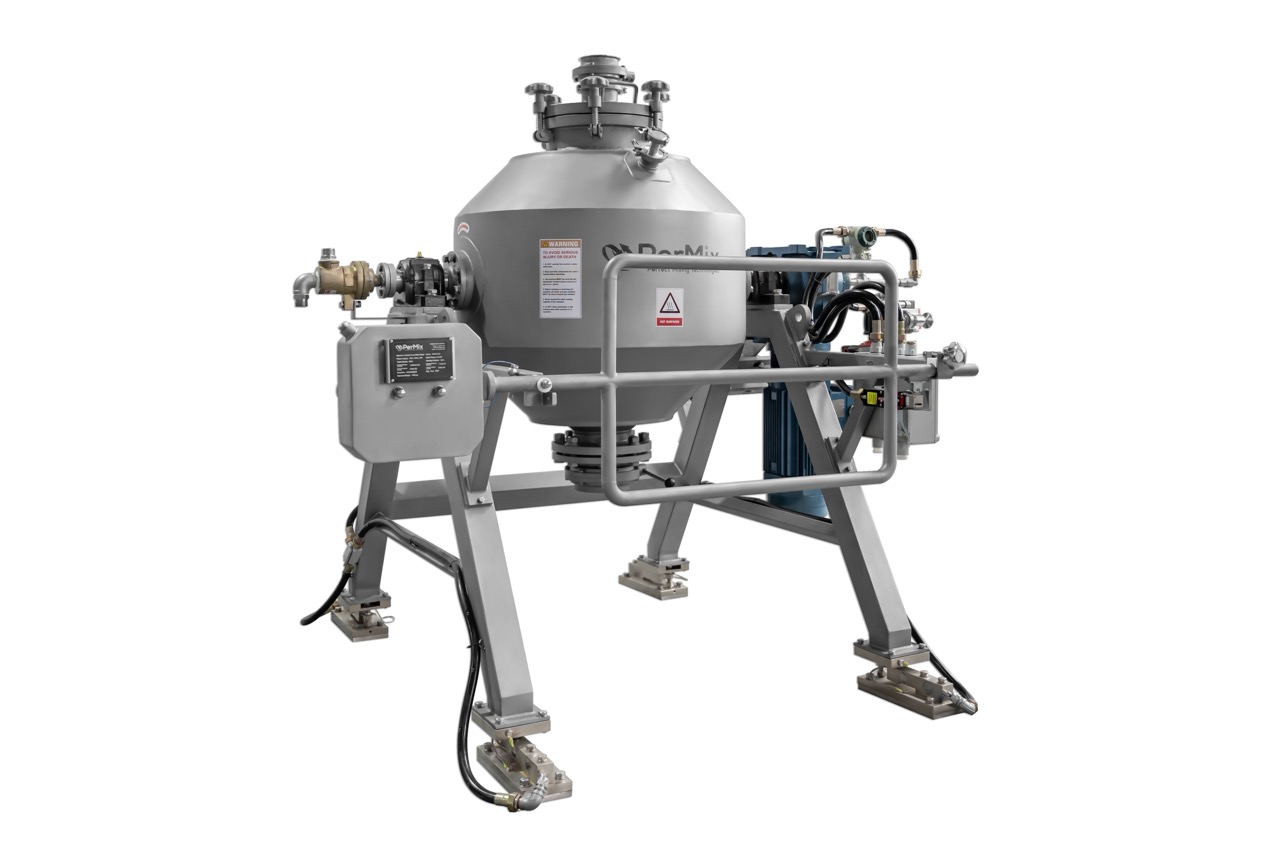
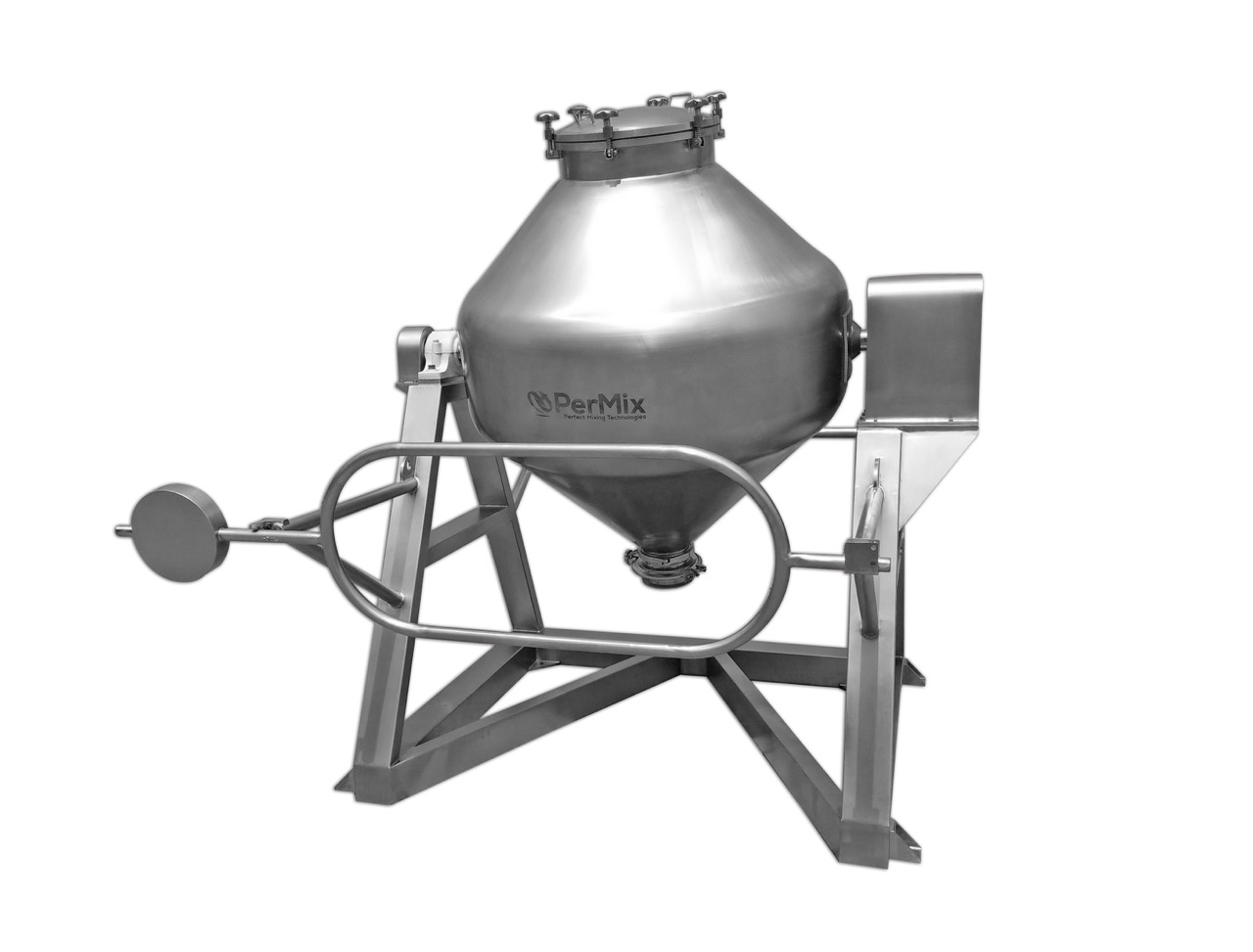
PerMix stainless steel double cone mixer with charging manway on a trunnion frame with safety rails

01Controlled tumble regime

02Precision balance

03Clean discharge

A Double Cone Mixer Is More Than a Rotating Vessel

A double cone mixer appears mechanically simple because the vessel itself rotates and the standard design contains no conventional internal agitator.

That apparent simplicity makes precision more—not less—important.

The vessel must be designed so the product repeatedly:

  1. Separates during the upward portion of rotation
  2. Cascades through available free space
  3. Recombines as it moves from one cone section to the other
  4. Changes orientation relative to the vessel wall
  5. Redistributes minor ingredients throughout the batch
  6. Avoids persistent sliding or centrifuging
  7. Discharges without unnecessary residual hold-up

A vessel can rotate while producing poor mixing.

The performance difference is determined by the relationship between vessel geometry, material behavior, fill level and rotational speed.

PerMix engineers the tumble regime—not merely the rotating shell.

Fig. 01Tumble regime
Separates during the upward portion of rotationCascades through available free space
  1. Gentle tumble blending for free-flowing powders and granules
  2. Low mechanical stress for fragile and shear-sensitive materials
  3. Clean internal geometry with no conventional agitator in the standard configuration
  4. Horizontal rotating vessel with controlled loading and discharge position
  5. Optional variable speed, intensifier bar and limited liquid-addition systems
  6. Optional low-pressure, non-ASME heating and cooling jackets
  7. Sanitary, industrial, abrasion-resistant and corrosion-resistant construction
  8. QuantumX vacuum double cone mixers and rotary vacuum dryers
  9. QuantumX vacuum, pressure, ASME, PED, ATEX and inerted configurations
  10. Automated loading, weighing, positioning, discharge and process controls

How Double Cone Mixing Works

During rotation, gravity continually changes direction relative to the powder bed.

The product is carried upward by the vessel wall and then cascades, rolls or slides back through the available headspace. Repeated cone-to-cone movement separates and recombines particles throughout the batch.

Unlike a ribbon, paddle or plough mixer, the standard double cone mixer does not force the material through a continuously driven internal tool.

This can reduce:

  • Particle breakage
  • Attrition
  • Smearing
  • Compaction
  • Frictional heating
  • Mechanical complexity inside the product zone

The basic principle is particularly well suited to free-flowing powders, granules and fragile materials that do not require aggressive deagglomeration or high-shear dispersion.

The Geometry That Determines Double Cone Mixer Performance

Cone Angle, Fill Level, Speed and Balance Matter

Two double cone mixers can have the same nominal volume and motor power—and deliver very different results.

Engineering VariableWhat It InfluencesWhy It Matters
01Cone angleTumble path, axial movement and discharge behaviorThe cone angle influences how product travels between each end of the vessel and how effectively gravity directs material toward the outlet.
02Vessel diameterCircumferential travel, bed depth and required rotational speedA larger diameter increases the distance traveled during each revolution and changes the speed required to maintain the desired tumble regime.
03Straight-side or central-section lengthAvailable mixing volume and cone-to-cone travel pathExcessive central length can alter the balance between rolling, cascading and axial transfer.
04Cone-to-cylinder transitionFlow continuity and product releaseSmooth transitions reduce hang-up and support predictable movement between the conical and central sections.
05Vessel symmetryBalanced movement, mechanical loading and repeatabilityDimensional asymmetry can produce vibration, uneven product distribution and inconsistent tumble behavior.
06Fill levelAvailable free-fall space and frequency of particle redistributionToo little material may reduce particle interaction. Too much material can eliminate the headspace needed for effective cascading.
07Rotational speedTumble regime, particle acceleration and cascade behaviorA vessel that turns too slowly may produce weak rolling; excessive speed can pin material against the wall and reduce effective cascading.
08Free-fall distanceDegree of particle separation and recombinationThe available drop path affects how effectively material redistributes during each rotation.
09Internal surface finishPowder release, adhesion, cleaning and wall frictionA rough or poorly finished surface can change flow behavior and increase product retention.
10Total internal surface areaWall contact, thermal exposure and product releaseInternal area becomes especially important in jacketed vacuum-drying applications.
11Discharge geometryEmptying time, residual hold-up and segregation riskThe outlet and valve must allow the blended product to leave without creating a new separation mechanism.
12Dynamic balanceBearing life, vibration and controlled rotationThe complete rotating assembly must remain balanced through loading, operation and discharge.
13Trunnion alignmentVessel stability and bearing loadingMisalignment can increase vibration, wear, seal loading and mechanical stress.

Cone Angle Controls More Than Discharge

The cone angle influences the way material moves from one end of the vessel toward the center and back again.

A poorly selected geometry can cause material to:

  • Slide as a consolidated bed
  • Remain concentrated in the central section
  • Move inefficiently between cone sections
  • Accumulate near transitions
  • Discharge slowly
  • Re-segregate during emptying

The correct geometry depends on:

Powder flowabilityParticle sizeParticle shapeBulk densityAngle of reposeSurface frictionFragilityRequired working volumeOutlet sizeCleaning method

The objective is to create a reliable tumble path while preserving clean discharge.

Rotational Speed Determines the Tumble Regime

RPM Alone Is Not a Complete Design Basis

The same rotational speed produces different particle behavior in vessels of different diameters.

The engineering review must consider the relationship between:

Vessel diameterGravityRotational speedBed depthProduct flowabilityWall frictionParticle size and shape

  1. At very low speed, the product may primarily roll or slide with limited separation.
  2. At an appropriate speed, material is lifted and cascades through the available headspace.
  3. At excessive speed, centrifugal effects can hold material against the vessel wall and reduce the desired tumble action.

PerMix uses controlled vessel speed and application-specific geometry to maintain the movement required by the product.

Variable-speed drives can be especially valuable during:

  • Product development
  • Scale-up
  • Fragile-particle processing
  • Multi-stage blending
  • Intensifier-bar operation
  • Loading and discharge positioning

Commercial tumble-blender platforms commonly use variable vessel speed, controlled positioning and optional intensifier systems to adjust the blending process while maintaining operator safety.

Fill Level Is a Process Variable—Not Just a Capacity Number

A double cone mixer requires both:

  • Enough product for repeated particle interaction
  • Enough free space for the powder bed to separate and cascade

Overfilling can suppress the tumble mechanism.

Underfilling can reduce the frequency of particle exchange or create inconsistent material movement.

The correct working volume depends on:

Batch massLoose bulk densityPacked bulk densityMaterial flowabilityParticle-size distributionDensity differencesVessel geometryRotational speedRequired blend timeIntensifier useLiquid additionThermal or vacuum duty

PerMix sizes the mixer using batch mass and operating bulk density—not gross vessel volume alone.

Particle Size and Density Compatibility Matter

Double cone mixers perform best when the components:

  • Flow without significant cohesion
  • Do not form persistent lumps
  • Have compatible particle sizes
  • Have reasonably compatible bulk densities
  • Are not highly prone to electrostatic adhesion
  • Do not require aggressive surface coating
  • Do not require high-shear deagglomeration

Large differences in particle size, density or shape can promote segregation during:

ChargingBlendingDecelerationDischargeConveyingPackaging

PerMix evaluates the complete process—not only the mixing stage.

A formulation that mixes well inside the vessel can still separate during discharge or transfer if the downstream system is not designed correctly.

More Mixing Time Is Not Always Better

Tumble blending is gentle, but excessive blending time can still be counterproductive.

For some formulations, prolonged tumbling can allow particles to reclassify according to:

SizeDensityShapeSurface characteristics

That means the correct batch cycle should be determined by:

  1. Blend-uniformity testing
  2. Sampling
  3. Material behavior
  4. Loading sequence
  5. Rotational speed
  6. Fill level
  7. Discharge method

The goal is not the longest possible cycle.

The goal is to reach the required uniformity and discharge the batch before a new segregation mechanism develops.

Vessel Symmetry and Dynamic Balance Are Process Requirements

Because the complete vessel rotates, fabrication accuracy directly affects both mechanical reliability and product movement.

PerMix evaluates:

Cone alignmentCentral-section concentricityTrunnion alignmentWeld distortionInlet and outlet weight distributionValve weightIntensifier-bar weightJacket weightInsulation and claddingLiner weightResidual productDrive alignmentSupport-frame rigidity

Poor balance can cause:

  • Vibration
  • Uneven bearing loading
  • Premature bearing wear
  • Seal problems
  • Frame fatigue
  • Inaccurate stopping position
  • Reduced service life

The rotating assembly must be designed as one complete balanced system.

Why PerMix Double Cone Mixers Are Different

We Start by Confirming the Application Belongs in a Tumble Blender

  • A double cone mixer is not the right choice for every powder. When the material is too cohesive, sticky, wet or difficult to disperse, PerMix may recommend a ribbon, paddle, plough or QuantumX specialty mixer instead.

  • Cone angle, vessel diameter, central-section length, transitions and discharge are evaluated against the actual material.

  • Batch weight, bulk density and required headspace determine usable volume.

  • Drive speed, acceleration and deceleration are selected around the required cascade behavior and particle fragility.

  • The rotating vessel, valve, ports, jacket, liner and optional internals are treated as one balanced assembly.

  • Outlet geometry, valve selection, stopping position and downstream transfer are evaluated to reduce residual material and re-segregation.

  • Atmospheric tumble blending remains standard PerMix. Vacuum drying, internal pressure, ASME/PED, ATEX, solvent service and advanced thermal duty move into QuantumX.

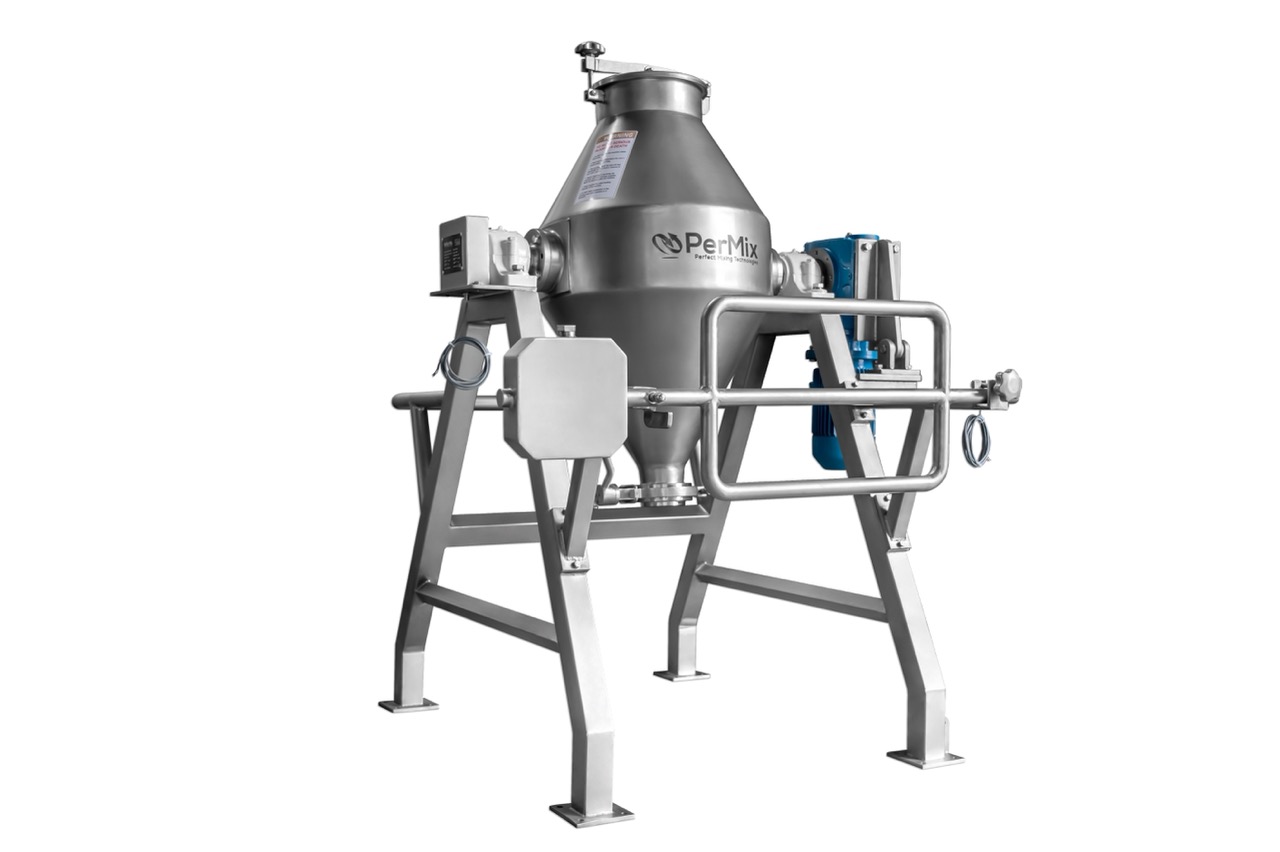
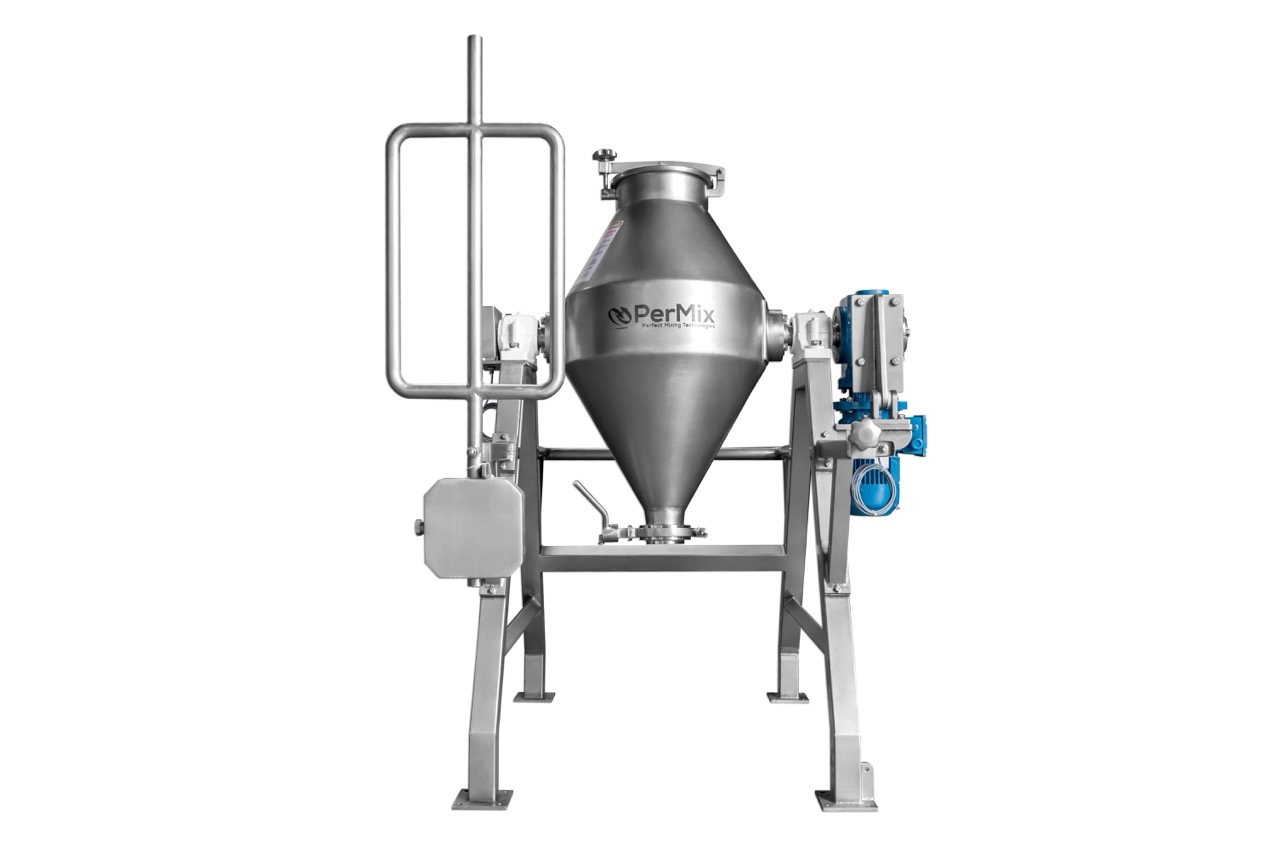
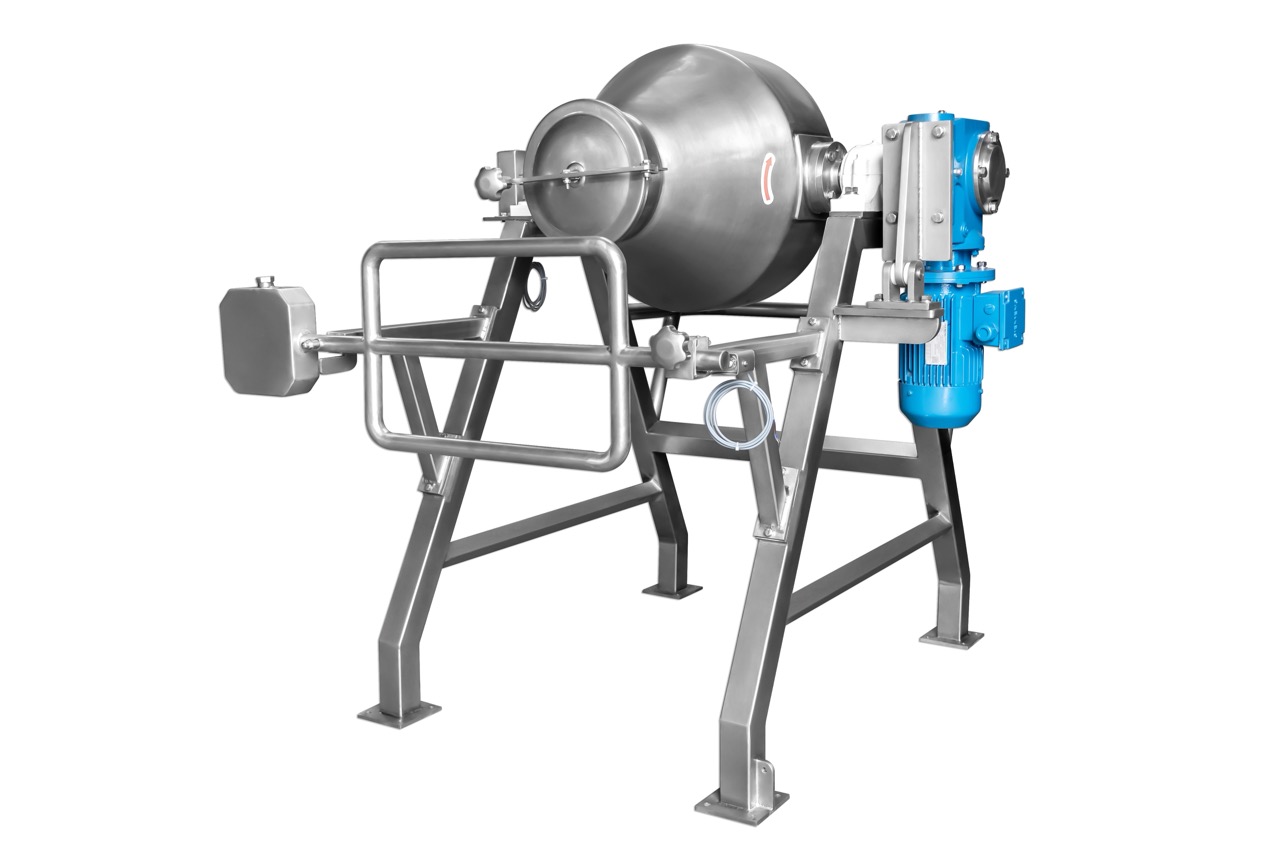
PerMix stainless steel double cone mixer on a trunnion frame PerMix double cone mixer showing cone geometry and central section PerMix double cone mixer vessel with charging manway PerMix double cone mixer with side-mounted drive PerMix double cone mixer rotating assembly on trunnions PerMix double cone mixer with gravity discharge QuantumX specialty mixing system

When Is a Double Cone Mixer the Right Choice?

PerMix Double Cone Mixer

Double Cone Mixers Are Often Preferred When:

  • The material is free-flowing
  • Particle integrity must be protected
  • Shear must remain low
  • Heat generation should be minimized
  • The formulation contains fragile granules or crystals
  • Clean internal geometry is important
  • Frequent changeover is required
  • Product-contact internals should be minimized
  • The batch must discharge by gravity
  • The ingredients have compatible particle size and density
  • Pharmaceutical or nutraceutical validation is required
  • A gentle vacuum-drying process may later be required

When Is a Double Cone Mixer Not the Best Choice?

A standard double cone mixer may not be the optimum platform when:

  • The powder is highly cohesive
  • The product does not cascade freely
  • The batch contains large, hard agglomerates
  • Significant liquid must be added
  • High-intensity coating is required
  • Wet granulation is required
  • The formulation behaves as a paste
  • Rapid deagglomeration is required
  • Particle-size or density differences are extreme
  • Extremely short mixing cycles are required
  • The process requires continuous mixing
  • The material adheres strongly to vessel walls

In those cases, PerMix may recommend:

  1. Ribbon mixer
  2. Paddle mixer
  3. Plough mixer
  4. Conical mixer
  5. QuantumX specialty mixer
  6. EmulXion liquid-processing system

Double Cone Mixer, V-Blender
or Agitated Mixer?

Mixer TypeBest Suited ForMixing CharacterKey Engineering Consideration
01Double Cone MixerFree-flowing powders, granules, crystals and fragile particlesSymmetrical, gentle tumble blendingCone geometry, fill level, speed, balance and discharge
02V-BlenderFree-flowing powders requiring repeated split-and-recombine movementGentle tumble blending through two intersecting vessel legsV-shell geometry, fill level, loading symmetry and discharge
03Ribbon MixerGeneral powder blending, premixes and selected cohesive productsActive axial and radial circulationRibbon width, pitch and inner-to-outer flow balance
04Paddle MixerFragile products, granules and variable-density materialsGentle lifting and foldingPaddle width, angle, spacing and fill level
05Plough MixerCohesive powders, coating, liquid addition and deagglomerationIntensive mechanical fluidizationPlough profile, tip speed, power input and chopper placement

Standard PerMix or QuantumX?

The Process Duty Determines the Platform

Standard PerMix Double Cone Mixer

  • Atmospheric tumble blending
  • Free-flowing powders and granules
  • Carbon steel, 304 or 316L construction
  • Industrial or sanitary execution
  • Optional low-pressure, non-ASME jacket
  • Standard charging and discharge
  • General controls and variable speed
  • Standard seals and dust control
  • Basic intensifier or spray option
  • General production environments

QuantumX Double Cone System

  • Vacuum mixing and vacuum drying
  • Moist, solvent-wet or atmosphere-sensitive products
  • ASME, PED and specialty pressure-vessel construction
  • ATEX, inerted and hazardous-area configurations
  • Engineered thermal and vacuum systems
  • Closed charging, contained discharge and solvent recovery
  • Recipe management, endpoint control and data logging
  • Vacuum-rated seals, rotary unions and containment systems
  • Engineered drying, reaction and specialty process internals
  • Regulated, reactive, high-purity or controlled-atmosphere processes

QuantumX Vacuum Double Cone Mixers and Dryers

Gentle Mixing and Vacuum Drying
in One Rotating System

When the process requires moisture removal, solvent recovery, lower-temperature drying or controlled atmosphere, the application moves into the QuantumX platform.

A QuantumX vacuum double cone mixer-dryer combines:

Gentle vessel rotationJacketed thermal transferVacuumVapor removalCondensationControlled atmosphereGravity-assisted discharge

The rotating vessel continually changes the orientation of the batch relative to the heated wall. This renews product contact with the heat-transfer surface while maintaining a comparatively gentle tumble action.

Double-conical vacuum dryers are established for gentle drying and mixing of fragile, free-flowing products. Glass-lined versions are also used where corrosion resistance, non-stick behavior or protection from metallic contamination is required.

QuantumX vacuum mixer-dryer system

A complete QuantumX system may include:

  1. Vacuum-rated double cone vessel
  2. Heating and cooling jacket
  3. Insulation and stainless-steel cladding
  4. Rotary thermal-media unions
  5. Vacuum pump
  6. Condenser
  7. Solvent or condensate receiver
  8. Heated vapor piping
  9. Dust or vapor filtration
  10. Nitrogen inerting
  11. Oxygen monitoring
  12. Product-temperature sensors
  13. Jacket-temperature sensors
  14. Pressure and vacuum transmitters
  15. Moisture endpoint monitoring
  16. Load cells
  17. PLC/HMI automation
  18. Recipe management
  19. Data logging
  20. Validated documentation
  21. Contained loading and discharge

PerMix has previously supplied a double cone vacuum mixer-dryer with gas-purge capability for a pharmaceutical nanotechnology application, illustrating the platform’s suitability for sensitive, high-value powders.

Potential Applications

Pharmaceutical intermediatesActive pharmaceutical ingredientsNutraceutical ingredientsSpecialty chemicalsBattery materialsNanomaterialsCeramicsPigmentsCatalystsCrystalsSolvent-wet powdersHeat-sensitive ingredientsOxygen-sensitive productsHigh-purity materials

Why Use Vacuum for Drying?

Vacuum reduces the pressure above the material and can reduce the temperature required to remove moisture or solvent.

This can support processing of products that are:

  • 01Heat-sensitive
  • 02Oxidation-sensitive
  • 03Solvent-wet
  • 04Moisture-sensitive
  • 05Fragile
  • 06High value
  • 07Easily contaminated

The drying result depends on:

  1. Vacuum level
  2. Product vapor pressure
  3. Jacket temperature
  4. Thermal-media flow
  5. Batch mass
  6. Product thermal conductivity
  7. Particle size
  8. Initial and final moisture
  9. Solvent characteristics
  10. Condenser temperature
  11. Wall renewal
  12. Vessel speed
  13. Drying endpoint

A vacuum dryer must be engineered as a complete thermal and vapor-handling system—not merely as a sealed blender connected to a pump.

Vacuum and Pressure-Rated Double Cone Systems

Rotating Pressure Equipment Requires Complete Mechanical Engineering

A vacuum or positive-pressure double cone system requires evaluation of:

  1. Vessel shell
  2. Cone heads
  3. Central section
  4. Nozzles
  5. Manways
  6. Trunnions
  7. Hollow shafts
  8. Rotary unions
  9. Product seals
  10. Thermal-media seals
  11. Jacket
  12. Bearings
  13. Support frame
  14. Operating cycles
  15. Fatigue
  16. Acceleration and braking
  17. Valve loading
  18. Applicable pressure code

QuantumX systems can be engineered for:

  • 01Full vacuum
  • 02Selected positive-pressure operation
  • 03Defined vacuum-and-pressure cycles
  • 04ASME construction
  • 05PED compliance
  • 06Inert-gas processing
  • 07Solvent service
  • 08Hazardous-area installations
  • 09ATEX configurations
  • 10High containment
  • 11Controlled oxidation
  • 12Controlled atmosphere
  • 13Validated thermal cycles

Positive-pressure operation is application-specific. Final allowable pressure, temperature, code requirements and safeguards are established during engineering review.

Heating and Cooling Jackets

Thermal Duty Depends on
Wall Contact and Rotation

A jacket transfers heat through the vessel wall.

In a rotating double cone, the tumble action continually presents different portions of the batch to the heat-transfer surface.

Thermal performance depends on:

  1. Jacket surface area
  2. Total internal contact area
  3. Product fill level
  4. Vessel rotational speed
  5. Thermal-media temperature
  6. Thermal-media flow
  7. Wall thickness
  8. Product thermal conductivity
  9. Particle size
  10. Product adhesion
  11. Batch mass
  12. Insulation
  13. Vacuum level
  14. Required endpoint

Standard PerMix Jackets

Standard PerMix double cone mixers may include:

  • Low-pressure hot-water jackets
  • Low-pressure cooling-water jackets
  • Non-ASME thermal jackets
  • Partial or full thermal coverage
  • Rotary media connections
  • Insulation
  • Stainless-steel cladding
  • Product-temperature monitoring
  • Basic temperature-control packages

QuantumX Thermal Systems

Move to QuantumX when the process requires:

Vacuum dryingPositive internal pressureASME or PEDSteam or advanced thermal mediaSolvent serviceCondensation and recoveryInertingAdvanced endpoint controlValidated thermal cyclesHigh containmentHazardous-area construction

Intensifier Bars

Add Localized Shear Without Turning the Entire Vessel into a High-Shear Mixer

A standard double cone mixer relies on gravity and vessel rotation.

When the product contains soft agglomerates or requires limited liquid addition, an independently driven intensifier bar may be evaluated.

Potential uses include:

  • Breaking soft lumps
  • Distributing minor liquid additions
  • Improving light surface coating
  • Dispersing low-percentage ingredients
  • Supporting difficult minor-component distribution

Commercial tumble-blender systems commonly offer independently driven intensifier bars alongside variable vessel speed and controlled positioning.

The intensifier system must be engineered around:

Blade profileBlade diameterRotational speedLocationProduct flow through the active zoneParticle fragilityAgglomerate strengthLiquid-addition rateSeal designCleaningVessel balance

An intensifier changes the process.

It introduces localized shear and should not be added automatically to every double cone mixer.

Limited Liquid Addition and Coating

Double cone mixers are not intended for heavy wet mixing, paste processing or aggressive granulation.

Small, controlled liquid additions may be possible when:

  • The base powder remains free-flowing
  • Total liquid percentage is limited
  • The liquid is distributed through an appropriate spray system
  • An intensifier bar is available where required
  • Wall buildup remains acceptable
  • The final product can still discharge cleanly

The system should be evaluated around:

  • Liquid viscosity
  • Total addition percentage
  • Addition rate
  • Droplet size
  • Nozzle type
  • Spray pattern
  • Spray location
  • Product temperature
  • Wetting tendency
  • Wall adhesion
  • Final flowability
  • Cleaning method

Applications requiring substantial liquid addition, wet granulation or strong deagglomeration are usually better suited to a paddle, plough or QuantumX specialty mixer.

Materials of Construction

The Rotating Assembly Must Be Designed Around the Material

PerMix and QuantumX double cone systems can be engineered using a broad range of contact materials, liners and surface finishes.

Material selection considers:Chemical compatibilityCleaning chemistryAbrasionProduct purityMetallic contaminationOperating temperatureVacuum or pressureThermal cyclingMechanical loadingFabrication methodVessel balanceExpected service lifeMaintenance strategy

Carbon Steel

A practical choice for selected non-corrosive industrial applications.

Potential uses include:

MineralsConstruction materialsGeneral chemicalsFertilizersFoundry materialsDry industrial powders

Options may include:

  • Painted exterior
  • Coated contact surfaces
  • Replaceable wear liners
  • Industrial weld finishes
  • Dust-tight valves

Sanitary and cGMP-Oriented Double Cone Mixers

Simple Product-Contact Geometry Supports Cleaning and Inspection

The absence of a conventional internal shaft can reduce the number of product-contact components in the standard design.

PerMix polished stainless steel sanitary double cone mixer

Sanitary PerMix double cone mixers can include:

  • 304, 316 or 316L contact construction
  • Continuous internal welds
  • Ground and polished transitions
  • Defined surface-finish requirements
  • Electropolishing
  • Passivation
  • Sanitary manways
  • Sanitary charge ports
  • Sanitary butterfly valves
  • FDA-compliant seals and elastomers
  • Washdown-compatible guarding
  • Automated stopping position
  • CIP provisions
  • Spray devices
  • Drainable orientations
  • Batch traceability
  • IQ/OQ documentation
  • 21 CFR Part 11-compatible control architecture where required

The cleaning method should be defined before final design:

Dry cleaningVacuum cleaningManual wet washAutomated spray cleaningClean-in-placeValidated campaign cleaning

Loading, Positioning and Discharge

The Mixer Must Be Engineered as Part of
the Material-Handling System

Available loading methods can include:

  • Manual bag charging
  • Drum charging
  • IBC charging
  • Bulk-bag discharge
  • Vacuum conveying
  • Pneumatic conveying
  • Screw feeding
  • Gravity loading
  • Contained transfer
  • Split-butterfly valve transfer

Available discharge arrangements can include:

  • Sanitary butterfly valve
  • Flush valve
  • Slide-gate valve
  • Dust-tight outlet
  • Contained discharge
  • Drum or tote filling
  • Packaging-system connection
  • Vacuum transfer
  • Gravity transfer to downstream equipment

The control system can automatically stop the vessel at:

  1. Loading position
  2. Mixing home position
  3. Sampling position
  4. Discharge position
  5. Cleaning position
  6. Maintenance position

Pilot and production tumble-blender systems commonly use automatic home-position stopping, variable speed and interlocked guarding to improve safe loading and discharge.

Safety and Guarding

A rotating vessel requires a defined safety strategy.

The mixer should not be capable of rotation while personnel have access to the operating envelope.

Available systems can include:

  1. Fixed perimeter guarding
  2. Interlocked access gates
  3. Light curtains
  4. Safety scanners
  5. Emergency-stop circuits
  6. Safe-speed monitoring
  7. Zero-speed confirmation
  8. Position sensors
  9. Vessel brake
  10. Locking pin
  11. Torque limiting
  12. Motor overload protection
  13. Guard-door monitoring
  14. Dust-tight loading
  15. Static grounding
  16. ATEX-rated components
  17. Safe maintenance access

Controls and Process Integration

PerMix double cone mixers can be supplied as stand-alone machines or integrated systems.

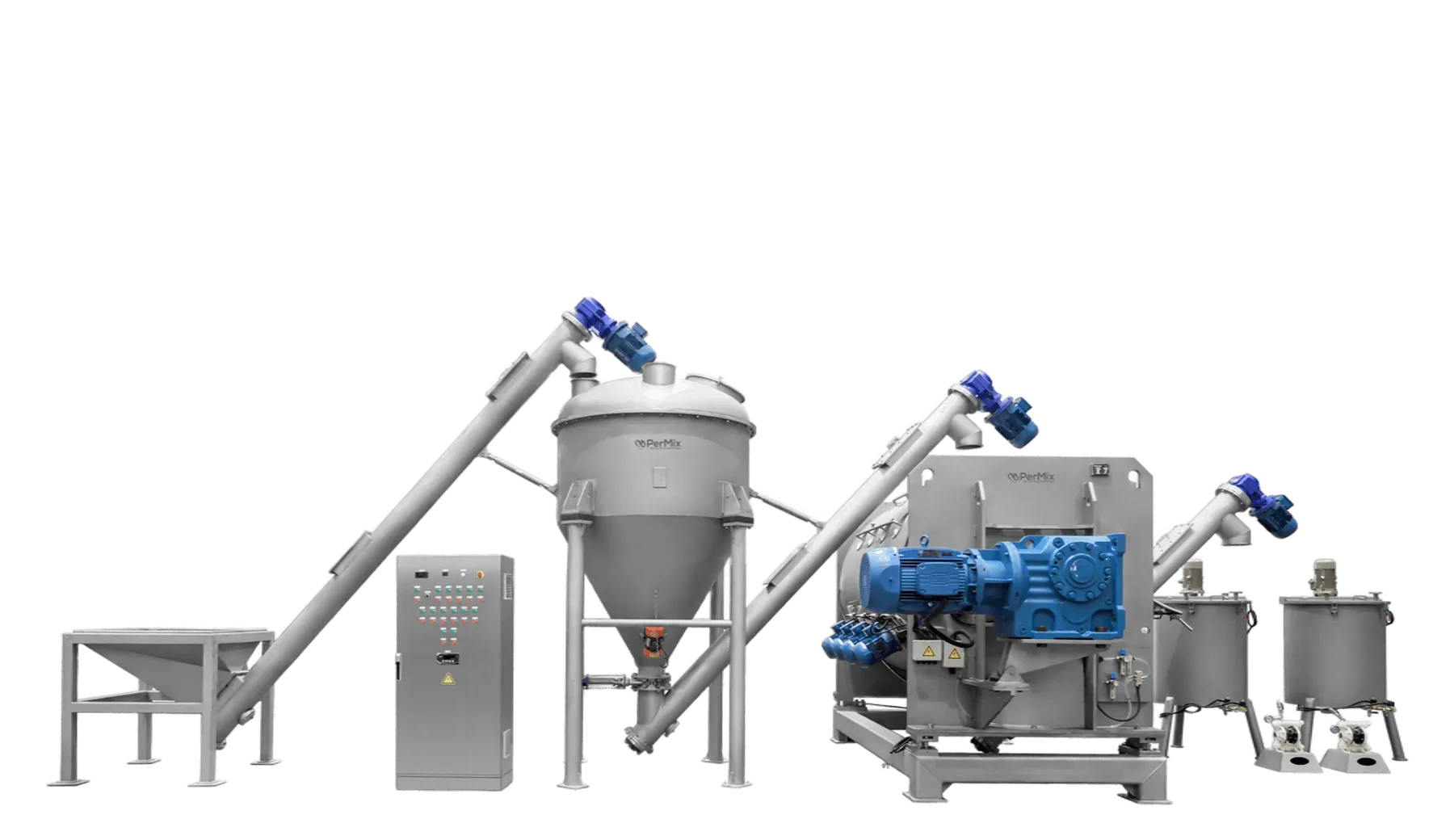
Integrated PerMix mixing line with conveyors, mixer, control panel and discharge equipment

Available options include:

  1. Local push-button controls
  2. Variable-frequency drive
  3. PLC and HMI
  4. Siemens or Allen-Bradley controls
  5. Vessel-position control
  6. Recipe management
  7. Batch timers
  8. Multi-stage speed profiles
  9. Intensifier control
  10. Liquid-dosing control
  11. Load-cell weighing
  12. Barcode verification
  13. Batch reporting
  14. Data logging
  15. Temperature control
  16. Vacuum control
  17. Pressure monitoring
  18. Nitrogen inerting
  19. Oxygen monitoring
  20. Moisture endpoint control
  21. Automated loading
  22. Contained discharge
  23. Packaging integration
  24. Remote support access

Industries and Applications

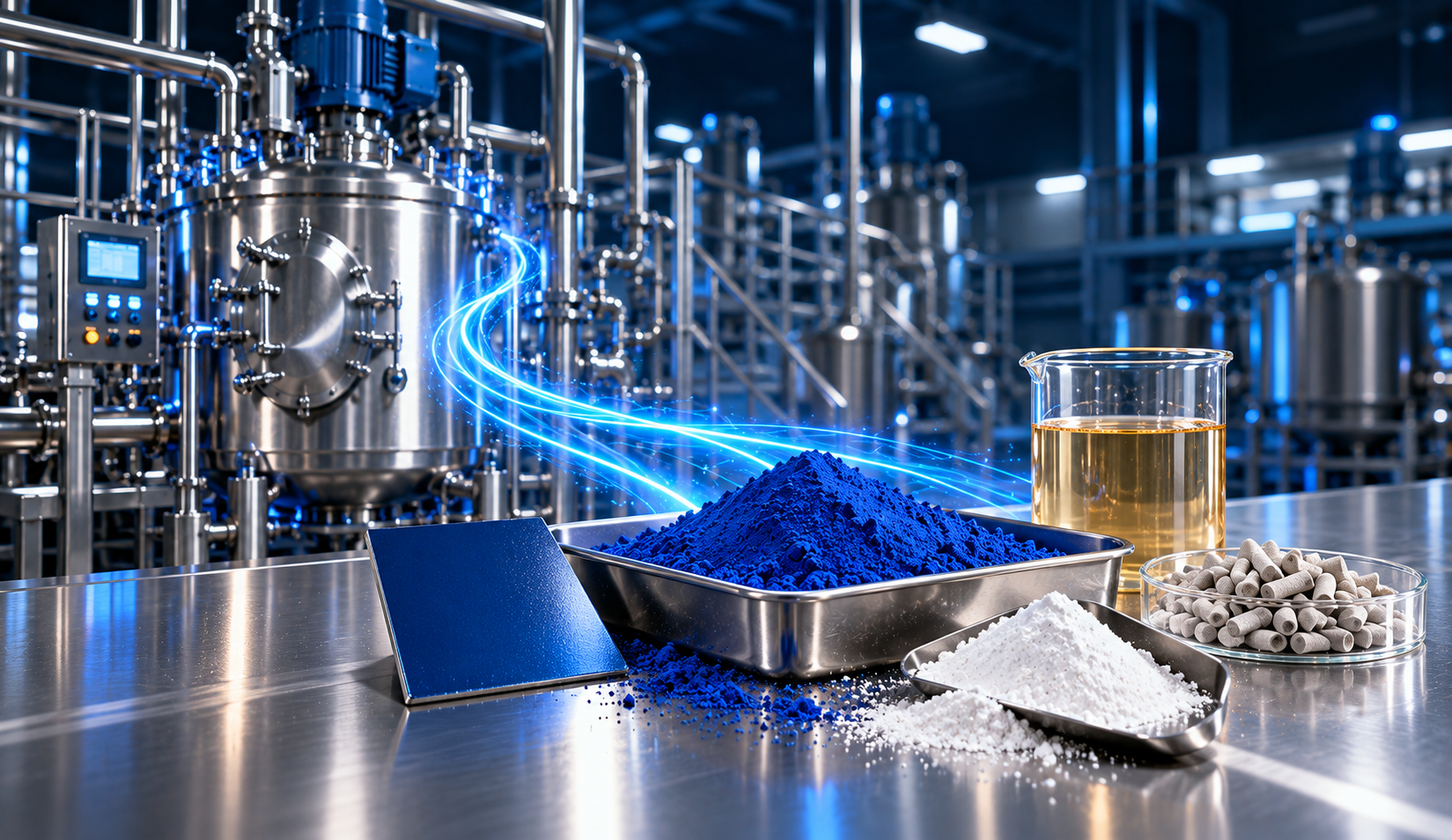
Stainless steel chemical processing equipment with blue specialty powder
Industry spotlight 01 / 08

Industrial Mixers for Chemicals & Specialty Materials

Fine chemicals Catalysts Pigments Crystals Additives Corrosion-sensitive products Solvent-wet powders Specialty formulations
Discuss Your Application

How We Engineer the Right Double Cone Mixer

Give Us the Product Data
Before Selecting the Vessel

To determine whether a double cone mixer is the correct platform, our engineers review:

  1. Material or formulation
  2. Batch mass
  3. Loose and packed bulk density
  4. Minimum and maximum batch size
  5. Particle size
  6. Particle-size distribution
  7. Particle shape
  8. Density of each component
  9. Flowability
  10. Cohesiveness
  11. Angle of repose
  12. Fragility
  13. Abrasiveness
  14. Electrostatic behavior
  15. Minor-ingredient ratio
  16. Required blend uniformity
  17. Segregation sensitivity
  18. Liquid-addition percentage
  19. Product temperature
  20. Heating or cooling requirements
  21. Initial moisture or solvent
  22. Final moisture target
  23. Vacuum requirement
  24. Positive-pressure requirement
  25. Inerting requirement
  26. Sanitary requirement
  27. Hazardous-area classification
  28. Containment requirement
  29. Loading method
  30. Discharge method
  31. Required batch cycle
  32. Available plant footprint
  33. Available voltage and utilities
  34. Upstream and downstream equipment

Let Us Confirm That a Double Cone Mixer Is the Right Platform

Tell us what you are mixing, how the ingredients differ and what must be protected during the process.

We will evaluate:

Application suitabilityWorking volumeCone geometryVessel diameterFill levelRotational speedDrive torqueDischarge arrangementIntensifier requirementLiquid additionMaterials of constructionSanitary designThermal requirementsVacuum or pressure requirementsQuantumX system requirements

Upload your material data sheet, particle-size data, density information, formulation, current process description, drying requirements or facility layout. The more process data you provide, the more useful our preliminary recommendation will be.

+1 (855) PERMIXUSACall john.paul@procxinc.comEmail

Request a Double Cone Mixer Recommendation

PerMix Versus a
Catalog Double Cone Blender

Catalog-Based SelectionPerMix Application Engineering
Selected mainly by nominal vessel volumeSelected by batch mass, bulk density and required tumble headspace
Standard cone geometryCone angle, diameter, transitions and discharge evaluated for the product
Fixed speedSpeed reviewed around vessel diameter, cascade behavior and fragility
Generic fill recommendationWorking fill evaluated for the actual formulation
Limited evaluation of segregationParticle size, density and discharge segregation reviewed
Basic fabricationVessel symmetry, trunnion alignment and dynamic balance treated as process requirements
Standard discharge valveOutlet and stopping position selected around clean discharge and blend protection
Standard stainless constructionCarbon steel, stainless, Hastelloy, titanium, ceramic and glass-lined options evaluated
Basic jacket optionThermal surface, vacuum, condensation and endpoint engineered as a complete system
Atmospheric blender onlyClear pathway to QuantumX vacuum dryers, ASME/PED, ATEX and inerted systems
Simple contact formEngineering RFQ captures powder, thermal, vacuum, containment and discharge data
Little scale-up guidanceScale-up evaluates geometry, fill, tumble regime, blend time and material behavior

FAQ

Frequently Asked Questions

Got more questions?Ask an engineer

What is a double cone mixer?

A double cone mixer is a rotating tumble blender consisting of two conical sections joined around a central axis. The vessel rotates so powders and granules repeatedly cascade, separate and recombine.

What materials are best suited to double cone mixing?

Free-flowing powders, granules, crystals and fragile particles are typically the strongest candidates. Materials with similar or compatible particle sizes and densities generally perform better than highly segregating formulations.

Is a double cone mixer gentler than a ribbon or plough mixer?

Usually, yes. A standard double cone mixer rotates the vessel rather than forcing product through a continuously driven internal agitator, resulting in relatively low mechanical shear.

Is a double cone mixer suitable for cohesive powders?

Highly cohesive powders may not cascade effectively. An intensifier bar may assist with soft agglomerates, but strongly cohesive products are often better suited to a ribbon, paddle or plough mixer.

Why does cone angle matter?

Cone angle influences the tumble path, axial movement, transition into the central section and gravity-assisted discharge.

Why is fill level important?

The mixer needs sufficient product for particle interaction and sufficient free space for cascading. Overfilling can suppress the tumble mechanism, while underfilling can reduce exchange.

Can a double cone mixer be overmixed?

Some formulations can re-segregate during excessive tumbling, particularly when ingredients differ significantly in size, density or shape. Blend time should be validated.

Can fragile crystals or granules be blended?

Yes. Gentle tumble mixing is often selected specifically to protect fragile particles and limit attrition.

Can liquid be added?

Small, controlled liquid additions may be possible through spray devices and an optional intensifier bar. Heavy wet mixing and granulation generally require another mixer type.

What is an intensifier bar?

An intensifier bar is an independently driven high-speed tool used intermittently for soft deagglomeration or limited liquid distribution.

Can a double cone mixer be heated or cooled?

Yes. Standard models can include low-pressure, non-ASME jackets. Advanced thermal, vacuum, pressure or code-rated systems are engineered under QuantumX.

Does PerMix offer vacuum double cone dryers?

Yes. QuantumX vacuum double cone mixer-dryers combine gentle vessel rotation, jacketed thermal transfer, vacuum and vapor handling.

Can solvents be recovered?

A QuantumX system can include a condenser, receiver, vacuum pump, heated vapor piping and controls for suitable solvent-recovery duties.

Can a double cone system operate under pressure?

Selected pressure-rated systems can be engineered under QuantumX. The vessel, trunnions, rotary unions, seals, jacket and operating cycles must be reviewed together.

Can double cone mixers be ASME or PED rated?

Yes, when required and technically appropriate, QuantumX systems can be engineered for applicable pressure-vessel codes.

Are ATEX configurations available?

QuantumX systems can be engineered for suitable ATEX or hazardous-area requirements, including grounding, rated components, inerting and process monitoring.

What materials of construction are available?

Options can include carbon steel, 304 stainless, 316/316L stainless, duplex grades, Hastelloy or nickel alloys, titanium, ceramic liners, glass lining and application-specific wear systems.

Can PerMix build a ceramic-lined double cone mixer?

Yes, for suitable applications. Liner weight, attachment, impact, thermal cycling and dynamic balance must be incorporated into the original design.

Can a double cone mixer be glass lined?

Glass-lined double-conical dryers are used in corrosive, high-purity and metal-sensitive applications. Final suitability depends on the process chemistry, impact, temperature and pressure duty.

Can a double cone mixer be cleaned in place?

CIP or automated spray-cleaning provisions can be engineered, but the cleaning method, spray coverage, drainage and validation requirements should be defined before final design.

Can loading and discharge be automated?

Yes. The system can include automatic positioning, interlocks, pneumatic valves, load cells, vacuum transfer, contained transfer and packaging integration.

How is the correct mixer size determined?

Sizing is based on batch mass, operating bulk density, required fill level, product flowability and process requirements—not gross vessel volume alone.

When should I choose QuantumX?

Choose QuantumX when the process requires vacuum drying, internal pressure, ASME, PED, ATEX, inerting, solvent recovery, high containment, advanced thermal control or specialty materials.

Gentle with the product. Precise in the engineering.

Your Double Cone Mixer Should Protect More Than the Blend

The right double cone mixer begins with an understanding of how the product flows, cascades, segregates, discharges, heats and responds to repeated tumbling.

PerMix evaluates the vessel geometry, fill level, speed, drive, balance, materials, valve, loading method, discharge system and controls as one complete process platform.

Whether you need:

A standard atmospheric tumble blenderA sanitary pharmaceutical mixerA pilot-scale double coneAn automated loading and discharge systemA ceramic-lined or glass-lined vesselA Hastelloy or titanium mixerA jacketed thermal blenderA QuantumX vacuum double cone mixer-dryerAn ASME/PED pressure-rated systemAn ATEX or inerted installation

—we will engineer the equipment around your product and process requirements.

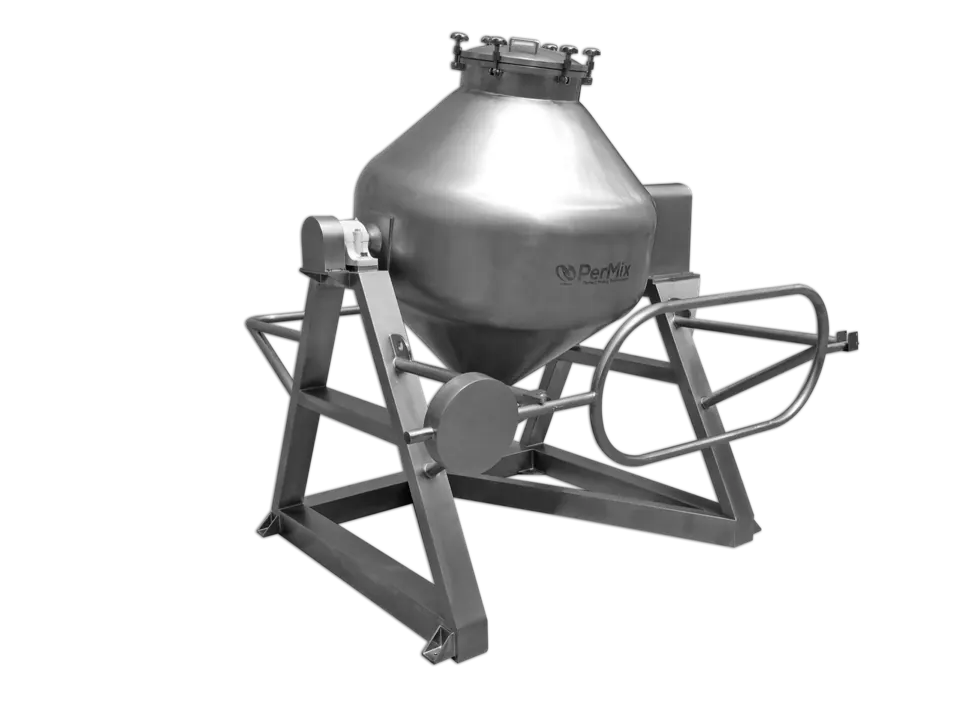
PerMix stainless steel double cone mixer in an industrial facility