Industrial Mixers
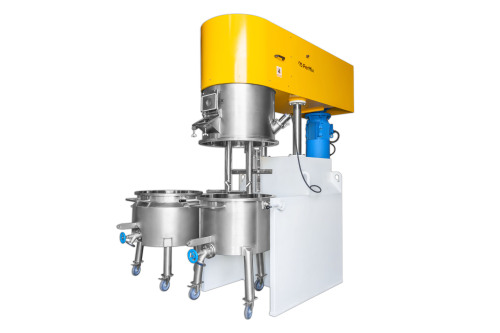
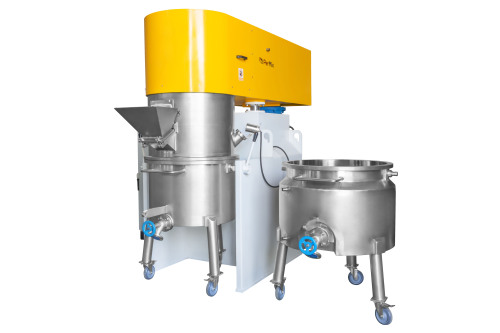
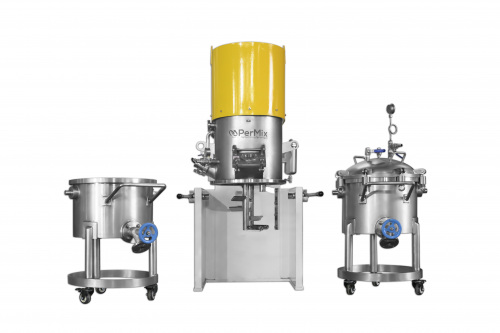
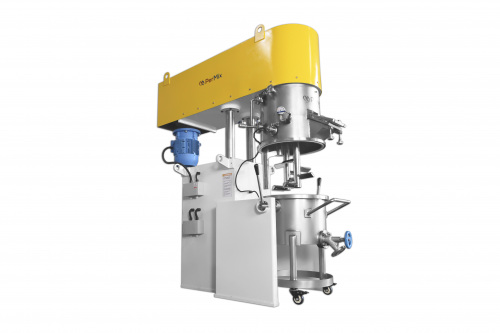
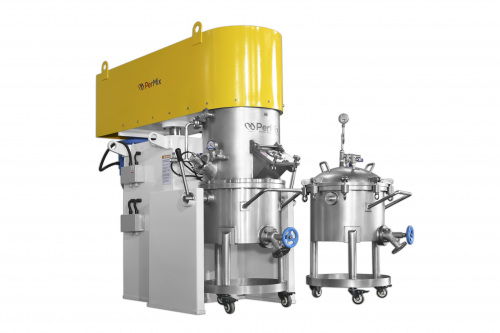
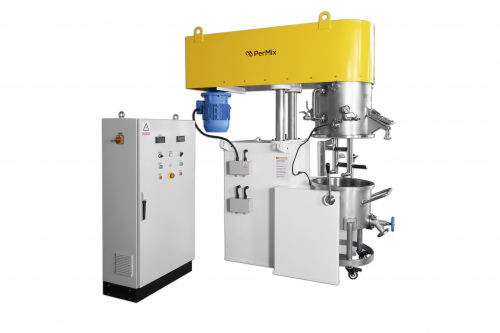
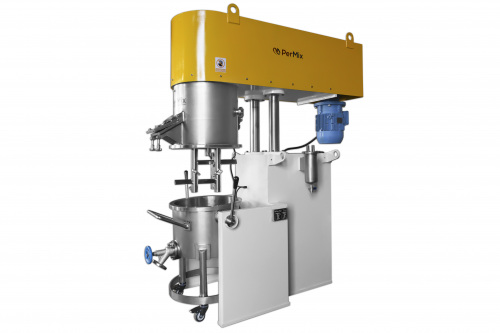
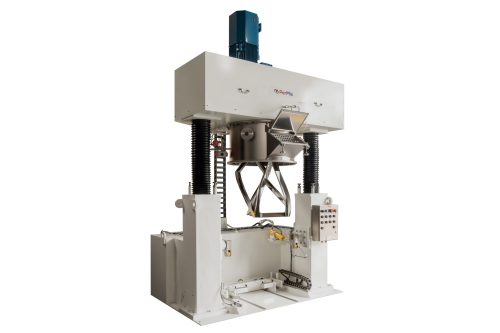
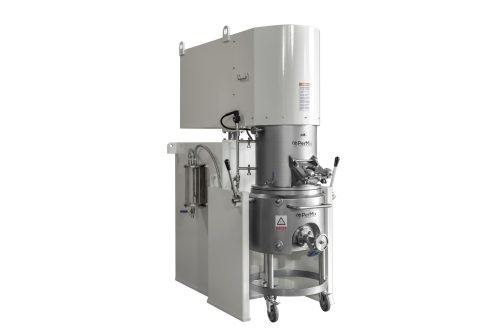
PerMix Double Planetary Mixer
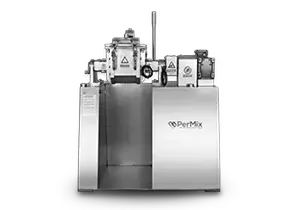
 PerMix Double Planetary Mixer for High Viscosity
Best in Innovation • Best In Performance • Best In Quality • Best In Price • Best In Warranty
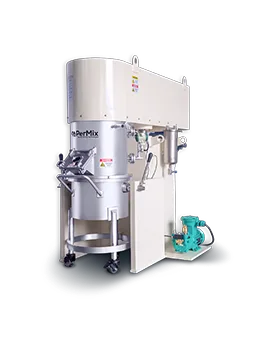
The PerMix Double Planetary Mixers are also called double planetary kneader, because it can be used to handle very viscous materials up to 1,500,000 cPs.
A double planetary mixer is a high-torque, low-speed paste mixer designed to process high-viscosity materials that cannot be mixed effectively with conventional agitators. It uses two planetary mixing tools that rotate on their own axes while simultaneously orbiting the mixing vessel—continuously sweeping the entire batch volume.
The result is complete, controlled mixing of dense, viscous, and yield-stress materials without dead zones.
At PerMix, double planetary mixers are engineered as primary paste-processing systems, used across industries where consistency, shear control, and scalability are critical.
During operation:
Two planetary agitators rotate on their own axes
Both agitators orbit the vessel simultaneously
Material is continuously folded, sheared, and redistributed
The agitators sweep nearly 100% of the vessel volume
This planetary motion ensures no stagnant zones, even in extremely thick or non-flowing materials.
Double planetary mixers were developed specifically to solve problems that ribbon, paddle, and tumble mixers cannot.
They excel when:
Materials do not flow under gravity
Viscosity increases dramatically during mixing
Shear must be controlled rather than maximized
Complete vessel coverage is required
They are paste mixers first, not modified powder mixers.
Double planetary mixers are commonly used for:
Adhesives and sealants
Battery slurries and electrode pastes
Cosmetics and personal care creams
Pharmaceutical ointments and gels
Food pastes and spreads
Specialty chemicals and composites
They perform reliably from moderately viscous pastes to extremely stiff, high-solids formulations.
At a high level:
Ribbon mixers rely on material flow
Paddle mixers rely on circulation
Plow mixers rely on fluidization
Double planetary mixers rely on forced mechanical shear and folding
They are selected when material resistance defines the process, not batch size or speed.
Understanding what a double planetary mixer is—and what it is not—prevents:
Severe under-mixing
Overheating due to wrong mixer selection
Excessive batch times
Inconsistent product quality
Double planetary mixers are chosen because other mixers fail in paste applications.
Double planetary mixers are selected when material resistance—not batch size—defines the mixing challenge. They are purpose-built for high-viscosity, non-flowing, and yield-stress materials where gravity-based or low-torque mixers simply cannot move the product.
Knowing when a double planetary mixer is the right choice—and when it is not—prevents costly misapplication and ensures predictable results.
A double planetary mixer is typically the correct solution when one or more of the following conditions apply:
High-Viscosity or Paste-Like Materials
Materials that do not flow freely, even under agitation, require forced mechanical movement.
Yield-Stress or Thixotropic Formulations
Materials that resist motion until stress is applied benefit from planetary shear and folding.
High Solids Loading
Formulations with very high solids content that would stall conventional mixers remain processable.
Viscosity That Changes During Mixing
Products that thicken dramatically as ingredients are added or reactions progress remain mixable.
Complete Vessel Coverage Is Required
Planetary motion ensures nearly 100% vessel sweep, eliminating dead zones.
Double planetary mixers are commonly chosen for:
Adhesives and sealants
Battery electrode slurries and pastes
Silicone compounds
Cosmetics creams, gels, and emulsions
Pharmaceutical ointments and topical formulations
Food pastes, doughs, and spreads
High-viscosity chemical compounds
These applications prioritize torque, shear control, and uniformity over speed.
Despite their power, double planetary mixers are not universal solutions.
A double planetary mixer may be inefficient or unnecessary when:
Materials Are Free-Flowing or Low Viscosity
Powders or thin liquids are better handled by ribbon, paddle, or inline mixers.
Very Short Mixing Times Are Required
High-speed dispersers or inline systems may be more efficient.
Continuous Processing Is Required
Double planetary mixers are batch machines, not continuous mixers.
Simple Blending Without Shear Is Needed
Tumble or gentle paddle mixers may provide sufficient results with lower cost and complexity.
At a high level:
Choose a sigma mixer for extremely stiff dough-like masses requiring kneading action
Choose a double planetary mixer for a wider viscosity range and better vessel coverage
Double planetary mixers offer greater flexibility across changing viscosities.
Multi-shaft mixers combine high-speed dispersion with anchor or planetary movement
Double planetary mixers focus on controlled, uniform shear
Double planetary mixers are preferred when uniform bulk mixing matters more than aggressive dispersion.
Choosing the correct paste mixer:
Prevents incomplete mixing
Reduces excessive heat generation
Improves batch-to-batch consistency
Shortens cycle times
Protects motors, gearboxes, and tooling
Using an underpowered mixer in paste applications almost always leads to failure.
Double planetary mixers are built to survive—and perform—where other mixers mechanically fail. Their design centers on high torque transmission, full vessel sweep, and structural rigidity, allowing them to process dense, resistant materials consistently over long service life.
PerMix double planetary mixers are engineered as true paste-processing machines, not reinforced powder mixers.
The heart of a double planetary mixer is its planetary drive system.
Key design elements include:
High-torque gearboxes designed for continuous heavy loads
Precision timing between planetary tools to maintain uniform shear
Robust drive components sized for worst-case viscosity scenarios
This ensures stable, synchronized motion even as material resistance increases dramatically during mixing.
Double planetary mixers use two independently rotating planetary tools.
Design characteristics include:
Counter-rotating or co-rotating tool configurations
Tool geometry optimized for folding, shear, and redistribution
Near-complete vessel sweep to eliminate dead zones
Tool profiles are selected based on viscosity, solids loading, and shear sensitivity.
The vessel must withstand extreme internal forces.
PerMix vessels are designed with:
Heavy-gauge construction to resist deformation
Rounded internal geometry to prevent stress concentration
Precision tolerances to maintain close tool-to-wall clearances
This ensures consistent mixing and long-term structural integrity.
Double planetary mixers are used across demanding industries.
Available materials include:
Carbon steel for general industrial applications
304 stainless steel for food and non-corrosive environments
316 / 316L stainless steel for pharmaceutical, cosmetic, and corrosive products
Internal surfaces can be polished to reduce adhesion and simplify cleaning.
To prevent material buildup and overheating, scraper systems are integrated.
Scraper features include:
Flexible or rigid wall scrapers
Continuous removal of material from vessel walls
Improved heat transfer and batch uniformity
Scrapers are essential for high-viscosity and heat-sensitive formulations.
Many paste applications require thermal control.
PerMix double planetary mixers can include:
Full-coverage heating and cooling jackets
Steam, hot water, thermal oil, or glycol service
Zoned temperature control
Thermal management prevents overheating and supports controlled reactions or drying.
Extreme torque demands robust sealing.
Design features include:
Heavy-duty shaft seals
Bearing isolation from the product zone
Optional double seals with purge capability
These features protect critical components and support long-term operation.
Discharging high-viscosity material requires force—not gravity.
Available discharge options include:
Hydraulic or screw-assisted bottom discharge
Tilting discharge systems
Removable mixing vessels
Discharge systems are selected based on viscosity and downstream handling requirements.
The frame must handle continuous mechanical stress.
PerMix frames feature:
Heavy-duty welded construction
Reinforced mounting points
Vibration-resistant design
This ensures safe, stable operation under maximum load conditions.
Every element of a PerMix double planetary mixer is designed to:
Transmit high torque reliably
Maintain uniform shear
Eliminate dead zones
Survive long production cycles
This construction philosophy is what separates true paste mixers from modified powder equipment.
Double planetary mixers are rarely “standard machines.” Paste formulations vary widely in viscosity, shear sensitivity, temperature requirements, and discharge behavior. For that reason, PerMix designs double planetary mixers as configurable platforms, allowing each system to be tuned to the material—not the other way around.
Every option is selected to enhance control, not brute force.
Mixing tools are selected based on how the material responds to shear and folding.
Common configurations include:
Rectangular or finger-style planetary blades for general paste mixing
Helical or contoured blades for improved folding of high-viscosity materials
Specialized geometries for shear-sensitive or aeration-prone formulations
Tool selection directly impacts mixing efficiency, heat generation, and batch uniformity.
Scrapers are critical for paste applications.
Available scraper options include:
Flexible PTFE or polymer wall scrapers
Rigid metal scrapers for abrasive materials
Bottom scrapers to prevent material buildup and overheating
Scrapers improve:
Vessel sweep efficiency
Heat transfer
Batch-to-batch consistency
Cleanability
Thermal control is often essential in paste processing.
Available options include:
Full-coverage heating and cooling jackets
Steam, hot water, thermal oil, or glycol service
Zoned jackets for precise temperature control
Integrated temperature sensors and control loops
These options support:
Viscosity control
Reaction management
Safe processing of heat-sensitive materials
Many double planetary mixers are configured for vacuum mixing.
Vacuum options include:
Vacuum-rated vessels and seals
Integrated vacuum ports
Condenser and vapor recovery systems
Inert gas purge capability
Vacuum is commonly used to:
Remove entrapped air
Prevent oxidation
Improve paste density and appearance
Paste discharge is application-specific and critical.
Available discharge systems include:
Hydraulic bottom discharge valves
Screw-assisted discharge systems
Tilting mixer frames for gravity-assisted emptying
Removable mixing vessels for batch transfer
Discharge selection is driven by viscosity, downstream handling, and cleaning requirements.
Double planetary mixers often operate as critical process equipment.
Available control options include:
Variable speed control for planetary tools
Independent control of heating, cooling, and vacuum
PLC and HMI systems with recipe management
Batch data logging and traceability
Automation improves repeatability and supports validated processes.
Customization supports hygiene, corrosion resistance, and wear life.
Options include:
Carbon steel
304 stainless steel
316 / 316L stainless steel
Polished internal finishes for sanitary or cosmetic applications
Material selection is matched to product chemistry and regulatory requirements.
For demanding or regulated environments, additional features are available:
Explosion-proof or ATEX-rated designs
Safety interlocks and guarding
Pressure relief and monitoring
Noise and vibration reduction features
These options ensure safe operation under high torque and load conditions.
Every customization offered for a PerMix double planetary mixer follows one rule:
Does this option improve control, consistency, or reliability for the paste?
If it does, it belongs.
If it adds complexity without value, it’s excluded.
Double planetary mixers are selected not just because they can mix pastes—but because they can do so consistently as viscosity, batch size, and formulation complexity increase. In paste processing, scale-up failures usually come from torque miscalculations, heat buildup, or incomplete vessel sweep. PerMix double planetary mixers are engineered to avoid all three.
Double planetary mixers achieve uniformity through forced mechanical movement, not material flow.
Performance is governed by:
Available torque at the planetary tools
Tool geometry and vessel clearance
Mixing speed and shear profile
Paste viscosity and yield stress
Thermal behavior during mixing
Because both planetary tools continuously sweep the vessel, even non-flowing materials are fully engaged.
One of the defining strengths of double planetary mixers is their ability to handle wide viscosity swings within a single batch.
They perform reliably when:
Materials start as low-viscosity liquids and become stiff pastes
Solids loading increases progressively
Reactions or temperature changes alter rheology
PerMix gearboxes and drives are sized for peak viscosity—not average conditions, preventing stalling or overload.
Double planetary mixers are not high-speed machines.
Instead, they deliver:
Controlled shear over longer mixing cycles
Gradual, uniform incorporation of ingredients
Reduced risk of localized overheating
Mixing time is driven by material resistance and heat management, not RPM.
Paste mixing often generates heat from both:
Mechanical shear
Exothermic reactions
PerMix systems manage this through:
Integrated heating and cooling jackets
Scrapers that improve heat transfer
Controlled mixing speeds
This prevents hot spots, viscosity runaway, and product degradation.
Scaling paste mixing is fundamentally different from scaling powder mixing.
PerMix scale-up methodology focuses on:
Preserving tool-to-vessel geometry ratios
Maintaining similar shear profiles
Scaling torque capacity appropriately
Matching heat transfer per unit mass
This allows formulations developed in lab or pilot mixers to transfer to production without reformulation.
Double planetary mixers are sensitive to underfilling, not overfilling.
Best practices include:
Operating within validated working volume ranges
Ensuring planetary tools remain fully immersed
Avoiding low fill levels that reduce shear effectiveness
PerMix provides application guidance to define optimal batch sizes at every scale.
As batch size increases, discharge becomes more challenging.
PerMix addresses this through:
Proper discharge system selection
Hydraulic or screw-assisted discharge where required
Vessel designs that prevent dead pockets
This ensures complete discharge without manual intervention—even at high viscosity.
Repeatable paste mixing is achieved through:
Stable torque delivery
Consistent tool geometry
Controlled thermal input
PLC-driven recipe control
This minimizes operator variability and supports validated production.
Poorly scaled paste mixers often lead to:
Motor overloads
Incomplete mixing at the vessel walls
Excessive heat buildup
Failed production trials
PerMix double planetary mixers are engineered to scale with the material, not fight it.
Double planetary mixers are applied when high-viscosity materials must be mixed uniformly, predictably, and without dead zones. They are the workhorse paste mixers across industries where material resistance, solids loading, and shear control define success.
Below are real-world workflows where double planetary mixers are the correct—and often the only—viable solution.
Primary challenges:
Extremely high viscosity
High solids loading
Entrapped air
Heat buildup during mixing
Typical workflow:
Liquid & Resin Charging
Base polymers, resins, or elastomers are loaded into the vessel.
Solid & Filler Addition
Fillers, thickeners, and additives are incorporated gradually.
Double Planetary Mixing
Forced shear and folding distribute solids uniformly.
Vacuum Deaeration (When Equipped)
Entrapped air is removed to improve performance.
Discharge to Packaging or Transfer
Why it works:
Planetary tools move material that will not flow, ensuring complete incorporation and uniform viscosity.
Primary challenges:
High solids content
Binder distribution
Solvent handling
Oxygen and moisture sensitivity
Typical workflow:
Binder & Solvent Charging
Active Material Addition
Double Planetary Mixing Under Controlled Conditions
Vacuum Deaeration or Solvent Conditioning
Closed Discharge to Downstream Processing
Why it works:
Uniform shear ensures consistent electrode performance and coating behavior.
Primary challenges:
Smooth texture requirements
Air entrapment
Temperature sensitivity
Aesthetic consistency
Typical workflow:
Oil & Water Phase Preparation
Emulsification or Paste Formation
Double Planetary Mixing with Scrapers
Vacuum Deaeration
Controlled Cooling & Discharge
Why it works:
Planetary motion eliminates lumps and air pockets while preserving product appearance.
Primary challenges:
Uniform API distribution
Shear sensitivity
GMP compliance
Validation and repeatability
Typical workflow:
Base Preparation
API Incorporation
Controlled Planetary Mixing
Vacuum Deaeration (When Required)
Clean Discharge for Filling
Why it works:
Complete vessel sweep ensures consistent potency and texture.
Primary challenges:
Thick, non-flowing materials
Temperature control
Ingredient incorporation without tearing
Typical workflow:
Ingredient Charging
Double Planetary Mixing
Thermal Conditioning (Heating or Cooling)
Discharge to Forming or Packaging
Why it works:
Gentle but powerful shear handles dense food pastes without damaging structure.
Primary challenges:
High filler loading
Abrasive materials
Uniform dispersion
Typical workflow:
Resin Charging
Filler Addition
Double Planetary Mixing with Heavy-Duty Scrapers
Thermal Control & Conditioning
Discharge to Molding or Packaging
Why it works:
High torque and full vessel sweep prevent unmixed zones—even with abrasive solids.
Primary challenges:
Predictable scale-up
Changing formulations
Process development
Typical workflow:
Lab-Scale Planetary Trials
Pilot-Scale Optimization
Production Replication
Why it works:
Planetary mixing physics scale reliably when geometry and torque are preserved.
Double planetary mixers perform best when:
Material resistance defines the process
Complete vessel coverage is mandatory
Shear must be controlled, not maximized
Application-driven workflows result in:
Uniform paste quality
Reduced batch failures
Predictable scale-up
Lower rework and scrap
(Including Bead Mills & Paste-Phase Size Reduction)
Paste processing is where many manufacturers get trapped by false choices. Milling, mixing, and deaeration are often treated as competing steps, when in reality they are complementary process functions—especially for high-viscosity formulations.
Double planetary mixers sit at the center of paste processing, but they do not replace milling or dispersion when particle size reduction is required. Understanding how these steps work together—including bead mills—is essential for stable, scalable production.
(Including Bead Mills)
Milling in paste applications is used to reduce particle size, break agglomerates, and improve dispersion quality—not to homogenize the bulk paste.
Milling is required when:
Solid particles must be reduced below a defined micron size
Agglomerates must be broken down, not just redistributed
Surface area must be increased for performance
Functional fillers, pigments, or actives must be fully dispersed
Bead mills are commonly used when:
Very fine particle size is required
Uniform dispersion quality is critical
Pigments, battery materials, coatings, or pharmaceuticals are involved
Bead mills provide:
High-energy shear at the particle level
Controlled micron or sub-micron size reduction
Consistent dispersion quality
However, bead mills:
Do not provide bulk paste mixing
Do not manage viscosity increases well
Do not deaerate effectively
They solve dispersion, not paste handling.
Double planetary mixers solve bulk paste movement and uniformity, not particle fracture.
They are used to:
Incorporate solids into viscous bases
Homogenize high-viscosity materials
Handle yield-stress and non-flowing pastes
Maintain complete vessel sweep
Control shear and heat generation
A double planetary mixer ensures:
Every portion of the paste is engaged
No dead zones or unmixed pockets remain
Viscosity increases do not stall the process
They are the backbone of paste processing, even when milling is involved elsewhere.
Deaeration addresses air and gas entrainment, which milling and mixing often introduce.
Deaeration is critical when:
Air impacts performance, appearance, or stability
Density consistency matters
Downstream coating or filling is sensitive to bubbles
Vacuum deaeration in double planetary mixers:
Removes entrapped air after milling or mixing
Improves paste density and surface finish
Prevents voids, pinholes, or performance loss
Milling alone may be sufficient when:
A slurry or low-viscosity dispersion is the final product
No significant viscosity build occurs
Bulk uniformity is not required
Examples:
Pigment concentrates
Intermediate dispersions
Once viscosity rises, milling alone becomes ineffective.
Double planetary mixing alone is sufficient when:
Particle size is already within specification
No fine dispersion is required
The challenge is moving and homogenizing a stiff paste
Examples:
Adhesives with pre-milled fillers
Food pastes
Cosmetic creams with pre-processed ingredients
(Most Common in Paste Applications)
This is the dominant industrial workflow.
Typical sequence:
Pre-dispersion or Milling (often with a bead mill)
Particles are reduced and dispersed in a carrier.
Transfer to Double Planetary Mixer
The paste is thickened, blended, and homogenized.
Controlled Mixing Under Torque
Viscosity increases without loss of uniformity.
This approach:
Separates particle reduction from paste handling
Protects milling equipment from overload
Ensures consistent final rheology
(High-Performance Paste Systems)
All three are required when:
Fine particle size and high viscosity coexist
Air impacts performance or appearance
Solids loading is extreme
Scale-up repeatability is critical
Typical workflow:
Bead Milling or High-Energy Dispersion
Double Planetary Mixing for Bulk Homogeneity
Vacuum Deaeration in the Same Vessel
This is common in:
Battery electrode pastes
High-performance adhesives
Coatings and pigments
Pharmaceutical and cosmetic pastes
Treating milling, mixing, and deaeration as one integrated strategy delivers:
Stable viscosity control
Superior dispersion quality
Reduced air entrapment
Predictable scale-up
Lower scrap and rework
Trying to force one machine to do all three jobs usually leads to:
Excessive heat
Equipment damage
Inconsistent results
At PerMix, double planetary mixers are designed to:
Work with bead mills and dispersers—not against them
Take over where milling stops and viscosity begins
Integrate vacuum deaeration without compromising torque
Scale reliably from lab to production
PerMix focuses on process architecture, not single-machine shortcuts.
In paste processing:
Bead mills reduce particles
Double planetary mixers move and homogenize pastes
Vacuum deaeration perfects the final product
The most successful systems use each tool for what it does best.
Double planetary mixers are the structural backbone of paste processing—especially when milling and dispersion are part of the equation.
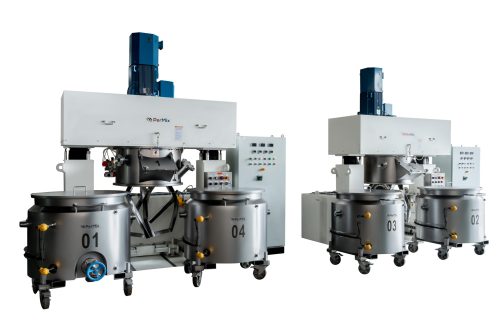
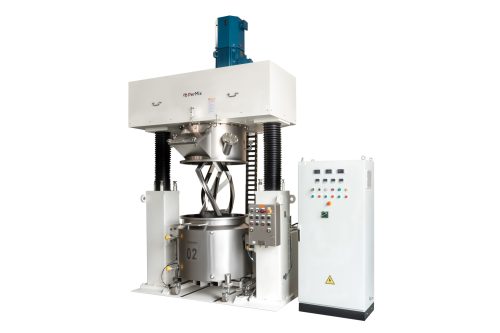






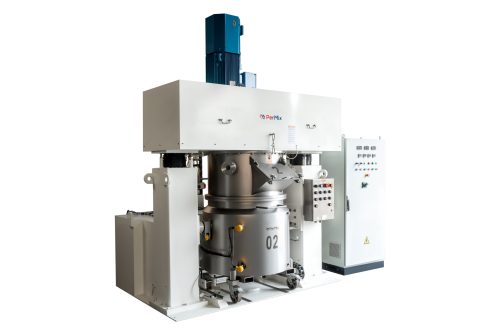

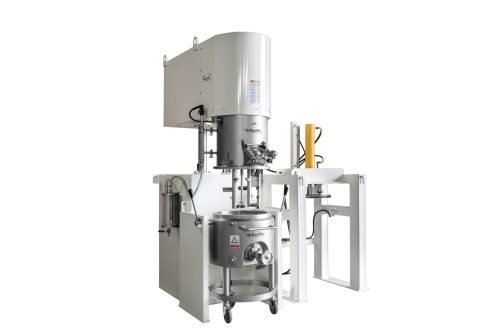
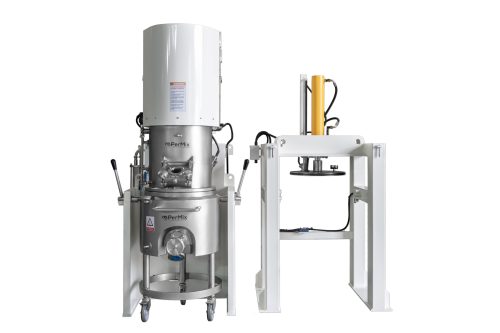

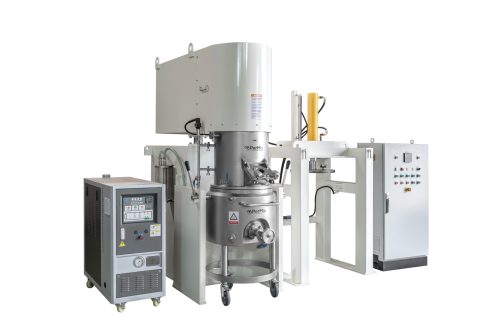
PerMix is here to listen to your needs and provide sustainable solutions. Contact us to discover more.
PerMix Double Planetary Mixer Videos