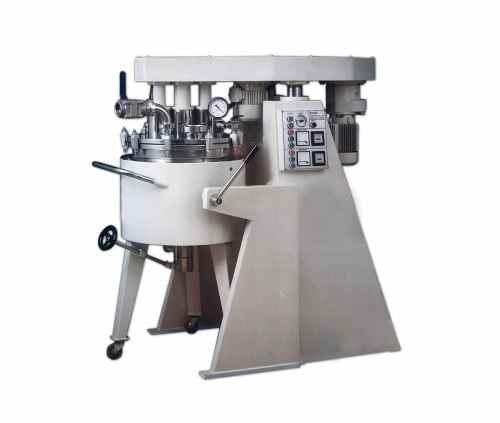
Industrial Mixers
PerMix Multi-Shaft Mixer
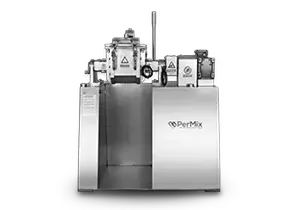
 PerMix Multi-Shaft Mixer
Best in Innovation • Best In Performance • Best In Quality • Best In Price • Best In Warranty
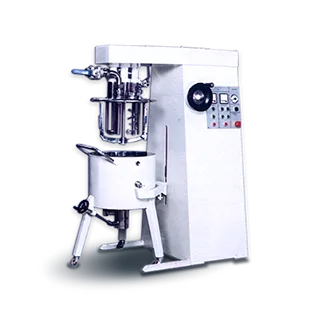
The PerMix Multi–Shaft Vacuum Mixers are a revolutionary universal multi-processing mixer that is designed to serve a wide variety of industries in many different processes. It provides a unique three-way mixing action by combining slowly running elements with a rapidly running element.
A multi-shaft mixer is a high-performance paste mixer that combines multiple mixing technologies in a single vessel—most commonly a high-speed disperser paired with one or more low-speed anchor or planetary tools. This configuration allows manufacturers to process materials that change dramatically in viscosity while maintaining control over shear, temperature, and bulk movement.
At PerMix, multi-shaft mixers are engineered as process systems, not just mixers. They are designed to handle the full transition from low-viscosity liquid dispersion to high-viscosity paste homogenization without stopping, transferring, or compromising product quality.
Multi-shaft mixers operate by assigning different mechanical jobs to different shafts, all working simultaneously in the same vessel.
Typical shaft functions include:
High-speed disperser shaft for particle wet-out and deagglomeration
Low-speed anchor or planetary shaft for bulk paste movement and wall sweep
Optional secondary disperser or planetary shaft for additional shear or coverage
Each shaft operates at its own speed, delivering targeted energy where it is needed, instead of forcing one tool to do everything.
Multi-shaft mixers were developed to solve a very specific problem:
Materials rarely stay the same viscosity from start to finish.
They excel when:
Liquids must first accept powders efficiently
Viscosity increases significantly during processing
Shear and torque are both required—but at different times
Heat and air must be controlled throughout the batch
Single-tool mixers struggle in these conditions. Multi-shaft mixers are designed specifically for them.
Multi-shaft mixers are widely used for:
Adhesives and sealants
Battery slurries and electrode pastes
Paints, coatings, and inks
Cosmetic creams, gels, and emulsions
Specialty chemical pastes
Food pastes and compound formulations
They are ideal for wide-rheology products that move from liquid to paste in one batch.
At a high level:
High-speed dispersers provide shear but no bulk movement
Double planetary mixers provide torque but limited dispersion
Sigma mixers knead extremely stiff masses
Multi-shaft mixers integrate dispersion, movement, and wall sweep in one vessel
They are chosen when no single mixing principle is sufficient on its own.
Multi-shaft mixers are often misunderstood as “planetary mixers with a disperser added.”
In reality, they are process integrators—designed to:
Reduce batch steps
Eliminate transfers
Improve dispersion quality
Shorten cycle time
Increase process stability
Understanding what a multi-shaft mixer truly is prevents under-engineering complex paste processes.
Multi-shaft mixers are selected when material behavior changes dramatically during processing and no single mixing technology can handle every stage efficiently. They are designed for formulations that begin as free-flowing liquids and end as high-viscosity pastes—all within the same batch.
Understanding when a multi-shaft mixer is the correct solution prevents over-complex systems and unnecessary capital expense.
A multi-shaft mixer is typically the best solution when one or more of the following conditions apply:
Wide Viscosity Range Within One Batch
Products that start liquid and thicken significantly benefit from multiple tools working simultaneously.
Powder Wet-Out and Paste Homogenization Are Both Required
Dispersers handle wet-out; anchors or planetary tools manage viscosity.
Shear and Torque Are Both Process-Critical
Dispersers supply shear; low-speed tools supply torque and bulk movement.
Heat and Air Must Be Managed Continuously
Anchor tools scrape walls, improving heat transfer and reducing aeration.
Batch Transfers Must Be Minimized
One vessel performs multiple process stages.
Multi-shaft mixers are commonly chosen for:
Adhesives and sealants
Battery electrode slurries
Coatings and inks
Cosmetic creams and emulsions
Specialty chemical formulations
These applications demand dispersion quality early and torque later—often within minutes of each other.
Despite their flexibility, multi-shaft mixers are not universal.
They may be unnecessary or inefficient when:
Viscosity Remains Consistently High
A double planetary or sigma mixer may be simpler and more robust.
Viscosity Remains Low Throughout
A high-speed disperser or inline system is more efficient.
Ultra-Fine Particle Size Is Required
Bead mills or other milling technologies are better suited.
The Process Is Continuous
Multi-shaft mixers are batch systems.
Double planetary mixers excel at high-viscosity paste movement
Multi-shaft mixers excel at viscosity transitions
If dispersion is minimal and torque dominates, planetary mixing may be superior.
High-speed dispersers provide shear only
Multi-shaft mixers provide shear and bulk movement
Dispersers alone fail once viscosity increases.
Sigma mixers knead extremely stiff, dough-like masses
Multi-shaft mixers offer broader viscosity range and flexibility
Sigma mixers are chosen for maximum resistance; multi-shaft mixers for versatility.
Choosing the wrong paste mixer leads to:
Excessive heat
Entrapped air
Long cycle times
Equipment overload
Multi-shaft mixers perform best when viscosity evolution is central to the process design.
Multi-shaft mixers are among the most mechanically demanding paste mixers to engineer. They must transmit high shear and high torque simultaneously, manage heat and air, and remain stable as material viscosity changes dramatically—all within a single vessel.
PerMix multi-shaft mixers are designed as integrated mechanical systems, not collections of bolted-on tools.
At the core of a multi-shaft mixer is a synchronized but independently controlled drive system.
PerMix designs feature:
Independent drives for each shaft
Proper torque sizing for low-speed anchor or planetary tools
High-speed motors engineered for sustained dispersion loads
Mechanical separation of shear and torque functions
This prevents one shaft from overloading another as viscosity evolves.
Each shaft has a defined mechanical job:
High-Speed Disperser Shaft
Provides localized shear for wet-out and deagglomeration.
Low-Speed Anchor or Planetary Shaft
Moves bulk material, manages viscosity, and sweeps vessel walls.
Optional Secondary Shafts
Add dispersion coverage or improve circulation in larger vessels.
This division of labor is what allows multi-shaft mixers to outperform single-tool designs.
Vessel design must support multiple flow regimes simultaneously.
PerMix vessels are engineered with:
Optimized diameter-to-height ratios
Precise tool-to-wall and tool-to-tool clearances
Smooth internal transitions to prevent stagnation
This ensures dispersers create shear while anchor tools maintain circulation.
Low-speed anchor tools are essential for:
Moving high-viscosity material
Preventing wall buildup
Improving heat transfer
PerMix anchors may include:
Fixed or flexible wall scrapers
Bottom scrapers for complete vessel sweep
Designs matched to viscosity and abrasiveness
Scrapers are critical for thermal control and batch uniformity.
Multi-shaft mixers frequently require active thermal management.
PerMix systems can include:
Full-coverage heating and cooling jackets
Steam, hot water, thermal oil, or glycol service
Zoned temperature control
Anchor tools continuously expose material to the vessel wall, maximizing heat transfer efficiency.
Multiple shafts increase sealing complexity.
PerMix designs include:
Heavy-duty bearings sized for combined axial and radial loads
Shaft seals compatible with heat, solvents, and vacuum (when required)
Bearing isolation from the product zone
These features prevent premature wear and contamination.
Multi-shaft mixers generate complex dynamic loads.
PerMix frames feature:
Heavy-duty welded construction
Reinforced motor mounts
Load paths engineered to prevent deflection
This maintains shaft alignment and mechanical stability at all operating conditions.
Multi-shaft mixers are built for demanding environments.
Available materials include:
Carbon steel for general industrial applications
304 stainless steel for food and non-corrosive products
316 / 316L stainless steel for chemical, cosmetic, and pharmaceutical use
Surface finishes can be tailored for hygiene, cleanability, or abrasion resistance.
Because multiple shafts operate simultaneously, control matters.
PerMix systems support:
Independent speed control for each shaft
Coordinated start-up and shut-down sequences
PLC/HMI systems with recipe-based control
Monitoring of load, speed, and temperature
Automation ensures repeatability and protects equipment.
Every design decision in a PerMix multi-shaft mixer is made to:
Deliver shear where particles need it
Deliver torque where viscosity demands it
Maintain thermal and mechanical stability
Support long-term, high-load operation
This is what separates true multi-shaft mixers from improvised combinations.
Multi-shaft mixers earn their place in paste processing because they scale more reliably across changing viscosity than any single-tool mixer—when engineered correctly. Scale-up failures almost always stem from misunderstanding how shear, torque, heat, and circulation interact simultaneously.
PerMix multi-shaft mixers are engineered so that each shaft scales according to its mechanical role, not by simple geometric enlargement.
Multi-shaft performance is governed by the interaction of three forces:
Localized shear from high-speed disperser shafts
Bulk movement and torque from anchor or planetary tools
Thermal behavior driven by shear, viscosity, and wall scraping
All three must remain balanced as batch size increases.
Most paste formulations do not have a fixed viscosity.
Multi-shaft mixers perform best when:
Low-viscosity liquids accept powders rapidly via dispersion
Viscosity rises progressively during solids loading
Anchor or planetary tools take over bulk movement
Dispersers reduce speed or disengage as circulation changes
PerMix systems allow independent shaft control, preventing over-shearing or stalling as viscosity evolves.
Just like standalone dispersers, shear scales with tip speed—not RPM.
As vessel size increases:
Disperser blade diameter increases
RPM must decrease to maintain equivalent tip speed
Motor power must increase to sustain shear under load
Poor scale-up occurs when RPM is copied directly from lab to production, leading to:
Excessive heat generation
Aeration
Premature viscosity breakdown
PerMix scale-up methodology preserves shear equivalence, not rotational speed.
Bulk movement tools scale differently than dispersers.
Torque requirements increase with:
Batch mass
Yield stress
Solids loading
Paste adhesion to vessel walls
PerMix anchors and planetary drives are sized for peak torque demand, ensuring:
Continuous circulation
No dead zones
Stable operation at maximum viscosity
Multi-shaft mixers generate heat from:
High-speed shear
Paste deformation
Friction at vessel walls
PerMix addresses this through:
Full-coverage heating and cooling jackets
Continuous wall scraping to enhance heat transfer
Controlled speed profiles to limit thermal spikes
Thermal discipline is essential to prevent viscosity runaway or product degradation.
Multi-shaft mixers are sensitive to tool engagement, not just volume.
Best practices include:
Maintaining proper immersion of disperser blades
Ensuring anchor tools remain fully engaged
Avoiding underfilling, which destabilizes shear
Avoiding overfilling, which suppresses circulation
PerMix provides working-volume guidance to protect performance at scale.
Successful scale-up focuses on functional similarity, not geometry alone.
PerMix scale-up methodology preserves:
Shear density at the disperser
Torque availability at bulk tools
Heat flux per unit mass
Vessel-to-tool proportionality
This allows:
Lab dispersion quality to transfer to production
Predictable viscosity development
Consistent batch outcomes
Repeatable multi-shaft mixing requires:
Independent shaft speed control
Defined sequencing between dispersion and bulk mixing
Recipe-driven automation
Load and temperature monitoring
PerMix PLC/HMI systems reduce operator variability and support validated production.
Poorly scaled systems often lead to:
Over-shearing early in the batch
Stalled bulk movement later
Excessive heat
Inconsistent final rheology
PerMix multi-shaft mixers are engineered to scale with the material, not fight it.
Multi-shaft mixers are applied when dispersion, viscosity control, and bulk paste movement must occur simultaneously—without stopping the batch or transferring material between machines. They are chosen when formulations evolve rapidly and process stability depends on using multiple mixing principles at once.
Below are real-world paste-processing workflows where multi-shaft mixers deliver decisive advantages.
Primary challenges:
Powder wet-out followed by rapid viscosity increase
High filler loading
Air entrainment
Heat buildup
Typical workflow:
Resin or Polymer Charging
High-Speed Dispersion for Filler Wet-Out
Anchor or Planetary Mixing for Bulk Movement
Controlled Speed Reduction as Viscosity Rises
Vacuum Deaeration (When Equipped)
Discharge to Packaging or Transfer
Why it works:
Dispersers handle early wet-out while anchor tools prevent stalling as viscosity increases.
Primary challenges:
Uniform binder distribution
Agglomerate control
Solvent management
Consistent rheology for coating
Typical workflow:
Binder & Solvent Mixing
Active Material Addition Under High-Speed Dispersion
Simultaneous Anchor Mixing for Bulk Homogeneity
Speed Modulation as Solids Loading Increases
Transfer to Bead Mill or Planetary Mixer (If Required)
Why it works:
Multi-shaft mixers maintain circulation while delivering dispersion quality critical to electrode performance.
Primary challenges:
Pigment wet-out
Viscosity transitions during letdown
Heat control
Color consistency
Typical workflow:
Liquid Phase Preparation
Pigment Addition Under High-Speed Dispersion
Anchor Mixing to Control Viscosity Build
Thermal Conditioning via Jacket
Transfer to Milling or Letdown
Why it works:
Combining shear and bulk movement prevents pigment settling and uneven dispersion.
Primary challenges:
Smooth texture
Stable emulsions
Air control
Temperature sensitivity
Typical workflow:
Oil & Water Phase Preparation
Powder or Pigment Addition via Disperser
Anchor Mixing for Emulsion Stability
Controlled Cooling & Deaeration
Discharge to Filling
Why it works:
Multi-shaft mixing eliminates lumps while preserving aesthetic quality.
Primary challenges:
Controlled reactions
Heat removal
Uniform dispersion
Typical workflow:
Reactant Charging
High-Speed Dispersion for Uniform Contact
Anchor Mixing for Thermal and Bulk Control
Temperature Regulation via Jacket
Safe Discharge
Why it works:
Simultaneous shear and circulation prevent localized reactions and hotspots.
Primary challenges:
Thick, non-flowing materials
Ingredient incorporation
Temperature control
Typical workflow:
Base Ingredient Charging
Powder or Additive Addition Under Dispersion
Anchor Mixing for Homogenization
Thermal Conditioning
Discharge to Forming or Packaging
Why it works:
Multi-shaft systems handle dense food pastes without tearing or overheating.
Primary challenges:
Process flexibility
Scale-up predictability
Energy input evaluation
Typical workflow:
Lab-Scale Multi-Shaft Trials
Shear and Torque Optimization
Pilot Validation
Production Transfer
Why it works:
Multi-shaft physics scale reliably when shear and torque roles are preserved.
Multi-shaft mixers perform best when:
Used for viscosity transitions
Positioned correctly in the process sequence
Integrated with milling or planetary mixing when required
Application-driven workflows result in:
Shorter cycle times
Reduced transfers
Better dispersion quality
Predictable scale-up
Multi-shaft mixers exist because paste processing is rarely a single-physics problem. Most formulations demand shear, torque, circulation, and thermal control at different moments in the same batch. Treating dispersion, planetary mixing, and multi-shaft mixing as interchangeable is the fastest way to create heat, air, and inconsistency.
This section clarifies what each technology actually solves—and where multi-shaft mixers fit in a complete paste strategy.
High-speed dispersers are shear tools.
They solve:
Powder wet-out into liquids
Soft agglomerate breakup
Initial dispersion of pigments, fillers, and actives
They do not solve:
Bulk paste movement
Yield-stress behavior
High-viscosity circulation
Vessel wall buildup
Dispersion is a front-end operation. Once viscosity rises, it becomes inefficient—and dangerous to overuse.
Double planetary mixers are torque-dominant paste movers.
They solve:
Bulk homogenization of non-flowing pastes
High solids loading
Yield-stress and thixotropic behavior
Complete vessel sweep
Controlled shear at high viscosity
They do not excel at:
Fast powder wet-out
Early-stage dispersion
Low-viscosity circulation
Planetary mixers dominate once viscosity defines the process.
Multi-shaft mixers solve the transition problem.
They exist specifically for formulations that:
Start as low-viscosity liquids
Require dispersion early
Rapidly thicken into high-viscosity pastes
Must remain uniform throughout the transition
Multi-shaft mixers integrate:
High-speed disperser shafts for wet-out and shear
Low-speed anchor or planetary tools for bulk movement
Wall scraping for heat and viscosity control
They eliminate the handoff problem between dispersion and paste mixing.
Multi-shaft mixers are powerful—but not universal.
They do not replace:
Bead mills for micron or sub-micron particle size reduction
Sigma mixers for extremely stiff, dough-like masses
Continuous inline dispersion systems
They are integrators, not specialists.
Dispersion alone is sufficient when:
Viscosity remains low throughout the process
Particle size reduction requirements are modest
Bulk paste structure is not critical
Examples:
Slurries
Intermediate pigment dispersions
Pre-mixes for downstream processing
Planetary mixing alone is sufficient when:
Ingredients are already well dispersed
Viscosity is consistently high
Torque and vessel sweep dominate the process
Examples:
Adhesives with pre-milled fillers
Cosmetic creams with prepared phases
Food pastes using pre-processed ingredients
Multi-shaft mixing is the best choice when:
Dispersion and paste movement must happen together
Viscosity increases rapidly during solids loading
Heat and air must be managed continuously
Batch transfers must be minimized
This is common in:
Adhesives and sealants
Battery electrode slurries
Coatings and inks
Cosmetic emulsions
Specialty chemical pastes
(Dispersion + Milling + Planetary or Multi-Shaft Mixing)
High-performance paste systems often require all three.
Typical workflow:
High-Speed Dispersion — wet-out and pre-dispersion
Bead Milling — particle size reduction and refinement
Multi-Shaft or Planetary Mixing — bulk paste control
Vacuum Deaeration — final conditioning
Each machine does one job exceptionally well, instead of forcing one tool to do everything poorly.
Systems designed around a single mixer usually suffer from:
Over-shearing
Entrapped air
Excessive heat
Inconsistent rheology
Poor scale-up
Integrated systems deliver:
Stable viscosity control
Better dispersion quality
Shorter cycle times
Predictable scale-up
Lower scrap and rework
At PerMix, multi-shaft mixers are positioned correctly:
As bridges between dispersion and paste mixing
As system components—not standalone compromises
As part of a broader paste-processing architecture
PerMix designs process solutions, not isolated machines.
PerMix is here to listen to your needs and provide sustainable solutions. Contact us to discover more.