Industrial Mixers
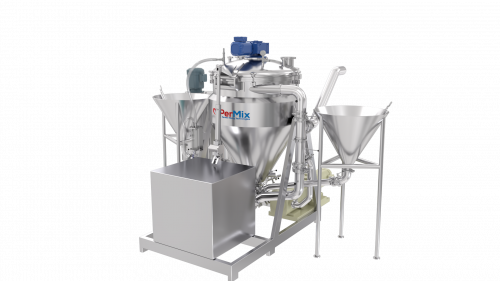
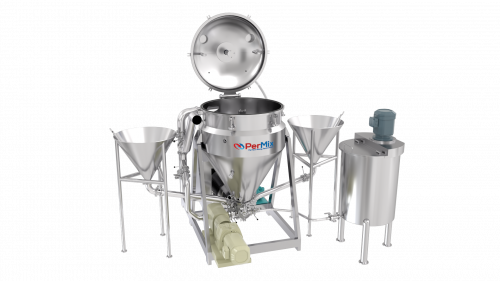
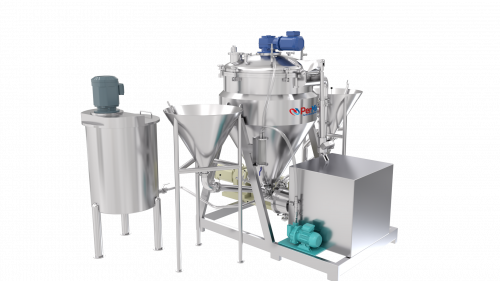
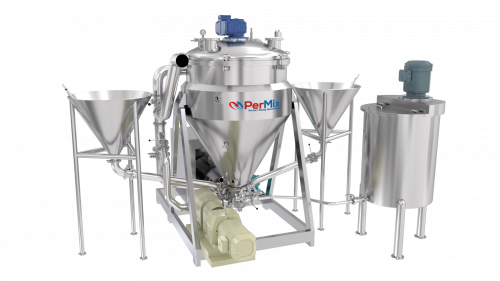
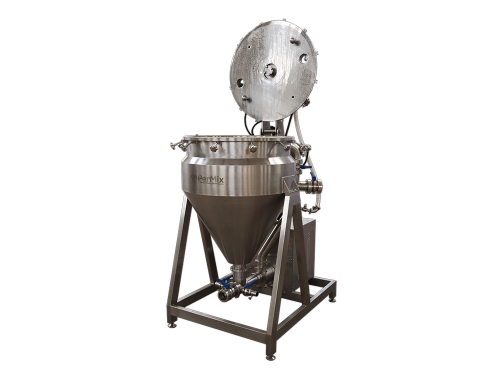
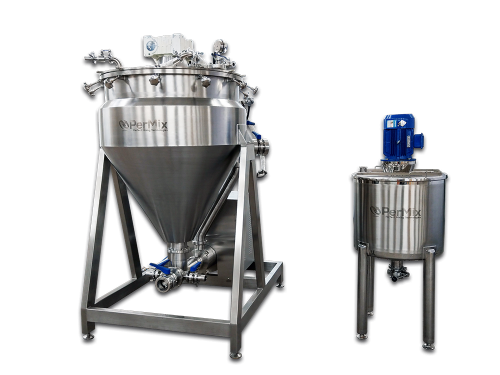
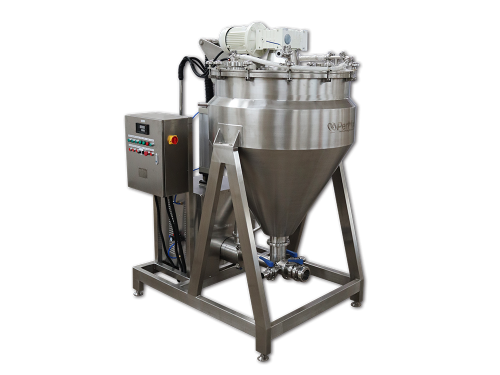
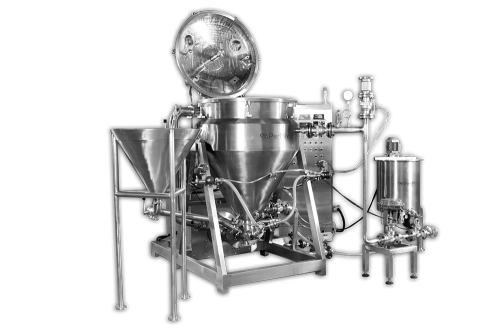
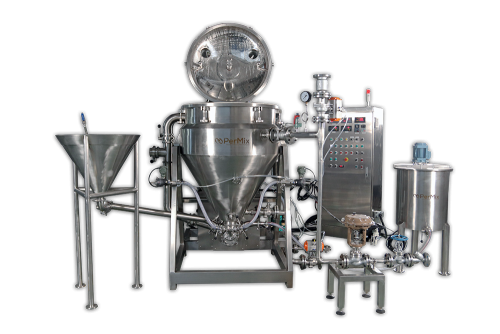
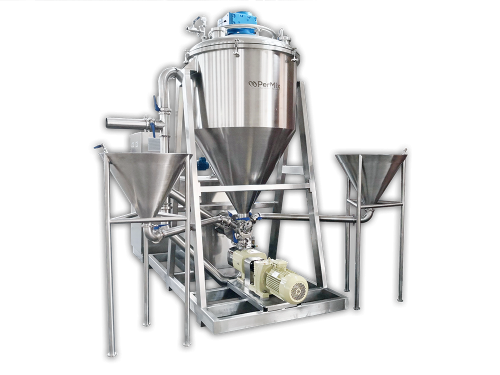
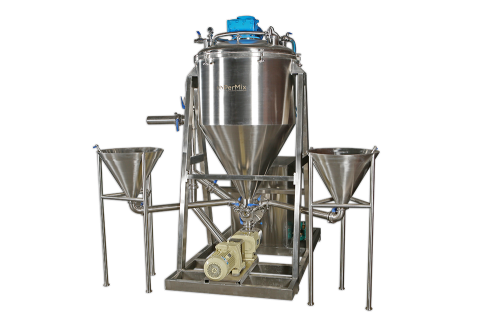
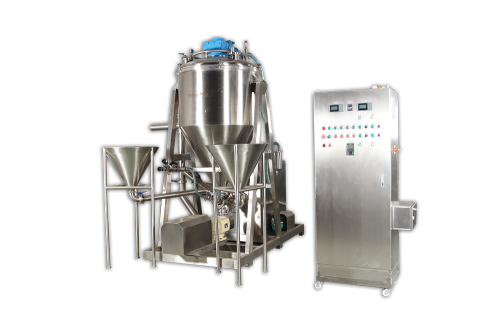
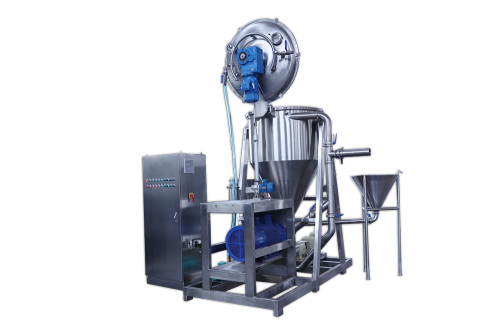
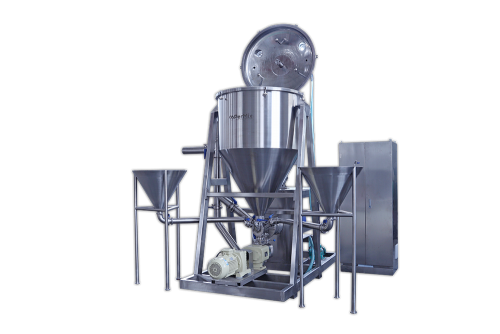
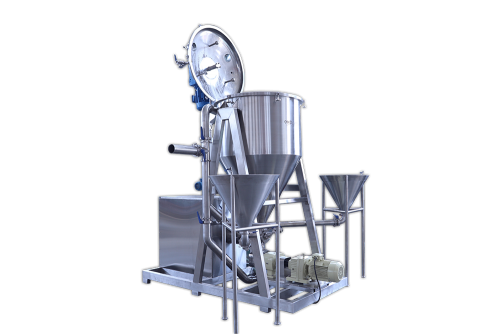
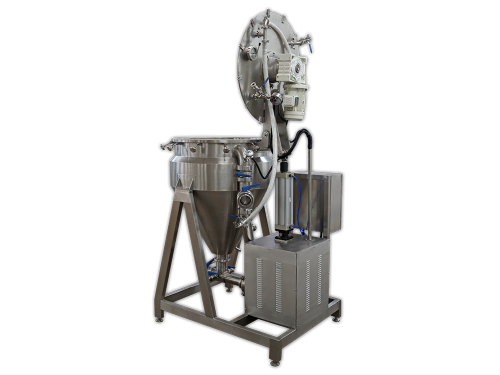
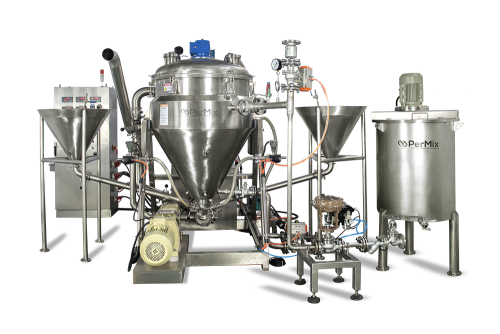
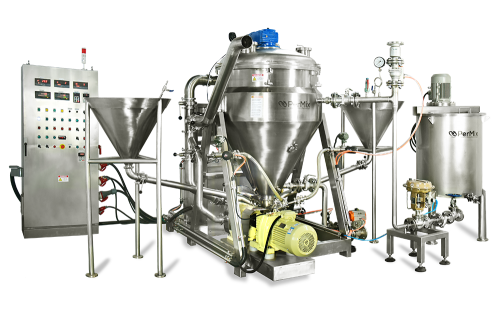
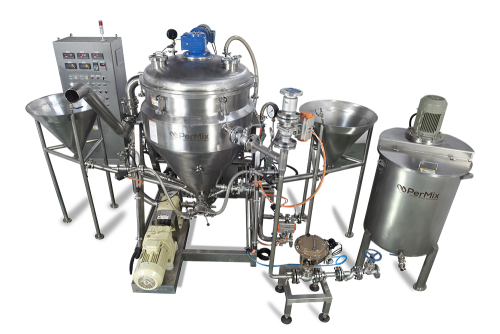
PerMix Vacuum Mixer
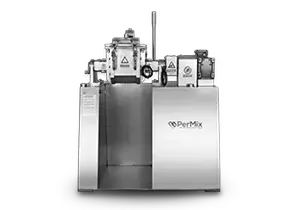
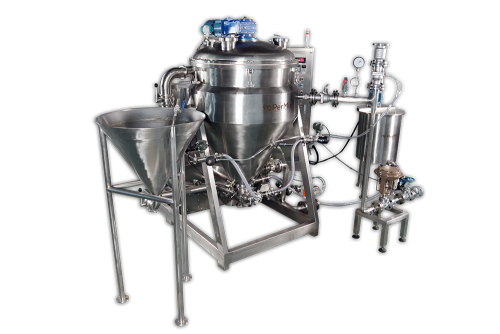
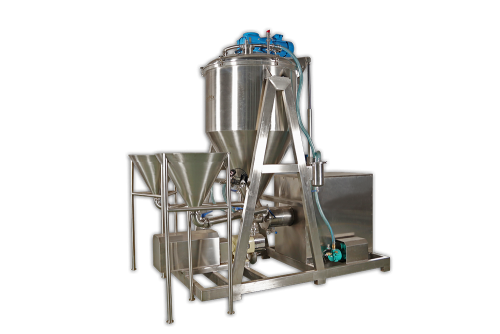
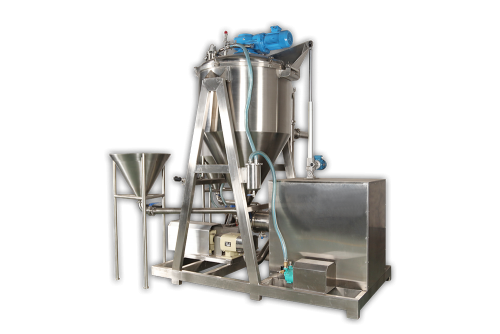
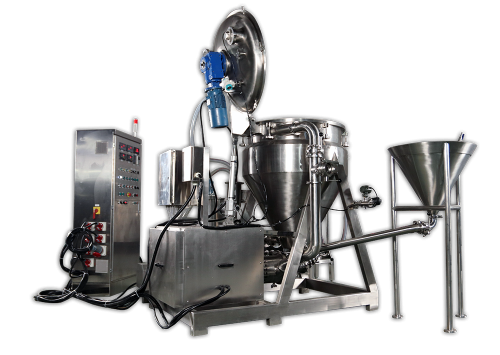
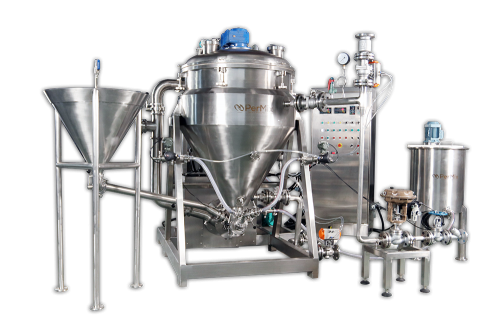
 PerMix Vacuum Mixer & Dryer
Best in Innovation • Best In Performance • Best In Quality • Best In Price • Best In Warranty
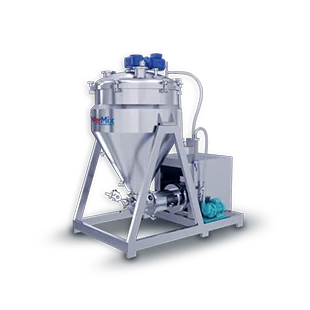
The PerMix Universal Vacuum Processor / Vacuum Mixers are more than a single emulsifying mixer, but a vacuum mixing, dispersing and emulsifying system that is used whenever a high quality and absolutely air-free product is required as with the PerMix PMS series Multi-Shaft Mixer, but at a lower cost.
A vacuum emulsifying mixer is a high-precision paste and liquid-paste processing system engineered to emulsify, homogenize, disperse, and deaerate products in a single, sealed vessel. It combines controlled shear, temperature management, and vacuum processing to produce stable, uniform, air-free emulsions that cannot be reliably achieved in open or atmospheric mixers.
At PerMix, vacuum emulsifying mixers are designed as complete formulation systems, not just mixers. They are used when product appearance, stability, texture, and shelf life are mission-critical.
Vacuum emulsifying mixers operate by integrating multiple functions simultaneously:
High-shear emulsification breaks droplets into fine, uniform sizes
Bulk mixing tools maintain circulation and temperature uniformity
Vacuum removes entrapped air and gases during processing
Heating and cooling jackets control phase changes and viscosity
All processing occurs under vacuum, preventing oxidation, foaming, and air incorporation from the first ingredient to final discharge.
Vacuum emulsifying mixers were developed to solve a very specific problem:
How do you create a stable, repeatable emulsion without air, oxidation, or texture defects—at scale?
They excel when:
Oil and water phases must be combined permanently
Fine droplet size defines stability and appearance
Air bubbles cause visual, functional, or shelf-life issues
Temperature control affects viscosity and phase behavior
Open mixers simply cannot meet these requirements consistently.
A PerMix vacuum emulsifying mixer performs several operations in one system:
Emulsification
Dispersing immiscible phases into a stable structure.
Homogenization
Reducing droplet size for uniform texture and stability.
Dispersion
Incorporating powders, actives, or additives smoothly.
Deaeration
Removing air and gas to prevent foaming and oxidation.
Thermal Processing
Heating, melting, cooling, and viscosity control.
This integration eliminates transfers that introduce air, contamination, and variability.
Vacuum emulsifying mixers differ from conventional mixers in key ways:
Mixing occurs without atmospheric air
Emulsification happens while deaeration is active
Droplet size is controlled mechanically, not by chance
Product density and appearance are stabilized in-process
Where atmospheric mixers react to defects after they occur, vacuum emulsifying mixers prevent them from forming.
Vacuum emulsifying mixers are widely used for:
Creams, lotions, and gels
Ointments and pharmaceutical pastes
Cosmetic and personal care emulsions
Food emulsions such as sauces, dressings, and spreads
Chemical emulsions and specialty formulations
They are chosen when product quality is visible, measurable, and non-negotiable.
At a high level:
High-speed dispersers add shear but trap air
Planetary mixers move viscous pastes but do not emulsify finely
Multi-shaft mixers manage viscosity transitions but remain atmospheric
Vacuum emulsifying mixers integrate shear, vacuum, and thermal control
They are precision systems, not brute-force mixers.
Vacuum emulsifying mixers are often misunderstood as “cosmetic mixers.”
In reality, they are process-critical systems wherever:
Emulsion stability defines product success
Air causes defects or oxidation
Temperature affects formulation chemistry
Scale-up consistency matters
Understanding what vacuum emulsifying mixers truly do prevents costly process compromises.
Vacuum emulsifying mixers are selected when product quality depends on droplet size control, air elimination, and thermal precision—not just mixing power. They are not general-purpose mixers. They are quality-defining systems chosen when defects are unacceptable and consistency must survive scale-up.
Understanding when a vacuum emulsifying mixer is the right tool—and when it is unnecessary—prevents both under-engineering and over-spending.
A vacuum emulsifying mixer is typically the correct solution when one or more of the following conditions apply:
Air or Foam Causes Product Defects
Visible bubbles, density variation, oxidation, or poor appearance cannot be tolerated.
Emulsion Stability Defines Shelf Life
Droplet size and distribution directly affect separation, texture, and performance.
Oil & Water Phases Must Be Permanently Combined
Temporary or mechanically unstable emulsions are not acceptable.
Temperature Impacts Viscosity or Phase Behavior
Melting, cooling, or controlled crystallization is required during mixing.
Product Appearance Is a Selling Feature
Cosmetics, pharmaceuticals, and premium foods demand visual perfection.
Vacuum emulsifying mixers are commonly chosen for:
Cosmetic creams, lotions, and gels
Pharmaceutical ointments and semi-solids
Personal care emulsions
Food emulsions such as sauces, dressings, and spreads
Chemical emulsions where oxidation must be controlled
In these applications, preventing defects is more important than correcting them later.
Despite their precision, vacuum emulsifying mixers are not required for every emulsion.
They may be excessive when:
Air Content Is Not Critical
Minor foaming or entrapped air does not affect performance.
Emulsion Stability Is Short-Term
Products are consumed or used quickly after production.
Simple Agitation Is Sufficient
Low-shear blending meets formulation needs.
Cost Sensitivity Overrides Aesthetic Requirements
The application tolerates variability.
In these cases, atmospheric mixers or inline emulsifiers may be more appropriate.
Atmospheric emulsification:
Introduces air during mixing
Requires post-deaeration
Produces variable droplet sizes
Vacuum emulsifying mixing:
Prevents air entry entirely
Controls droplet formation in real time
Produces stable, repeatable emulsions
The difference shows up immediately in appearance—and later in shelf life.
Inline emulsifiers:
Deliver high shear
Require recirculation
Often trap air upstream
Vacuum emulsifying mixers:
Combine shear, bulk mixing, and deaeration
Eliminate recirculation loops
Maintain full batch control
Inline systems excel in continuous processes; vacuum vessels dominate batch precision.
Using a non-vacuum system where vacuum emulsification is required leads to:
Foaming and air defects
Oxidation
Inconsistent texture
Shortened shelf life
Using a vacuum emulsifying mixer where it is not required leads to:
Unnecessary complexity
Higher capital cost
Over-processing
Vacuum emulsifying mixers are precision instruments, not default mixers.
At PerMix, vacuum emulsifying mixers are positioned as:
Quality-driven systems
Integrated thermal, shear, and vacuum platforms
Scalable from pilot to production without reformulation
They are specified based on product risk, not just viscosity or batch size.
Vacuum emulsifying mixers are precision systems, not reinforced tanks with a high-shear head attached. They must maintain vacuum integrity, controlled shear, uniform circulation, and thermal stability—all at the same time. A weakness in any one area shows up immediately as air, instability, or batch inconsistency.
At PerMix, vacuum emulsifying mixers are engineered as sealed process vessels, not modified atmospheric mixers.
Everything starts with the vessel.
PerMix vacuum emulsifying mixers feature:
Fully sealed, pressure-rated vessels
Precision-machined flanges and ports
Vacuum-rated manways and inspection covers
Leak-free welds and hygienic construction
Vacuum is not an accessory—it is a core operating condition that must be maintained throughout the process.
At the heart of the system is the emulsifying/homogenizing assembly.
Key design elements include:
High-shear rotor-stator geometry
Tight mechanical tolerances for droplet size control
Stable operation under vacuum
Shear delivery without vortex-induced aeration
PerMix designs shear to create emulsions, not foam.
High shear alone does not create a uniform emulsion.
PerMix systems integrate:
Anchor or sweep agitators for bulk circulation
Wall-scraping tools to prevent buildup
Uniform temperature distribution across the batch
These tools ensure every portion of the product experiences the same shear and thermal history.
Thermal control is inseparable from emulsification.
PerMix vacuum emulsifying mixers can include:
Full-coverage heating and cooling jackets
Steam, hot water, thermal oil, or glycol service
Zoned temperature control for phase management
Wall scraping continuously renews the heat-transfer surface, improving efficiency and stability.
Vacuum performance must be stable and predictable.
PerMix integrates:
Properly sized vacuum pumps
Condensers or traps when required
Controlled vacuum levels throughout the batch
Safe venting and pressure protection
Vacuum is maintained during:
Mixing
Emulsification
Heating and cooling
Final conditioning
This prevents air ingress at every stage.
Vacuum emulsifying mixers impose unique sealing demands.
PerMix designs include:
Vacuum-rated mechanical seals
Seal materials compatible with heat, solvents, and CIP
Bearing isolation from the product zone
Long-life bearing arrangements for continuous duty
Seal failure is not an option in a vacuum system.
Vacuum emulsifying mixers are often used in regulated industries.
PerMix offers:
304 stainless steel for general applications
316 / 316L stainless steel for pharmaceutical, cosmetic, and food use
Polished internal finishes for hygiene and cleanability
Materials are selected to match both process chemistry and regulatory requirements.
Precision processing demands precision control.
PerMix systems support:
Independent speed control for shear and bulk tools
Temperature monitoring and control
Vacuum level monitoring
PLC/HMI with recipe management
Automation ensures repeatability and protects product quality across batches.
For hygienic applications, PerMix designs:
CIP-ready spray systems
Drainable vessel geometry
Minimal crevices and dead zones
Compliance with sanitary design principles
Cleanability is engineered—not assumed.
Vacuum, shear, and temperature create combined loads.
PerMix frames feature:
Rigid structural support
Reinforced drive mounting
Safety interlocks and protections
Compliance with applicable safety standards
Mechanical stability preserves emulsification precision.
Every design decision in a PerMix vacuum emulsifying mixer is made to:
Prevent air incorporation
Control droplet size
Stabilize temperature
Preserve product appearance and performance
These are not “mixers with vacuum.”
They are emulsion manufacturing systems.
Vacuum emulsifying mixers live at the intersection of fluid mechanics, thermodynamics, and materials science. Performance is not defined by horsepower alone—it is defined by droplet size control, air exclusion, thermal stability, and repeatability at scale. This is where many emulsification systems fail quietly: the lab batch looks perfect, the production batch does not.
At PerMix, vacuum emulsifying mixers are scaled by preserving emulsification physics, not by simply enlarging hardware.
Vacuum emulsifying mixer performance is governed by four tightly linked variables:
Shear intensity and consistency
Vacuum level and stability
Temperature control throughout the batch
Bulk circulation and residence time
All four must remain balanced as batch size increases.
In emulsification, droplet size distribution defines product quality.
Performance success means:
Uniform droplet size
Narrow distribution
Stable structure over time
Poor performance appears as:
Phase separation
Texture inconsistency
Visual defects
Shortened shelf life
PerMix designs shear systems to maintain equivalent shear density, not just equivalent motor power.
As vessel size increases:
Emulsifying head diameter increases
RPM must decrease to avoid over-shearing
Power must increase to maintain shear under load
Copying lab RPMs into production systems leads to:
Excessive heat generation
Emulsion breakdown
Over-processing
PerMix scale-up methodology preserves mechanical energy per unit volume, not raw speed.
Vacuum effectiveness is often underestimated during scale-up.
As batch size increases:
Gas release volume increases
Surface area-to-volume ratio decreases
Degassing time increases
PerMix addresses this by:
Proper vacuum pump sizing
Maintaining vacuum throughout emulsification
Preventing air ingress during ingredient addition
Designing vessels for efficient gas evacuation
Vacuum is not a post-step—it is active during emulsification.
Shear generates heat. At scale, this becomes critical.
Key thermal considerations include:
Heat from emulsification shear
Heat from viscosity increase
Heat removal capacity of jackets
PerMix systems manage this through:
Full-coverage heating/cooling jackets
Continuous wall scraping to renew heat transfer surfaces
Controlled shear profiles instead of constant maximum intensity
Temperature stability preserves viscosity and emulsion structure.
Vacuum emulsifying mixers are designed for:
Controlled emulsification, not brute-force speed
As scale increases:
Residence time must increase to maintain uniformity
Shear must be applied consistently—not aggressively
PerMix focuses on process repeatability, not minimum cycle time at the expense of quality.
Vacuum emulsifying mixers are sensitive to tool engagement and head submergence.
Best practices include:
Maintaining proper working volume ranges
Ensuring emulsifying heads remain fully submerged
Avoiding overfilling, which limits circulation
Avoiding underfilling, which destabilizes shear
PerMix provides application-specific working volume guidance to protect performance.
Successful scale-up preserves:
Shear density at the emulsifying head
Bulk circulation patterns
Vacuum efficiency
Thermal flux per unit mass
PerMix supports scale-up by:
Matching lab and production shear profiles
Preserving geometric ratios where they matter
Engineering heat and vacuum capacity for worst-case conditions
This allows customers to scale without reformulation, which is often the hidden cost of poor emulsifier design.
Repeatable emulsification requires:
Stable shear delivery
Defined vacuum levels
Controlled temperature ramps
Recipe-based automation
PerMix PLC/HMI systems eliminate operator variability and support validated production environments.
Poorly scaled systems lead to:
Foaming
Emulsion collapse
Oxidation
Inconsistent texture
Batch rejection
PerMix vacuum emulsifying mixers are engineered so that what works at 10 liters still works at 1,000—or 10,000.
Vacuum emulsifying mixers are applied when emulsion stability, appearance, texture, and shelf life are inseparable from the mixing process itself. These systems are not chosen to “make something mix”—they are chosen to manufacture a finished product with controlled structure.
Below are real-world workflows where vacuum emulsifying mixers are not optional, but foundational.
Primary challenges:
Ultra-smooth texture
Air-free appearance
Stable emulsions over long shelf life
Temperature-sensitive ingredients
Typical workflow:
Oil Phase Preparation (Heated)
Oils, waxes, and emulsifiers are melted under vacuum.
Water Phase Preparation
Aqueous ingredients are heated separately or in-vessel.
Vacuum Emulsification
Oil and water phases are combined under controlled shear.
Cooling Under Vacuum
Emulsion structure is locked in while air is continuously removed.
Final Conditioning & Discharge
Why it works:
Vacuum prevents foaming and oxidation while shear controls droplet size—producing premium creams and lotions.
Primary challenges:
Uniform API distribution
Air elimination
Validated repeatability
Hygienic processing
Typical workflow:
Base Excipient Melting
Active Ingredient Addition Under Vacuum
High-Shear Emulsification / Homogenization
Controlled Cooling & Deaeration
Transfer to Filling
Why it works:
Vacuum emulsification ensures consistent dosage and eliminates entrapped air that compromises dosing accuracy.
Primary challenges:
Phase separation
Oxidation
Texture consistency
Shelf stability
Typical workflow:
Oil & Aqueous Phase Preparation
Ingredient Addition Under Vacuum
High-Shear Emulsification
Cooling & Viscosity Development
Sanitary Discharge to Packaging
Common products:
Sauces and dressings
Spreads and emulsified condiments
Specialty food emulsions
Why it works:
Vacuum processing protects flavor, color, and texture while preventing air-related defects.
Primary challenges:
Oxidation control
Stable droplet formation
Reactive or sensitive ingredients
Typical workflow:
Carrier Phase Charging
Additive & Reactive Component Introduction
Vacuum Emulsification
Thermal Conditioning
Air-Free Discharge
Why it works:
Controlled emulsification under vacuum prevents unwanted side reactions and improves product stability.
Primary challenges:
Ingredient protection
Uniform dispersion
Visual quality
Regulatory compliance
Typical workflow:
Phase Preparation Under Vacuum
Active Addition & Emulsification
Cooling & Deaeration
Controlled Discharge
Why it works:
Vacuum emulsifying mixers preserve ingredient integrity while producing consistent, market-ready products.
Primary challenges:
Formulation development
Process repeatability
Scale-up confidence
Typical workflow:
Lab-Scale Vacuum Emulsification Trials
Droplet Size & Texture Optimization
Pilot Validation
Production Transfer
Why it works:
Vacuum emulsification physics scale reliably when shear, vacuum, and thermal control are preserved.
Vacuum emulsifying mixers perform best when:
Used as finished-product systems, not pre-mixers
Integrated with heating, cooling, and vacuum from the start
Positioned to prevent defects—not correct them later
Application-driven workflows result in:
Stable emulsions
Improved shelf life
Superior appearance and texture
Reduced scrap and rework
Emulsions fail for predictable reasons: air, uncontrolled droplet size, thermal drift, and inconsistent shear history. The mistake many processors make is assuming all emulsification technologies address these risks equally. They do not.
This section clarifies what each technology truly solves, where it fails, and why vacuum emulsifying mixers exist as a distinct class of system.
Atmospheric emulsification relies on:
Open-vessel mixing
Vortex-driven ingredient incorporation
Post-process deaeration (if any)
It solves:
Basic blending of oil and water phases
Low-cost, low-risk emulsions
Short shelf-life products
It fails when:
Air causes visual or functional defects
Droplet size distribution must be controlled
Oxidation affects flavor, color, or actives
Scale-up introduces foaming and variability
Atmospheric systems create defects first and attempt to remove them later.
Inline emulsifiers are shear devices, not full process systems.
They solve:
High shear in continuous or recirculating loops
Droplet size reduction when feed conditions are controlled
Integration into continuous lines
They fail when:
Air is introduced upstream
Bulk temperature and residence time vary
Batch-to-batch repeatability matters
Multiple phase transitions occur in one process
Inline emulsifiers require perfect upstream control to deliver perfect results.
Planetary mixers are bulk paste homogenizers, not emulsifiers.
They solve:
Uniform movement of viscous emulsions
Gentle mixing at high viscosity
Complete vessel sweep
They fail when:
Fine droplet size is required
Oil and water phases must be emulsified, not blended
Air must be eliminated during mixing
Planetary mixers maintain emulsions—they do not create high-quality ones.
Vacuum emulsifying mixers are emulsion manufacturing systems.
They solve:
Droplet size control during formation
Air elimination while emulsifying
Oxidation prevention
Thermal stability during phase changes
Repeatable emulsification from lab to production
They do not rely on:
Vortices
Post-deaeration
Operator finesse
They prevent defects instead of correcting them.
Inline emulsifier:
High shear, limited process control
Dependent on recirculation
Sensitive to upstream air
Vacuum emulsifying mixer:
Shear + bulk mixing + vacuum + thermal control
One sealed vessel
Full batch visibility and control
Inline emulsifiers are tools.
Vacuum emulsifying mixers are systems.
Atmospheric systems:
Lower cost
Higher variability
Visible and invisible defects
Vacuum emulsifying systems:
Higher initial investment
Dramatically higher product consistency
Longer shelf life and better aesthetics
The difference is usually visible before the product leaves the mixer.
Vacuum emulsifying mixers are required when:
Air causes visible or functional defects
Emulsion stability defines shelf life
Product appearance is a selling point
Oxidation degrades performance
Scale-up consistency is non-negotiable
This is common in:
Cosmetics and personal care
Pharmaceuticals
Premium food emulsions
Specialty chemical emulsions
Vacuum emulsifying mixers may be unnecessary when:
Emulsions are temporary
Air content is irrelevant
Product is consumed immediately
Cost sensitivity outweighs quality sensitivity
In these cases, atmospheric or inline systems may suffice.
At PerMix, vacuum emulsifying mixers are positioned correctly:
As quality-critical manufacturing systems
As replacements for multi-step, defect-prone processes
As scalable platforms from R&D through production
PerMix does not sell vacuum emulsifiers as “nice-to-have” upgrades.
They are specified when product risk demands process control.
In emulsion processing:
Atmospheric mixers blend
Inline emulsifiers shear
Planetary mixers homogenize
Vacuum emulsifying mixers manufacture finished emulsions
When air, droplet size, and thermal history matter, there is no workaround.
Vacuum emulsifying mixers exist because quality cannot be bolted on after the fact.
PerMix is here to listen to your needs and provide sustainable solutions. Contact us to discover more.
PerMix Vacuum Mixer Videos