Industrial Mixers
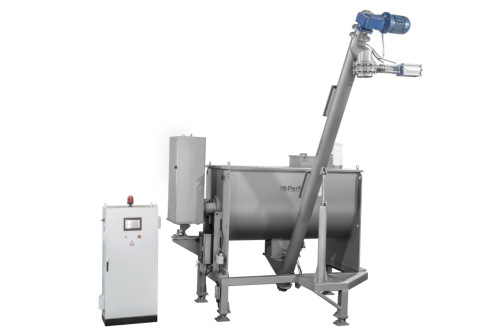
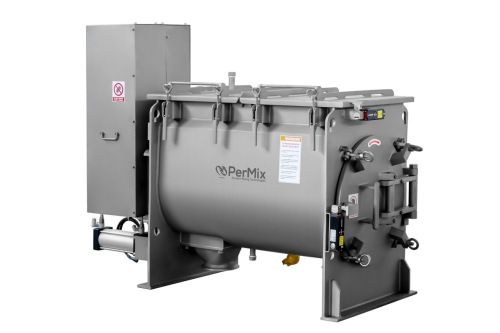
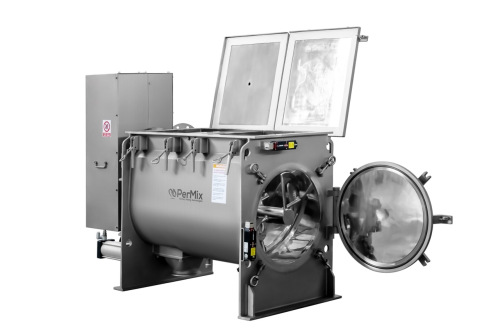
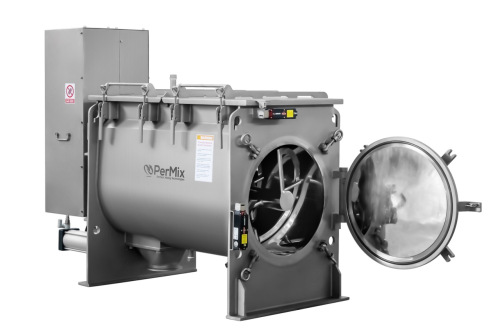
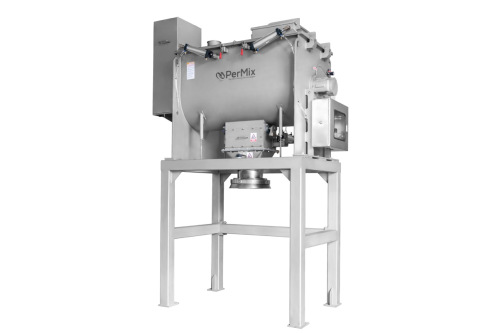
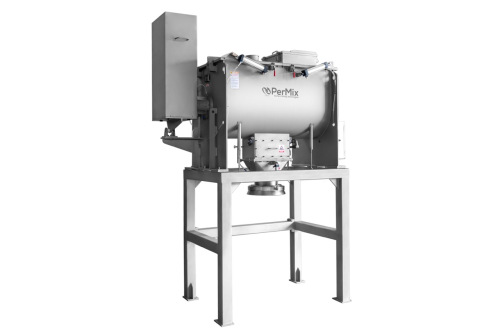
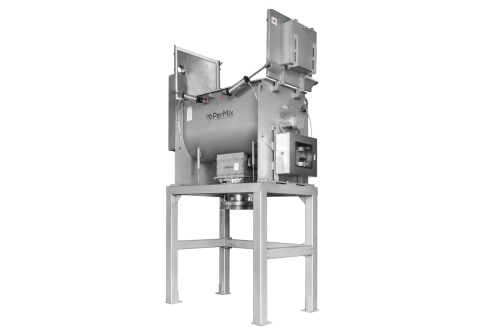
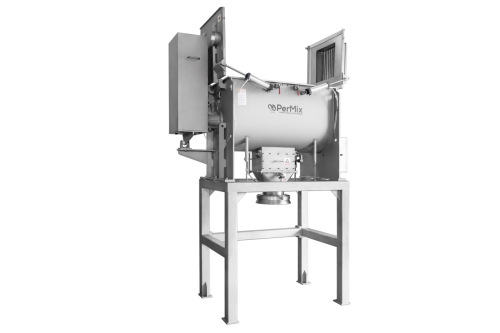
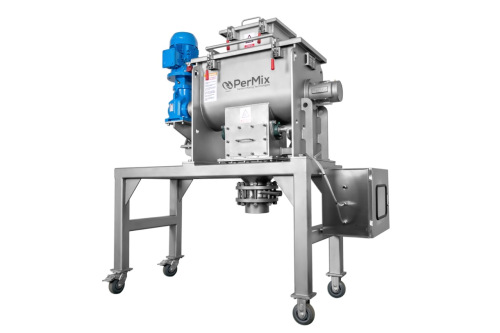
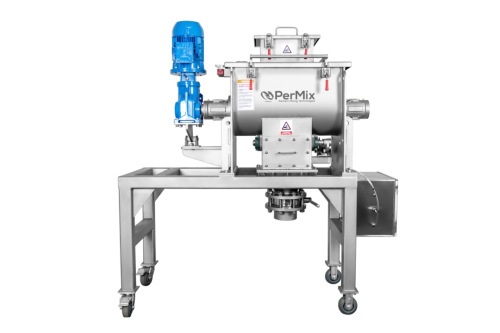
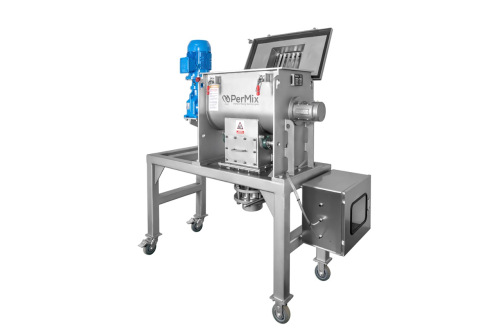
PerMix Ribbon Mixer
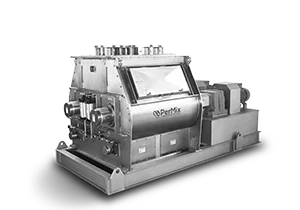
 PerMix Ribbon Mixer: High-Quality Ribbon Mixers and Blenders
Best in Innovation • Best In Performance • Best In Quality • Best In Price • Best In Warranty
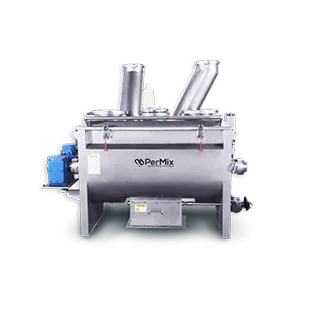
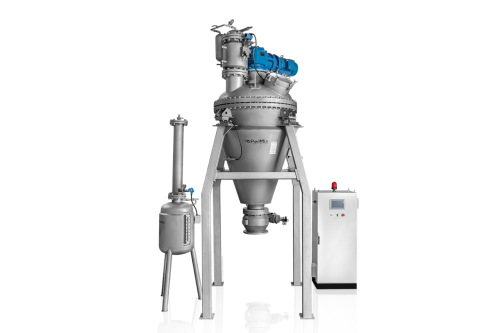
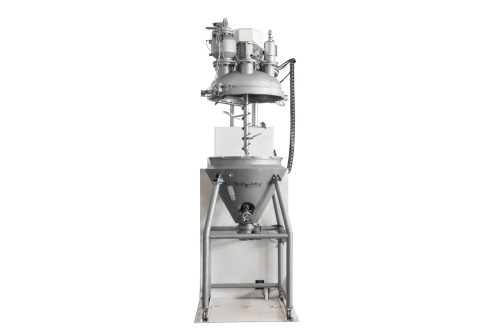
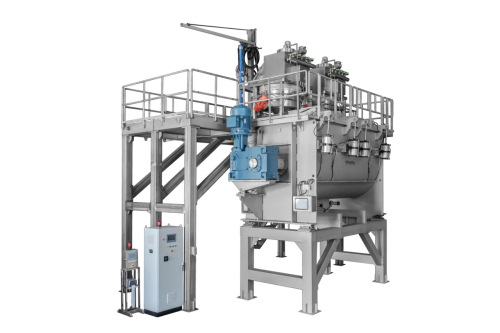
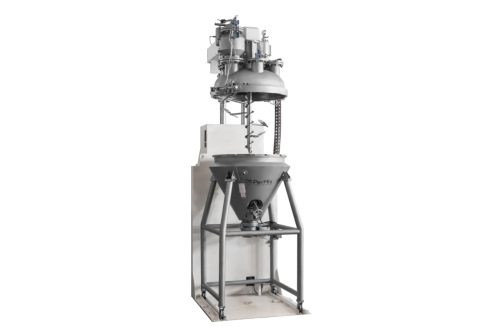
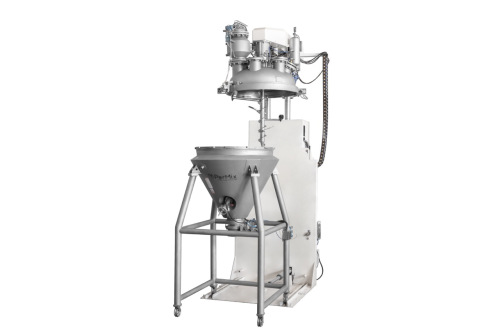
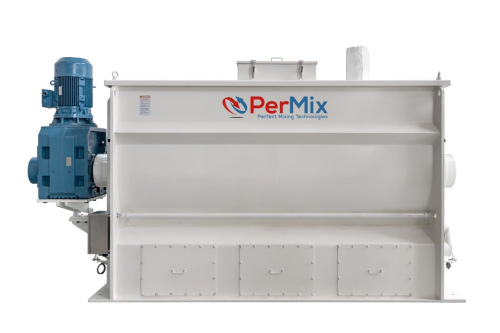
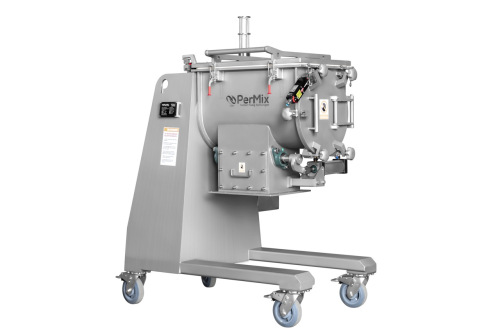
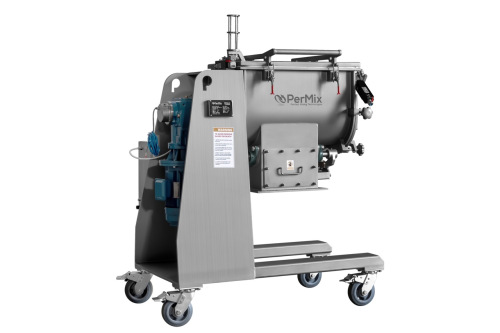
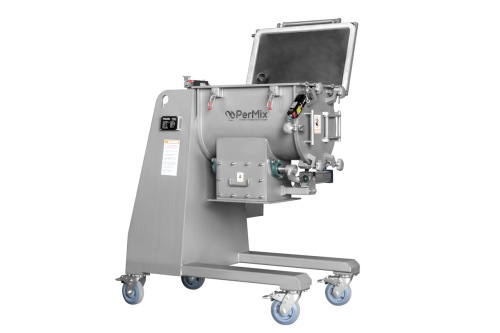
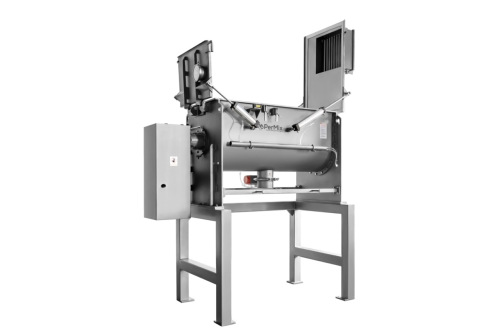
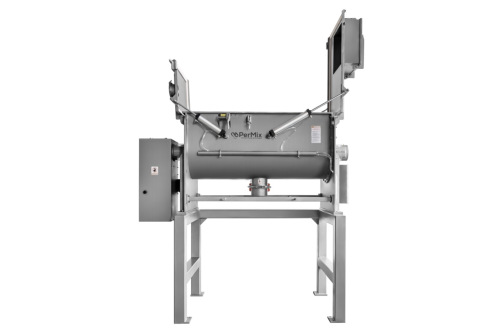
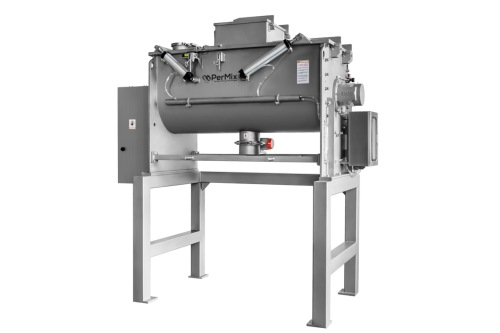
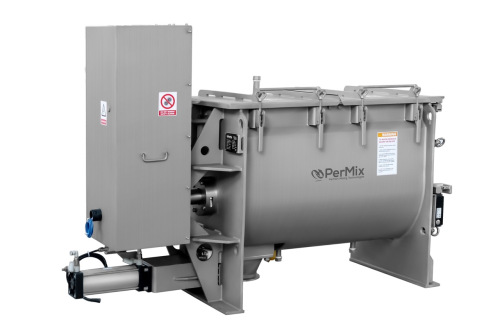
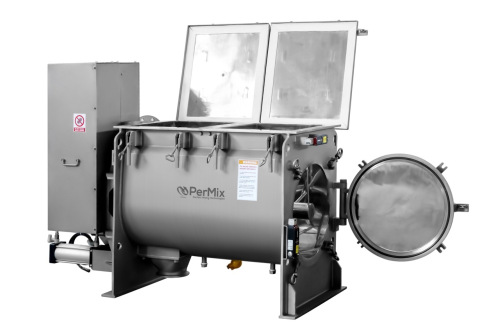
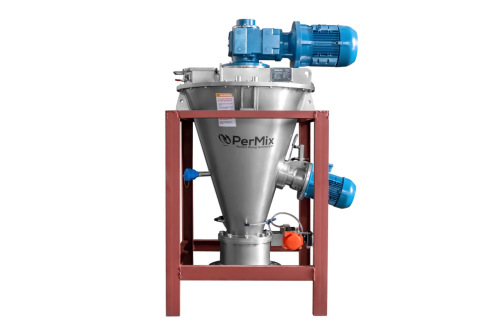
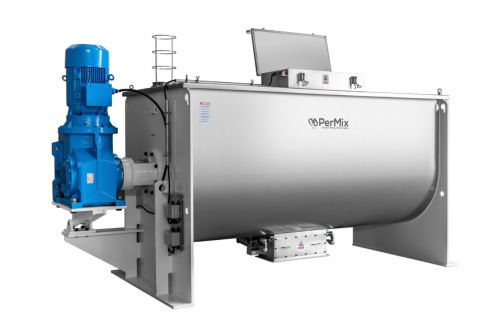
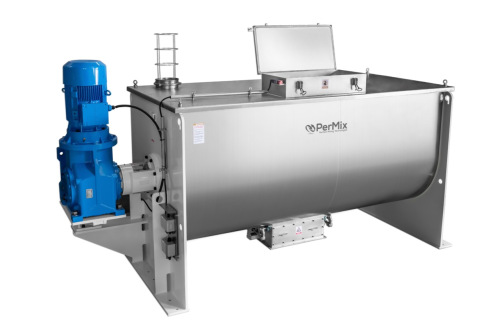
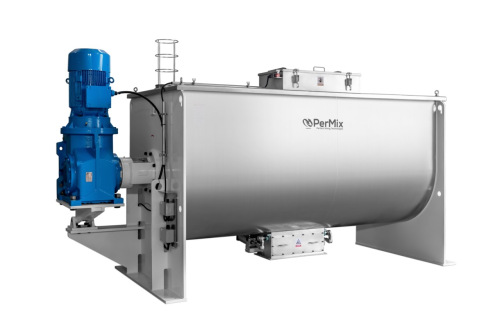
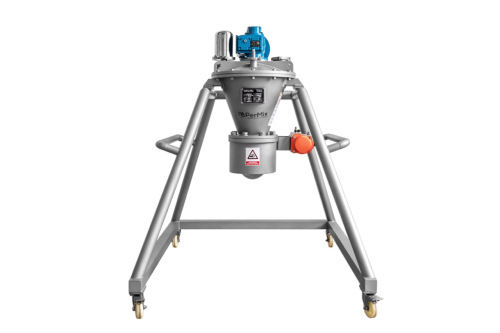
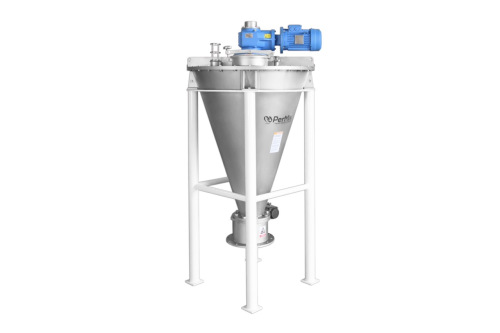
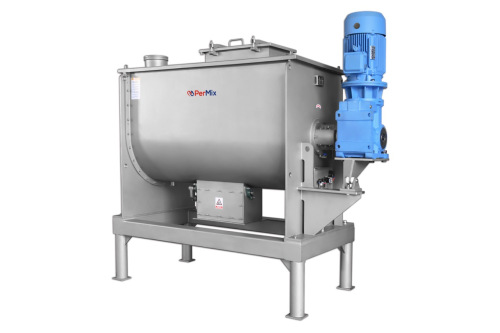
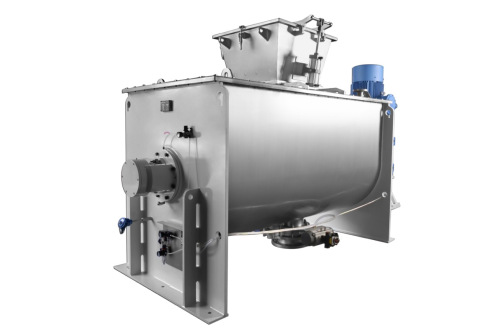
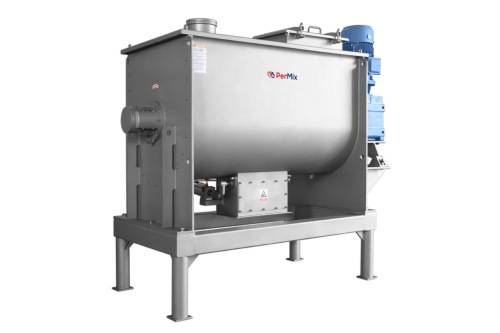
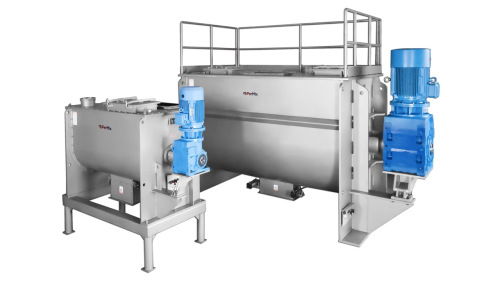
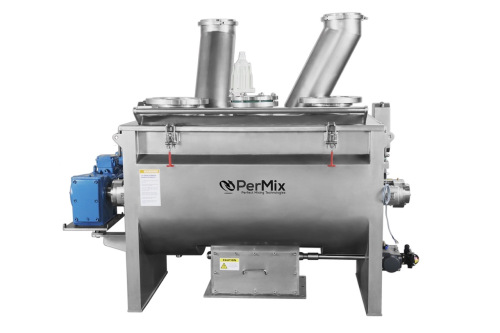
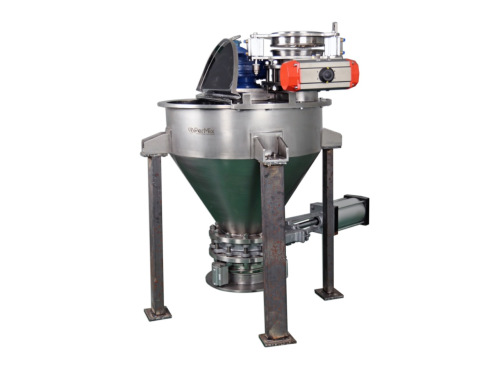
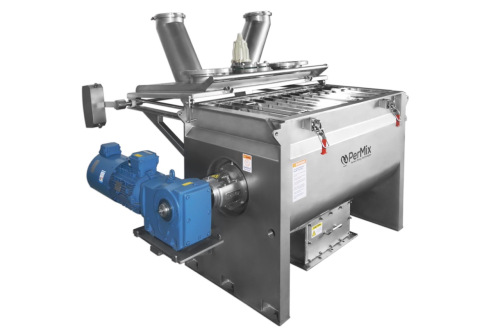
PerMix Ribbon Mixers lead the industry in technology, performance, and value. PerMix Ribbon Mixers are available in two types, Horizontal Ribbon Mixers and Vertical Ribbon Mixers. Both our Horizontal Ribbon Mixers as well as our Vertical Ribbon Mixers are available in capacities from 1 liter to 30,000 liters, and have options that are endless.
Best-in-Class Ribbon Mixers Engineered for Uniformity, Throughput & Reliability
From lab scale to 30,000 L industrial batches, PerMix Ribbon Mixers deliver consistent, repeatable mixing performance for demanding production environments across food, pharmaceutical, chemical, nutraceutical, and industrial markets.
Designed for reliability, efficiency, and long service life, PerMix ribbon mixers are trusted worldwide for blending powders, granules, and light pastes where uniformity matters.
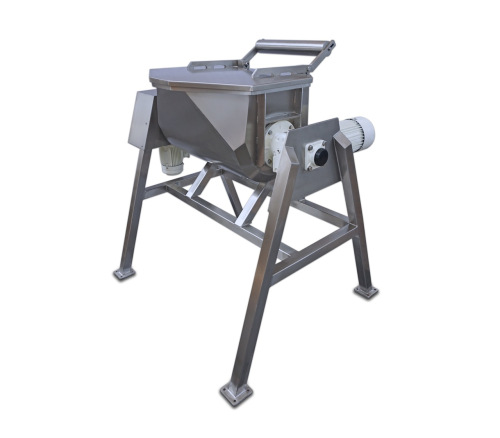
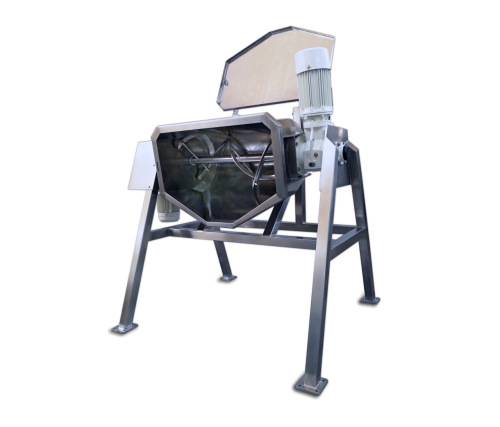
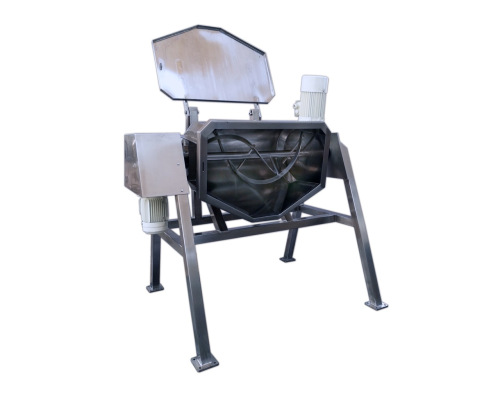
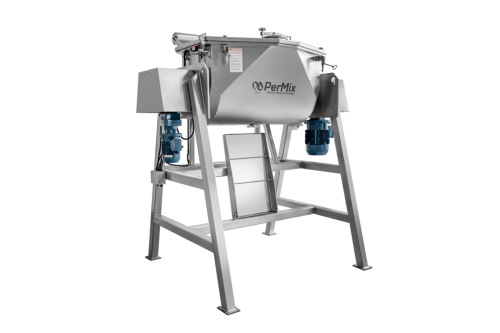
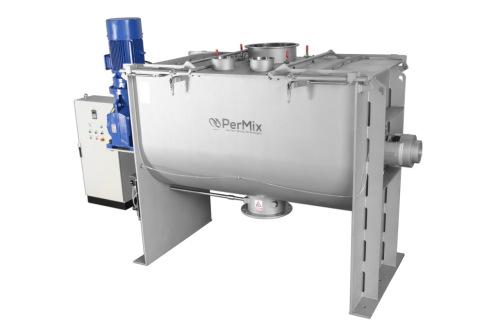
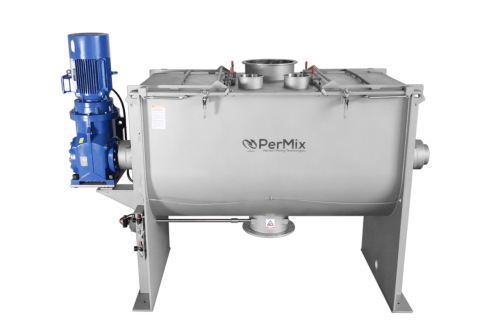
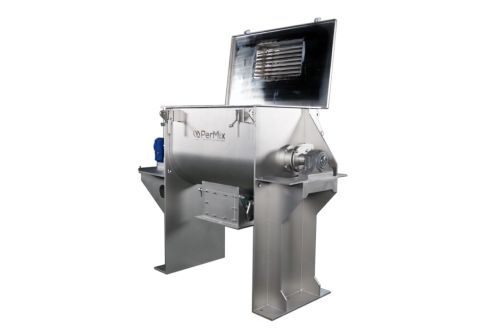
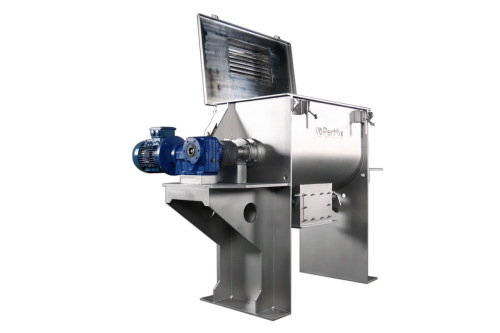
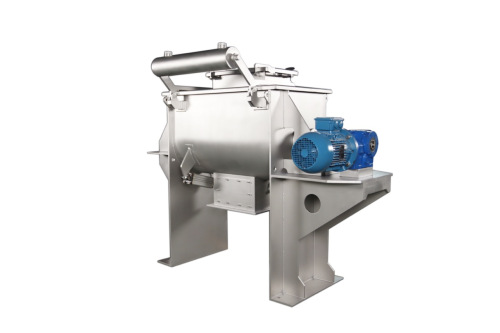
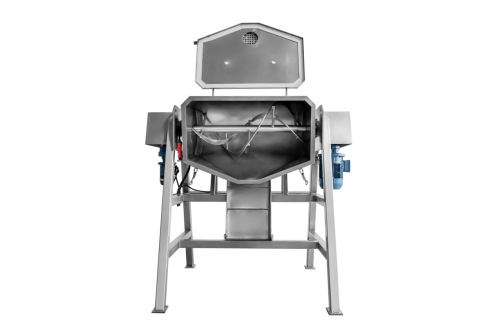
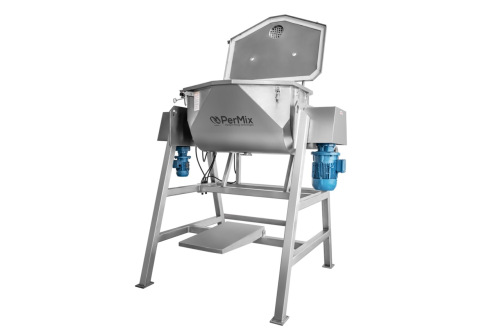
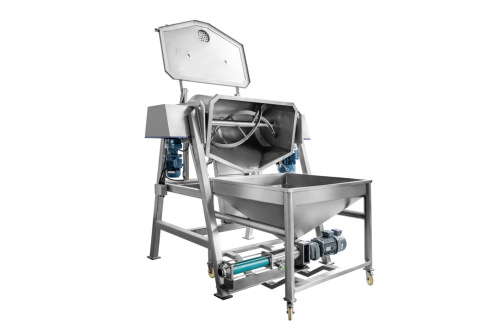
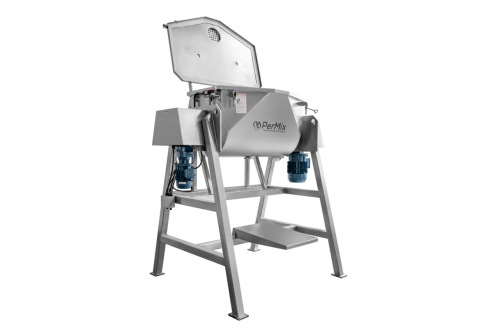
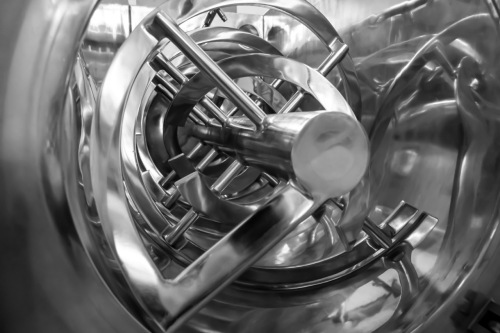
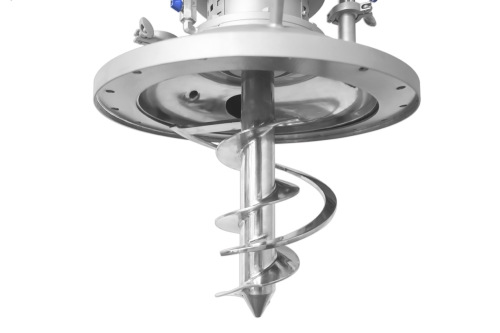
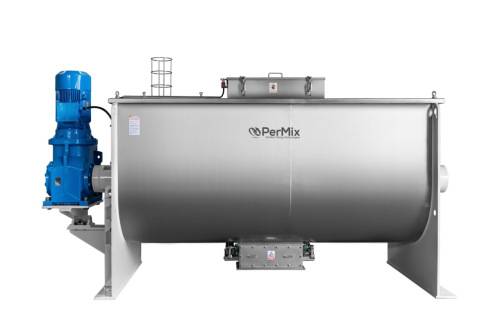
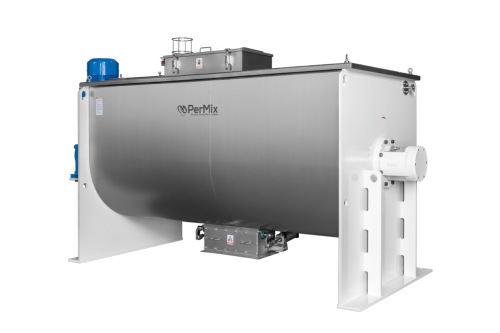
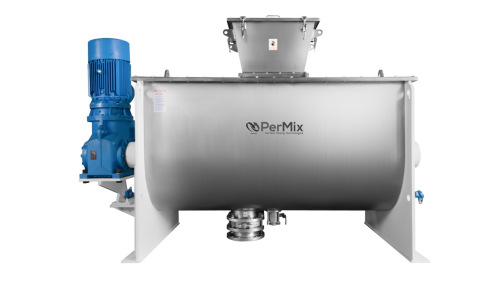
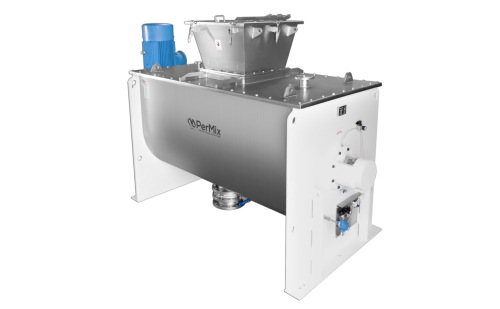
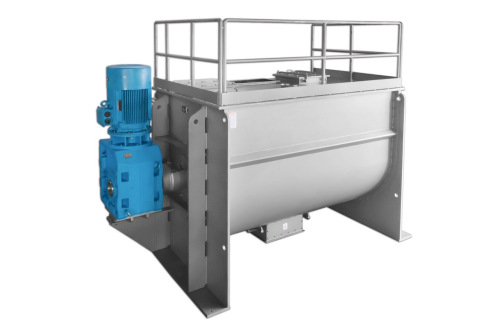
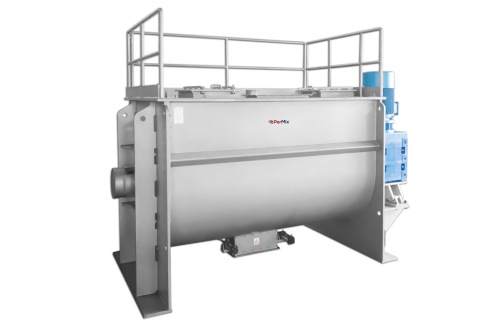
A ribbon mixer (also known as a ribbon blender) uses dual helical ribbons mounted on a central shaft inside a U-shaped horizontal trough or vertical mixing vessel.
The outer ribbon moves material in one direction while the inner ribbon moves it in the opposite direction, creating a counter-flow mixing action. This motion continuously lifts, folds, and redistributes material throughout the batch.
The result is:
High homogeneity in short cycle times
Gentle handling of fragile ingredients
Efficient mixing with relatively low energy input
Excellent performance for dry powders, granules, and light pastes
Ribbon mixers are a proven, workhorse technology for batch mixing applications where consistency, scalability, and reliability are critical.
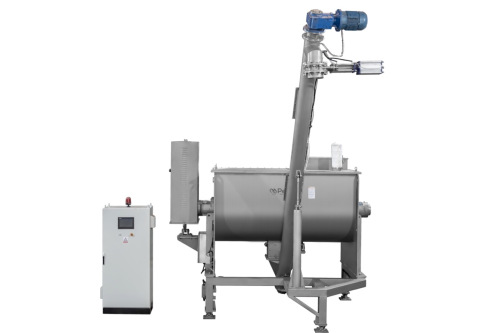
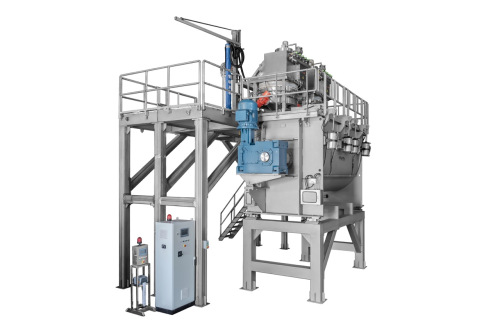
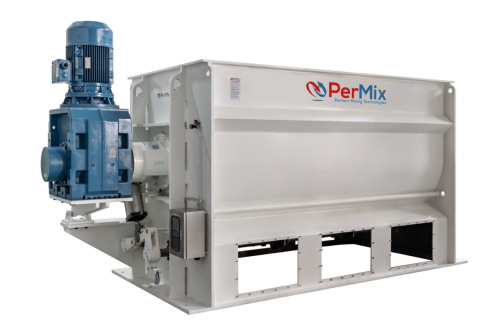
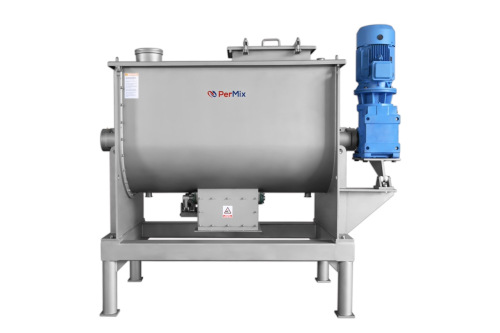
Horizontal ribbon mixers are the most widely used configuration and are ideal for medium- to high-volume batch production.
Best suited for:
Large batch sizes
Continuous production schedules
Broad material compatibility
Common applications include:
Food ingredients, spices, nutraceutical powders, chemical blends, building materials, and industrial additives.
Key advantages:
Fast mixing cycles
Excellent batch-to-batch consistency
Wide range of discharge options
Compatibility with heating & cooling jackets and liquid addition systems
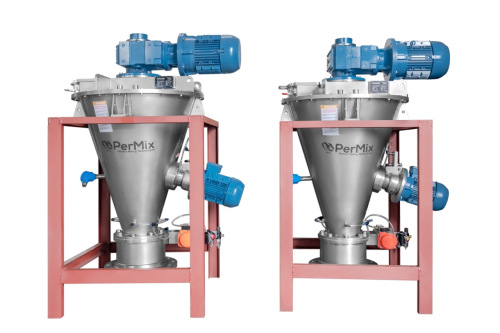
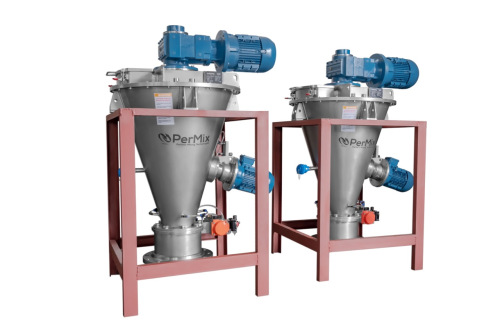
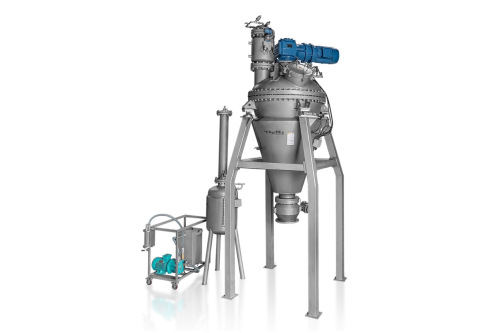
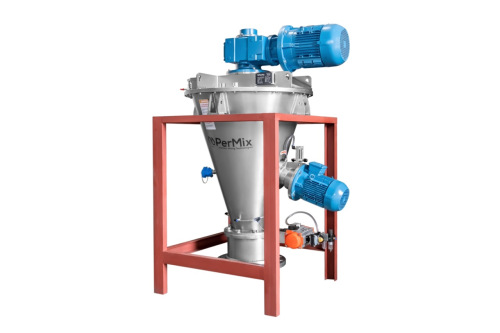
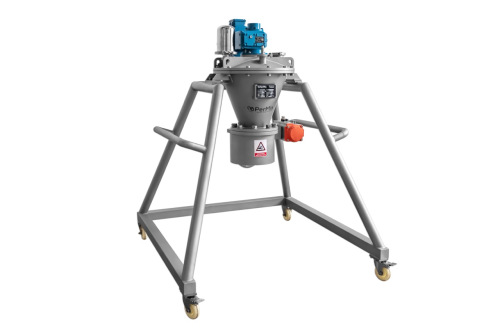
Vertical ribbon mixers provide a smaller footprint and gentler mixing action compared to horizontal designs.
Best suited for:
Space-constrained facilities
Fragile or shear-sensitive materials
Applications requiring easier access for cleaning
Key advantages:
Compact design
Reduced shear
Simplified maintenance and sanitation
Ideal for pharmaceutical and nutraceutical powders
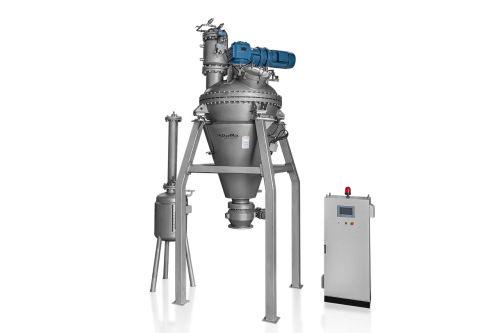
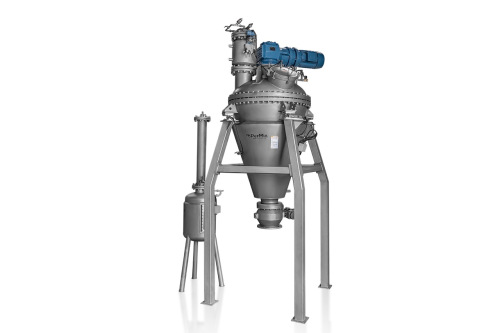
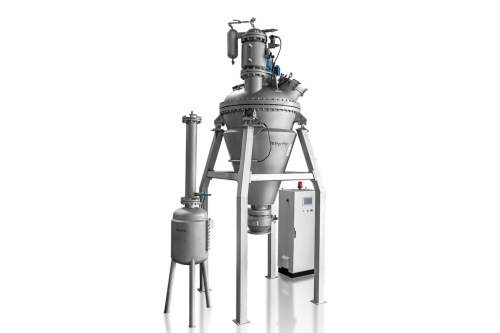
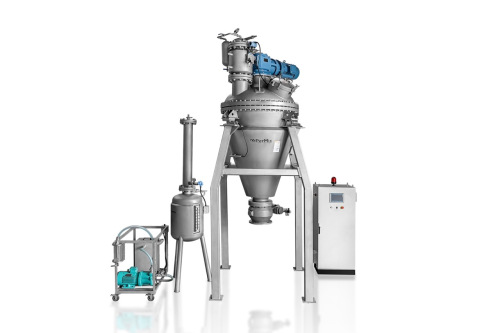
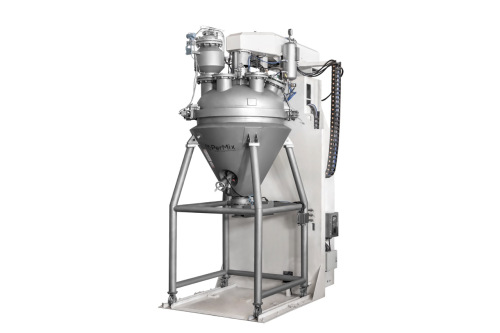
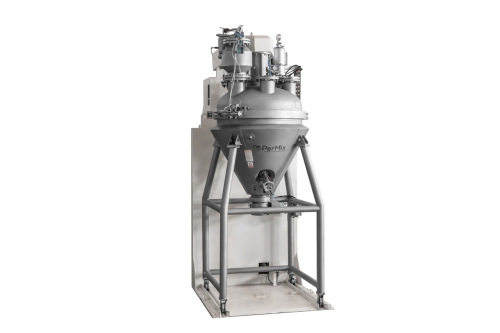
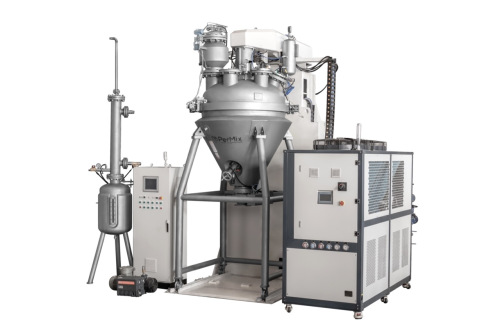
Vacuum ribbon mixers combine mixing and drying in a single sealed vessel, allowing manufacturers to remove moisture or solvents while blending.
Key advantages:
Reduced oxidation and contamination risk
Faster drying at lower temperatures
Solvent recovery options
Improved product stability for heat-sensitive materials
These systems eliminate the need for multiple processing steps and transfers.
PerMix ribbon mixers are engineered as process solutions, not commodity equipment.
Optimized ribbon geometry minimizes dead zones
Uniform particle distribution across the entire batch
Controlled shear to protect sensitive materials
Sanitary and hygienic designs for food and pharmaceutical use
Explosion-proof and hazardous-duty configurations available
Broad material construction options including carbon steel, 304 & 316 stainless steel, Hardox, Hastelloy, and titanium
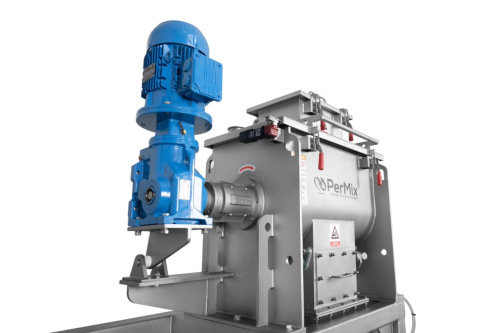
Cantilever and stub-shaft designs available for unobstructed access
CIP-ready configurations
Reduced downtime between batches
Ribbon mixing relies on counter-directional material flow:
The outer ribbon pushes material toward one end of the vessel
The inner ribbon pushes material in the opposite direction
This creates continuous lifting, folding, and cascading of particles. Each ingredient repeatedly changes position within the batch, resulting in thorough blending without excessive shear or degradation.
PerMix ribbon mixers are used across a wide range of industries, including:
Food & Beverage: spices, seasonings, protein powders, baking mixes
Pharmaceutical & Nutraceutical: excipients, herbal blends, supplements
Chemical Processing: powders, fillers, pigments, catalysts
Building Materials: dry mortars, cement additives, mineral blends
Agriculture: animal feed premixes, fertilizers, soil amendments
Choosing the right ribbon mixer depends on understanding both your material and your process.
Key factors include:
Batch size and throughput requirements
Bulk density and flow characteristics
Sensitivity to shear or heat
Liquid addition requirements
Cleaning, sanitation, and changeover needs
Thermal control or drying requirements
Horizontal ribbon mixers are typically favored for large-scale production, while vertical or vacuum designs are selected for specialty, sensitive, or space-limited applications.
Ribbon mixers are ideal for free-flowing powders, granules, and light pastes. However, some applications may benefit from alternative technologies such as paddle mixers, plow mixers, or fluidized zone mixers—especially where aggressive liquid incorporation, high shear, or instantization is required.
PerMix works with customers to evaluate material behavior and process goals to ensure the correct mixer is selected from the start.
PerMix Ribbon Mixers are engineered to deliver consistent results, long service life, and strong return on investment.
Request a quote or speak with our engineering team to configure the right ribbon mixer for your application.
PerMix Ribbon Mixers — Precision You Can Measure. Performance You Can Trust.
Selecting the correct ribbon mixer requires more than matching batch size. Material behavior, process conditions, and downstream requirements all influence performance, longevity, and product quality.
Below is how engineers typically evaluate ribbon mixers in real production environments.
Ribbon mixers perform best with free-flowing to moderately cohesive powders and granules.
Well-suited materials:
Dry powders with consistent bulk density
Granules and blends with similar particle sizes
Light pastes with limited stickiness
Consider alternatives if your material is:
Extremely sticky or smear-prone
Highly abrasive without proper liner materials
Requiring aggressive dispersion or high shear
Material behavior determines ribbon geometry, clearance, speed, and construction material.
Ribbon mixers are batch machines, so usable volume matters more than total vessel size.
Typical working volume:
60–70% of total vessel capacity
Horizontal ribbon mixers are generally preferred for:
Larger batch sizes
Faster cycle times
Continuous production schedules
Vertical ribbon mixers are often chosen when:
Floor space is limited
Smaller batch sizes are required
Gentle mixing is critical
Many ribbon mixer applications involve adding liquids to powders.
Common liquid addition methods include:
Spray nozzles mounted above the mixing zone
Metered pump systems for controlled dosing
Heated liquid injection for viscous additives
If uniform coating is critical, nozzle placement, droplet size, and mixing speed must be engineered together.
Ribbon mixers provide low to moderate shear, making them suitable for fragile ingredients such as:
Flakes
Fibrous materials
Nutraceutical and food powders
If your formulation requires:
Emulsification
Deagglomeration
Particle size reduction
A different mixer technology may be more appropriate.
For food, pharmaceutical, and regulated applications, cleaning efficiency is often the deciding factor.
Design features that simplify cleaning:
Cantilever or stub-shaft construction
Smooth internal welds and polished finishes
CIP-ready spray systems
Minimal internal obstructions
Shorter cleaning cycles directly increase plant uptime and ROI.
Ribbon mixers can be configured with:
Heating jackets
Cooling jackets
Vacuum systems for drying
Vacuum ribbon mixer/dryers are ideal when:
Moisture removal is required
Oxidation must be minimized
Solvents need to be recovered
Heat-sensitive materials are processed
Combining mixing and drying into one system reduces handling, contamination risk, and processing time.
A ribbon mixer is typically the right solution when:
Materials are free-flowing or lightly cohesive
Uniform blending is the primary objective
Gentle handling is required
Batch sizes are well-defined
Cleaning and maintenance efficiency matter
When processes demand high shear, aggressive liquid dispersion, or instantization, alternative mixer designs may be recommended.
| Feature / Criteria | Ribbon Mixer | Paddle Mixer | Plow Mixer (Ploughshare) |
|---|---|---|---|
| Primary Mixing Action | Counter-flow convective mixing using inner & outer ribbons | Gentle convective mixing using paddles | High-energy mechanical fluidization using plows |
| Shear Level | Low to moderate | Very low | High |
| Best for Material Types | Free-flowing powders, granules, light pastes | Fragile, heat-sensitive, or segregative powders | Cohesive powders, wet granulation, agglomeration |
| Liquid Addition Capability | Good (spray nozzles, metered dosing) | Moderate (gentle coating) | Excellent (intensive dispersion & coating) |
| Agglomeration / Granulation | Limited | Not recommended | Excellent |
| Mixing Speed | Moderate | Moderate | Fast |
| Batch Homogeneity | High for compatible materials | Very high for delicate blends | Very high, even with challenging formulations |
| Heat Generation | Low | Very low | Moderate to high |
| Typical Batch Fill Ratio | 60–70% | 50–70% | 40–70% |
| Drying Capability (Vacuum) | Yes (Vacuum Ribbon Mixer/Dryer) | Yes (Vacuum Paddle Mixer/Dryer) | Yes (Vacuum Plow Mixer/Dryer) |
| Ease of Cleaning | Good (enhanced with stub shaft / CIP) | Excellent | Moderate (more internal components) |
| Common Industries | Food, nutraceuticals, chemicals, building materials | Pharma, food, specialty powders | Chemicals, batteries, minerals, fertilizers |
| When to Choose | Uniform blending of powders with gentle handling | Delicate products where minimal shear is critical | Difficult materials requiring high energy mixing |
Choose a Ribbon Mixer when your goal is uniform blending of powders or granules with efficient throughput
👉 https://www.permixmixers.com/powder-mixers/permix-ribbon-mixer/
Choose a Paddle Mixer when handling fragile, heat-sensitive, or segregative materials
👉 https://www.permixmixers.com/powder-mixers/permix-paddle-mixer/
Choose a Plow Mixer when dealing with cohesive powders, wet granulation, coating, or agglomeration
👉 https://www.permixmixers.com/powder-mixers/permix-plow-mixer/
PerMix ribbon mixers are selected when uniform blending, gentle handling, and repeatability are required across a wide range of batch processes. Their versatility makes them a core mixer in many production plants.
Food & Beverage Processing
Ribbon mixers are widely used for blending dry food ingredients and light pastes where consistency and sanitation are critical.
Typical products include:
Spices and seasoning blends
Baking mixes and dry ingredients
Protein powders and nutritional blends
Sugar, salt, starches, and flavor systems
Sanitary construction, smooth internal finishes, and CIP-ready options support hygienic operation and fast changeovers.
Nutraceutical & Pharmaceutical Manufacturing
For controlled blending of excipients, active ingredients, and supplements, ribbon mixers provide low-shear, predictable mixing.
Typical uses include:
Vitamin and mineral premixes
Herbal and botanical powders
Tablet and capsule blends
Pre-blending prior to granulation
Vertical and vacuum ribbon mixers are often selected in these environments due to footprint, cleanliness, and oxidation control.
Chemical Processing
Ribbon mixers are used extensively in chemical applications where materials are free-flowing or moderately cohesive.
Common products include:
Pigments and fillers
Powdered resins and additives
Catalyst blends
Polymer compounds
Construction materials and sealing options can be engineered for corrosive, abrasive, or hazardous-duty environments.
Building Materials & Industrial Products
For dry construction materials, ribbon mixers provide scalable, repeatable blending.
Typical products include:
Dry mortars and cement additives
Mineral blends
Insulation and composite materials
Industrial powders and bulk blends
Heavy-duty designs and wear-resistant materials extend service life in abrasive applications.
Ribbon mixers are not ideal for:
Extremely sticky or smear-prone materials
Heavy pastes or dough-like products
Applications requiring aggressive deagglomeration
Processes needing high shear or emulsification
In these cases, paddle mixers, plow mixers, or high-shear technologies are typically recommended.
Yes. Ribbon mixers can be configured with:
Spray nozzles for uniform liquid distribution
Metered pump systems for controlled dosing
Heated liquid injection for viscous additives
Proper nozzle placement and droplet size are critical to prevent lumping and ensure even coating.
When properly sized and engineered for the material, ribbon mixers routinely achieve excellent batch homogeneity.
Uniformity depends on:
Material flow properties
Batch fill level
Ribbon geometry and speed
Mixing time
PerMix engineers optimize these variables during equipment selection.
Mixing times vary by application, but most ribbon mixer batches are completed in minutes, not hours.
Cycle time depends on:
Batch size
Material characteristics
Liquid addition requirements
Desired level of homogeneity
Ribbon mixers are available with features that significantly reduce cleaning time:
Stub-shaft or cantilever designs
Smooth internal welds
Polished stainless steel finishes
CIP-ready spray systems
These options are especially important in food and pharmaceutical environments.
Yes. Vacuum ribbon mixer/dryers allow manufacturers to mix and dry in the same vessel.
This is beneficial when:
Moisture must be removed
Oxidation must be minimized
Heat-sensitive materials are processed
Solvents need to be recovered
Ribbon mixers are often the first mixer evaluated because they offer:
Proven, scalable technology
Predictable mixing behavior
Lower energy consumption
Broad material compatibility
Long service life with minimal maintenance
When selected correctly, they provide one of the best cost-to-performance ratios in batch mixing.
PerMix ribbon mixers are engineered for mechanical integrity, process performance, and long-term reliability. Every design decision—from shaft geometry to weld finish—is made to support consistent mixing, ease of maintenance, and extended service life in real production environments.
At the heart of every ribbon mixer is the agitator assembly. PerMix designs ribbon geometry based on material behavior, batch size, and desired mixing intensity.
Key design elements include:
Precision-formed inner and outer helical ribbons
Optimized clearances between ribbons and trough walls
Rigid shaft construction to prevent deflection under load
Balanced agitator assemblies for smooth operation
Ribbon pitch, width, and thickness are engineered to ensure uniform material movement while minimizing dead zones and excessive shear.
Ribbon mixers are typically constructed with a U-shaped horizontal trough or a vertical cylindrical vessel, depending on the configuration.
Design considerations include:
Smooth internal surfaces to promote material flow
Rounded corners to prevent material buildup
Heavy-duty reinforcement for structural stability
Leak-tight construction for liquid addition or vacuum operation
Vessels can be manufactured to sanitary, industrial, or heavy-duty standards depending on the application.
PerMix ribbon mixers are available in a wide range of construction materials to match product chemistry and wear conditions:
Carbon steel for general industrial use
304 stainless steel for food and non-corrosive applications
316 / 316L stainless steel for corrosive or hygienic environments
Hardox for abrasive products
Specialty alloys such as Hastelloy or titanium for extreme conditions
Material selection directly impacts equipment life, cleanliness, and regulatory compliance.
Reliable sealing and bearing systems are critical to long-term performance.
PerMix ribbon mixers can be equipped with:
Packed gland seals
Mechanical seals
Air purge seals for dust control
Gas purge seals for inert atmospheres
Bearings are mounted externally, away from the product zone, to:
Reduce contamination risk
Simplify maintenance
Extend bearing life
Ribbon mixers are designed with robust drive systems matched to the material load and mixing intensity.
Drive options include:
Direct-drive gear motors
Chain and sprocket drives
Belt-driven systems with guards
Variable frequency drives (VFDs) allow:
Speed adjustment
Soft start and stop
Improved control during liquid addition
All drive systems are sized with safety margins to handle startup torque and full-load operation.
Discharge design plays a major role in batch efficiency and cleanout.
Common discharge configurations include:
Manual or pneumatically actuated slide gates
Flush bottom valves
Bomb bay doors for fast, complete discharge
Discharge selection is based on material flow characteristics, batch size, and downstream equipment.
Ribbon mixers can be equipped with heating or cooling jackets for temperature control during mixing.
Jacket options include:
Single-zone or multi-zone jackets
Steam, hot water, thermal oil, or chilled water service
Dimple jackets or full welded jackets
Thermal control is often used for:
Improving flowability
Controlling viscosity
Preheating or cooling ingredients
Supporting drying or conditioning processes
Vacuum ribbon mixers are designed with reinforced vessels and sealing systems to support drying and oxygen-sensitive processing.
Vacuum configurations allow:
Lower drying temperatures
Reduced oxidation
Solvent recovery
Improved product stability
Pressure-rated designs are available for specialized applications.
For regulated industries, PerMix offers sanitary ribbon mixer designs that support cleanability and compliance.
Sanitary features include:
Polished internal finishes
Continuous welds with smooth transitions
CIP-ready spray systems
FDA-compliant elastomers and seals
Stub-shaft and cantilever designs further improve access and reduce cleaning time.
Ribbon mixers can be supplied with controls ranging from basic local panels to fully automated systems.
Options include:
PLC and HMI controls
Recipe management
Batch tracking and data logging
Integration with upstream and downstream equipment
Automation improves repeatability, reduces operator variability, and supports scale-up.
Every PerMix ribbon mixer is designed to operate reliably under continuous production conditions. Conservative mechanical design, quality materials, and attention to detail ensure long service life and predictable performance.
Every PerMix ribbon mixer is configured to match the specific material, process, and operating environment. From mechanical upgrades to automation and sanitary features, PerMix offers a wide range of options to ensure optimal performance, safety, and ease of use.
For applications requiring the addition of liquids to powders, PerMix ribbon mixers can be equipped with engineered liquid delivery systems.
Available options include:
Spray nozzles for uniform dispersion
Metered dosing pumps for precise liquid control
Multiple injection points for complex formulations
Heated liquid lines for viscous additives
Proper liquid addition design helps prevent lumping, improves coating uniformity, and reduces batch variability.
Thermal control can be integrated directly into the ribbon mixer for conditioning, processing, or drying applications.
Options include:
Full welded heating or cooling jackets
Dimple jackets for improved heat transfer
Single-zone or multi-zone temperature control
Steam, hot water, thermal oil, or chilled water service
Temperature control improves material flowability, protects heat-sensitive ingredients, and supports downstream processing.
Vacuum ribbon mixer configurations allow mixing and drying to occur in a single sealed vessel.
Available features include:
Vacuum-rated vessel design
Condensing columns and solvent recovery systems
Inert gas purge capability
Oxygen-free processing environments
Vacuum options are commonly used in food, pharmaceutical, chemical, and nutraceutical manufacturing.
Discharge configuration impacts batch cycle time and cleanout efficiency.
PerMix offers multiple discharge designs, including:
Manual or pneumatic slide gates
Flush-bottom valves
Bomb bay doors for rapid discharge
Screw-assisted discharge for poor-flowing materials
Discharge systems are selected based on material flow properties and downstream equipment.
Seal and bearing selection is critical for dust control, sanitation, and long-term reliability.
Available options include:
Packed gland seals
Mechanical seals
Air purge seals for dust prevention
Gas purge seals for inert or hazardous atmospheres
External bearing arrangements keep critical components out of the product zone.
For regulated and hygienic applications, PerMix offers sanitary ribbon mixer configurations.
Available features include:
Polished internal finishes
Continuous, smooth internal welds
CIP-ready spray systems
FDA-compliant elastomers and gaskets
Stub-shaft and cantilever designs further reduce cleaning time and contamination risk.
Ribbon mixers can be customized with materials to match wear, corrosion, and regulatory requirements.
Options include:
Carbon steel
304 and 316 / 316L stainless steel
Hardox wear-resistant liners
Specialty alloys such as Hastelloy and titanium
Material selection directly impacts durability, compliance, and lifecycle cost.
PerMix ribbon mixers can be supplied with automation systems tailored to production needs.
Control options include:
Local control panels
PLC and HMI systems
Recipe management and batch sequencing
Data logging and traceability
Integration with upstream and downstream equipment
Automation improves repeatability, reduces operator dependence, and supports scale-up.
Ribbon mixers can be configured to meet safety and regulatory requirements.
Available options include:
Explosion-proof motors and controls
ATEX-rated designs
Pressure relief and venting systems
Safety interlocks and guarding
These features support safe operation in hazardous or regulated environments.
PerMix offers customization for plant layout and installation requirements.
Options include:
Integrated support frames and platforms
Load cells for batch weighing
Forklift pockets or skid-mounted designs
Custom inlet and outlet configurations
These features simplify installation and improve process efficiency.
Every PerMix ribbon mixer is engineered to meet the specific needs of the application. Customization ensures that the mixer performs efficiently from the first batch through years of production.
PerMix ribbon mixers are designed to deliver predictable mixing performance at every scale, from lab and pilot systems through full-scale production. Proper scale-up ensures that formulations, mixing times, and product quality remain consistent as batch size increases.
Ribbon mixers rely on convective mixing created by counter-flow ribbons. When properly engineered, this produces reliable batch homogeneity without excessive shear.
Key performance factors include:
Ribbon geometry and pitch
Shaft speed and torque
Batch fill level
Material flow characteristics
PerMix designs each mixer to maintain consistent material movement across the full working volume, minimizing dead zones and segregation.
Consistency from batch to batch is critical for quality control and regulatory compliance.
PerMix ribbon mixers support repeatability through:
Rigid agitator construction to prevent deflection
Conservative mechanical design for consistent speed and torque
Controlled liquid addition systems
Optional automation and recipe control
These features reduce operator variability and improve process reliability.
Scaling a ribbon mixer is not a simple linear increase in size. PerMix applies proven engineering principles to ensure predictable results when moving from small-scale testing to full production.
Key scale-up considerations include:
Maintaining similar fill ratios
Matching mixing intensity rather than RPM alone
Adjusting ribbon geometry for vessel size
Accounting for changes in bulk density and flow behavior
PerMix offers lab, pilot, and production-scale ribbon mixers to support seamless process development.
As batch size increases, mixing time does not scale proportionally. Larger ribbon mixers often achieve similar or shorter mixing times due to improved material circulation.
Performance optimization focuses on:
Efficient ribbon design
Proper vessel proportions
Adequate drive power and torque
This allows production systems to maintain throughput without compromising blend quality.
Liquid addition becomes more critical as batch size increases.
PerMix addresses this by:
Engineering nozzle placement for uniform coverage
Scaling droplet size and flow rate appropriately
Coordinating mixing speed during liquid addition
Proper liquid addition design prevents localized over-wetting and ensures consistent coating at any scale.
Ribbon mixers generate relatively low heat compared to high-shear technologies. However, thermal effects become more noticeable in larger batches.
PerMix mitigates thermal issues through:
Controlled mixing speeds
Optional heating or cooling jackets
Vacuum operation for temperature-sensitive materials
Thermal management preserves product integrity and improves process control.
Vacuum ribbon mixer/dryers allow efficient moisture or solvent removal while maintaining uniform mixing.
Performance benefits include:
Lower drying temperatures
Improved mass transfer due to agitation
Reduced oxidation and degradation
Consistent drying across the batch
Drying performance scales predictably when vessel geometry and agitation are engineered correctly.
Ribbon mixers support efficient batch processing with:
Fast mixing cycles
Reliable discharge
Minimal product hold-up
High throughput is achieved without sacrificing uniformity, making ribbon mixers well-suited for continuous production schedules.
Ribbon mixers remain one of the most widely used batch mixers because their performance is:
Predictable
Scalable
Easy to validate
Cost-effective over the equipment lifecycle
When engineered correctly, they provide a stable foundation for long-term production growth.
Reduces risk during scale-up
Protects formulations developed in R&D
Prevents costly rework or reformulation
Supports future capacity expansion
PerMix works closely with customers to validate performance at every stage, ensuring confidence before full-scale deployment.
PerMix designs and builds ribbon mixers with a focus on process performance, real-world reliability, and long-term value. The difference isn’t marketing language — it’s the result of engineering decisions that matter in production environments.
Many mixers are sold as “fits most materials,” but true mixing performance depends on matching ribbon geometry, shaft speed, fill level, and liquid addition characteristics to the material.
PerMix mixers are:
Designed with optimized ribbon geometry for minimal dead zones
Engineered to maintain consistent material flow
Configured to achieve high homogeneity within targeted cycle times
Competitor designs often rely on generic agitators that perform adequately in some cases but fail to deliver uniform results across a range of materials.
In many designs, mechanical components are selected to hit a price point rather than last through a production calendar.
PerMix mixers feature:
Rigid shaft and agitator assemblies to resist deflection
External bearings and robust sealing systems to reduce wear
Conservative drive and torque sizing for extended life
Equipment that tolerates continuous production without premature wear reduces downtime and lowers lifecycle cost.
Some manufacturers offer “options,” but they treat them as afterthoughts rather than integral design elements.
PerMix options are engineered, not bolted on:
Liquid addition systems optimized for even wetting
Thermal management jackets designed for efficient heat transfer
Vacuum capabilities engineered for drying and solvent recovery
Sanitary and CIP features integrated into the core design
This reduces risk, improves performance, and simplifies validation — especially in regulated industries.
Cleanability is rarely an afterthought for PerMix. In many competitor designs, cleaning challenges show up only after installation.
PerMix mixers offer:
Smooth internal finishes that minimize product hold-up
Stub-shaft and cantilever configurations for unobstructed access
CIP-ready systems that reduce cleaning time and cost
Easy cleaning translates directly into increased uptime and better product quality control.
PerMix pairs equipment with engineering insight:
We evaluate material properties — not just batch size
We recommend options based on mixing behavior, shear sensitivity, liquid addition needs, and downstream processes
We support scale-up from lab to production
We collaborate on test plans before purchase
Many competitors treat quotes as transactions. PerMix treats them as the start of a solution.
In regulated industries, documentation matters:
PerMix can provide:
Material certificates for wetted parts
Factory acceptance test (FAT) results
Performance curves and mixing data
Installation, operation, and maintenance manuals tailored to your configuration
This reduces compliance risk and supports internal sign-off processes.
The conversation shouldn’t end after installation.
PerMix offers:
Spare parts support
Field service and startup assistance
Preventive maintenance guidance
Upgrade paths as processes evolve
This extends the value of your investment far beyond the purchase order.
Choosing a ribbon mixer isn’t just about specs on a page. It’s about:
Equipment that performs reliably every batch
Engineering that understands your process
Service that supports your long-term success
PerMix ribbon mixers are engineered to deliver on that promise — not just today, but as your process grows, scales, and evolves.
Many mixing challenges don’t start in the mixer — they start upstream with inconsistent particle size.
If powders are too coarse, too fine, too wide in distribution, or irregular in shape, even the best mixer will struggle to achieve uniformity, fast cycle times, and repeatable results.
That’s why PerMix approaches process design holistically, combining milling and mixing into a single, engineered solution.
Proper size-reduction directly impacts mixing performance by improving:
Particle-to-particle contact
Flowability and bulk density consistency
Liquid absorption and coating uniformity
Blend homogeneity and repeatability
When particle size is controlled before mixing, batch cycles are shorter, variability is reduced, and scale-up becomes far more predictable.
PerMix works closely with DP Pulverizers, a specialist manufacturer of industrial milling and size-reduction equipment, to provide complete milling and mixing systems.
DP Pulverizers offers a full range of mills designed to prepare materials for optimal downstream mixing, including:
Hammer mills
Pin mills
Turbo mills
Air classifier mills
Jet mills
Fine grinding and micronization systems
These mills are used across food, pharmaceutical, chemical, nutraceutical, battery, and industrial applications where particle size control is critical.
Learn more about DP Pulverizers milling solutions here:
👉 https://www.dpmills.com
Combining milling and mixing under one engineered approach provides key advantages:
Improved blend uniformity
Reduced segregation during mixing
More consistent liquid distribution
Better scale-up from lab to production
Fewer process variables and transfers
Rather than treating milling and mixing as separate equipment decisions, PerMix helps customers design complete powder processing lines that perform reliably from the first batch through full-scale production.
Whether you need size reduction before mixing, tighter particle size control, or a fully integrated milling and mixing system, PerMix and DP Pulverizers work together to support your process from raw material to finished blend.
In powder processing, milling and mixing are often discussed together — but they solve very different problems. Understanding the distinction is critical to designing a process that performs consistently at scale.
Many production issues arise not because the wrong mixer was selected, but because particle size was never properly addressed upstream.
Milling is the process of reducing particle size and controlling particle size distribution. It changes the physical dimensions of the material, but not its formulation.
Milling is used to:
Reduce large particles into smaller ones
Narrow particle size distribution
Improve flowability and bulk density consistency
Increase surface area
Prepare materials for uniform blending or coating
If incoming raw materials vary widely in size, no mixer — ribbon, paddle, or plow — can fully compensate.
This is where industrial mills from DP Pulverizers play a critical role.
Learn more about size-reduction technologies here:
👉 https://www.dpmills.com
Mixing is the process of uniformly distributing multiple ingredients throughout a batch. It does not significantly change particle size.
Mixing is used to:
Blend powders, granules, or light pastes
Distribute minor ingredients evenly
Coat particles with liquids or additives
Achieve batch-to-batch consistency
Ribbon mixers excel at blending materials once particle size is already suitable for mixing.
If particle size is inconsistent, mixing time increases, segregation risk rises, and uniformity becomes harder to achieve.
Milling may be sufficient when:
Only one material is being processed
Particle size must meet a final product specification
No blending of multiple ingredients is required
Examples include:
Producing a fine powder for direct packaging
Creating a controlled particle size feedstock
Reprocessing oversized material
In these cases, a mill alone may be the correct solution.
Mixing alone is appropriate when:
Incoming materials already have consistent particle size
Ingredients flow similarly
No agglomerates or oversize particles are present
The process does not require coating or granulation
Examples include:
Blending pre-milled powders
Mixing dry ingredients with similar bulk density
Gentle blending of fragile materials
This is where ribbon mixers are often the most efficient and cost-effective choice.
Many industrial processes benefit from integrating milling and mixing into a single engineered workflow.
Milling + mixing is recommended when:
Raw materials arrive with variable particle size
Fine ingredients must blend with coarse ones
Liquid coating or wetting is required
Segregation occurs during mixing
Scale-up from lab to production is challenging
In these cases, milling prepares the material, and mixing ensures uniform distribution — each step reinforcing the other.
Integrating milling before mixing provides measurable benefits:
Faster mixing cycles
Improved blend uniformity
Reduced segregation
More consistent liquid distribution
Easier scale-up
Improved product quality
Rather than forcing a mixer to solve a particle size problem, the process is engineered correctly from the start.
PerMix and DP Pulverizers work together to provide complete powder processing solutions, from size reduction to final blending.
Whether you need:
Milling only
Mixing only
Or a fully integrated milling + mixing system
Our teams help evaluate material behavior, process goals, and scale-up requirements to deliver a system that works in real production — not just on paper.
Explore milling solutions from DP Pulverizers here:
👉 https://www.dpmills.com
Every industry has different materials, tolerances, and failure modes. The most successful projects start with an engineered process workflow, not a single piece of equipment.
Below are common milling + ribbon mixing workflows PerMix supports across industries.
Primary challenges:
Wide particle size variation
Essential oil loss
Dusting and segregation
Inconsistent flavor distribution
Typical workflow:
Milling / Size Reduction
Whole spices or coarse ingredients are milled to a controlled particle size to improve flowability and consistency.
Ribbon Mixing
Pre-milled spices are blended in a ribbon mixer to achieve uniform flavor distribution with low shear.
Optional Liquid Addition
Oils or flavor carriers are sprayed during mixing for even coating without clumping.
Why it works:
Uniform particle size improves mixing efficiency and prevents flavor hot spots.
Primary challenges:
Segregation due to density differences
Poor wettability
Dust control
Scale-up inconsistency
Typical workflow:
Fine Milling or Deagglomeration
Protein powders and functional ingredients are milled to break soft agglomerates and standardize size.
Ribbon Mixing
Macro and micro ingredients are blended uniformly without damaging protein structure.
Optional Coating or Conditioning
Lecithin or flow aids may be added to improve instantization.
Why it works:
Controlled particle size reduces segregation and improves finished product consistency.
Primary challenges:
Potency variation
Regulatory compliance
Cleaning and validation
Oxygen sensitivity
Typical workflow:
Precision Milling
Actives and excipients are milled to tight particle size distributions.
Ribbon or Vacuum Ribbon Mixing
Ingredients are blended gently to ensure uniform potency.
Vacuum or Inert Gas Processing (Optional)
Oxygen exposure is minimized for sensitive compounds.
Why it works:
Repeatable particle size and low-shear mixing protect product integrity and simplify validation.
Primary challenges:
Agglomerates
Poor dispersion
Abrasiveness
Hazardous atmospheres
Typical workflow:
Robust Milling
Raw materials are milled to achieve consistent feedstock and eliminate oversize particles.
Ribbon or Plow Mixing (Depending on Energy Needs)
Ribbon mixers are used for blending; plow mixers are selected when higher energy is required.
Controlled Liquid Addition
Binders, coatings, or reactants are added evenly.
Why it works:
Pre-conditioning material with milling prevents mixers from being overloaded or misapplied.
Primary challenges:
Abrasive materials
Large batch sizes
Consistency at scale
Wear and maintenance
Typical workflow:
Pre-Milling or Screening
Raw materials are reduced or classified to improve blend uniformity.
Heavy-Duty Ribbon Mixing
Dry materials are blended efficiently at high throughput.
Optional Additive Injection
Minor ingredients are dispersed evenly.
Why it works:
Consistent particle size improves blend quality and reduces wear on mixing equipment.
Primary challenges:
Fine powders
Agglomeration
Dust control
Process repeatability
Typical workflow:
Controlled Milling / Micronization
Materials are milled to precise size targets.
Ribbon or Vacuum Mixing
Powders are blended uniformly with minimal contamination.
Inert or Vacuum Processing
Sensitive materials are protected during processing.
Why it works:
Particle size control is essential for downstream performance and product reliability.
Designing the process around the material and end use provides:
Better blend uniformity
Faster cycle times
Reduced segregation
Easier scale-up
Lower operating costs
Fewer production surprises
Rather than forcing a single machine to solve every problem, PerMix engineers the entire workflow.
By combining milling from DP Pulverizers with mixing from PerMix, customers receive a coordinated solution designed for real-world production.
Learn more about industrial milling solutions here:
👉 https://www.dpmills.com
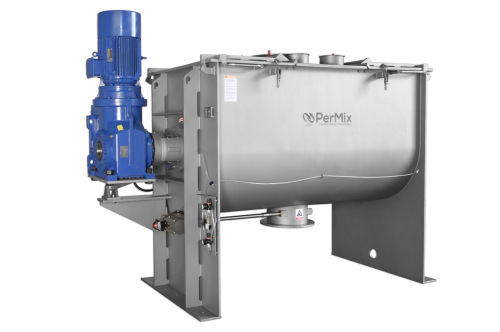
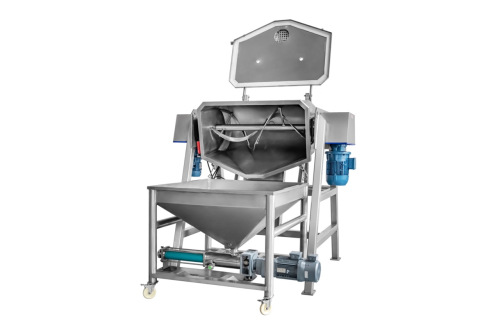



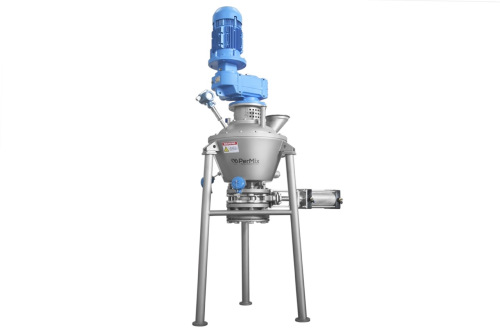
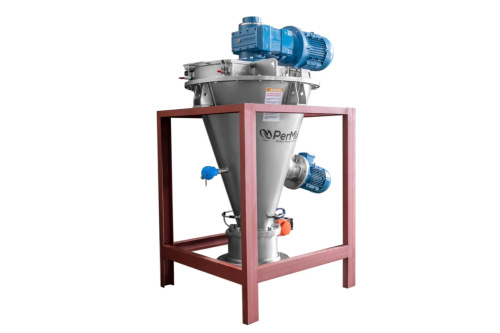
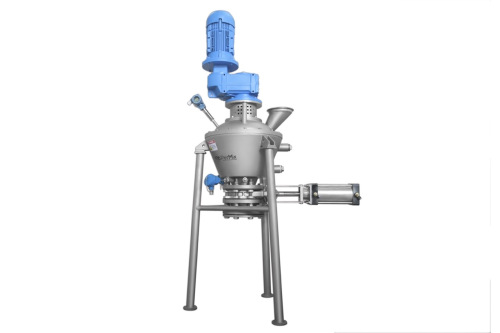
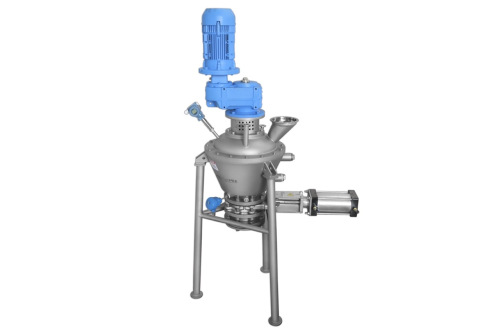





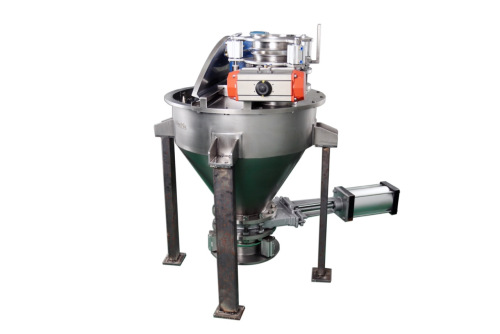
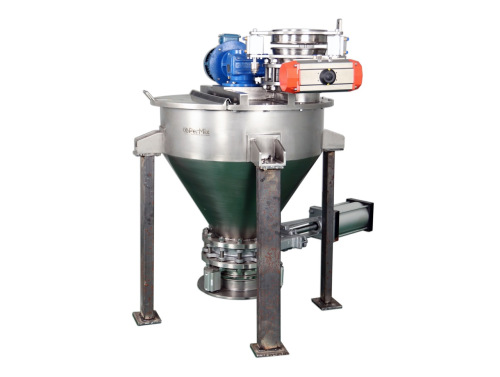
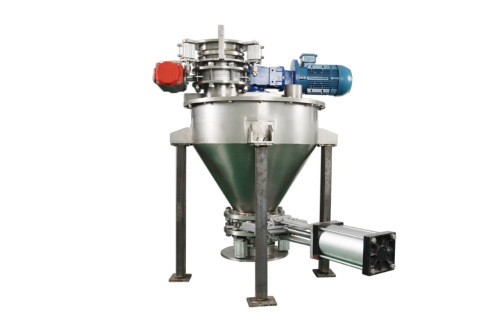
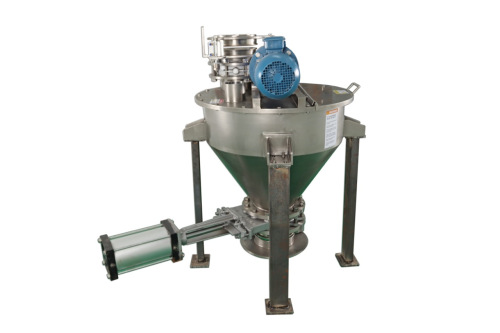

PerMix is here to listen to your needs and provide sustainable solutions. Contact us to discover more.
PerMix Ribbon Mixer Videos