Industrial Mixers
PerMix High Speed Dispersion Mixer
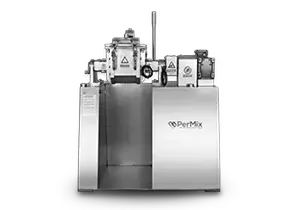
 PerMix High Speed Dispersion Mixer
Best in Innovation • Best In Performance • Best In Quality • Best In Price • Best In Warranty
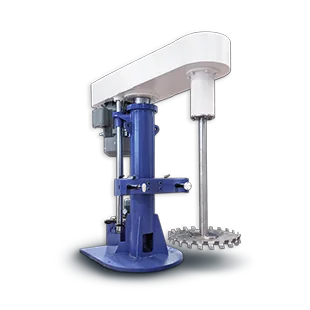
PerMix High Speed Dispersion Mixers / High Speed Dispersers (or Dissolver) is ideally designed to meet the demands of a broad spectrum of industrial applications for dispersing purpose of solid or liquid materials into liquid body.
A high-speed dispersion mixer is a paste and liquid mixer designed to rapidly wet, deagglomerate, and disperse solid particles into liquids or semi-viscous media using a high-RPM disperser blade. Unlike planetary or sigma mixers that rely on torque and folding, high-speed dispersers rely on tip speed and shear to break down agglomerates and create uniform dispersions.
At PerMix, high-speed dispersion mixers are engineered as precision dispersion tools, often used as stand-alone systems or as part of a multi-stage paste processing line.
High-speed dispersers operate using a single rotating disperser blade, typically a saw-tooth or serrated design.
During operation:
The disperser blade rotates at high RPM
Tip speed generates intense localized shear
A vortex draws solids into the liquid phase
Agglomerates are broken apart through shear and turbulence
The goal is particle wet-out and dispersion, not bulk paste movement.
High-speed dispersion mixers excel at:
Rapid incorporation of powders into liquids
Deagglomeration of soft to moderate agglomerates
Pigment wet-out
Initial dispersion before viscosity increases
They are optimized for shear-driven processes, not torque-driven paste movement.
High-speed dispersers are commonly used for:
Paints, coatings, and inks
Pigment slurries and color concentrates
Adhesives and sealants (early-stage dispersion)
Battery slurries (pre-mix and dispersion stages)
Cosmetic emulsions and gels
Chemical dispersions and suspensions
They perform best when materials are liquid or moderately viscous and still able to circulate freely.
At a high level:
Double planetary mixers rely on torque and folding
Sigma mixers rely on kneading
Multi-shaft mixers combine shear and torque
High-speed dispersers rely on tip speed and localized shear
They are chosen when particle breakup and dispersion are the primary objectives.
High-speed dispersers are often misapplied as “do-everything paste mixers.”
Understanding what they are designed to do—and what they are not—prevents:
Incomplete mixing at high viscosity
Air entrainment
Overheating
Scale-up failures
High-speed dispersers are dispersion specialists, not bulk paste movers.
High-speed dispersion mixers are selected when particle wetting and deagglomeration—not bulk paste movement—define the process. They excel in early-stage dispersion and low-to-moderate viscosity systems where shear intensity is more important than torque.
Knowing when a high-speed disperser is the right choice—and when it is not—prevents overworking the product and underperforming the process.
A high-speed disperser is typically the correct solution when one or more of the following conditions apply:
Powder-to-Liquid Wet-Out Is Critical
Rapid incorporation of powders into liquids without floating or clumping.
Agglomerate Breakdown Is Required
Breaking soft to moderate agglomerates through localized shear.
Viscosity Is Low to Moderate
Materials must still be able to circulate freely around the blade.
Short Mixing Cycles Are Desired
High tip speeds achieve dispersion quickly.
Pre-Dispersion Before Thickening
Often used before viscosity increases in downstream processing.
High-speed dispersers are commonly chosen for:
Paints, inks, and coatings
Pigment slurries and color pastes
Adhesives (pre-mix stages)
Battery slurry pre-dispersion
Cosmetic emulsions and gels
Chemical suspensions
These processes require shear-driven dispersion, not kneading or folding.
High-speed dispersers are frequently misapplied.
They are not ideal when:
Viscosity Becomes High or Paste-Like
Circulation collapses and dispersion efficiency drops.
Bulk Homogeneity Is Required
Localized shear does not guarantee full vessel uniformity.
Yield-Stress Materials Are Present
Dispersers cannot move material that resists flow.
Long Mixing Times Are Required
Extended high-speed operation leads to overheating and aeration.
Complete Vessel Sweep Is Necessary
Dispersers do not eliminate dead zones in thick pastes.
High-speed dispersers break agglomerates and wet particles
Double planetary mixers move, fold, and homogenize viscous pastes
Dispersers are often used before planetary mixing—not instead of it.
High-speed dispersers rely on shear and turbulence
Bead mills rely on media-induced impact and shear
Dispersers handle bulk dispersion, while bead mills deliver fine particle size reduction.
Multi-shaft mixers combine dispersers with anchor or planetary tools
High-speed dispersers alone provide shear but not bulk movement
Multi-shaft systems are used when viscosity spans a wide range.
Choosing the wrong mixer often leads to:
Entrapped air
Overheating
Incomplete dispersion
Poor scale-up behavior
High-speed dispersers perform best when used within their designed operating window.
High-speed dispersion mixers live in a very different mechanical world than planetary or sigma mixers. They are defined by RPM, tip speed, shear intensity, and thermal load. Good dispersion performance is impossible without precise mechanical alignment, rigid construction, and controlled energy transfer.
PerMix high-speed dispersion mixers are engineered specifically to deliver shear without instability, overheating, or premature wear.
The heart of a high-speed disperser is the shaft–motor–drive system.
PerMix designs include:
Precision-aligned shafts to prevent runout at high RPM
Heavy-duty motors sized for sustained dispersion loads
Robust drive systems designed for frequent starts and stops
This ensures stable operation even at extreme tip speeds.
Blade design determines dispersion quality.
PerMix disperser blades are engineered to:
Generate strong radial and axial flow
Create controlled vortex formation for powder draw-down
Maximize shear at the blade edge without excessive aeration
Saw-tooth and serrated blade profiles are selected based on particle type, agglomerate strength, and viscosity.
Dispersion effectiveness is driven by tip speed, not just RPM.
PerMix systems provide:
Variable speed control
Precise RPM adjustment to tune shear intensity
Repeatable speed profiles for batch consistency
This allows operators to match energy input to the material—avoiding over-processing.
The mixing vessel must support efficient circulation.
PerMix dispersion vessels are designed with:
Optimized diameter-to-height ratios
Smooth internal surfaces to reduce buildup
Proper clearance between blade and vessel wall
Correct geometry prevents dead zones and improves dispersion uniformity.
High-speed dispersers generate dynamic forces.
PerMix frames feature:
Heavy-duty welded construction
Reinforced motor mounts
Vibration-resistant design
This rigidity prevents shaft deflection, bearing wear, and mechanical fatigue.
High RPM demands reliable bearing protection.
Design features include:
Heavy-duty bearings rated for high-speed operation
Effective sealing to protect against product ingress
Optional flush or purge systems for abrasive or solvent-based materials
These features extend service life and maintain consistent performance.
High shear generates heat.
PerMix systems address this through:
Controlled mixing speeds
Optional jacketed vessels for heat removal
Integration with downstream cooling or transfer steps
Thermal control is essential to prevent viscosity changes or product degradation.
PerMix high-speed dispersers are available in:
Carbon steel for general industrial use
304 stainless steel for food and non-corrosive applications
316 / 316L stainless steel for chemical, cosmetic, and pharmaceutical products
Surface finishes can be tailored to hygiene and cleanability requirements.
High-speed equipment requires disciplined safety design.
PerMix includes:
Guarding and interlocks
Emergency stop systems
Speed ramping to reduce mechanical shock
These features protect both operators and equipment.
Every design decision in a PerMix high-speed dispersion mixer is made to:
Deliver repeatable shear
Maintain mechanical stability
Protect product quality
Support long-term operation
This is the difference between a true industrial disperser and a light-duty agitator.
High-speed dispersion mixers deliver results through shear intensity, tip speed, and controlled energy input. Unlike planetary or sigma mixers—where torque dominates—dispersion performance lives or dies by how efficiently shear is applied without destabilizing the batch.
Scale-up failures with dispersers almost always come from misunderstanding this balance.
High-speed dispersion performance is governed by:
Tip speed at the disperser blade
Blade diameter and geometry
RPM stability under load
Vessel geometry and circulation pattern
Heat generation and removal
More power alone does not improve dispersion—correct shear density does.
Dispersion effectiveness scales with tip speed, not motor RPM.
As mixer size increases:
Blade diameter increases
RPM must decrease to maintain equivalent tip speed
Power must increase to maintain shear under load
Poor scale-up occurs when:
RPM is copied directly from lab to production
Tip speed increases unintentionally
Heat generation skyrockets
PerMix scale-up methodology preserves shear equivalence, not raw speed.
High-speed dispersers perform best in a defined viscosity range.
They excel when:
Materials circulate freely
Vortex formation is stable
Shear is transmitted uniformly
As viscosity increases:
Circulation collapses
Dispersion efficiency drops
Heat and air entrainment increase
This is the natural transition point where planetary or multi-shaft mixers must take over.
Shear creates heat—always.
Performance considerations include:
Short dispersion cycles to limit temperature rise
Staged speed profiles instead of continuous max RPM
Optional jacketed vessels for heat removal
Ignoring thermal behavior leads to:
Viscosity drift
Product degradation
Inconsistent batch results
Controlled shear beats aggressive shear every time.
High-speed dispersers are designed for:
Fast wet-out
Rapid agglomerate breakdown
Short, intense mixing cycles
They are not designed for:
Long bulk mixing times
Holding high viscosity for extended periods
PerMix systems are sized to achieve dispersion quickly—then transition the process.
Successful dispersion scale-up focuses on:
Matching tip speed
Preserving blade-to-vessel geometry ratios
Scaling power density appropriately
Managing heat removal capacity
PerMix supports scale-up by ensuring:
Mechanical stability at high blade diameters
Consistent shear application
Predictable dispersion quality across batch sizes
High-speed dispersers are sensitive to fill level.
Best practices include:
Keeping the blade properly submerged
Avoiding overfilling, which suppresses vortex formation
Avoiding underfilling, which increases air entrainment
Correct working volume is critical for repeatable dispersion.
Repeatable dispersion requires:
Stable RPM under load
Consistent blade geometry
Controlled speed ramps
Defined dispersion time windows
PerMix systems support recipe-based control to eliminate operator variability.
Poorly scaled dispersers often lead to:
Over-shearing
Excessive aeration
Thermal damage
Unstable viscosity
PerMix high-speed dispersion mixers are engineered to scale shear intelligently, not blindly.
High-speed dispersion mixers are applied when particle wetting, deagglomeration, and dispersion quality determine downstream performance. They are rarely the only machine in a paste-processing line, but they are often the critical first step that defines whether the rest of the process succeeds.
Below are real-world workflows where high-speed dispersion mixers deliver decisive value.
Primary challenges:
Pigment wet-out
Agglomerate breakdown
Color strength and consistency
Heat control
Typical workflow:
Liquid Phase Charging
Resins, solvents, or water-based carriers are loaded.
Pigment & Filler Addition
Solids are drawn into the vortex for wet-out.
High-Speed Dispersion
Agglomerates are broken down through shear.
Transfer to Bead Mill (When Required)
Fine particle size reduction.
Downstream Letdown or Planetary Mixing
Why it works:
Rapid wet-out prevents floating, clumping, and color inconsistency.
Primary challenges:
Filler incorporation
Air entrainment
Early viscosity control
Typical workflow:
Resin or Polymer Charging
Filler & Additive Addition via Vortex
High-Speed Dispersion
Transfer to Double Planetary or Sigma Mixer
Final Homogenization & Deaeration
Why it works:
Dispersers reduce load on planetary mixers and improve final uniformity.
Primary challenges:
Binder distribution
Particle wetting
Solvent management
Agglomerate control
Typical workflow:
Binder & Solvent Mixing
Active Material Addition
High-Speed Dispersion
Bead Milling (If Required)
Planetary Mixing & Vacuum Deaeration
Why it works:
Uniform dispersion directly impacts electrode performance and coating quality.
Primary challenges:
High pigment loading
Uniform dispersion
Color repeatability
Typical workflow:
Carrier Preparation
High-Speed Dispersion for Wet-Out
Bead Milling for Fine Particle Size
Transfer to Packaging or Letdown
Why it works:
Dispersers handle bulk incorporation efficiently before fine milling.
Primary challenges:
Smooth texture
Emulsion stability
Air control
Typical workflow:
Oil or Water Phase Preparation
Powder or Pigment Addition
High-Speed Dispersion
Planetary Mixing for Viscosity Build
Vacuum Deaeration
Why it works:
Fast dispersion prevents lumps and supports stable emulsions.
Primary challenges:
Consistent dispersion quality
Heat sensitivity
Scale-up repeatability
Typical workflow:
Liquid Base Charging
Solid Additive Addition
High-Speed Dispersion
Thermal Conditioning or Further Mixing
Why it works:
Controlled shear improves reaction uniformity and product performance.
Primary challenges:
Formulation screening
Energy input evaluation
Scale-up planning
Typical workflow:
Lab-Scale Dispersion Trials
Tip Speed & Time Optimization
Pilot-Scale Validation
Production Transfer
Why it works:
Dispersion physics scale reliably when tip speed and geometry are preserved.
High-speed dispersers perform best when:
Used within their viscosity window
Positioned correctly in the process sequence
Paired with downstream paste mixers when viscosity rises
Application-driven workflows result in:
Better dispersion quality
Shorter processing time
Reduced equipment stress
Predictable scale-up
High-speed dispersion mixers are powerful—but they are not complete paste-processing systems on their own. The most common failures in paste manufacturing happen when dispersion, milling, and bulk mixing are treated as interchangeable instead of sequential and complementary.
Understanding where dispersion ends and other technologies must take over is what separates stable processes from chronic rework.
High-speed dispersion solves particle wetting and agglomerate breakup through localized shear.
Dispersion mixers excel at:
Pulling powders into liquids quickly
Wetting pigments, fillers, and actives
Breaking soft to moderate agglomerates
Creating uniform pre-dispersions
However, dispersion mixers do not:
Reduce particles to micron or sub-micron size
Maintain efficiency as viscosity rises sharply
Move yield-stress or non-flowing pastes
Eliminate entrapped air
They are shear tools, not paste movers.
Milling addresses particle size reduction and dispersion refinement, not bulk homogeneity.
Bead mills and similar technologies are used when:
Tight particle size distribution is required
Pigments or actives must reach micron or sub-micron size
Dispersion quality impacts final performance
Surface area and reactivity matter
Bead mills deliver:
High-energy particle fracture
Consistent dispersion quality
Repeatable particle size control
But bead mills:
Cannot handle very high viscosity
Do not homogenize bulk paste
Introduce air that must be removed later
They solve particle physics, not paste rheology.
Double planetary mixers take over when viscosity becomes the defining challenge.
They solve:
Bulk paste movement
Uniformity in non-flowing materials
High solids loading
Yield-stress behavior
Complete vessel sweep
Planetary mixers are where:
Dispersion stops being effective
Milling equipment would overload
Paste structure must be controlled
They are the backbone of paste processing, not a replacement for dispersion or milling.
Deaeration removes what dispersion and milling inevitably introduce: air.
Vacuum deaeration is required when:
Air affects performance or appearance
Density consistency matters
Coating, filling, or curing is sensitive to bubbles
Planetary mixers with vacuum capability:
Remove entrapped air efficiently
Improve paste density and surface finish
Stabilize downstream processing
Ignoring deaeration leads to defects—even in well-dispersed pastes.
Dispersion alone is sufficient when:
The product remains low viscosity
Particle size requirements are modest
Bulk homogeneity is not critical
Examples:
Slurries
Intermediate pigment dispersions
Pre-mixes for downstream processing
Once viscosity rises, dispersion alone fails quickly.
This combination is common in:
Coatings
Pigments
Battery slurries
Advanced materials
Typical flow:
High-speed dispersion for wet-out
Bead milling for fine particle size
Transfer downstream before viscosity rises
This approach maximizes dispersion quality while protecting equipment.
Used when:
Solids are well sized
Viscosity increases dramatically
Bulk homogeneity becomes critical
Typical flow:
High-speed dispersion for wet-out
Transfer to double planetary mixer
Controlled viscosity build and homogenization
This is common in adhesives, cosmetics, and food pastes.
This is the highest-performance paste workflow.
Typical sequence:
High-Speed Dispersion — wet-out
Bead Milling — particle size reduction
Double Planetary Mixing — bulk paste control
Vacuum Deaeration — final conditioning
Used in:
Battery electrode pastes
High-performance coatings
Advanced adhesives
Pharmaceutical and cosmetic formulations
Each machine does exactly what it is best at—no overlap, no compromise.
Processes designed around a single machine usually suffer from:
Excessive heat
Air entrapment
Inconsistent viscosity
Poor scale-up
Integrated systems deliver:
Stable rheology
Superior dispersion quality
Predictable scale-up
Lower scrap and rework
At PerMix, high-speed dispersion mixers are positioned correctly:
As dispersion specialists
As front-end tools for paste systems
As partners to bead mills and planetary mixers—not competitors
PerMix designs process architectures, not isolated machines.
PerMix is here to listen to your needs and provide sustainable solutions. Contact us to discover more.
PerMix High Speed Dispersion Mixer Video