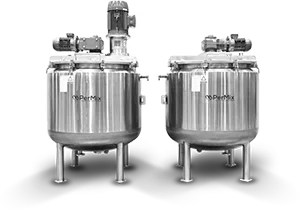
From Spices to Baby Formula: How the PerMix PAMD-SS Steam Injection Sterilizer Is Transforming Powder Processing
Steam sterilization has long been a balancing act between achieving microbial kill and preserving product quality. The PerMix PAMD-SS Steam Injection Sterilizer has changed that equation. Engineered as a fluidized-zone paddle/plow mixer, it delivers validated sterilization of powders using saturated steam — without clumping, over-hydration, or loss of functionality. From spice processors to infant nutrition manufacturers, industries are discovering how this single machine achieves food safety, uniform results, and product integrity.
The Science Behind the PAMD-SS
Inside the PAMD-SS, a precisely orchestrated sequence takes place:
1. Fluidization & Pre-Conditioning
Counter-rotating paddles or plows suspend powders in a dynamic fluidized bed, creating uniform heat transfer and eliminating cold zones. Optional jacket heating pre-warms the material to within 10°C of target temperature.
2. Steam Injection Phase
Clean, culinary-grade steam is injected through multiple sanitary nozzles. Because the bed is fluidized, steam disperses instantly across every particle surface. The process achieves lethal microbial reduction while adding less than 0.5 % moisture in most cases.
3. Controlled Hold Time
Using the built-in PLC/HMI, the cycle is programmed for precise temperature and dwell time — typically 121–135 °C for 15–180 seconds, depending on microbial load, product sensitivity, and required log reduction.
4. Vacuum-Assisted Drying & Cooling
Once sterilization is complete, the integrated vacuum system removes residual steam and moisture. Cooling jackets or chilled-water circuits bring product temperature down rapidly, ensuring the powder remains free-flowing.
5. Verification & Batch Reporting
Temperature, humidity, and pressure sensors continuously monitor the process. Batch data, including Fo/A₀ values, are recorded automatically for QA validation and full traceability compliant with 21 CFR Part 11 when required.
Key Engineering Options:
- 316L stainless contact parts (304 non-contact standard)
- Sanitary design with polished welds and HEPA-filtered venting
- Load cells for batch weighing and steam-mass balance
- PAT inline moisture sensors
- CIP/SIP or dry-CIP capability
- ATEX/IECEx configurations for explosive powders
- N₂ or CO₂ inerting for oxidation-sensitive materials
Applications Across Industries
1. Spices & Herbs
Objective: Eliminate Salmonella and spoilage organisms without damaging volatile oils or color.
- Process: 121–128 °C for 30–90 s with < 0.6 % moisture gain.
- Techniques: Inert-gas blanket and rapid vacuum-dry cycle prevent aroma loss.
- Result: Pathogen-free, vibrant spices with authentic flavor and appearance.
2. Infant Formula & Baby Foods
Objective: Destroy Cronobacter sakazakii and Salmonella while maintaining nutrient stability.
- Process: 120–125 °C for 30–60 s under low-oxygen, low-moisture conditions.
- Techniques: Gentle heat curve avoids denaturing milk proteins or vitamins; probiotics and heat-sensitive actives can be added post-sterilization.
- Result: Sterile, free-flowing base powders ready for final blending and packaging.
3. Dairy Powders (WPC, WPI, SMP)
Objective: Reduce microbial load while preserving solubility and functionality.
- Process: 118–124 °C for 20–60 s.
- Techniques: Rapid vacuum-dry prevents casein denaturation; optional de-agglomerator ensures instantization.
- Result: Safe, easily dispersible dairy ingredients suitable for high-end formulations.
4. Nutraceuticals & Botanicals
Objective: Lower total plate count without degrading active compounds.
- Process: 118–122 °C for 60–120 s.
- Techniques: Inert-gas environment and precise humidity control preserve polyphenols and alkaloids.
- Result: Sterilized botanical extracts retaining potency and color.
5. Plant Proteins & Sports Nutrition Powders
Objective: Achieve microbial safety while maintaining texture and amino acid integrity.
- Process: 121–128 °C for 30–90 s with ≤ 0.5 % moisture gain.
- Techniques: Controlled steam dose combined with rapid vacuum cooling prevents denaturation.
- Result: Sterilized, odor-free proteins that retain solubility and flavor.
6. Bakery, Cocoa & Flavor Bases
Objective: Microbial control with full flavor retention.
- Process: 121–125 °C for 30–60 s.
- Techniques: Progressive steam ramping avoids “hot spots”; immediate vacuum-cool stabilizes volatile compounds.
- Result: Hygienic, aromatic powders that flow and dose perfectly.
7. Starches & Carbohydrate Powders
Objective: Kill spores without gelatinization.
- Process: 118–121 °C, short pulse.
- Techniques: Precise humidity control and rapid drying preserve granule structure.
- Result: Functional starches with unchanged viscosity profiles.
8. Pet Food & Feed Premixes
Objective: Sanitize animal nutrition powders for pathogen control and shelf stability.
- Process: 121–130 °C for 30–60 s depending on fat load.
- Techniques: Specialized steam diffusers handle greasy powders; sanitary construction allows full CIP.
- Result: Safe, nutrient-stable meal powders ready for extrusion or packaging.
9. Pharmaceutical Excipients & API Carriers
Objective: Bioburden reduction in lactose, MCC, or starch blends.
- Process: 121–125 °C for 30–120 s.
- Techniques: Validation via Fo/A₀; documentation with audit trails; gentle agitation preserves PSD.
- Result: Sterile excipients meeting pharmacopoeia standards.
10. Tea, Superfoods & Functional Blends
Objective: Yeast/mold reduction while keeping natural colors and actives.
- Process: 118–122 °C for 60–120 s.
- Techniques: Controlled humidity and inert gas avoid oxidation of sensitive ingredients such as matcha or beetroot powder.
- Result: Vibrant, clean, and free-flowing products for high-value blends.
Why the PAMD-SS Excels
- Uniform Lethality: The fluidized zone ensures every particle reaches target temperature for full microbial kill.
- Minimal Moisture Uptake: Steam condenses as a microscopic film and is immediately removed under vacuum.
- Product Integrity: Short dwell times prevent flavor degradation, protein denaturation, and caking.
- Regulatory Confidence: Fo/A₀ validation, electronic batch reports, and full traceability meet HACCP, FDA, and EU standards.
Typical System Parameters
| Parameter | Range / Value |
|---|---|
| Temperature | 115–135 °C |
| Hold Time | 15–180 s |
| Moisture Gain | < 0.5 % typical |
| Working Capacity | 25 L – 3,000 L |
| Total Cycle | 8–20 min (load to unload) |
| Materials | 304/316L SS, polished sanitary finish |
| Options | Vacuum, inerting, CIP/SIP, ATEX/IECEx, PLC/HMI data logging |
The Outcome
Across industries, the PerMix PAMD-SS gives processors a validated kill step for powders without the compromises of conventional heat treatment. Whether it’s black pepper, plant protein, or infant formula base, the result is the same:
- Microbially safe product
- Consistent color, aroma, and taste
- Preserved functionality
- Documented, repeatable process
In short, the PAMD-SS turns the once-difficult challenge of powder sterilization into a science of precision — making PerMix the trusted partner for manufacturers from spices to baby formula and every blend in between.