Industrial Mixers
PerMix News & Updates
A blend that looks acceptable in the discharge chute can still fail in the lab, create weight variation at filling, or trigger downstream quality issues. That is why operations teams keep asking how to improve mix uniformity – not as a theoretical question, but as a production problem tied directly to yield, compliance, and customer satisfaction.
Uniformity is not controlled by mixer horsepower alone. It is the result of how material moves, how ingredients enter the process, how long the batch is mixed, and whether the equipment matches the product’s actual behavior. In powder, paste, and liquid applications, small process mismatches often create large consistency problems.
The first mistake many plants make is treating mix uniformity as a single equipment issue. In practice, the material defines the process window. Bulk density, particle size distribution, moisture level, cohesiveness, fat content, flowability, and liquid absorption all affect how ingredients disperse.
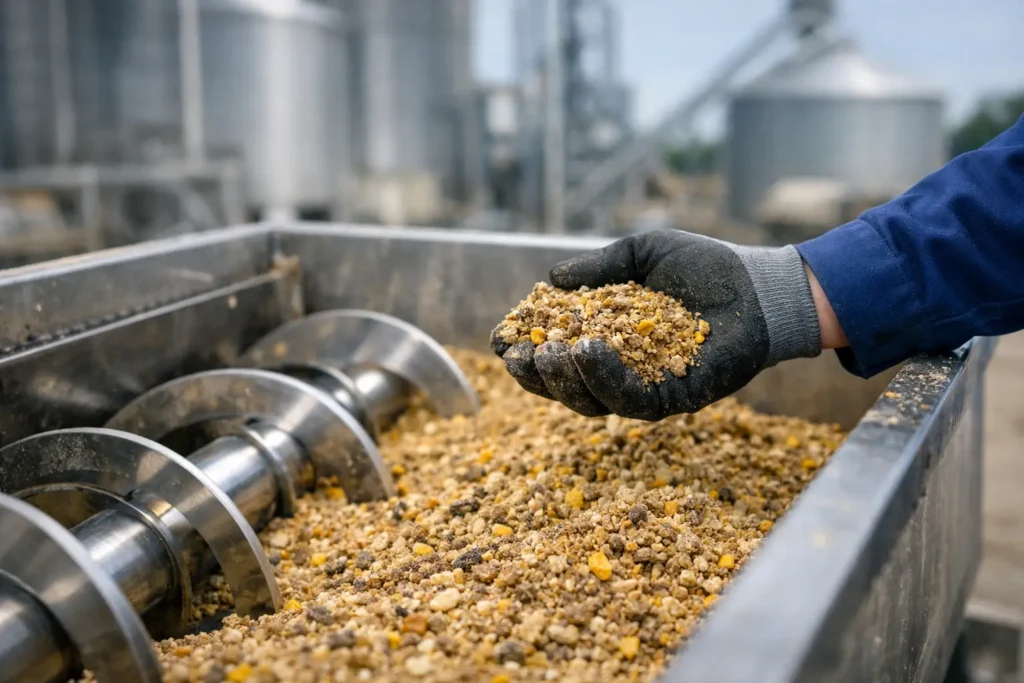
A free-flowing powdered beverage mix behaves very differently from a mineral premix, a spice blend with oil addition, or a pharmaceutical formulation with low-dose actives. If particle size and density vary widely, segregation can occur before mixing, during mixing, or after discharge. In that case, improving uniformity is not only about stronger agitation. It may require gentler movement, faster incorporation, controlled loading order, or a discharge method that limits re-separation.
This is where process evaluation matters. If a product is heat sensitive, shear sensitive, or prone to agglomeration, the wrong mixer can work against uniformity even if it appears mechanically capable. Good mixing starts with understanding how the ingredients behave under motion.
When teams ask how to improve mix uniformity, the most important question is often whether they are using the correct mixer type. Different mixer designs create different flow patterns, shear levels, and residence profiles.
Ribbon mixers are widely used for dry powders and light paste applications because they provide efficient convective movement and solid batch turnover. They work well for many standard blends, especially where ingredients are relatively similar in density and particle size. Paddle mixers can offer gentler treatment and are often preferred when friable materials must be preserved.
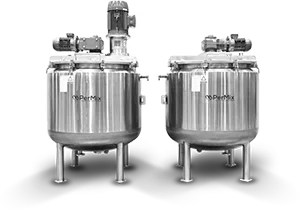
For more demanding powder applications, plow mixers can create a more fluidized mechanical zone, which improves dispersion and supports faster mixing, especially when liquid addition or deagglomeration is involved. Sigma mixers and other heavy-duty paste mixers are better suited for high-viscosity materials where uniformity depends on working dense product through controlled shear. In liquid systems, high shear mixers, homogenizers, and emulsifiers may be necessary when droplet size reduction or stable dispersion is part of the uniformity target.
The trade-off is straightforward. Higher intensity can improve dispersion, but too much shear can damage particles, affect texture, or change product performance. Lower intensity protects the product, but may leave dead zones or slow ingredient incorporation. The best result comes from matching mixer geometry and energy input to the process requirement, not from choosing the most aggressive machine.
A well-designed mixer still underperforms when it is run outside its effective working range. Fill level has a direct impact on product movement, turnover, and exposure to the mixing elements.
An underfilled mixer may not generate a stable mixing pattern. An overfilled mixer may compress the bed, reduce circulation, and leave areas with limited ingredient exchange. Both conditions reduce uniformity, even when the cycle time is extended. That is why the same machine can produce strong results on one SKU and inconsistent results on another if batch volume shifts too far from the intended operating window.
Plants dealing with variable order sizes should pay close attention to minimum and maximum working capacities. If production requires a wide batch range, the right solution may be a different machine size, a dedicated line, or custom internal geometry designed around that operating profile.
Many inconsistent batches are traced back to loading sequence rather than mixer performance. When minor ingredients, binders, colors, flavors, or actives are added at the wrong time or in the wrong location, they may not disperse properly through the product mass.
This is especially true in formulations with low inclusion rates. A small amount of active ingredient cannot be expected to distribute evenly if it is dumped into a partially moving bed without pre-blending or controlled introduction. The same applies to liquid addition. Spraying a liquid unevenly onto a powder bed can create localized wet spots, lumps, or overworked zones while leaving other regions untreated.
For better uniformity, ingredient addition should be engineered. That may mean pre-blending trace ingredients, using spray bars or atomizing nozzles for liquids, controlling feed rate, or staging ingredients in a sequence that supports even incorporation. In regulated industries, repeatable loading procedures are just as important as machine selection.
Longer mixing does not always mean better mixing. At first, additional time improves distribution. After the optimal point, the batch may plateau. In some formulations, extended mixing can actually make uniformity worse by promoting segregation, particle attrition, temperature rise, or overdevelopment.
The only reliable approach is to validate the required cycle. That means sampling at defined intervals and testing for the actual quality metric that matters – concentration variance, moisture distribution, particle dispersion, color consistency, or another measurable indicator.
Once the ideal cycle is established, it should be treated as a controlled production parameter. Operators should not be left to adjust mixing time based on visual judgment alone. Standardized cycles improve repeatability, reduce overprocessing, and make deviations easier to identify.
Poor sampling can create false confidence or false alarms. If samples are only taken from the top layer or only from the first discharge, the data may not represent the full batch. To evaluate uniformity correctly, sampling needs to reflect the actual product path.
In many cases, the best method is to sample from multiple batch locations or timed intervals during discharge, then compare the variance. This helps identify whether the problem starts in the mixer or appears during emptying and transfer. If the blend is uniform inside the vessel but separates in conveying or packaging, the corrective action will be different.
Process data also matters. Agitator speed, batch weight, liquid addition rate, product temperature, and cycle time all influence results. When those inputs drift, uniformity drifts with them. Plants that want tighter control should treat blending as a measurable process, not a black box.
A batch can leave the mixer in excellent condition and still arrive at packaging with poor uniformity. This happens often with free-flowing powders that segregate during transfer, surge hoppers that funnel material unevenly, or pneumatic systems that separate fines from larger particles.
If the formulation is segregation-prone, the full line must be reviewed. Hopper design, discharge valve choice, conveyor type, transfer height, and even fill speed can affect the final result. In some applications, the solution is not more mixing. It is less drop distance, gentler conveying, mass-flow storage, or direct feed from blender to the next step.
This is one reason industrial mixing projects should be approached as a system. A mixer cannot compensate for every weakness downstream.
Uniformity is also influenced by what remains in the machine from the previous batch. Residual buildup on shafts, ribbons, paddles, nozzles, or vessel walls can alter ingredient ratios and create contamination risk. In sanitary or allergen-sensitive production, this becomes a quality and compliance issue at the same time.
Routine inspection and maintenance are essential. Worn seals, damaged choppers, misaligned agitators, and inconsistent spray performance all reduce process reliability. The best in performance is not only about initial machine design. It also depends on keeping the equipment in proper working condition.
For manufacturers running frequent changeovers, cleanability should be part of the uniformity discussion from the start. A machine that is difficult to clean may save money upfront and cost far more in rejected batches, labor, and downtime later.
When mix uniformity is a recurring problem, generic fixes rarely hold. A speed change may help one product and hurt another. Extra time may improve one batch size and fail at a different fill level. The most durable improvement comes from evaluating the complete application – material properties, batch size, ingredient sequence, liquid addition, required shear, discharge behavior, and downstream handling.
That is why experienced manufacturers often move past catalog-level equipment selection and toward application-specific design. In many cases, the right answer is a standard mixer with the right options. In others, it is a custom configuration built around the process. PerMix works with producers across powder, liquid, and paste applications to match mixer design to real production conditions, because consistent mixing is not achieved by theory alone.
If your process is producing variation, start by looking beyond the mixer nameplate. Uniformity improves fastest when the machine, method, and material are all working in the same direction.
Stay Connected