
A dry powder blend can look perfect in the first minute and fail completely the moment liquid hits the batch. That is where a plow mixer for liquid addition earns its place. When the process requires fast wetting, controlled dispersion, and consistent coating without turning the product into lumps or dead zones, mixer geometry matters.
In many plants, liquid addition is not a minor step. It is the step that determines yield, texture, dissolution, flowability, and downstream performance. Whether the goal is adding oils into a food premix, introducing binders into a chemical formulation, or applying actives onto a carrier powder, the mixer has to create enough mechanical energy to expose fresh particle surfaces while still protecting the product from overworking.
Why a plow mixer for liquid addition performs differently
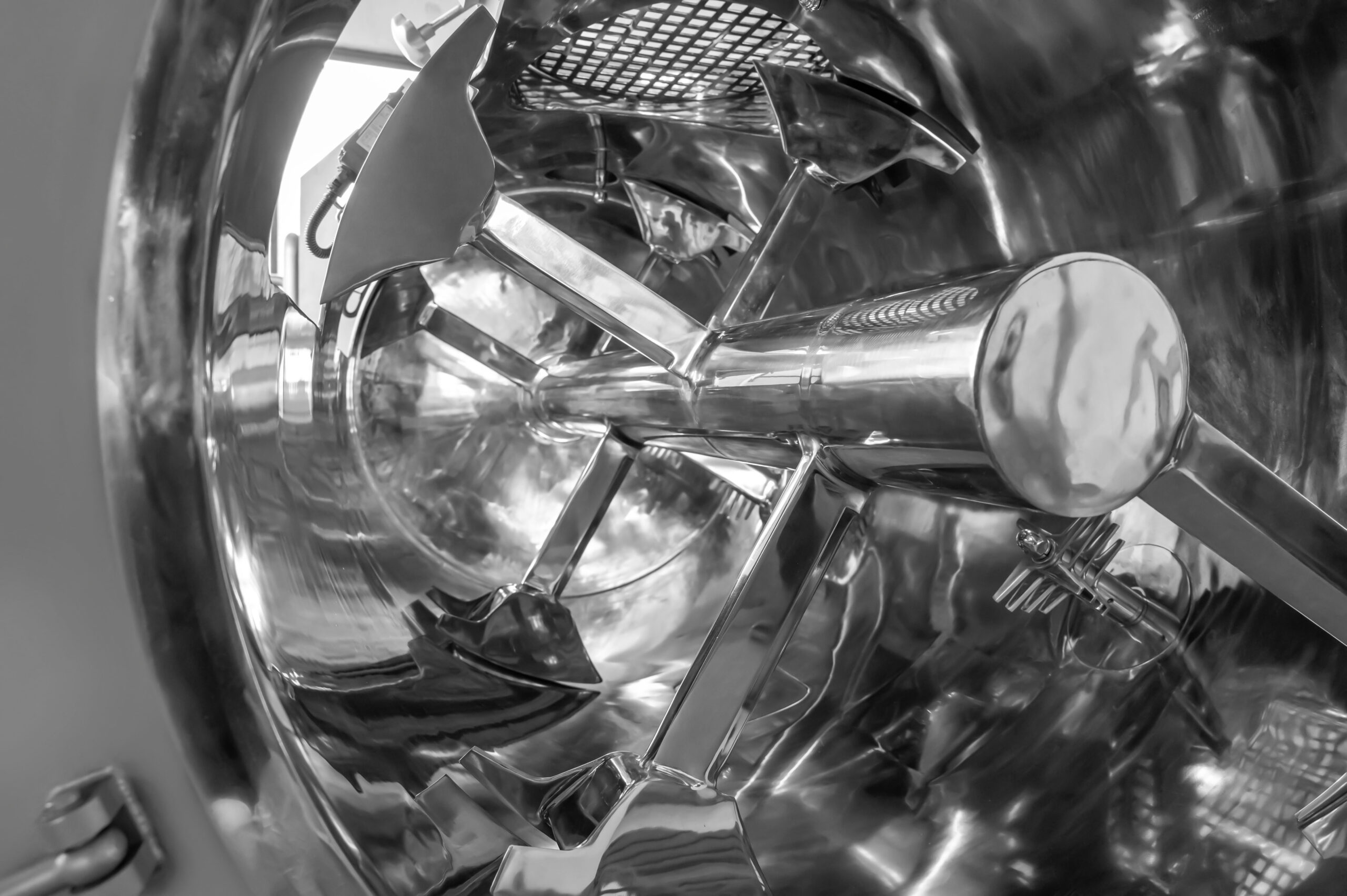
A plow mixer is built around a horizontal vessel with specially shaped plow elements mounted on a shaft. As the shaft rotates, those plows lift, separate, and project the product into a three-dimensional mechanical fluid bed. That movement is the key advantage during liquid addition.
Instead of relying on slow rolling action, the mixer continuously renews the powder surface. Liquid introduced through spray nozzles or controlled injection points reaches moving particles rather than a static mass. The result is faster distribution and less chance of localized overwetting.
This is why plow mixers are often selected for applications where a ribbon blender may be too gentle and a high-shear mixer may be more aggressive than necessary. The plow design sits in a useful middle ground. It can deliver intensive mixing and effective liquid incorporation while still being adapted to the product’s sensitivity and the process target.
What happens during liquid addition
Liquid addition sounds simple until the batch proves otherwise. The liquid has to be introduced at the right rate, in the right droplet size, and at the right location inside the mixer. At the same time, the powder bed must remain active enough to absorb or distribute that liquid before wet pockets form.
In a plow mixer, the mechanical action helps in three ways. First, it promotes rapid particle turnover, so more material contacts the spray zone quickly. Second, it minimizes stagnant regions where liquid can accumulate. Third, it can support deagglomeration when choppers are added, which is often critical for sticky or binder-heavy formulations.
That combination is valuable in applications such as instant beverage powders, detergent blends, mineral premixes, fertilizer products, metal powders, and pharmaceutical or nutraceutical granulation steps. The exact benefit depends on the formulation. Some products need only uniform surface coating. Others need partial agglomeration, densification, or a controlled granule build.
Where a plow mixer for liquid addition fits best
The best fit is usually a process where dry solids must receive a relatively small to moderate amount of liquid and still remain free-flowing or controlled in particle structure. That includes coating powders with oils, flavors, lecithin, surfactants, molasses, binders, or functional additives.
It also fits applications where batch time matters. Because the plow action creates high product mobility, liquid can often be distributed more quickly than in lower-energy mixer designs. For production teams trying to reduce cycle time without sacrificing uniformity, that can be a meaningful advantage.
Another strong use case is formulations with multiple solid components of different particle sizes or densities. Once liquid is introduced, segregation risks can increase if the mixer does not maintain active, full-volume movement. A properly engineered plow mixer helps keep the batch dynamic through the wetting phase.
That said, not every process belongs in a plow mixer. If the product becomes a heavy paste early in the cycle, a different machine type may be better. If the application requires extremely delicate handling with almost no particle attrition, the intensity of a plow mixer may need to be moderated or reconsidered. Good equipment selection starts with the material behavior, not just the target throughput.
Key design factors that affect results
Liquid addition performance is not determined by the mixer body alone. Spray system design is just as important. Nozzle placement, droplet size, spray angle, line pressure, and flow control all influence whether the liquid disperses cleanly or creates spots of overwetting.
Mixer fill level also matters. Too low, and the product may not interact consistently with the plows and spray pattern. Too high, and the machine may lose some of the open, projected movement that makes plow mixing effective in the first place. The right operating window depends on the product bulk density, flow behavior, and the amount of liquid being added.
Choppers can be a major advantage when the liquid promotes clump formation. In many formulations, the base plow action distributes liquid well, but localized agglomerates still form as tackiness increases. Side-mounted or top-mounted choppers break those wet clusters and improve final homogeneity. They are not always necessary, but when they are, they often determine whether the process is merely workable or production-ready.
Material of construction, surface finish, and sanitary design are also practical decision points. Food, pharmaceutical, and nutraceutical producers may need polished contact surfaces, clean-in-place features, or validation-friendly construction. Chemical and industrial users may prioritize wear resistance, corrosion resistance, explosion protection, or jacketed temperature control.
Common process challenges and how plow mixers address them
One common problem is uneven coating. Operators see acceptable average assay or composition, but batch samples show local variation. In many cases, the issue is that liquid is being dumped rather than atomized, or the mixer is not creating enough particle exposure at the point of addition. A plow mixer can solve the second issue, but the spray system still has to be engineered correctly.
Another challenge is lumping. This often happens when the liquid addition rate is higher than the powder can absorb, or when sticky intermediates are allowed to build faster than the mixer can disperse them. Plow mixers improve the odds by increasing movement and surface renewal, especially when paired with choppers, but process tuning is still essential. Pump rate, nozzle design, sequence of ingredient charging, and batch temperature can all shift the outcome.
Heat can also become a factor. Some products react to friction, and some liquids change viscosity with temperature. If the formulation is heat-sensitive, the process may need jacketed temperature control or a lower-energy operating profile. If the product mixes better warm, controlled heating may improve absorption and reduce cycle time. This is where custom engineering matters more than catalog claims.
How to evaluate a plow mixer before purchase
For most industrial buyers, the right question is not whether a plow mixer can add liquid. It is whether the machine can add your liquid into your formulation at your required batch size, throughput, and quality standard.
Start with the product itself. Look at particle size distribution, bulk density, flow behavior, moisture sensitivity, and how the material changes during wetting. Then define the liquid phase clearly – viscosity, addition rate, total percentage, and whether atomization is required.
After that, focus on the process target. Are you coating particles, suppressing dust, creating granules, dissolving an active into the batch, or driving a reaction? These are different jobs, and they influence rotor speed, chopper selection, vessel geometry, and discharge design.
Scale-up deserves special attention. A lab result is useful, but production behavior can change when spray coverage, residence time, and heat transfer shift at larger volumes. That is why experienced manufacturers such as PerMix put real value on application review and test-based equipment sizing rather than selling a one-size-fits-all machine.
The commercial case for the right mixer
Liquid addition problems are expensive even when they do not stop the line. They show up as longer batches, higher reject rates, poor cleanability, inconsistent bulk density, and rework. In regulated or specification-driven industries, they also create quality risk that reaches well beyond the mixing room.
A properly selected plow mixer can improve batch consistency, reduce cycle time, and widen the operating window for challenging formulations. It can also give production teams more flexibility when products evolve, ingredient sources change, or throughput demands increase.
That is the real value proposition. Not just that the machine mixes, but that it supports predictable production under real plant conditions. For buyers balancing performance, budget, and long-term reliability, that distinction matters.
If liquid addition is where your process starts to lose control, it is worth looking closely at mixer dynamics before adjusting everything else around them. The right plow mixer does more than move powder – it gives the process room to perform the way it was designed to.