
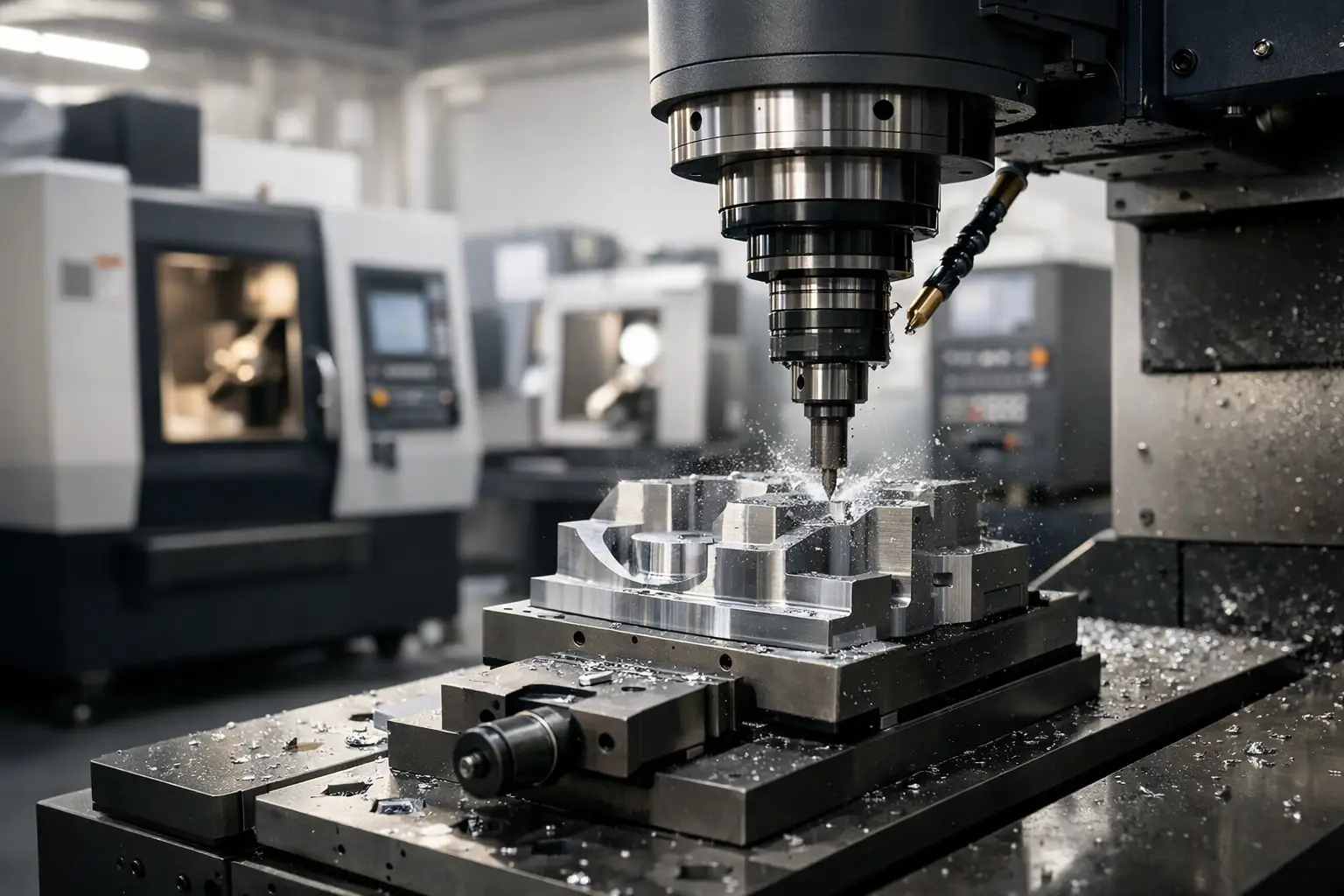
A milling machine that looks right on paper can still become a production bottleneck once real material hits the chamber. That is why the search for the best industrial milling machines rarely starts with brand names or horsepower alone. It starts with the product itself – friable or tough, heat sensitive or abrasive, free flowing or prone to smearing – and with the production targets the machine has to meet every shift.
For plant managers, process engineers, and procurement teams, the right milling system is not just a size reduction tool. It affects yield, bulk density, downstream mixing, dissolution, packaging behavior, cleanability, and line uptime. A machine that produces the target particle distribution consistently, fits the sanitation standard, and handles future capacity growth will usually outperform a lower-cost option that needs constant adjustment or creates too many fines.
What defines the best industrial milling machines
The best industrial milling machines are the ones that match material behavior, process goals, and plant constraints with the least compromise. In food and pharmaceutical applications, that often means predictable particle size control, sanitary construction, and fast cleaning. In chemical, mineral, and agricultural processing, it may mean abrasion resistance, higher throughput, and the ability to handle tougher feed materials.
The first mistake many buyers make is treating all milling technologies as interchangeable. They are not. A hammer mill, pin mill, cone mill, air classifier mill, and roller mill may all reduce particle size, but they do it in different ways and produce different outcomes. One design may excel at deagglomeration, while another is better for tight top-size control or fine grinding with limited heat rise.
The second mistake is specifying only a target micron range without defining the full process requirement. Throughput, feed variability, moisture content, required uniformity, explosion protection, noise limits, and cleaning frequency all affect what “best” really means in practice.
Best industrial milling machines by application fit
Hammer mills for general-purpose size reduction
Hammer mills remain a practical choice for many bulk solids because they are straightforward, productive, and cost-effective. They work well for grains, some chemicals, certain minerals, and other brittle or moderately hard materials. If your main requirement is reliable throughput and moderate particle reduction, a hammer mill is often a strong starting point.
The trade-off is control. Hammer mills can generate a broader particle size distribution than more selective technologies, and heat buildup can become an issue with sensitive products. Wear can also be significant with abrasive materials, so maintenance planning matters.
Pin mills for fine grinding and controlled impact
Pin mills are often selected when a finer grind is needed without moving immediately to more complex classifier systems. They can perform well with sugar, salt, spices, certain chemicals, and crystalline products. Their impact action supports finer reduction than many basic hammer mill setups, and they are commonly used where product consistency matters.
That said, pin mills are not ideal for every material. Sticky, fatty, or highly moist products can foul the grinding zone. When feed behavior changes by season or supplier, trial work becomes especially valuable.
Cone mills for deagglomeration and gentle sizing
Cone mills are common in pharmaceutical, nutraceutical, and food operations where granule conditioning, deagglomeration, and controlled sizing are more important than aggressive fine grinding. They are often chosen for inline or intermediate processing because they are gentle on product and easier to validate and clean in regulated environments.
If your objective is to break soft agglomerates or standardize particle flow before blending, feeding, or tableting, a cone mill may be the better answer than a high-impact mill. The limitation is that it is not the right tool for hard materials or very fine end points.
Air classifier mills for finer targets and tighter control
When applications call for finer particle size and narrower distributions, air classifier mills become more attractive. They combine impact milling with internal classification, allowing oversized particles to remain in the grinding zone until they meet the target. This is useful in chemicals, specialty powders, pigments, and some advanced food or bio applications.
The benefit is improved control. The trade-off is higher system complexity, greater sensitivity to operating parameters, and a larger investment. These systems can be the right long-term value when product performance depends heavily on particle size precision.
Roller mills for friable materials and selective crushing
Roller mills are well suited for applications that benefit from compression rather than high-impact reduction. They are commonly used in grain, mineral, and other friable material processing where low fines generation and consistent crushing are priorities. In some operations, a roller mill supports better energy efficiency and less dust than impact-based equipment.
The fit depends on the material. Roller mills are less versatile across broad product changes, and they may not achieve the finer particle targets required in specialty powder applications.
How to compare industrial milling machines the right way
A strong equipment comparison starts with the product specification, but it should not end there. The best industrial milling machines for one facility can underperform badly in another because the surrounding process is different.
Start with particle size distribution, not just average size. Two mills may both claim the same nominal output, but one may create too many fines or too much oversize for your downstream blending or packaging step. If your product dissolves slowly, segregates in transport, or bridges in bins, the issue may be particle shape and distribution rather than simple top size.
Then look at throughput under real conditions. Nameplate capacity is useful, but actual output changes with feed rate, bulk density, moisture, inlet particle size, and screen or classifier settings. A mill that runs well in a dry trial may struggle if your production material arrives with seasonal moisture variation.
Heat generation is another deciding factor. In food, nutraceutical, and pharmaceutical production, excess heat can damage actives, change flavor, affect color, or create caking. For heat-sensitive products, lower-energy reduction methods, cooling options, or integrated process design become important.
Sanitary design should be evaluated as seriously as grinding performance. If the machine is difficult to open, inspect, and clean, labor costs and downtime will rise. In regulated sectors, hygienic construction, surface finish, access points, and validation support are not optional extras. They are part of the total cost of ownership.
Key buying factors beyond the mill itself
The mill is only one part of the system. Feed method, discharge arrangement, dust collection, controls, and integration with mixers, blenders, sifters, and conveying equipment all affect performance. A well-chosen machine can still fail to meet expectations if the feeding is inconsistent or the discharge system lets heat and fines accumulate.
This is where engineering support matters. The strongest suppliers do more than quote standard models. They ask about product behavior, required capacity range, available utilities, operator access, cleaning routines, and growth plans. In many cases, a customized configuration produces better long-term value than forcing a standard machine into an unsuitable duty.
Materials of construction also deserve close review. Abrasive products may justify hardened components. Corrosive environments may require upgraded metallurgy. Sanitary applications may call for polished stainless contact surfaces and specific gasket or seal materials. The best industrial milling machines are engineered for the actual process, not a generic brochure case.
Serviceability is another overlooked factor. Screen changes, rotor access, bearing replacement, and routine inspections should be straightforward. If maintenance tasks are difficult, they will be delayed, and reliability will suffer. Buyers focused only on purchase price often pay for that decision later in labor, spare parts, and lost production.
When custom engineering makes the difference
Many milling problems are not solved by choosing a different catalog model. They are solved by adjusting the system around the material. That may mean adding temperature control, changing rotor geometry, pairing the mill with upstream pre-break or downstream classification, or integrating the mill into a broader powder handling line.
For manufacturers running multiple products, flexibility can be as important as peak performance on one SKU. Quick-change tooling, clean-in-place options, mobile frames, and control recipes may justify a higher initial cost because they reduce downtime and support faster changeovers. In facilities scaling up, extra attention should be paid to turndown capability and how the machine behaves across different batch sizes.
This is where a solution-focused equipment partner adds value. Companies such as PerMix serve industrial processors best when they combine broad equipment selection with application-specific engineering, practical testing, and commercially realistic recommendations. That approach helps buyers avoid overbuying, underbuying, or selecting a machine that performs well in theory but not on the plant floor.
The best purchase decision is rarely the most aggressive machine or the cheapest quote. It is the one that consistently meets the process target, fits the plant environment, and supports profitable production as volumes grow. If you define those requirements clearly before comparing options, the right milling system becomes much easier to identify.
Before you approve any mill, ask one more question: will this machine still be the right fit when your product mix, volumes, or compliance demands change two years from now? That question usually leads to a better decision than chasing headline capacity alone.