Skip to content
PerMix — Perfect Mixing Technologies Request a Quote
Call Request Quote

ABOUT PERMIX AMERICAS

We Engineer the Process Before We Engineer the Mixer

PerMix Americas helps manufacturers select, configure and integrate industrial mixing equipment around the behavior of their materials and the realities of production.

We do not begin with a model number.

We begin with the product, batch size, bulk density, particle characteristics, required blend result, sanitation level, thermal duty, plant environment and downstream process.

That process-first approach allows us to engineer mixers that are not merely sized to fit a capacity—but designed to accomplish a defined manufacturing objective.

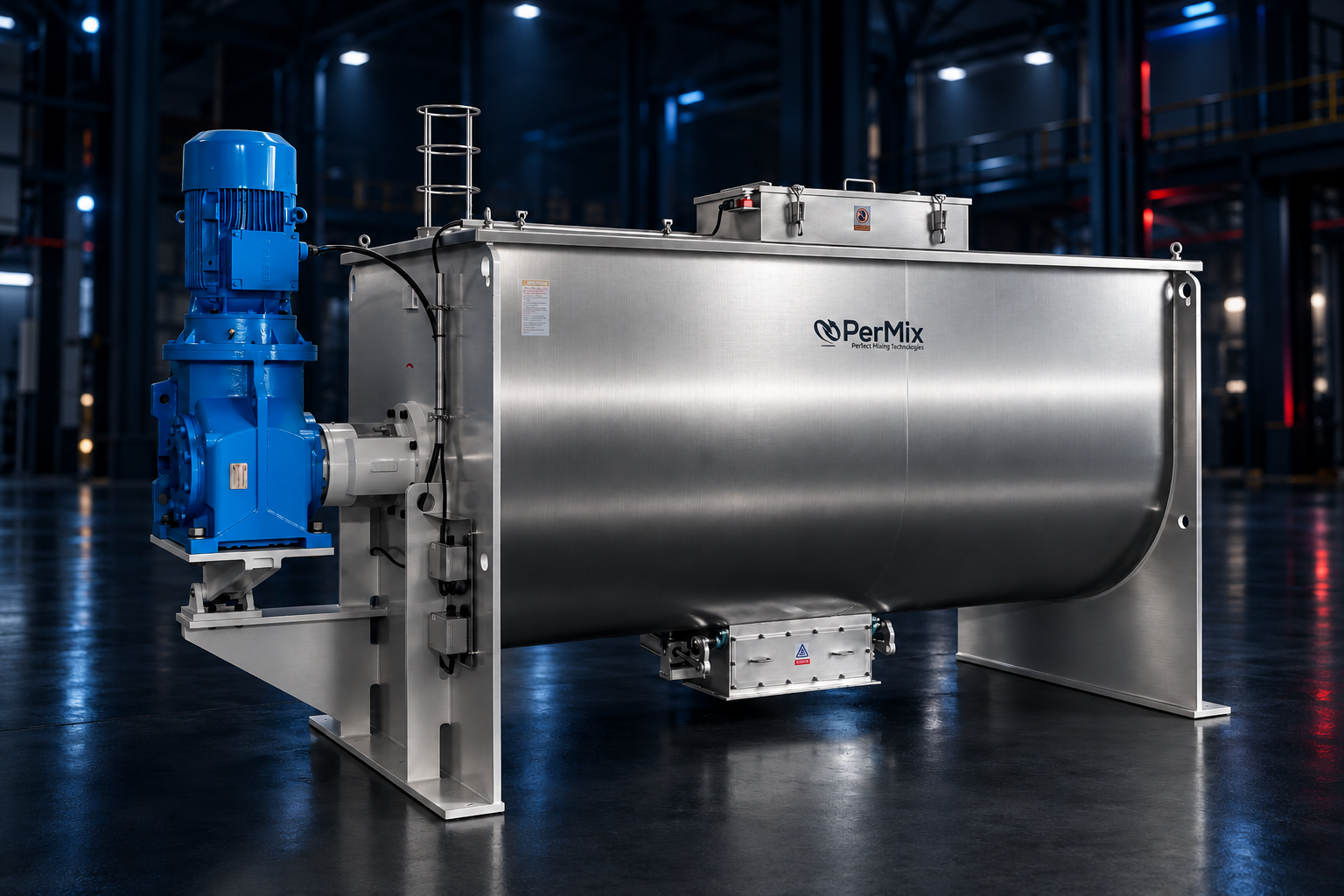
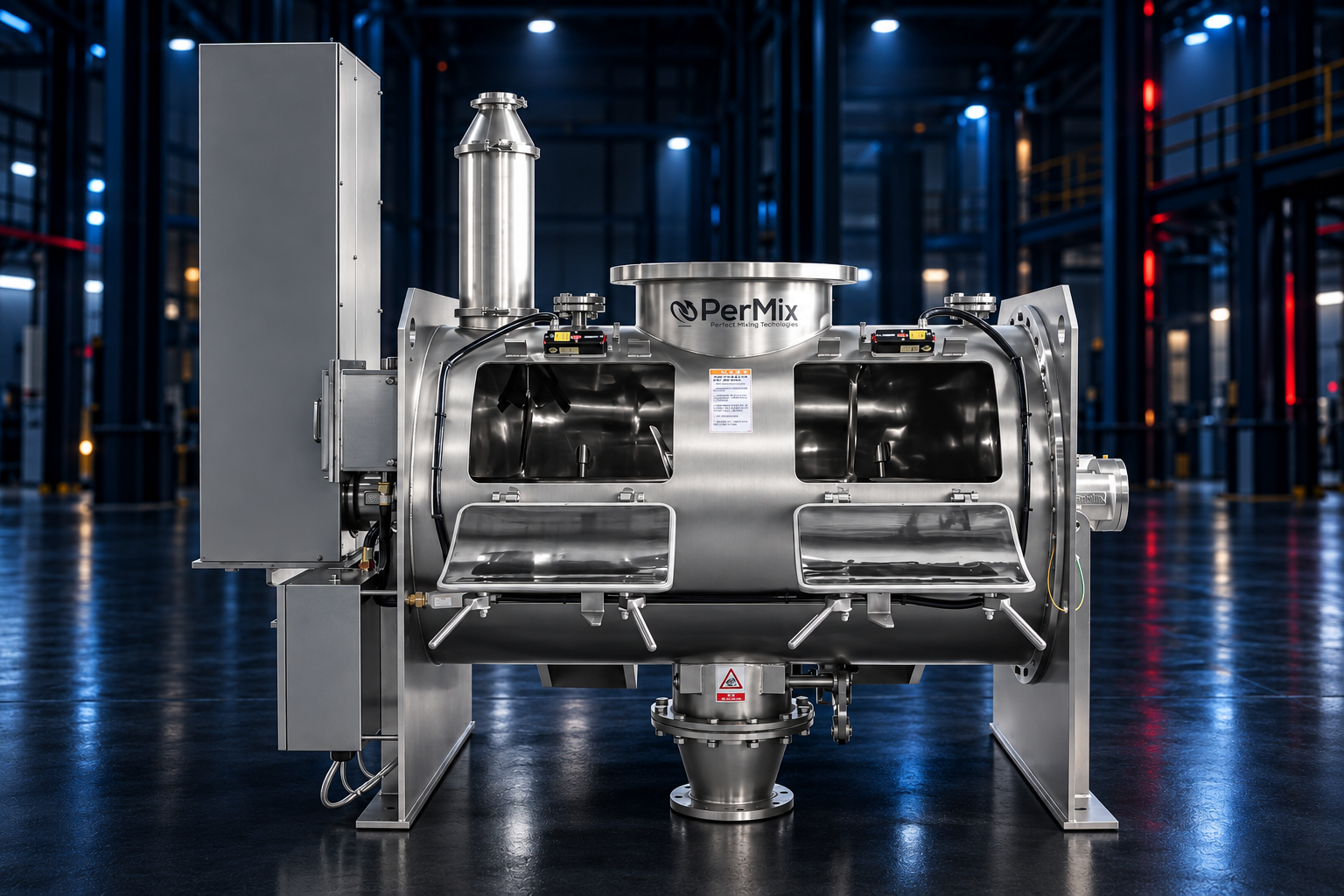
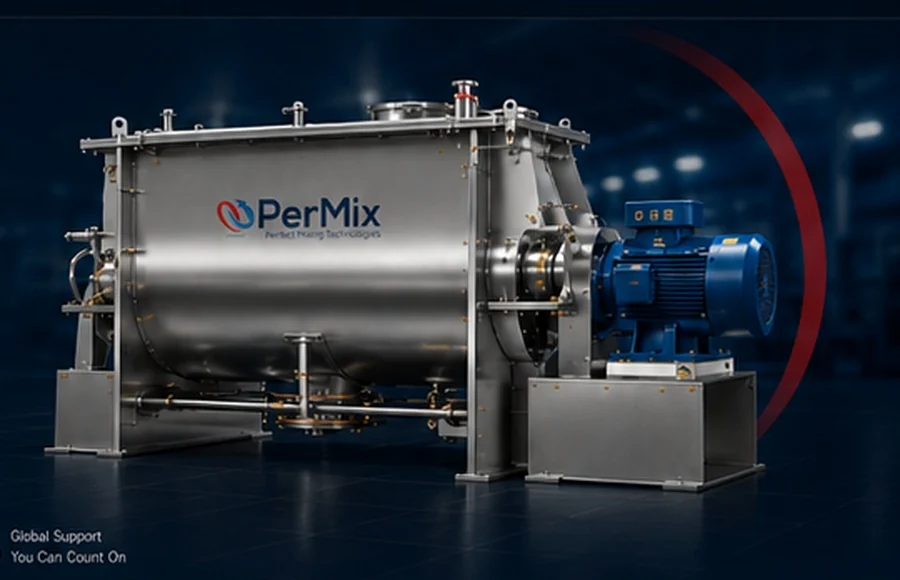
PerMix stainless steel industrial ribbon mixer engineered by PerMix Americas

Mix
Solve
Create
A Brighter
Tomorrow

Industrial Mixing Is Not a Catalog Decision

Many equipment decisions begin with one question:

“How many liters do you need?”

That question is not enough.

A fine cohesive powder does not behave like a free-flowing granule.

A fragile inclusion cannot be handled like an abrasive mineral.

A sanitary food blend does not have the same cleaning requirements as a specialty chemical.

A mixer intended for vacuum, pressure, solvent handling, ATEX, ASME or thermal drying cannot be treated as a standard atmospheric blender with additional accessories.

PerMix Americas exists to make those distinctions before the equipment is built.

Two products with the same batch volume can require completely different:

  • Agitator geometry
  • Working fill level
  • Motor power
  • Startup torque
  • Shaft design
  • Seal arrangement
  • Materials of construction
  • Surface finish
  • Discharge system
  • Thermal design
  • Controls
  • Safety systems

Our Story

Established Mixer Heritage. Modern Process Engineering.

The PerMix equipment heritage traces back to 1954, with decades of experience across powder mixing, tumble blending, high-intensity processing and specialty mixing systems.

Today, PerMix Americas carries that equipment heritage forward as part of Proc-X Manufacturing Group Inc.

Our role is not simply to reproduce established mixer types. It is to combine proven mechanical platforms with modern application engineering, materials technology, automation, thermal processing, safety requirements and system integration.

That means taking familiar equipment—including ribbon mixers, paddle mixers, ploughshare mixers and double cone mixers—and engineering it for contemporary manufacturing challenges such as:

  • Advanced materials
  • High-purity processing
  • Sanitary production
  • Abrasive powders
  • Controlled liquid addition
  • Vacuum drying
  • Pressure processing
  • Solvent handling
  • Hazardous areas
  • Batch traceability
  • Automated ingredient handling
  • Data collection and validation

We respect the history of industrial mixing while continuing to improve how equipment is selected, designed, controlled and supported.

One Group. Three Clear Mixing Platforms.

A major part of our engineering approach is knowing when a standard mixer is appropriate—and when the process requires something more specialized.

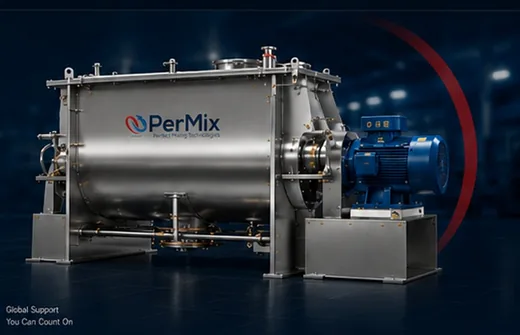
PerMix standard ribbon mixer

PerMix Standard Mixers

Focused Industrial Mixing for Powders and Granules

PerMix standard equipment is organized around four principal mixer families:

These platforms serve a broad range of atmospheric powder and granule processing applications.

Standard PerMix systems can include:

  • Carbon steel, 304 or 316L stainless steel construction
  • Industrial or sanitary fabrication
  • Horizontal or vertical configurations where applicable
  • Controlled liquid addition
  • Choppers and intensifiers where appropriate
  • Load-cell weighing
  • PLC/HMI controls
  • Automated ingredient handling
  • Packaging-line integration
  • Low-pressure, non-ASME heating and cooling jackets
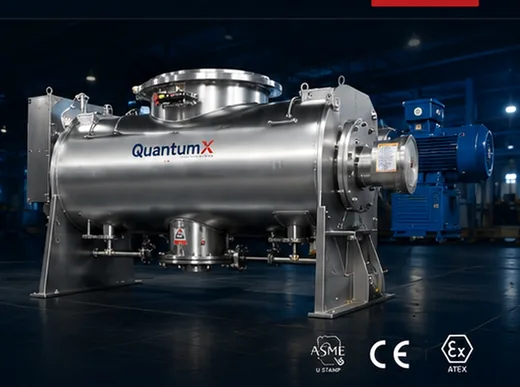
QuantumX engineered specialty mixer

QuantumX Specialty Systems

When Standard Is Not Enough

Applications move into the QuantumX platform when they require more than atmospheric blending.

QuantumX systems can be engineered for:

QuantumX equipment includes advanced versions of established mixer platforms, including:

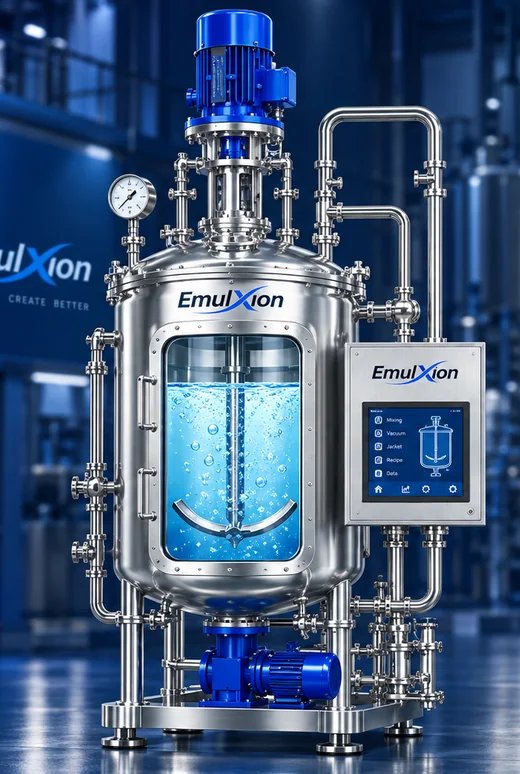
EmulXion liquid processing system

EmulXion Liquid Processing

Dedicated Engineering for Liquids, Suspensions and Emulsions

Liquid mixing requires a different engineering approach than dry powder blending.

EmulXion is our dedicated platform for:

  • Liquid agitation
  • High-shear mixing
  • Emulsification
  • Homogenization
  • Powder induction
  • Wet dispersion
  • Vacuum deaeration
  • Suspensions
  • Inline processing
  • Colloid milling
  • Complete liquid-process systems

EmulXion systems are engineered around:

  • Viscosity
  • Shear requirement
  • Particle or droplet-size target
  • Powder wet-out
  • Recirculation
  • Temperature
  • Vacuum
  • Sanitation
  • Batch or continuous operation
  • Upstream and downstream integration

Our Engineering Philosophy

The Machine Comes After the Process

Every serious mixing project begins with understanding the material.

Our engineers review factors such as:

  • Batch mass
  • Loose and packed bulk density
  • Minimum and maximum fill level
  • Particle size
  • Particle-size distribution
  • Particle shape
  • Flowability
  • Cohesiveness
  • Fragility
  • Abrasion
  • Corrosion
  • Minor-ingredient ratio
  • Required blend uniformity
  • Liquid-addition percentage
  • Heating or cooling requirements
  • Vacuum or pressure
  • Sanitary requirements
  • Hazardous-area classification
  • Loading and discharge methods
  • Required batch cycle
  • Downstream equipment

The objective is not to fit every application into the mixer a customer initially requests.

The objective is to identify the mixer and process configuration most likely to achieve the required result.

Sometimes that confirms the original equipment choice.

Sometimes it leads to a different recommendation.

That distinction is part of responsible application engineering.

We Engineer the Agitator—not Just the Vessel

The internal mixing tool determines how energy is transferred into the product.

That is why we evaluate details such as:

Industrial Ribbon Mixers

Ribbon Mixers

  • Inner and outer ribbon width
  • Ribbon pitch
  • Total active surface area
  • Inner-to-outer circulation balance
  • Ribbon-to-vessel clearance
  • Fill level
  • Tip speed
  • Startup torque
industrial paddle mixers

Paddle Mixers

  • Paddle width
  • Paddle angle
  • Number of paddles
  • Axial spacing
  • Radial position
  • Active paddle area
  • Product lift and folding pattern
  • Vessel clearance
industrial ploughshare mixers

Ploughshare Mixers

  • Plough width
  • Plough profile
  • Attack angle
  • Axial spacing
  • Zone overlap
  • Tip speed
  • Chopper location
  • Mechanical fluidization
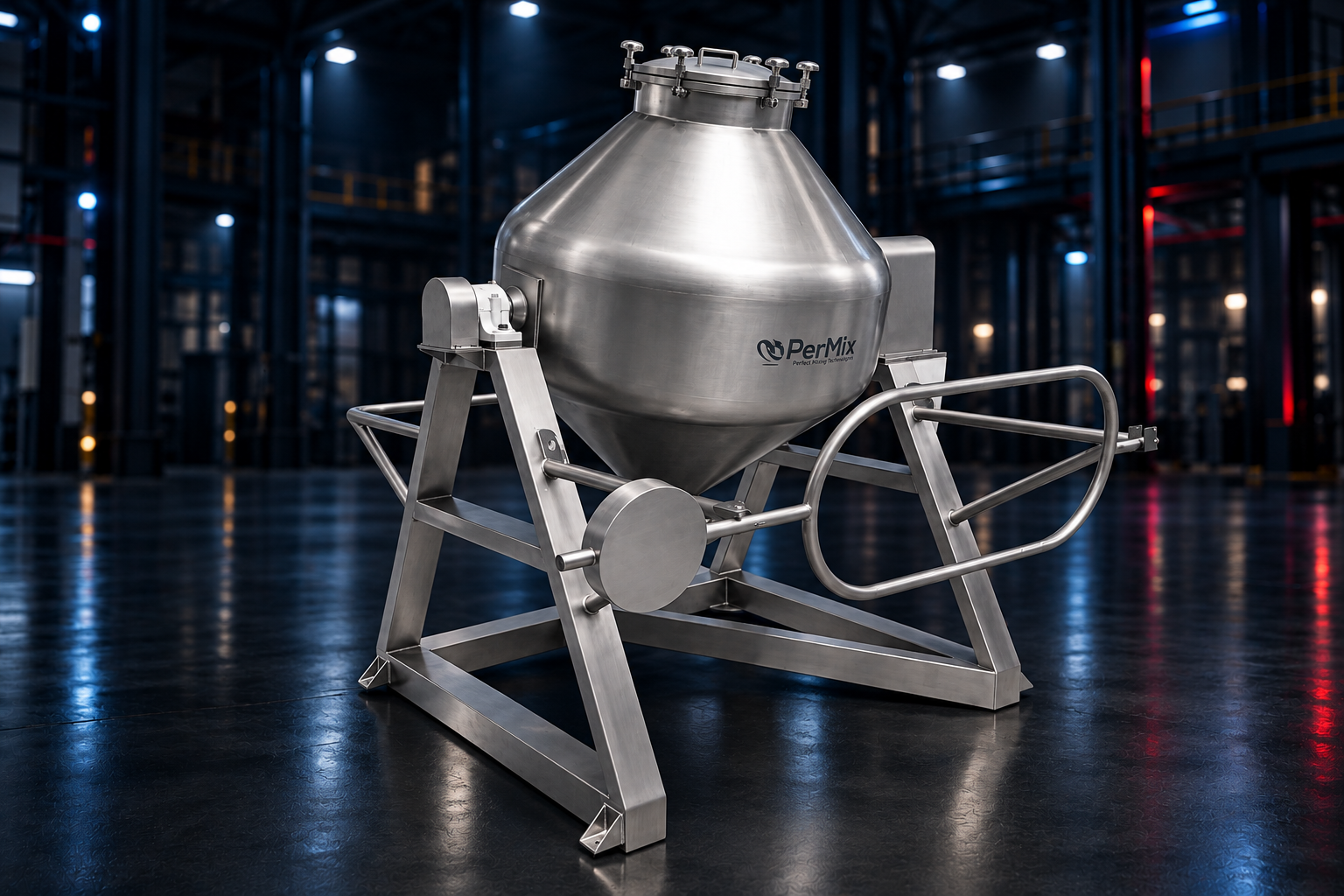
industrial double cone mixer

Double Cone Mixers

  • Cone angle
  • Vessel diameter
  • Working fill
  • Tumble path
  • Rotational speed
  • Dynamic balance
  • Discharge position
  • Segregation risk

The mixer is not defined only by its capacity.

It is defined by how the material moves inside it.

Materials of Construction

Built for Corrosion, Abrasion, Purity and Service Life

Different materials require different construction strategies.

PerMix and QuantumX systems can be evaluated using:

  • Carbon steel
  • 304 stainless steel
  • 316 and 316L stainless steel
  • Duplex stainless steels
  • Specialty stainless grades
  • Hastelloy
  • Nickel alloys
  • Titanium
  • Hardox
  • Abrasion-resistant steels
  • Ceramic liners
  • Glass-lined construction
  • Tungsten-carbide protection
  • Replaceable wear liners
  • Application-specific coatings

Material selection considers:

  • Chemical compatibility
  • Cleaning chemistry
  • Abrasion
  • Impact
  • Operating temperature
  • Vacuum or pressure
  • Thermal cycling
  • Metallic contamination
  • Product purity
  • Weldability
  • Fabrication method
  • Maintenance
  • Expected service life
  • Lifecycle cost

The most expensive material is not automatically the best material.

The correct material is the one that provides the required process compatibility and service life without introducing unnecessary cost or mechanical risk.

Standardization Where It Helps. Customization Where It Matters.

Standardization can improve:

  • Cost
  • Lead time
  • Documentation
  • Spare-parts availability
  • Serviceability
  • Operator familiarity

But standardization should not override the process.

We use established mixer platforms and proven assemblies wherever practical, then customize the areas that materially affect performance, including:

  • Agitator geometry
  • Vessel proportions
  • Materials of construction
  • Surface finish
  • Shaft seals
  • Access doors
  • Discharge system
  • Spray system
  • Thermal jacket
  • Vacuum system
  • Pressure rating
  • Choppers
  • Controls
  • Instrumentation
  • Loading
  • Downstream integration

The objective is not customization for its own sake.

The objective is controlled customization where it improves process performance, sanitation, safety or lifecycle value.

From Application Review to Production

A Structured Engineering Process

1. Application Discovery

We begin by reviewing the material, batch, production target, plant environment and process objective.

2. Mixer Selection

We evaluate whether the application is best suited to a ribbon, paddle, plough, double cone, QuantumX or EmulXion platform.

3. Process Basis

We define the working volume, expected batch mass, mixing duty, thermal requirements, materials, controls and integration requirements.

4. Technical Proposal

The proposal establishes the preliminary equipment configuration, scope, options, commercial basis and lead time.

5. Engineering Review

The project moves into detailed review of:

  • General arrangement
  • Nozzles and connections
  • Utilities
  • Controls
  • Safety
  • Access
  • Cleaning
  • Loading
  • Discharge
  • Documentation

6. Manufacturing and Inspection

The equipment is manufactured, inspected and documented according to the approved project requirements.

7. Factory Acceptance Testing

FAT scope can include:

  • Mechanical operation
  • Controls
  • Interlocks
  • Rotation
  • Positioning
  • Vacuum testing
  • Pressure testing where applicable
  • Heating or cooling checks
  • Instrument verification
  • Product trials when agreed

8. Delivery and Support

Support can include installation guidance, commissioning, training, spare parts, troubleshooting, retrofits and lifecycle service.

We Believe Proof Matters More Than Claims

A manufacturer can say equipment is engineered, sanitary, reliable or high quality.

The more useful question is:

“What evidence supports the statement?”

Depending on project scope, PerMix and QuantumX documentation can include:

  • General arrangement drawings
  • P&IDs
  • Material certificates
  • Surface-finish documentation
  • Motor and gearbox data
  • Instrument data sheets
  • Welding documentation
  • Pressure-test records
  • Vacuum-test records
  • Electrical drawings
  • Control narratives
  • FAT protocols
  • FAT reports
  • Operating manuals
  • Spare-parts lists
  • Preventive-maintenance guidance
  • IQ/OQ documentation
  • Validation support
  • Test data
  • Customer-approved case studies

We are building the PerMix website to function as an engineering resource—not simply an online equipment catalog.

North American Accountability. International Capability.

PerMix Americas provides a clear North American point of responsibility for:

  • Application engineering
  • Project definition
  • Quotations
  • Customer communication
  • Documentation
  • FAT coordination
  • Service
  • Warranty support
  • Spare parts
  • Lifecycle assistance

Projects may use a combination of domestic and international engineering, fabrication and component resources depending on:

  • Equipment type
  • Materials
  • certification requirements
  • project schedule
  • country of destination
  • customer preference
  • supply-chain requirements

Manufacturing location, country of origin and project execution basis should be clearly identified in the proposal and confirmed before order placement.

The customer should know who is responsible, where the equipment is being built and how the project will be supported.

Industries We Serve

Bowls of spices, seasonings and food powders for blending in industrial ribbon mixers

Food and Beverage

  • Seasonings
  • Proteins
  • Bakery ingredients
  • Beverage powders
  • Dairy powders
  • Functional ingredients
  • Starches
  • Sweeteners
  • Ready-meal components
  • Pet food
Pharmaceutical capsules and granules in a petri dish for supplement and excipient blending

Pharmaceutical and Nutraceutical

  • APIs
  • Excipients
  • Vitamins
  • Minerals
  • Botanical ingredients
  • Supplement blends
  • Granules
  • High-purity powders
  • Vacuum-dried materials

What Makes PerMix Americas Different?

Process-First Equipment Selection

We recommend the mixer that best fits the material and objective—not simply the model initially requested.

Clear Platform Boundaries

Standard PerMix, QuantumX and EmulXion each have a defined role. Customers are not asked to force a specialty process into a standard machine.

Agitator Engineering

We evaluate the dimensions, geometry, surface area, spacing, clearances and speeds that determine actual product movement.

Advanced Materials

We can evaluate stainless steel, Hastelloy, titanium, ceramic liners, glass lining, Hardox and other specialty constructions.

System Integration

Mixers can be integrated with weighing, conveying, liquid dosing, screening, metal detection, packaging and automation.

Documentation and FAT

Projects can include drawings, P&IDs, test protocols, operating documents and application-specific FAT.

Lifecycle Support

Our relationship does not end when the equipment ships. Service, spare parts, retrofits and process support remain part of the equipment lifecycle.

Accountability

Customers have a clear project contact and a defined route for technical, commercial and service communication.

Our Standard Is the Result

We do not believe the goal is to build the most complicated mixer.

We believe the goal is to engineer the simplest reliable system that can achieve the process requirement safely, repeatedly and economically.

That may mean:

  • A standard atmospheric ribbon mixer
  • A gentle paddle mixer
  • An intensive plough mixer
  • A simple double cone blender
  • A vacuum dryer
  • A pressure-rated reactor
  • An EmulXion liquid-processing system
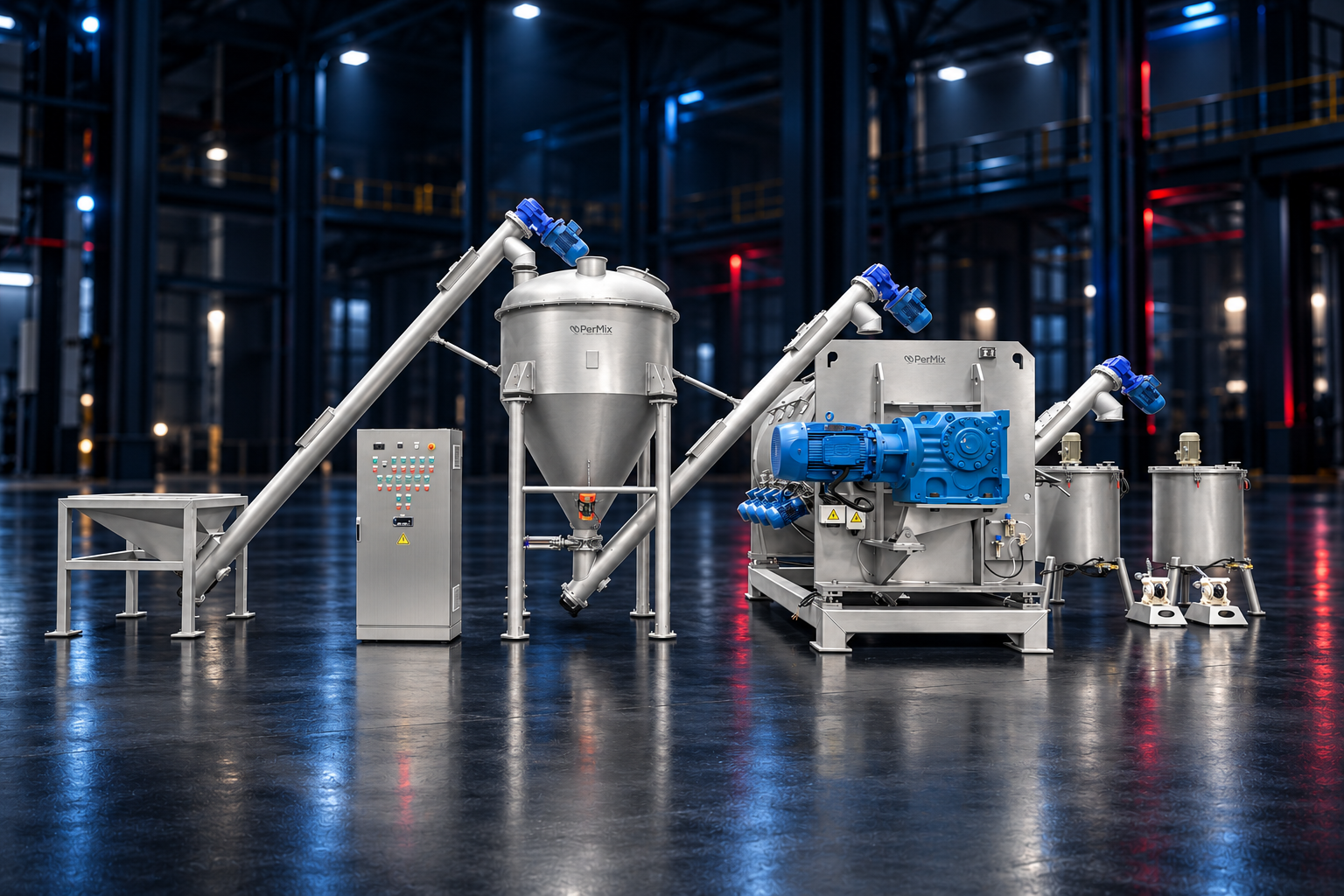
  • A complete integrated line

The right answer depends on the process.

Leadership Message

“We do not want to sell a mixer simply because it appears in a catalog. We want to understand how the material behaves, what the customer must accomplish and what can fail when the process reaches production. The machine comes after the process.”

John Paul
CEO & Managing Director
Proc-X Manufacturing Group Inc.

Official PerMix Americas Website

Verify Before Sharing Project or Payment Information

The official PerMix Americas website is:

https://www.permixmixers.com

Primary project and lead communications are routed through approved company channels, including:

john.paul@procxinc.com

Before sending confidential process information, purchase orders or payment instructions, customers may request verification of:

  • Official contact information
  • Quotation validity
  • Company details
  • Payment instructions
  • Project responsibility
  • Authorized representatives

Frequently Asked Questions

Is PerMix Americas part of Proc-X Manufacturing Group?

Yes. PerMix Americas operates within Proc-X Manufacturing Group Inc., providing application engineering, project execution, support and lifecycle services for PerMix equipment and associated specialty platforms.

What mixers does PerMix Americas offer?

The principal standard mixer families are Ribbon Mixers, Paddle Mixers, Ploughshare Mixers and Double Cone Mixers.

What is QuantumX?

QuantumX is the specialty platform for vacuum, pressure, ASME, PED, ATEX, containment, advanced thermal processing, drying, reactive systems and specialty materials.

What is EmulXion?

EmulXion is the dedicated liquid-processing platform for high-shear mixing, emulsification, homogenization, powder induction, deaeration and complete liquid-process systems.

Does PerMix only sell standard mixers?

No. Standard equipment platforms are customized where the process requires different agitator geometry, materials, finishes, seals, discharge, controls, thermal systems or integration.

Can PerMix help select the right mixer?

Yes. The engineering review considers the material, batch, density, particle characteristics, liquid addition, sanitation, thermal duty and production objectives.

Are heating and cooling jackets available?

Yes. Standard PerMix equipment can include low-pressure, non-ASME heating and cooling jackets. More demanding thermal, vacuum, pressure or code-rated systems move into QuantumX.

Are vacuum and pressure systems available?

Yes. Vacuum, pressure, ASME, PED, ATEX and advanced process systems are engineered under QuantumX.

What materials of construction are available?

Options can include carbon steel, stainless steels, duplex grades, Hastelloy, nickel alloys, titanium, Hardox, ceramic liners, glass lining and application-specific coatings.

Does PerMix provide FAT?

Factory acceptance testing can be included according to the equipment and agreed project scope.

Can PerMix integrate the mixer into a complete production line?

Yes. Systems can include weighing, feeding, conveying, liquid dosing, screening, metal detection, packaging, controls and data management.

Does PerMix support existing equipment?

Support can include spare parts, troubleshooting, inspections, controls upgrades, rebuilds, retrofits and preventive-maintenance planning.

How do I begin a project?

Submit the material, batch size, bulk density, process objective and available supporting information through the Request a Quote or Mixer Selection forms.

APPLICATION ENGINEERING BEFORE EQUIPMENT SELECTION

The Right Mixer Begins with the Right Questions

Tell us:

  • What you are processing
  • How much you need per batch
  • How the material behaves
  • What result must be achieved
  • What is failing in the current process
  • What standards or constraints apply

We will help determine whether the correct platform is:

  • Ribbon
  • Paddle
  • Plough
  • Double cone
  • QuantumX
  • EmulXion