
01
ATEX Ribbon Mixers
Controlled Convective Mixing for Powders and Granules
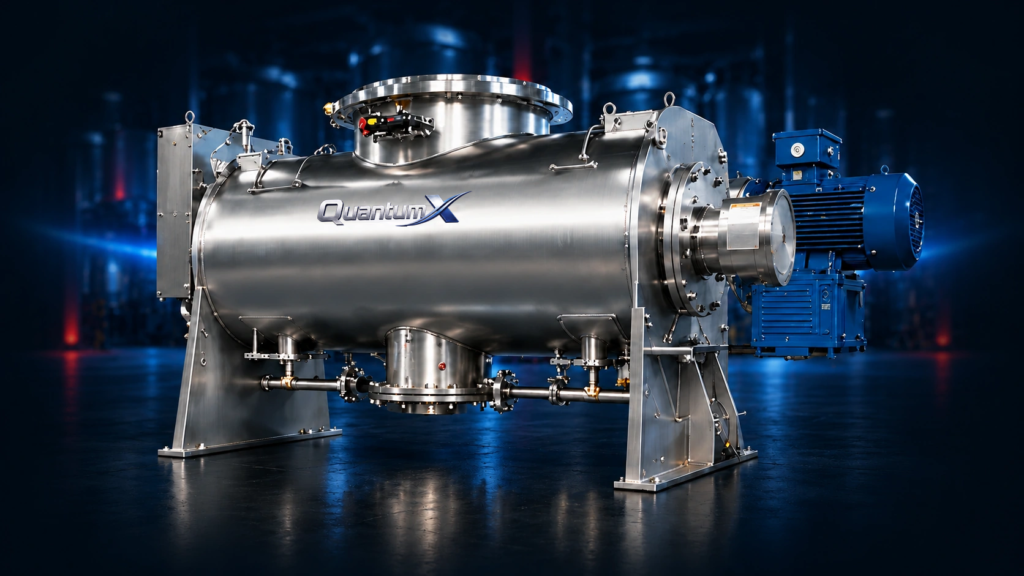
EXPLOSIVE-ATMOSPHERE ENGINEERING DUST, GAS, VAPOR & SOLVENT DUTIES
ATEX Mixers Engineered Around the Complete Ignition-Risk Basis
An ATEX mixer is not a standard mixer fitted with an Ex-rated motor.
The complete equipment system must be evaluated for electrical and non-electrical ignition risks, including hot surfaces, mechanical friction, impact sparks, static electricity, bearings, shaft seals, foreign bodies, choppers, agitator clearances, product heating, gas or dust release, cleaning and foreseeable equipment faults.
Overview
Installing an ATEX-rated motor does not make the complete mixer suitable for an explosive atmosphere.
A mixer contains multiple potential ignition sources and interfaces, including:
The ATEX equipment directive requires integrated explosion safety and consideration of both electrical and non-electrical ignition sources. It specifically addresses sparks, electric arcs, high surface temperatures, static electricity, stray currents, friction, impacts, overheating, foreign-body intrusion and pressure-compensation effects.
QuantumX evaluates the machine as one integrated system.
The motor may be ATEX-rated. The mixer must be ATEX-engineered.
QuantumX engineers industrial mixing systems around the customer’s defined:
The EU ATEX equipment directive applies to equipment and protective systems intended for potentially explosive atmospheres, including certain safety, control and regulating devices located outside the hazardous area when they contribute to explosion safety. The current framework remains Directive 2014/34/EU, supported by European Commission guidance and harmonized standards published through the Official Journal.
QuantumX platforms
01
Controlled Convective Mixing for Powders and Granules
02
Gentle Mixing for Fragile and Variable-Density Products
03
Intensive Processing for Cohesive Powders and Liquid Addition
04
Gentle Tumble Blending in Hazardous Environments
05
06
QuantumX platforms
01Platform
Controlled Convective Mixing for Powders and Granules
QuantumX ATEX ribbon mixers can be evaluated for:
General chemical powdersFood ingredientsPharmaceutical excipientsNutraceutical powdersPolymer additivesFeed premixesBattery materialsMineral formulationsControlled liquid additionInerted powder blending
Engineering considerations include:
Ribbon width and pitchActive surface areaStartup torqueBearing temperatureSeal arrangementAgitator clearanceGrounding and bondingProduct temperatureInternal and external zonesRequired equipment category
02Platform
Gentle Mixing for Fragile and Variable-Density Products
QuantumX ATEX paddle mixers can be evaluated for:
Fragile granulesPolymer pelletsFood inclusionsCoated particlesPharmaceutical granulesCatalyst carriersBattery-material granulesControlled liquid coating
Engineering considerations include:
Paddle width and angleProduct fragilityOpen agitator geometryBearing temperatureProduct temperatureStaticSeal purgeDischargeZone and category
03Platform
Intensive Processing for Cohesive Powders and Liquid Addition
QuantumX ATEX plough mixers can be evaluated for:
Cohesive powdersPigmentsCatalystsDetergentsPowder coatingDeagglomerationGranulationBattery materialsConstruction chemicalsSolvent-treated powders
Engineering considerations include:
Plough tip speedProduct accelerationMechanical heat inputChopper ignition riskBearing monitoringSeal monitoringWearStaticForeign-body controlInternal dust zoneGas or vapor hazard
04Platform
Gentle Tumble Blending in Hazardous Environments
QuantumX ATEX double cone mixers can be evaluated for:
Free-flowing powdersFragile granulesPharmaceutical powdersNutraceutical powdersFine chemicalsHigh-purity materialsCatalyst carriersBattery powders
Engineering considerations include:
Rotating-vessel ignition risksBearings and trunnionsDynamic balanceBrake and positioning systemStaticVessel speedGuardingLoading and discharge zonesIntensifier toolsVacuum and inerting
05Platform
QuantumX ATEX mixer-dryers can combine:
AgitationHeatingVacuumVapor removalCondensationSolvent recoveryInertingOxygen monitoringClosed discharge
Potential platforms include:
Ribbon mixer-dryersPaddle mixer-dryersPlough mixer-dryersDouble cone vacuum dryersConical screw mixer-dryers
The project must define both the explosive-atmosphere basis and the pressure or vacuum design basis.
06Platform
High-containment systems can integrate:
Closed chargingGlovebox interfacesSplit-butterfly valvesVacuum transferContained samplingHigh-integrity sealsFiltered ventingContained dischargeWash-in-placeClean-in-placeNitrogen inertingOxygen monitoring
Containment, ATEX and pressure-vessel requirements are separate engineering considerations and must all be defined.
ATEX responsibilities
Directive 2014/34/EU applies to equipment and protective systems intended for use in potentially explosive atmospheres.
For an applicable mixer project, the manufacturer’s responsibilities can include:
The exact conformity route and level of notified-body involvement depend on the equipment category, type of equipment and applicable assessment procedure.
Directive 1999/92/EC addresses the safety and health of workers who may be exposed to explosive atmospheres.
The employer or facility operator is responsible for matters including:
The workplace directive requires the employer to evaluate the likelihood and duration of explosive atmospheres, the likelihood of effective ignition sources, the substances and processes involved, and the anticipated consequences.
QuantumX can engineer equipment around the supplied hazardous-area and material basis.
QuantumX does not replace the customer’s responsibility to:
Hazardous areas
Hazardous Areas Are Classified by Frequency and Duration
The workplace directive defines gas, vapor and mist zones as:
Combustible-dust zones are defined as:
Dust layers, deposits and accumulations must also be considered because they can become sources of an explosive atmosphere.
Category Must Match the Defined Zone and Risk Basis
For non-mining applications, ATEX equipment generally falls under Equipment Group II.
The standard zone-to-category selection relationship is:
| Hazardous Zone | Normally Applicable Equipment Categories |
|---|---|
| Zone 0 | Category 1G |
| Zone 1 | Category 1G or 2G |
| Zone 2 | Category 1G, 2G or 3G |
| Zone 20 | Category 1D |
| Zone 21 | Category 1D or 2D |
| Zone 22 | Category 1D, 2D or 3D |
Category 1 provides a very high level of protection and addresses rare equipment incidents. Category 2 provides a high level of protection and addresses disturbances or faults that normally must be anticipated. Category 3 provides a normal level of protection during normal operation. The final selection remains subject to the facility risk assessment and explosion-protection document.
Zone interfaces
A mixer can have multiple hazardous interfaces:
The vessel interior may contain a dust cloud during normal operation while the surrounding room has a lower-frequency classification—or no classified zone under normal operation.
The opposite can also occur when the process handles solvent vapor or flammable gas around seals, vents or connected equipment.
Because the workplace directive requires connected spaces, processes and potential interactions to be considered in the overall explosion-risk assessment, the project must define the internal and external classification separately.
Provide:
Do not assume that one zone designation applies to the complete machine.
ATEX marking distinguishes between equipment intended for:
Some processes involve both dust and flammable vapor, requiring assessment of both hazard types.
Examples can include:
A machine suitable for a dust atmosphere is not automatically suitable for a gas or vapor atmosphere.
A machine suitable for a gas atmosphere is not automatically suitable for combustible dust.
The project documentation must identify every applicable hazard.
Project information
Provide:
Where applicable, provide:
If reliable dust data are unavailable, representative testing may be required before the protection strategy can be finalized.
Where applicable, provide:
Provide:
Explosion safety
01Strategy
Potential measures can include:
Closed chargingClosed dischargeDust extractionFiltered ventingVacuum transferSealed process connectionsControlled solvent additionCondensationNitrogen inertingOxygen reductionDry-gas sweepLeak reductionHousekeeping interfaces
02Strategy
Potential measures can include:
ATEX-rated electrical componentsMechanical ignition-risk assessmentControlled agitator clearancesBearing-temperature monitoringProduct-temperature monitoringSeal monitoringSpeed monitoringOverload and torque monitoringVibration monitoringStatic grounding and bondingConductive component selectionForeign-body exclusionSurface-temperature controlInterlocksPurged sealsSafe opening logicControlled maintenance procedures
03Strategy
Depending on the facility strategy, potential protective measures can include:
Explosion ventingFlameless ventingExplosion suppressionExplosion isolationPressure-resistant constructionContainmentRapid shutdownEmergency depressurizationSafe vent dischargeProtected filter systems
The ATEX workplace directive establishes the hierarchy of preventing explosive atmospheres, avoiding ignition and mitigating explosion consequences. The final combination of measures must be established by the customer’s risk assessment and explosion-protection document.
Dust, gas, vapor and solvent duties
Potential dust applications can include:
Dust-specific engineering may include:
The actual hazard classification must be based on representative material data and the facility risk assessment.
Potential gas or vapor applications can include:
Gas- and vapor-specific engineering may include:
A project can require multiple independent compliance frameworks, including:
An ATEX mixer is not automatically pressure-rated.
An ASME or PED vessel is not automatically ATEX-compliant.
A sanitary mixer is not automatically suitable for an explosive atmosphere.
QuantumX identifies each requirement separately and integrates them into one project design basis.
Ignition-risk engineering
01Risk
Bearing failure can create heat, friction and mechanical damage.
Potential controls can include:
External bearing locationSuitable bearing selectionLubrication planTemperature monitoringVibration monitoringSpeed monitoringInspection accessPreventive-maintenance intervalsFailure alarmsAutomatic shutdown
02Risk
Shaft seals can create risks through:
Frictionoverheatingleakageproduct buildupgas or vapor releasedust releaseloss of purgebarrier-fluid failure
Potential arrangements can include:
Air-purged sealsNitrogen-purged sealsMechanical sealsDouble mechanical sealsBarrier-fluid systemsVacuum-rated sealsPressure-rated sealsContainment sealsSeal-temperature monitoringSeal-pressure monitoringPurge-flow monitoring
03Risk
A rotating agitator that contacts the vessel, liner, foreign body or accumulated product can create friction, heat or sparks.
The mechanical design must consider:
Shaft deflectionManufacturing toleranceThermal expansionLiner thicknessProduct buildupBearing wearForeign bodiesStartup torqueVessel distortionProcess pressureVacuumAgitator speed
04Risk
High-speed choppers require special review because of:
Tip speedBearing temperatureSeal frictionblade-to-housing clearanceForeign-body impactProduct buildupVibrationOverspeedTool damage
Potential safeguards can include:
Independent speed monitoringBearing-temperature monitoringVibration monitoringMotor-current monitoringInterlocked operationControlled startup sequenceForeign-body preventionInspection procedures
05Risk
Potential mechanical-spark mechanisms can include:
Metal-to-metal contactForeign-body impactLoose componentsAgitator contactChopper damageCoupling failureBroken toolsWorn bearingsMisalignment
The risk depends on the materials involved, impact energy, process environment and required equipment category.
Technical details
Grounding Is Necessary—but May Not Be Sufficient
Static charge can develop through:
Potential controls can include:
The ATEX directive specifically requires prevention of electrostatic charges capable of causing dangerous discharge.
Ceramic, polymeric and other nonmetallic liners can affect static behavior.
A liner selected only for abrasion or corrosion resistance may create a new electrostatic concern.
The review should consider:
Electrical Temperature Class Is Only Part of the Review
Potential hot surfaces can include:
The design must consider both normal operation and foreseeable faults.
The ATEX equipment directive requires control of hot surfaces and temperature increases caused by heat buildup, friction, impacts and chemical reactions.
Potential monitoring can include:
Inerting Can Reduce Risk—but Must Be Engineered as a Safety System
Potential inerting sequences can include:
An inerting system may include:
The required oxygen target must be based on the material data and process risk assessment.
Inerting does not eliminate the need to evaluate all foreseeable operating and failure conditions.
Protective Systems Must Match the Equipment and Installation
Potential strategies can include:
The appropriate method depends on:
Protective systems and associated safety devices may themselves fall within the scope of ATEX conformity requirements.
The customer’s explosion-protection specialist must define the overall facility strategy.
QuantumX can coordinate the required equipment interfaces.
Thermal systems must account for:
Potential safeguards can include:
Potential QuantumX ATEX construction options can include:
Material selection must evaluate:
Potential ATEX-rated or safety-related components can include:
The required equipment category, protection method and temperature rating must be established from the defined zone and process basis.
Variable-frequency-drive operation must be evaluated together with the selected motor, load profile, cooling and temperature protection.
Potential controls can include:
Safety-related functions should be defined through the project risk assessment and implemented using the required architecture.
Depending on the project scope and conformity route, documentation can include:
Applicable harmonized standards should be confirmed against the current Official Journal references at the beginning of each project because the published list is amended over time. The European Commission’s ATEX page identifies updates through 2026 and the sixth edition of the ATEX application guidelines issued in January 2026.
Potential FAT activities can include:
FAT does not replace final installation verification, workplace explosion-safety verification or commissioning within the customer’s actual hazardous environment.
Industries and applications
QuantumX ATEX mixers can be evaluated for:

Flour · Sugar · Starch · Spices · Proteins · Beverage powders · Dairy powders · Seasonings · Alcohol-treated ingredients
Explore industry
APIs · Excipients · Vitamin blends · Botanical powders · Solvent-wet intermediates · High-containment powders
Explore industry
Pigments · Catalysts · Detergents · Resins · Fertilizers · Coatings · Solvent-treated powders · Reactive formulations
Explore industry
Graphite · Conductive carbon · Carbon nanotubes · Metal powders · Cathode materials · Anode materials · Solvent-containing materials
Explore industry
Polymer powders · Resin systems · Additives · Masterbatch ingredients · Solvent-treated polymers
Explore industry
Feed powders · Agricultural chemicals · Fertilizers · Seed-treatment materials · Dusty premixes
Explore industryWhy QuantumX
QuantumX evaluates electrical and non-electrical ignition risks across the complete machine.
Ribbon, paddle, plough, double cone, conical and specialty mixers can be evaluated according to the material and process duty.
The mixer interior, installation area, charging, venting, sealing and discharge interfaces are treated separately.
Systems can be evaluated for combustible dust, gas, vapor, mist or combined hazards.
QuantumX can integrate vacuum, positive pressure, nitrogen inerting, oxygen monitoring and closed processing when required.
Temperature, speed, torque, vibration, purge and oxygen data can be incorporated into the control strategy.
Potential options include stainless steel, Hastelloy, titanium, ceramic liners and wear-resistant systems.
The mixer can be coordinated with feeders, conveyors, filters, explosion-protection systems, vacuum packages, condensers and contained discharge.
ATEX-relevant design, component, operating and test documentation can be defined within the project scope.
HAZARDOUS-AREA APPLICATION REVIEW
Provide:
Upload the area-classification drawing, explosion-protection document extracts, dust-test report, safety data sheets, hazardous-area specification, process description, P&ID and facility drawings. Confirm an approved confidential communication channel before submitting proprietary formulation or process information.
Frequently asked questions
An ATEX mixer is equipment engineered and conformity-assessed for intended use in a defined potentially explosive atmosphere under the applicable requirements of Directive 2014/34/EU.
No. The complete mixer must be assessed for electrical and non-electrical ignition risks, including bearings, seals, static, mechanical contact, hot surfaces, choppers, foreign bodies and controls.
Zone 20 applies where an explosive dust cloud is present continuously, for long periods or frequently. Zone 21 applies where it is likely occasionally during normal operation. Zone 22 applies where it is unlikely during normal operation or persists only briefly.
These zones apply to explosive atmospheres formed by gas, vapor or mist. Zone 0 represents continuous, long-duration or frequent presence; Zone 1 occasional presence during normal operation; and Zone 2 unlikely or brief presence.
The standard relationship allows Category 1D or Category 2D equipment in Zone 21, subject to the facility risk assessment and explosion-protection document.
Category 1D, 2D or 3D equipment may be selected for Zone 22, subject to the facility risk assessment.
Yes. The vessel interior, surrounding room, charging point, discharge point, vent and shaft-seal area can have different classifications.
G indicates equipment intended for explosive atmospheres involving gases, vapors or mists.
D indicates equipment intended for explosive atmospheres involving combustible dust.
Yes. ATEX addresses both electrical and non-electrical ignition risks. Mechanical mixers can create ignition risks through friction, impact, hot surfaces, static, bearings or tool contact.
Category 1D or other appropriate solutions can be evaluated for a defined Zone 20 application. The technical feasibility, conformity route and protection concept require detailed project review.
Yes, application-specific Category 2D or Category 3D configurations can be evaluated where appropriate to the supplied zone and risk basis.
Yes. QuantumX can engineer systems combining ATEX requirements with vacuum mixing or vacuum drying. ATEX and pressure or vacuum design remain separate engineering requirements.
Selected pressure-rated ATEX systems can be engineered under QuantumX. ASME, PED or other pressure requirements must be identified separately.
Yes. The thermal design must control all relevant surface temperatures and foreseeable fault conditions.
Yes. Systems can include nitrogen purge, evacuation and backfill, oxygen monitoring, pressure control and interlocks where required by the process basis.
Not automatically. The effect of inerting on zone classification and protection strategy must be established through the customer’s risk assessment and explosion-protection documentation.
Equipment interfaces can be engineered for suitable venting, suppression and isolation systems. Final selection and sizing depend on the material data, vessel, connected equipment and facility strategy.
Ceramic-lined systems can be evaluated, but static behavior, impact, liner attachment, clearances and grounding strategy must be included in the ignition-risk assessment.
Selected Hastelloy, nickel-alloy and titanium constructions can be evaluated according to process compatibility, mechanical design and conformity requirements.
No. ATEX and pressure-vessel requirements are separate. A project may require compliance with multiple directives, codes or jurisdictional rules.
The applicable conformity-assessment route and notified-body involvement depend on the equipment category, equipment type and protection concept.
The package can include marking information, conformity documentation, component certificates, ignition-hazard assessment, instructions, drawings, control narratives and FAT records according to the agreed project scope.
No. QuantumX can supply equipment designed for the defined ATEX requirements. The employer remains responsible for workplace classification, explosion-risk assessment, installation, operation and the explosion-protection document.
At minimum, provide the zones, equipment category, dust or gas data, temperature requirements, process conditions, internal and external classifications, mixer duty, inerting strategy, protection strategy and installation country.
QuantumX ATEX mixers
Request engineering support
Share your material and batch requirements. A PerMix engineer will review the application and recommend a mixer.