
1. Paddle Geometry Selected for the Product
Paddle width, angle, number, spacing, radial position, sweep and speed are evaluated against the actual material characteristics.
INDUSTRIAL PADDLE MIXERS | CONTROLLED PRODUCT MOVEMENT BY DESIGN
PerMix designs horizontal and vertical paddle mixers around the way your materials lift, separate, fold, exchange and discharge.
Paddle width, face angle, radial position, spacing, total active surface area, vessel clearance, tip speed, fill level, bulk density and startup torque are evaluated as one process system.
The result is controlled mixing with strong batch circulation and reduced product degradation—especially for fragile particles, variable-density ingredients, granules, pellets and materials that do not respond well to continuous ribbon contact or high-intensity plough mixing.
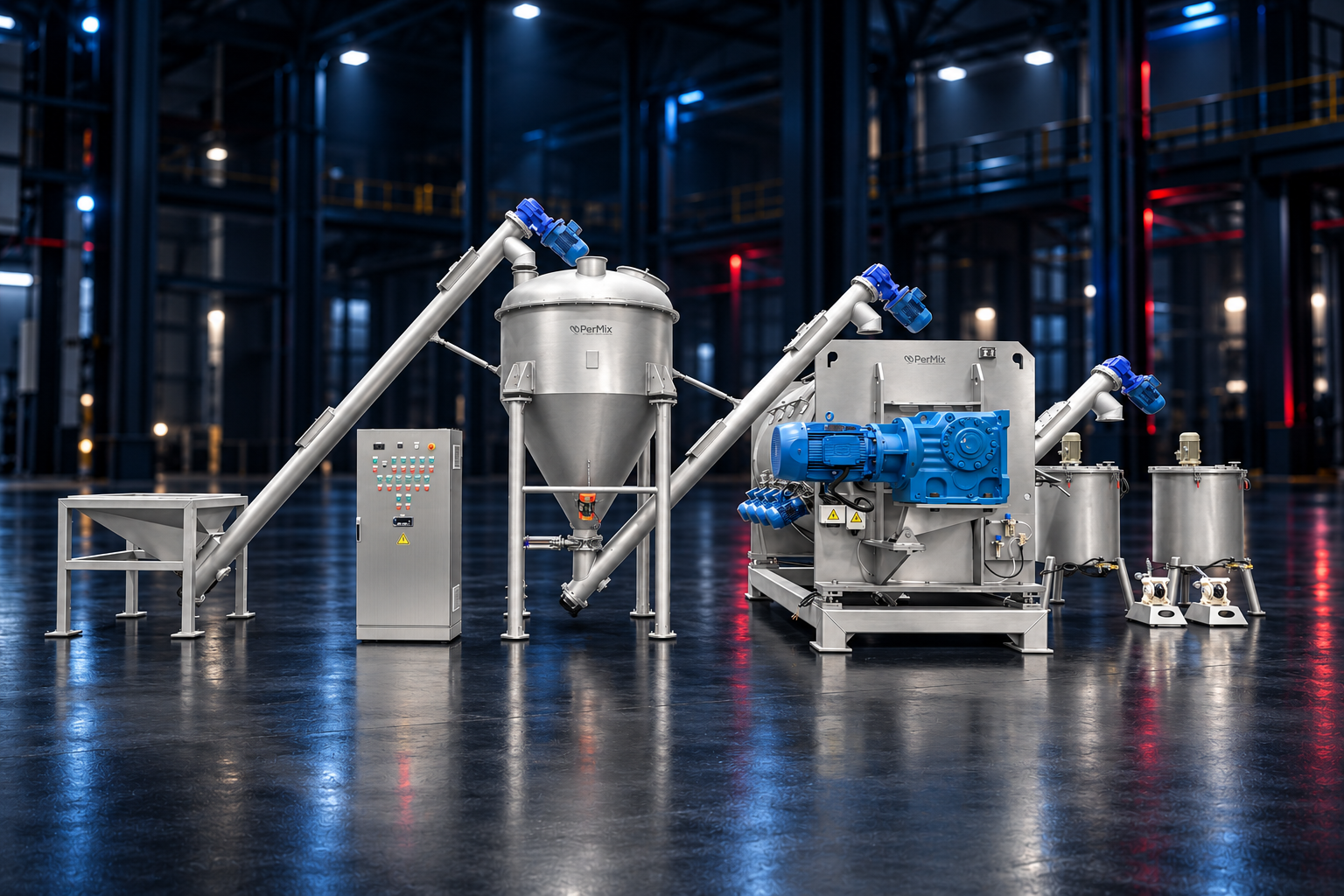
Mix
Solve
Create
A Brighter
Tomorrow
The performance of a paddle mixer is determined by much more than vessel volume, motor horsepower or rotational speed.
Each paddle must engage the product at the correct angle, depth and radial position. Together, the paddles must create repeated lifting, folding, separation and exchange throughout the working volume without unnecessarily crushing, smearing or heating the material.
A properly engineered paddle mixer creates active product movement while limiting the continuous drag that can occur with other agitator geometries.
That makes paddle mixers particularly effective when the objective is to:
PerMix does not treat the paddle assembly as a generic shaft accessory.
We engineer the complete movement of the batch.
The Geometry That Determines Paddle Mixer Performance
Two paddle mixers can have the same nominal volume and motor power but produce completely different results.
The arrangement of the paddles determines how much product is lifted, how strongly it is accelerated, how quickly it exchanges between zones and how much energy is transferred into the batch.
| Engineering variable | What it controls | Why it matters |
|---|---|---|
| Paddle width | Product capture, lifting capacity, active contact area and torque demand | A paddle that is too narrow may create weak circulation. A paddle that is too wide can increase drag, shear and startup load. |
| Paddle face angle | Direction of product movement and balance between axial and radial flow | The paddle angle determines whether material is lifted, pushed axially, folded inward or redirected toward another active zone. |
| Number of paddles | Frequency of product engagement per shaft revolution | Too few paddles can leave weakly circulated regions. Too many can create excessive drag and reduce the open character of the agitator. |
| Axial spacing | Distribution of mixing action along the vessel length | Uneven spacing can create isolated zones, inconsistent residence patterns or poor end-to-center exchange. |
| Radial position | Depth of product engagement and relationship to vessel geometry | Paddle placement influences bottom turnover, surface movement and the ability to exchange material between the center and vessel wall. |
| Total active paddle surface area | Quantity of product influenced during each revolution | Surface area must be sufficient to move the batch without creating unnecessary resistance or particle damage. |
| Paddle-to-vessel clearance | Bottom sweep, residual hold-up and cleanability | Excessive clearance can leave slow-moving material. Insufficient clearance can increase mechanical risk, especially with liners or thermal expansion. |
| Tip speed | Product acceleration, shear environment and heat generation | RPM alone is not meaningful. Paddle diameter determines the distance and velocity traveled at the outer edge. |
| Fill level | Degree of paddle engagement and free product movement | The correct working level is necessary for lifting and folding. Overfilling can suppress circulation; underfilling can reduce exchange. |
| Shaft and support design | Mechanical stability, deflection and cleanability | The shaft must withstand startup and operating torque while limiting product traps and maintaining clearances. |
Paddle placement must produce a coordinated sequence of material movement.
The individual paddles may be oriented to:
A random arrangement of paddles may create visible movement without achieving uniform circulation.
PerMix evaluates the complete sequence so material is repeatedly transferred through active mixing zones rather than simply rotating with the shaft.
More paddle surface area does not automatically mean better mixing.
Insufficient active area may cause:
Excessive paddle area may cause:
The goal is not to place the maximum amount of steel inside the vessel.
The goal is to engage the correct amount of product, in the correct direction, at the correct frequency.
Why PerMix Paddle Mixers Are Different
Paddle width, angle, number, spacing, radial position, sweep and speed are evaluated against the actual material characteristics.
Mixer selection is based on batch weight, bulk density, minimum and maximum fill levels and expected density variation—not liters alone.
The drive system is reviewed for:
Compared with a continuous ribbon, the paddle assembly provides greater open area within the vessel. This can support easier discharge, inspection and cleaning while limiting unnecessary contact with fragile particles.
Discharge options are evaluated according to flowability, residual hold-up, downstream equipment and required emptying time.
Contact materials, wear liners, coatings, seals and finishes are chosen around corrosion, abrasion, sanitation, purity and service life.
Standard atmospheric paddle mixing remains PerMix. Vacuum, pressure, ASME, PED, ATEX, advanced drying, containment and specialty thermal duties move into QuantumX.
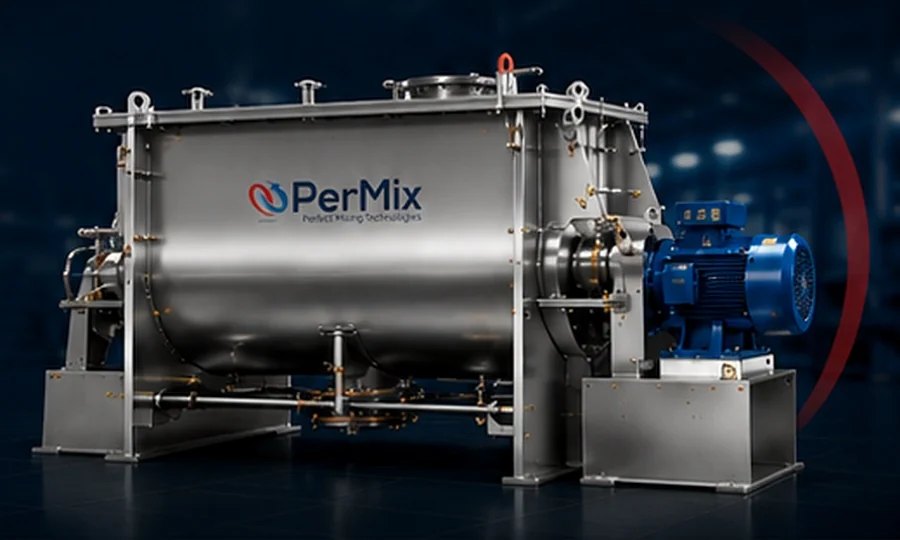
Horizontal Paddle Mixers
Horizontal paddle mixers use a horizontal shaft fitted with multiple paddle elements inside a trough-shaped or cylindrical vessel.
The paddles lift and redistribute material through overlapping active zones, creating repeated exchange throughout the vessel.
Horizontal paddle mixers can be an excellent choice for:
Horizontal models can be integrated with:
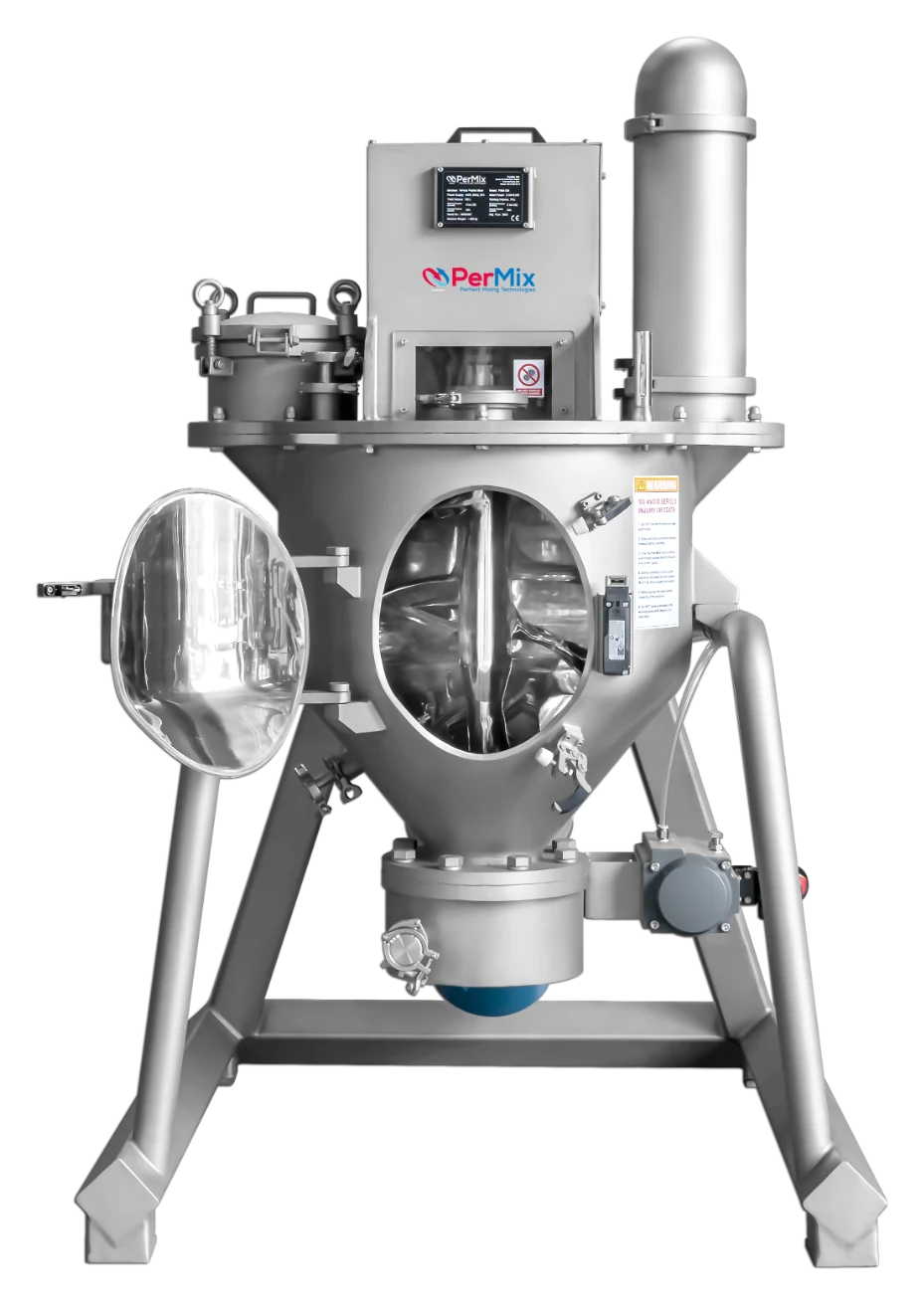
Vertical Paddle Mixers
Vertical paddle mixers use a top-driven vertical shaft with paddle elements arranged inside a cylindrical or conical vessel.
They can be advantageous when:
Vertical paddle mixers can be engineered for:
Paddle Mixers Are Often Preferred When:
| Mixer type | Best suited for | Mixing character | Key consideration |
|---|---|---|---|
| Paddle Mixer | Fragile materials, variable-density products, granules and controlled liquid addition | Gentle lifting, folding and active exchange | Paddle angle, area, spacing and fill level must be balanced |
| Ribbon Mixer | Free-flowing powders, premixes and general dry blending | Opposing axial and radial circulation | Ribbon pitch, width and inner-to-outer flow balance are critical |
| Plough Mixer | Cohesive materials, intensive liquid addition, coating and deagglomeration | High-energy mechanical fluidization | Higher power input and shear must be appropriate for the product |
| Double Cone Mixer | Free-flowing powders requiring very gentle tumble blending | Low-shear vessel rotation | Requires suitable flowability and longer tumble-based circulation |
Standard PerMix or QuantumX?
| Standard PerMix Paddle Mixer | QuantumX Paddle System |
|---|---|
| Atmospheric powder, granule and selected damp-product blending | Vacuum mixing and vacuum drying |
| Horizontal or vertical configuration | Vacuum-rated, pressure-rated or combined duty |
| Carbon steel, 304 or 316L construction | ASME, PED and specialty pressure-vessel construction |
| Industrial or sanitary execution | ATEX, inerted and hazardous-area configurations |
| Optional low-pressure, non-ASME jackets | Advanced thermal processing systems |
| Standard liquid addition | Solvent removal, condensation and recovery |
| General process controls | Recipe management, validation and data recording |
| Standard seals and dust control | High-integrity seals, gas purging and containment |
| General production environments | Regulated, reactive or highly controlled processes |
QuantumX Vacuum Paddle Mixers and Dryers
When the application requires vacuum, controlled atmosphere, advanced drying or solvent removal, the paddle mixer is engineered as a QuantumX system.
QuantumX vacuum paddle mixers and paddle mixer-dryers combine:
The paddle assembly continually exposes new material to the vessel wall while lifting and redistributing wetter and drier regions throughout the batch.
The relatively open agitator can be advantageous for products that require effective turnover without the continuous product contact created by a full ribbon flight.
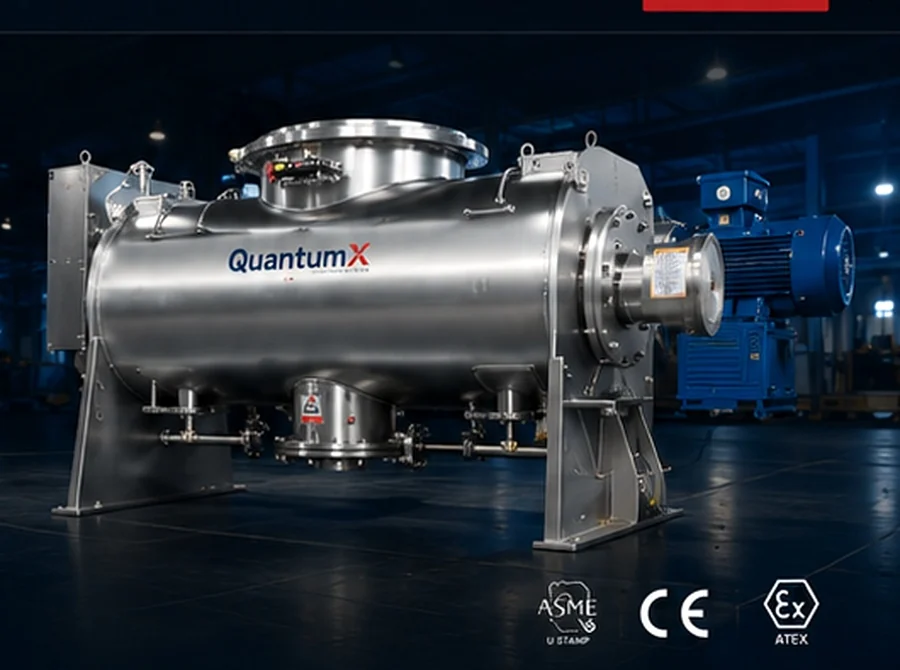
Depending on the application, a complete QuantumX system may include:
Vacuum and Pressure-Rated Paddle Mixers
A paddle mixer intended for vacuum or positive internal pressure must be engineered as a pressure system.
The review includes:
QuantumX paddle mixers can be engineered for:
Final design pressure, temperature, code requirements and safety systems are established during engineering review.
Heating and Cooling Jackets
A thermal jacket is only effective when the agitator continually renews the product contacting the heat-transfer surface.
The paddle arrangement must move material:
Thermal performance depends on:
Standard PerMix paddle mixers may include:
Move to QuantumX when the process requires:
Materials of Construction
PerMix and QuantumX paddle mixers can be engineered using a wide range of contact materials, wear systems and surface finishes.
Selection considers:
A practical construction material for many non-corrosive industrial applications.
Potential uses include:
Options can include:
Commonly used for food ingredients, general sanitary processing and applications requiring improved corrosion resistance.
Available with application-specific:
Selected for applications requiring greater corrosion resistance, hygienic construction or stricter contamination control.
Potential applications include:
Duplex and specialty stainless grades may be considered when standard 304 or 316L does not provide the required combination of corrosion resistance, mechanical strength and lifecycle performance.
Selected Hastelloy or nickel alloys may be required for highly corrosive products or cleaning environments.
The engineering review includes:
Titanium can be considered for selected corrosive, chloride-sensitive or high-purity applications.
The complete mixer design must account for:
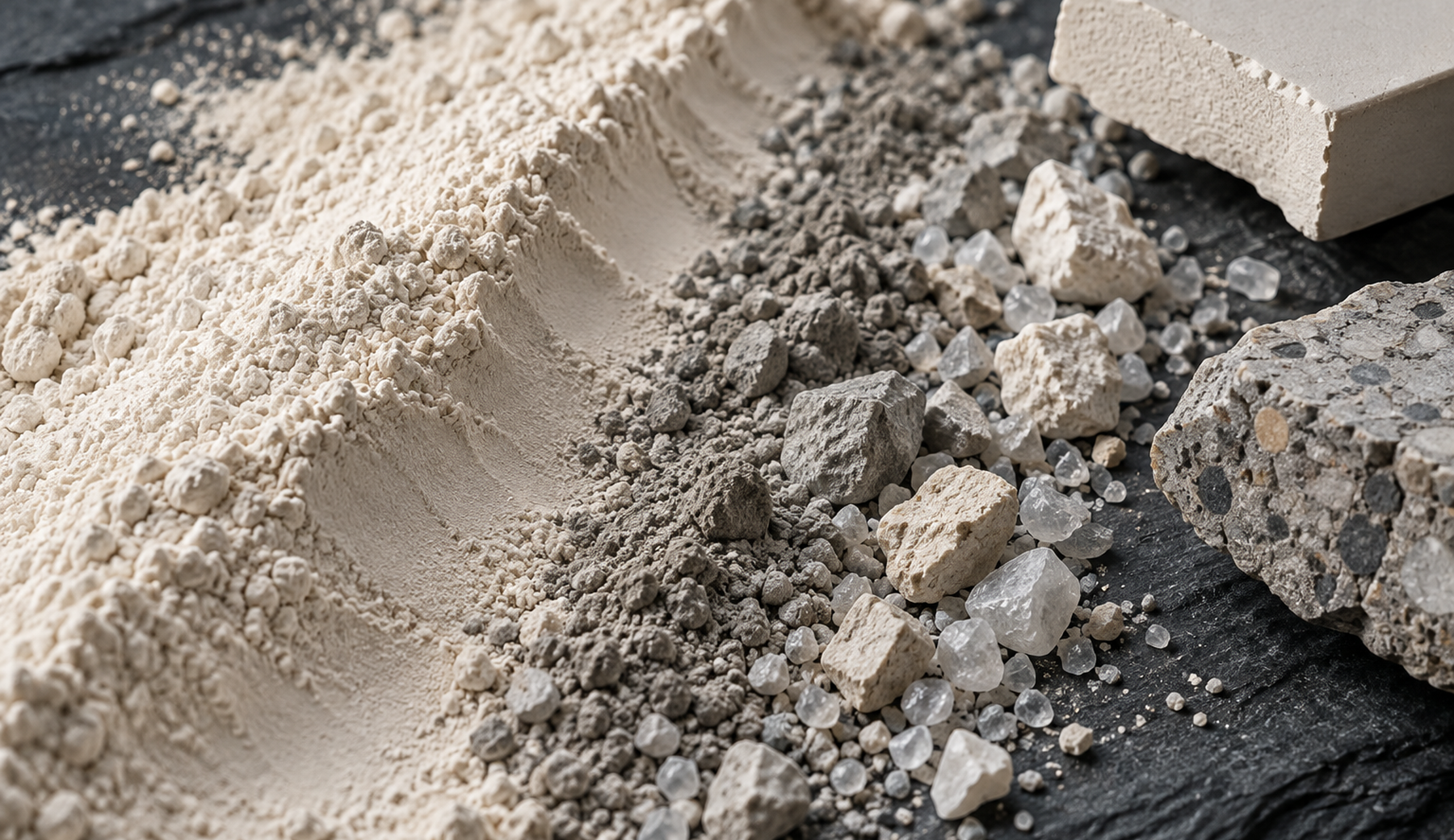
Abrasive powders can rapidly wear standard contact surfaces.
For minerals, refractories, ceramics, silica, cementitious materials and similar products, PerMix can evaluate:
Ceramic lining may be considered for highly abrasive or contamination-sensitive materials.
A successful ceramic-lined paddle mixer must be engineered around the liner from the beginning.
The design must account for:
The paddle diameter, face angle and sweep must reflect the final lined vessel dimensions.
Sanitary and Easy-Clean Paddle Mixers
The open nature of a paddle agitator can provide practical advantages for inspection and cleaning.
Sanitary PerMix paddle mixers can be engineered with:
The design should reflect whether the mixer will be:
Paddle mixers can be effective for controlled addition of oils, flavors, binders, coatings and other liquids.
The system should be designed around:
The paddle geometry should rapidly redistribute wetted material before localized over-wetting develops.
Optional choppers or intensifiers can support:
A chopper is a supplementary tool—not a substitute for properly engineered paddle geometry.
The relatively open paddle arrangement can support rapid discharge, particularly when combined with an appropriately sized outlet or full-length discharge system.
Available options may include:
Discharge design should account for:
PerMix paddle mixers can be supplied as stand-alone machines or complete production systems.
Available options include:

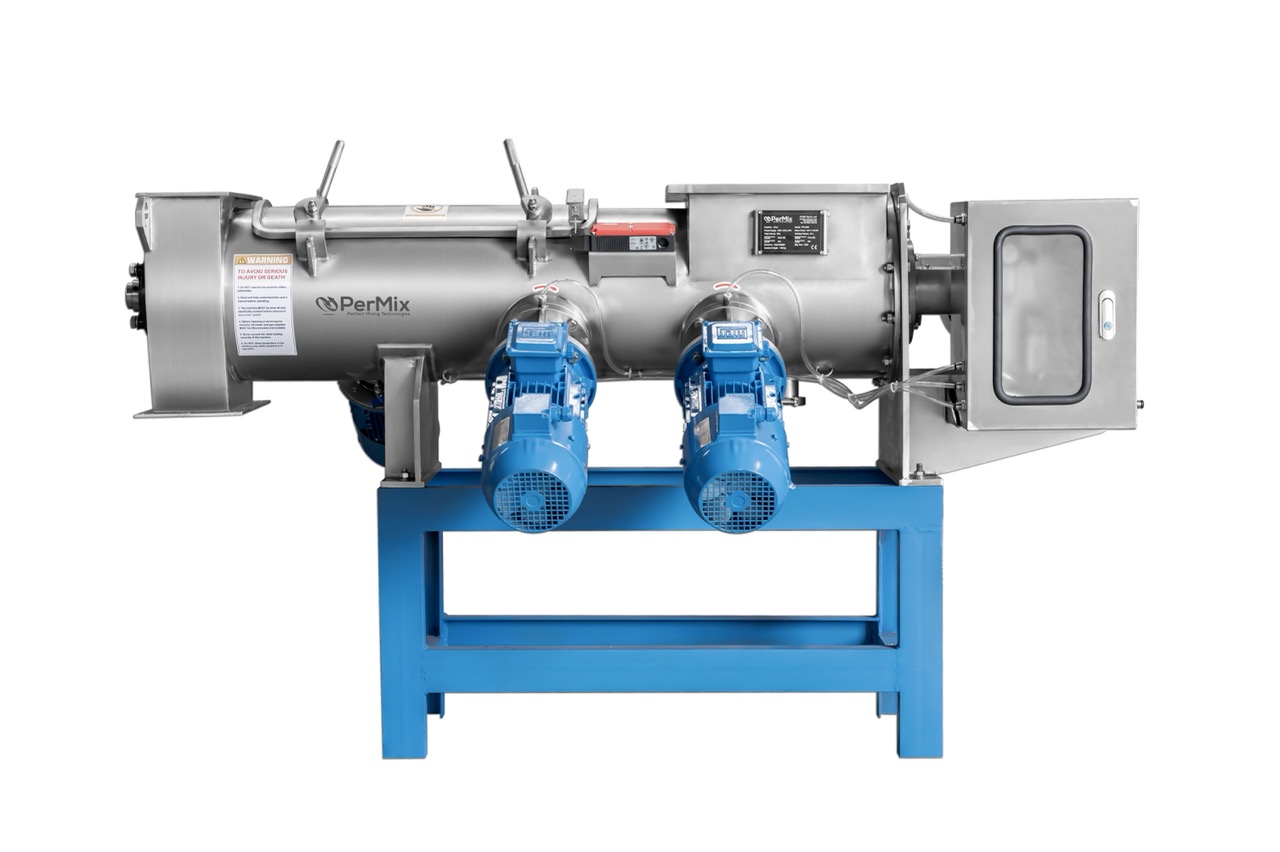
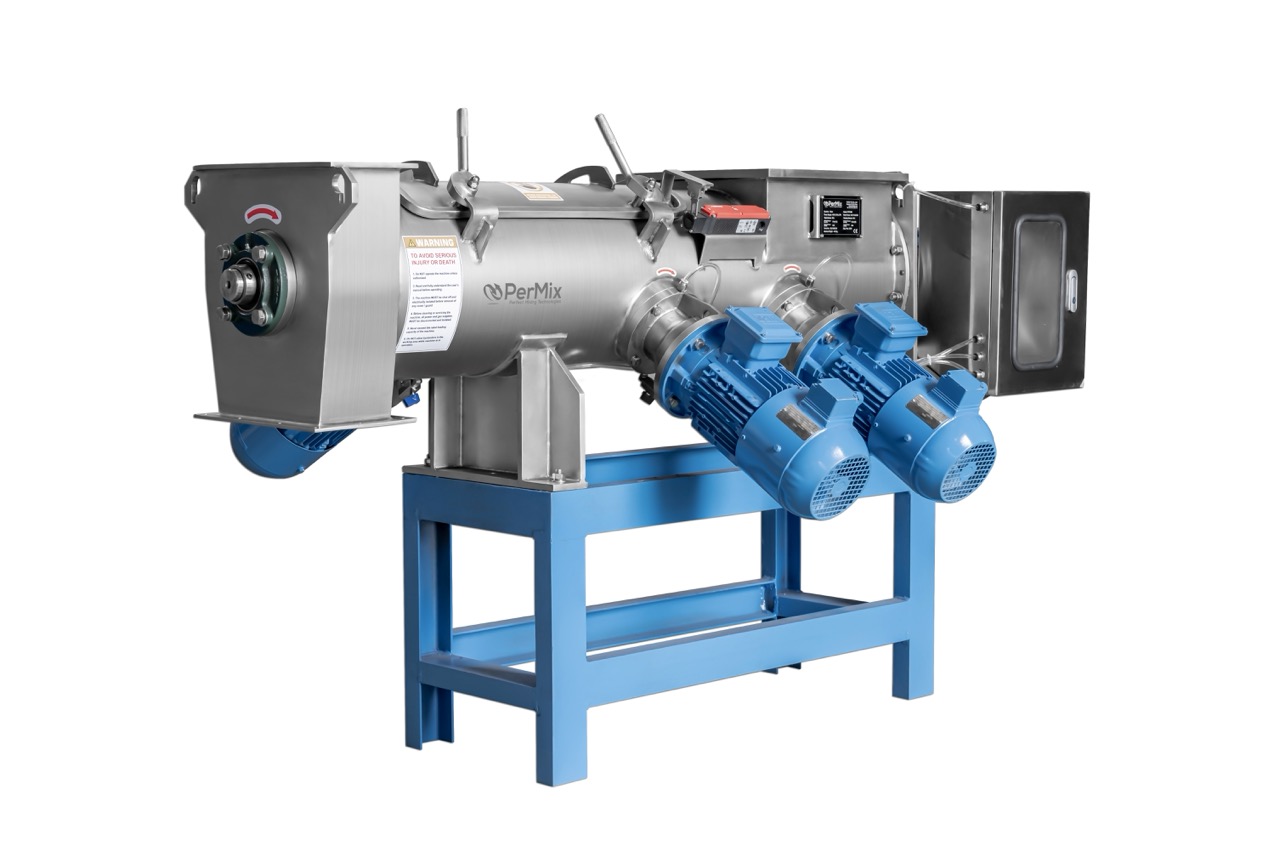
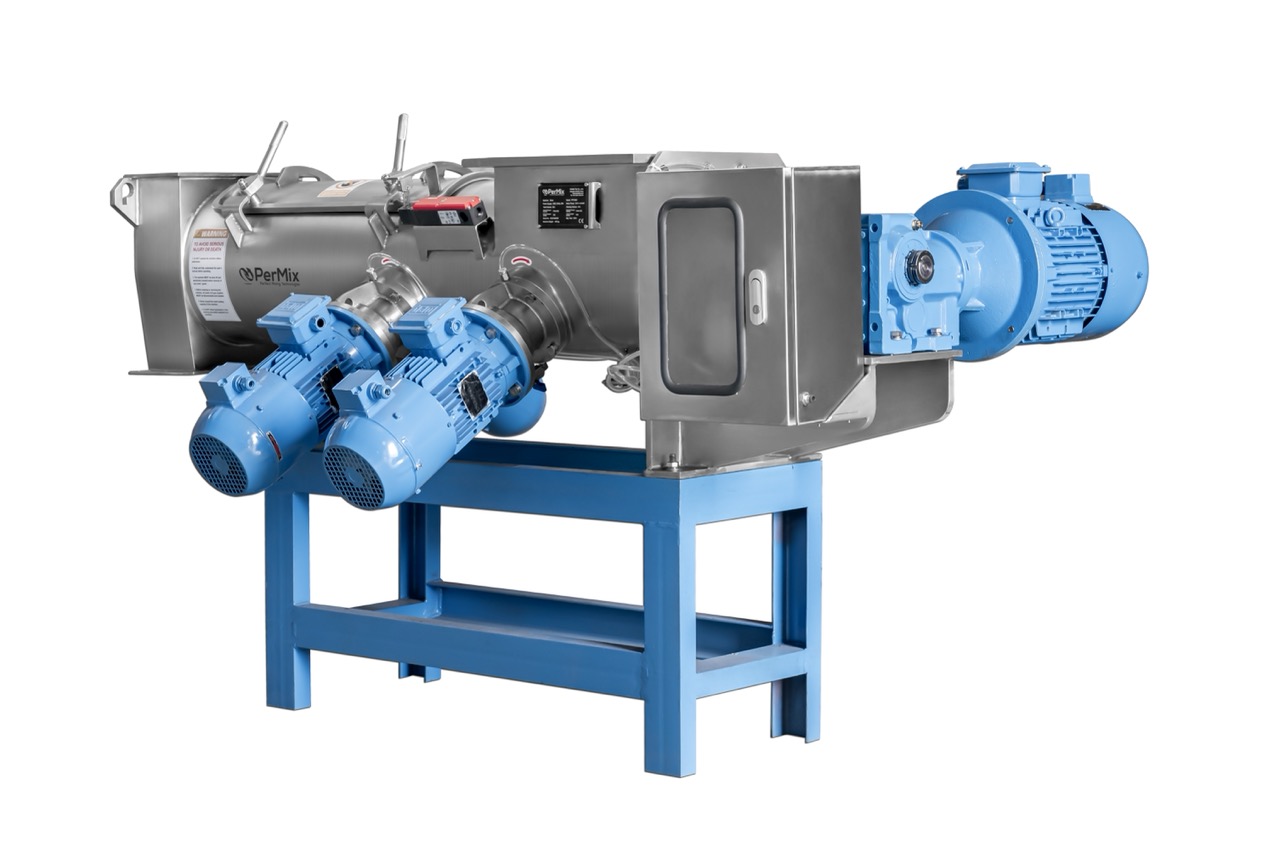
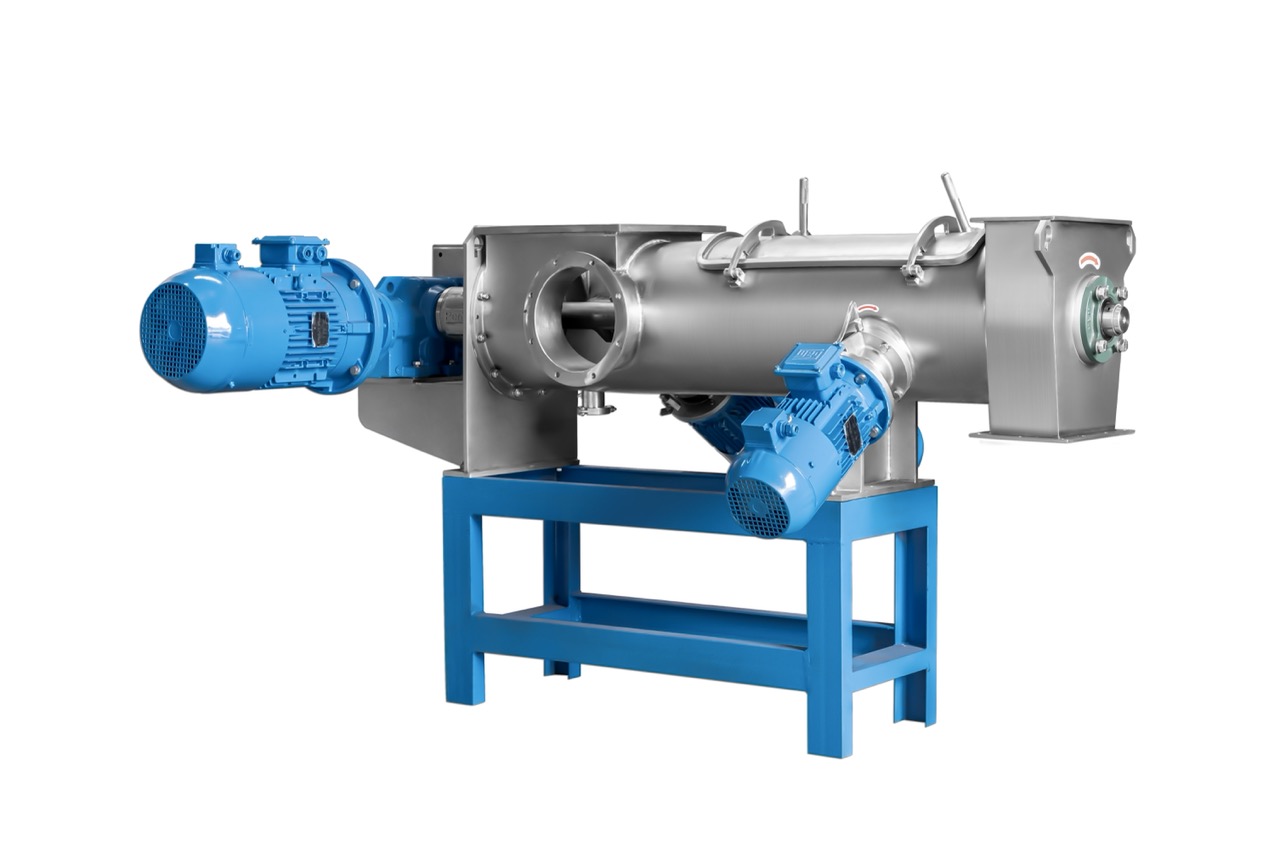
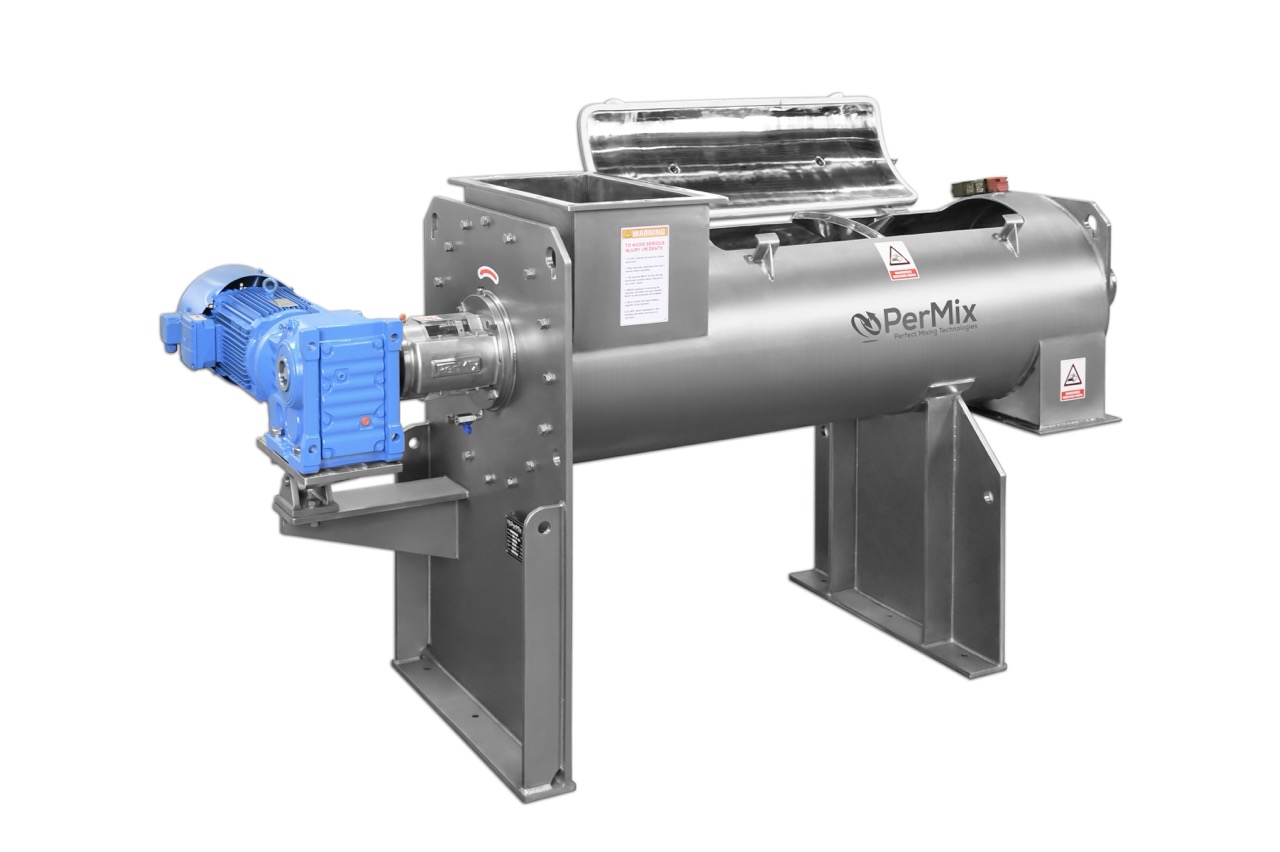
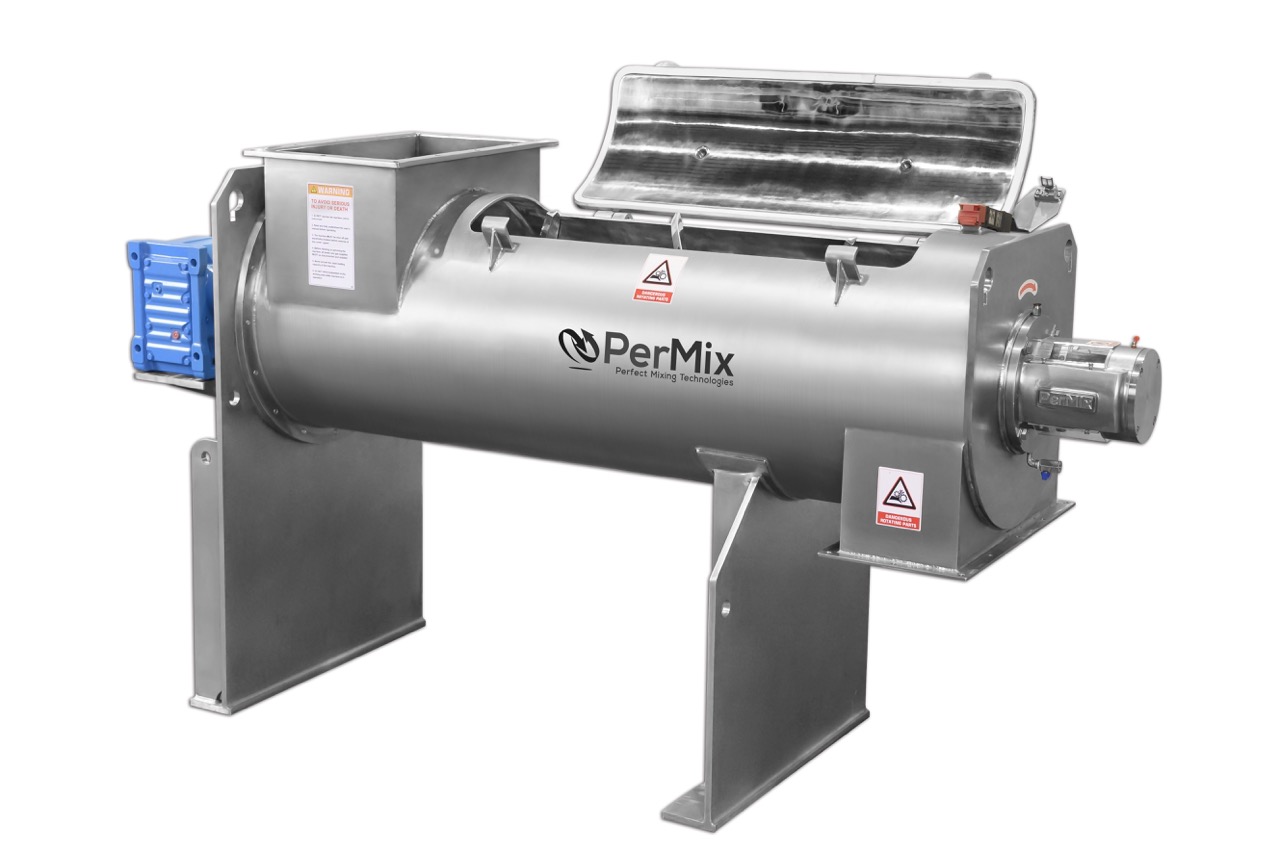
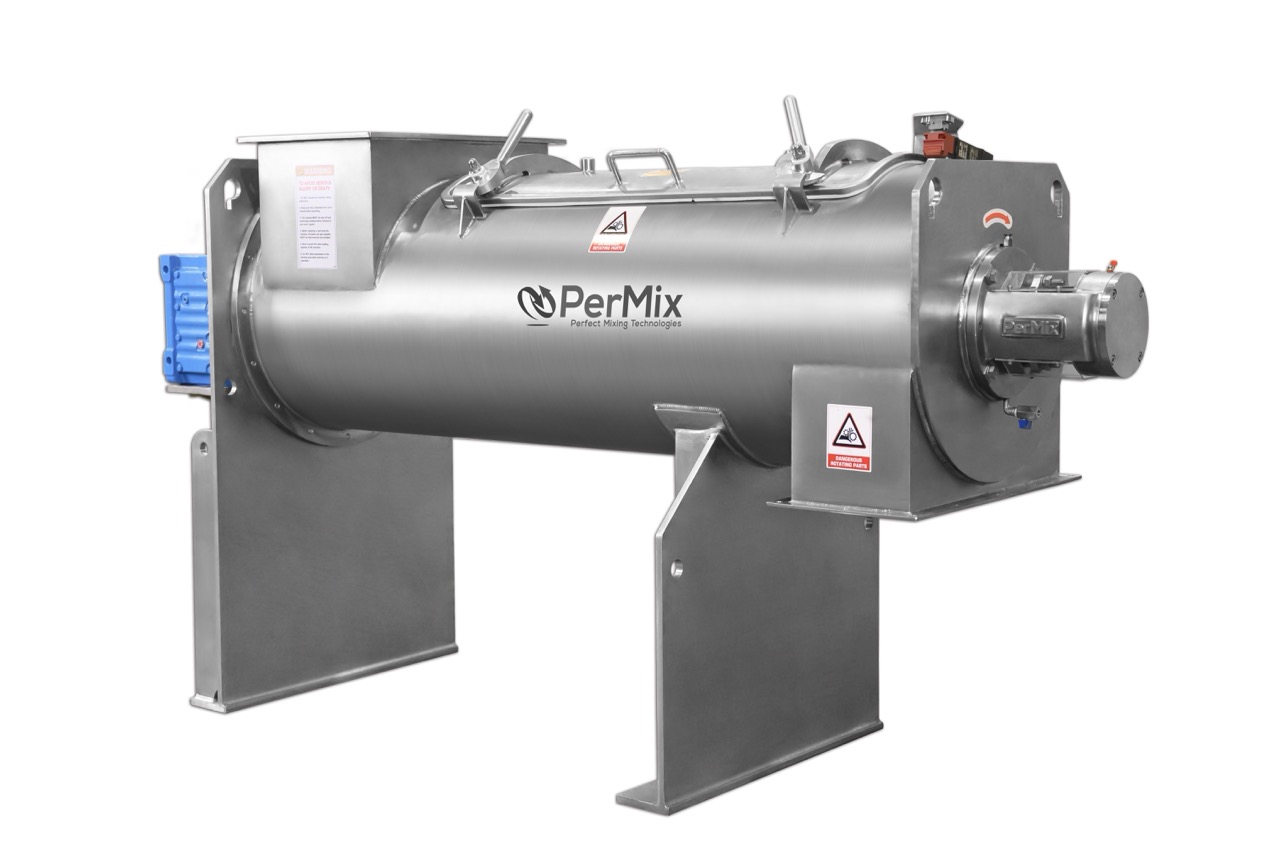
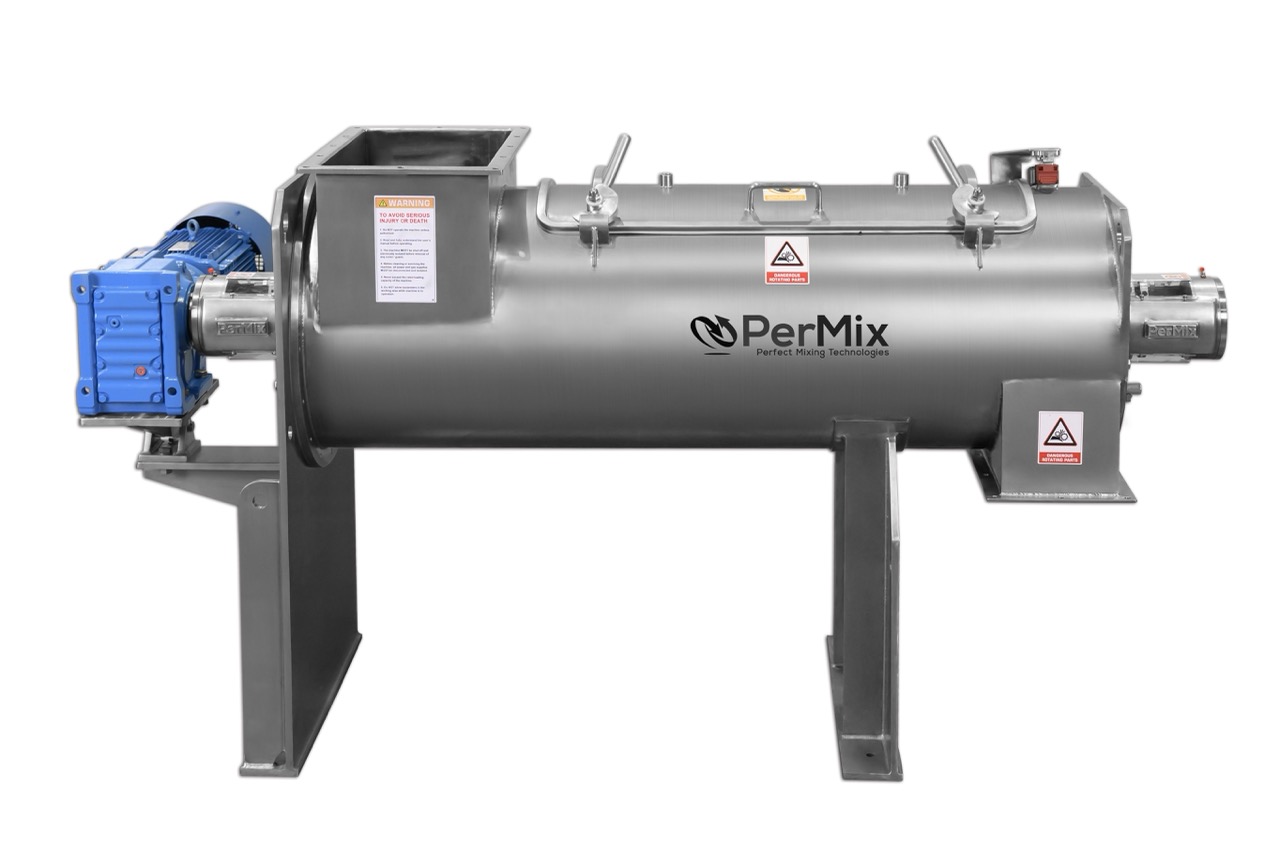
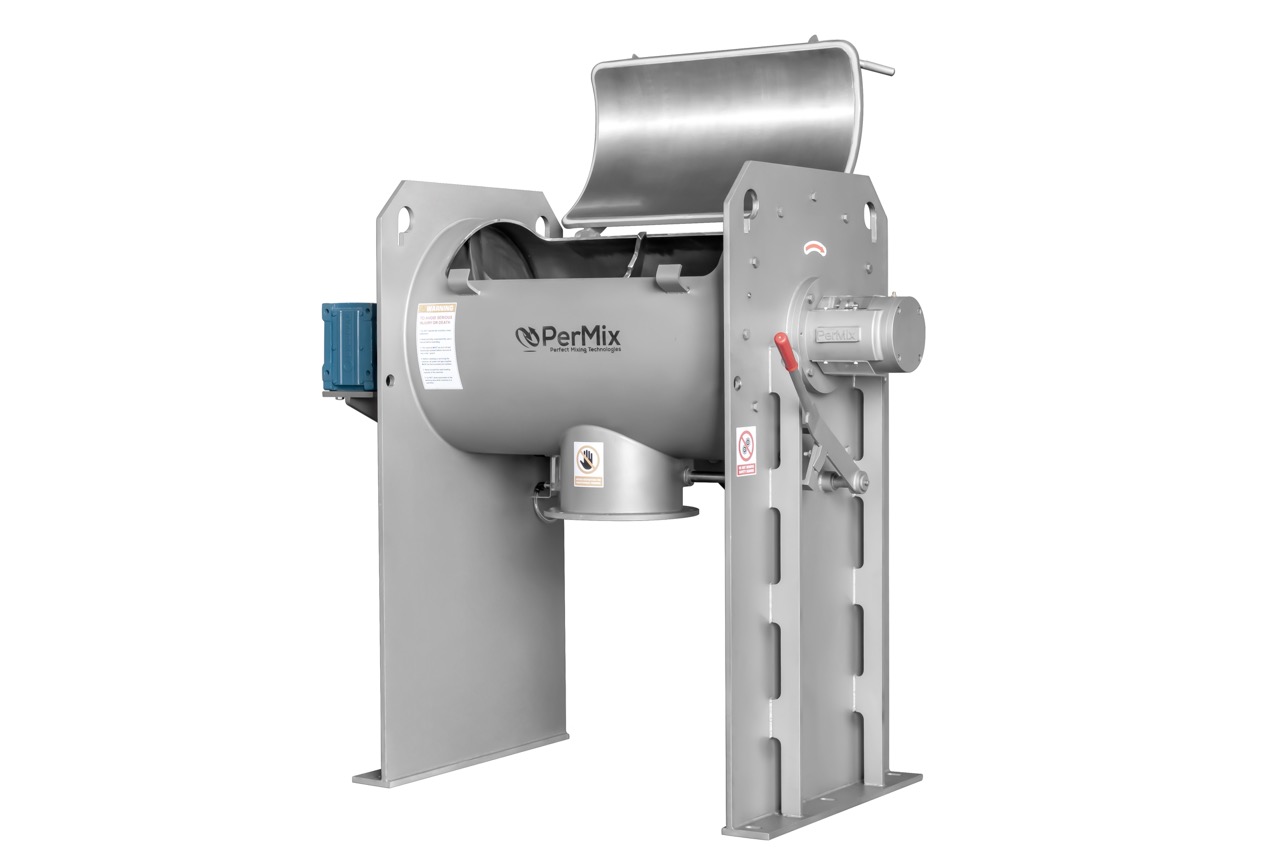
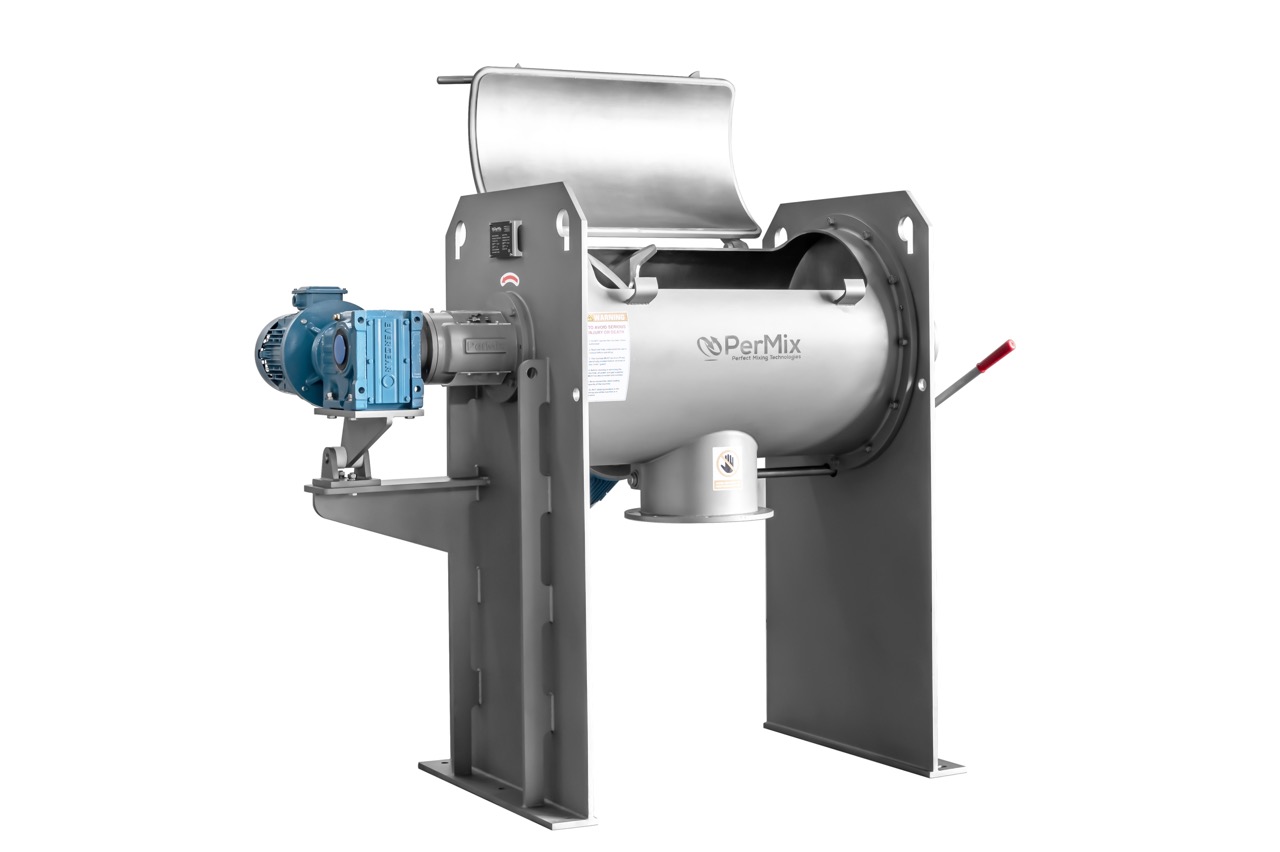
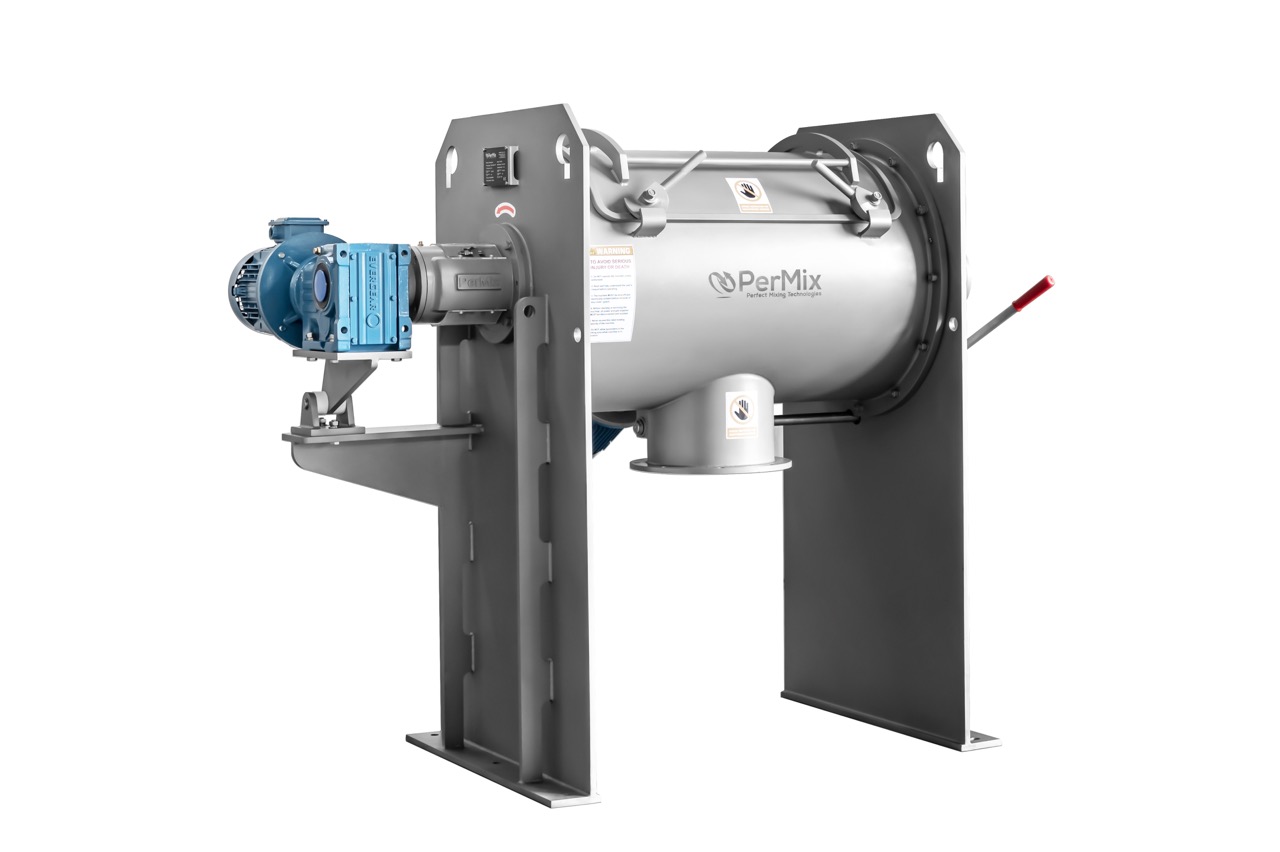
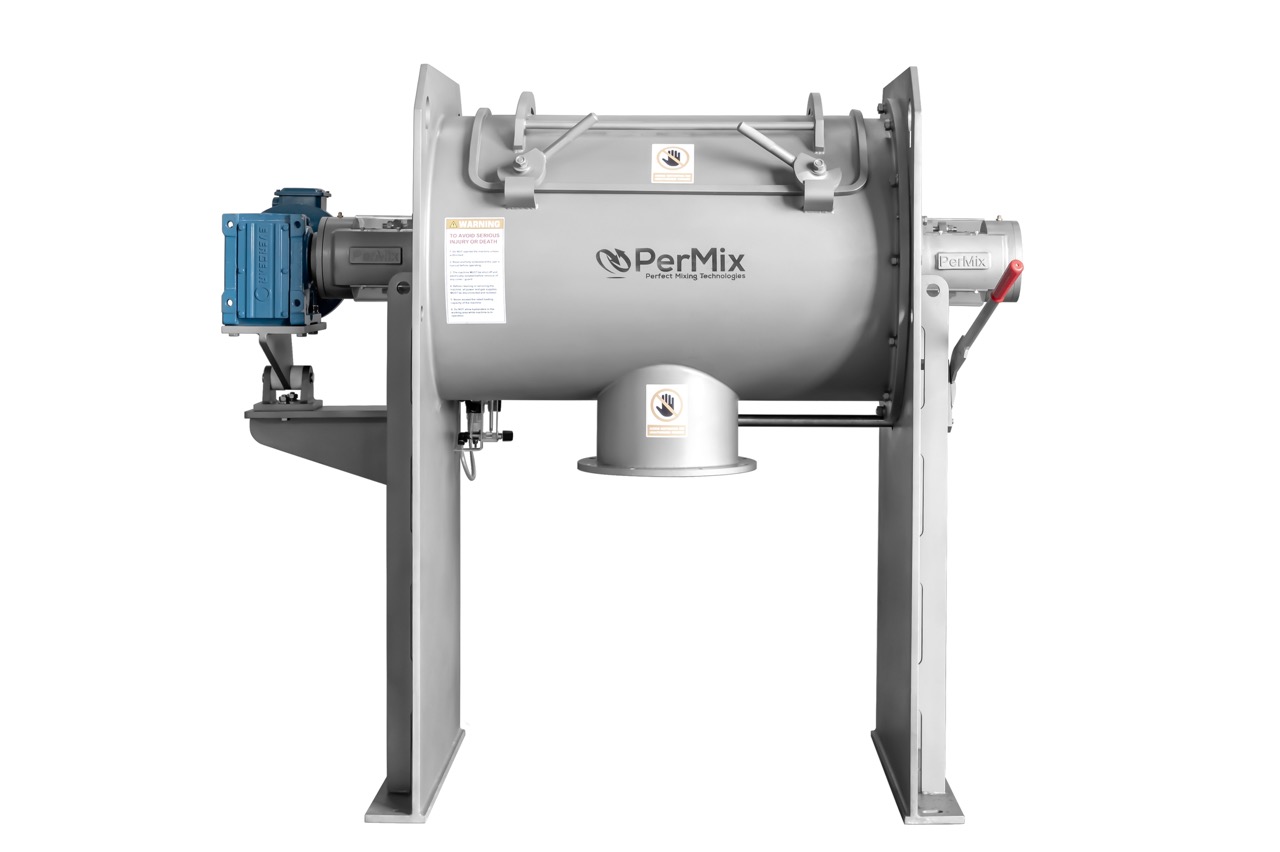
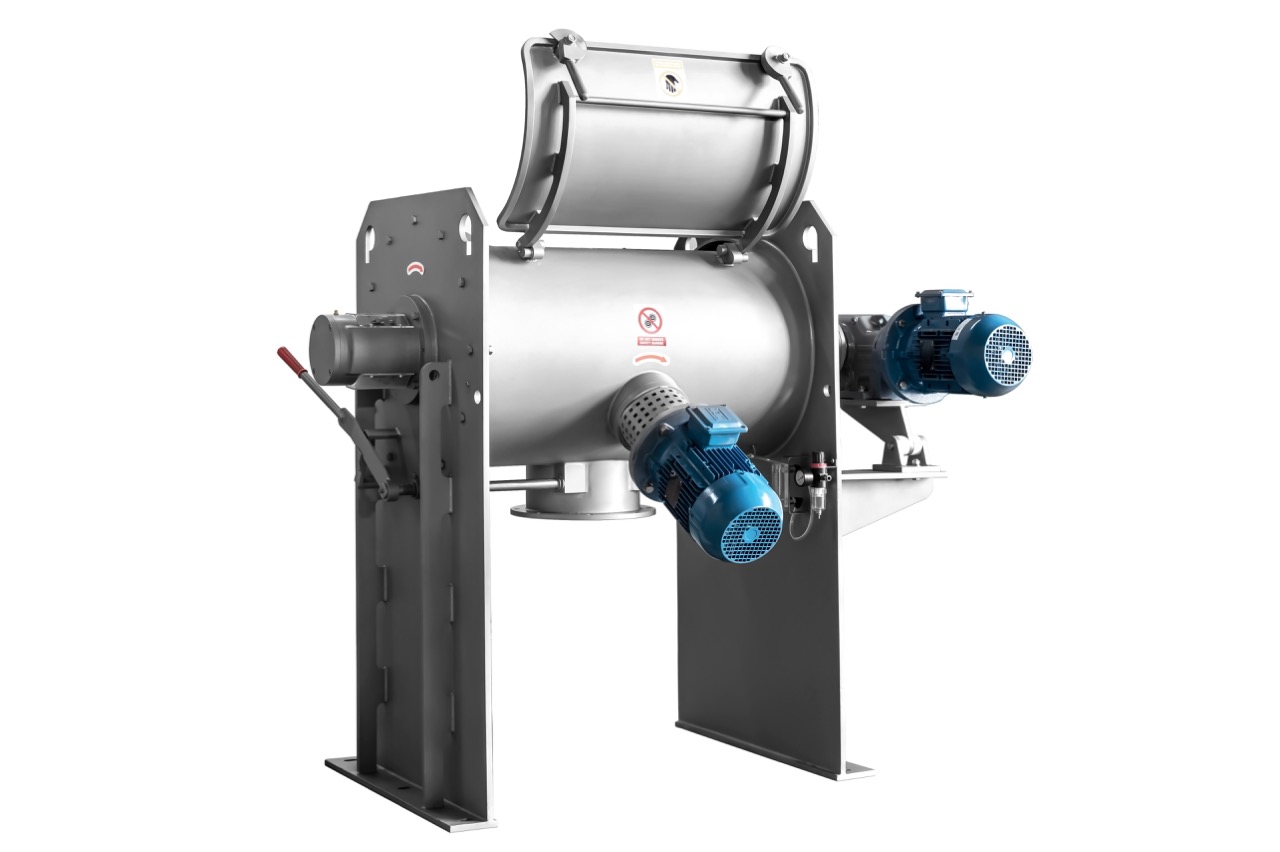
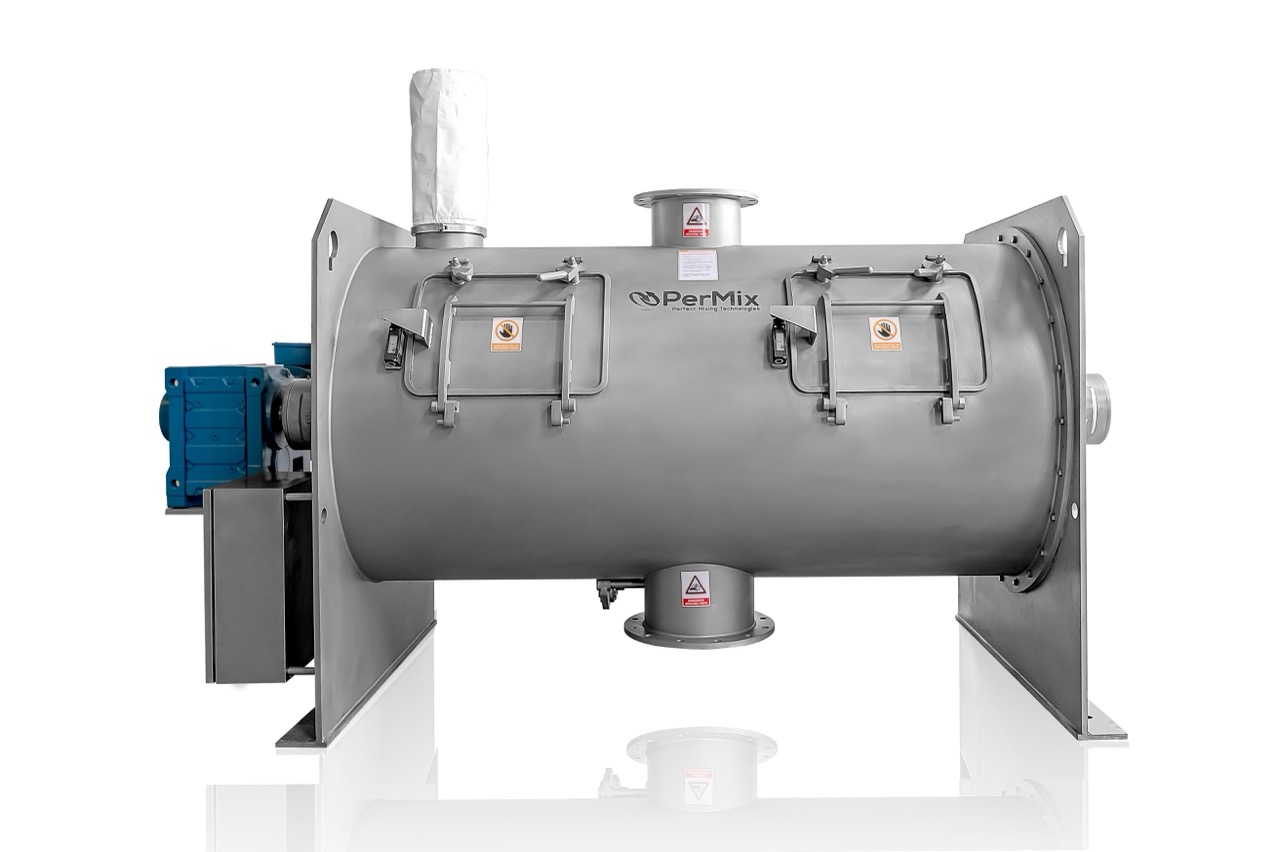
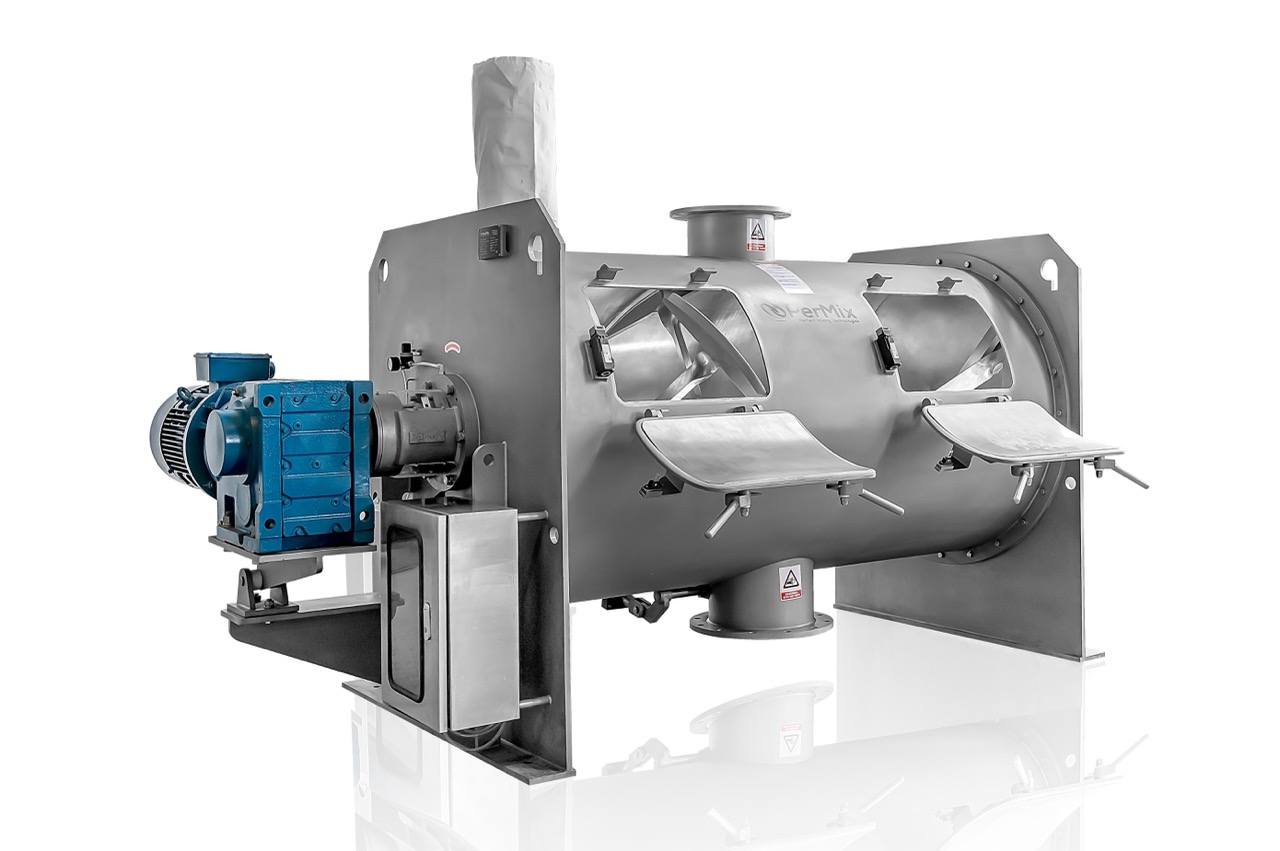
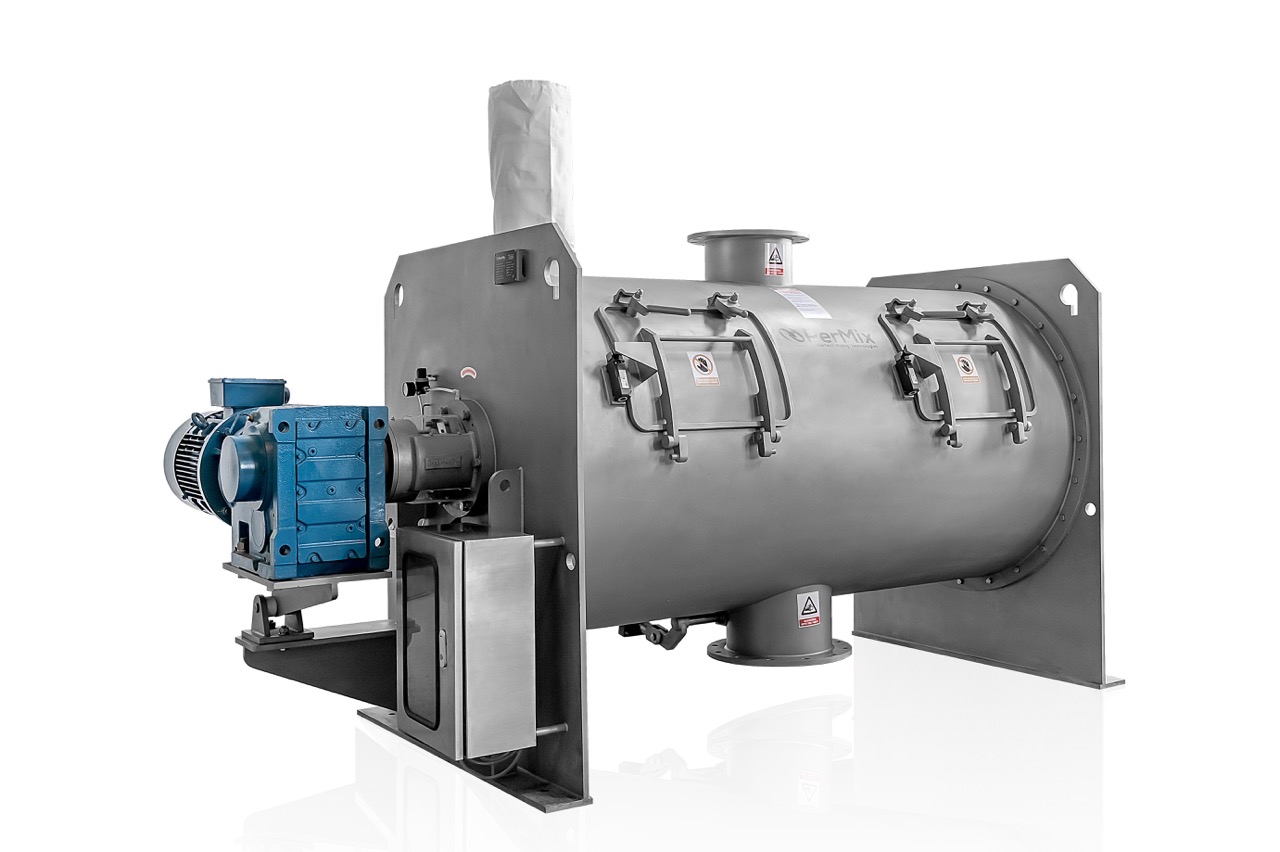
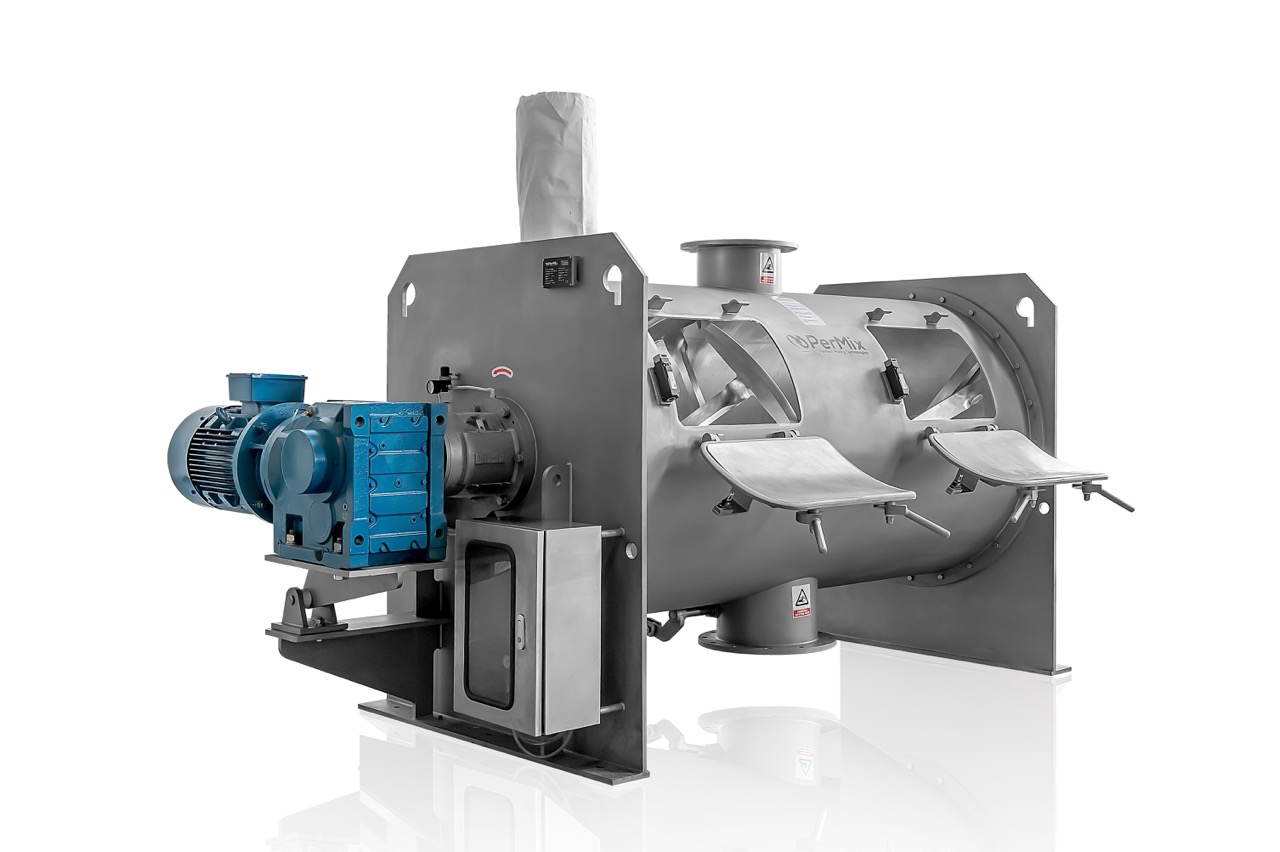
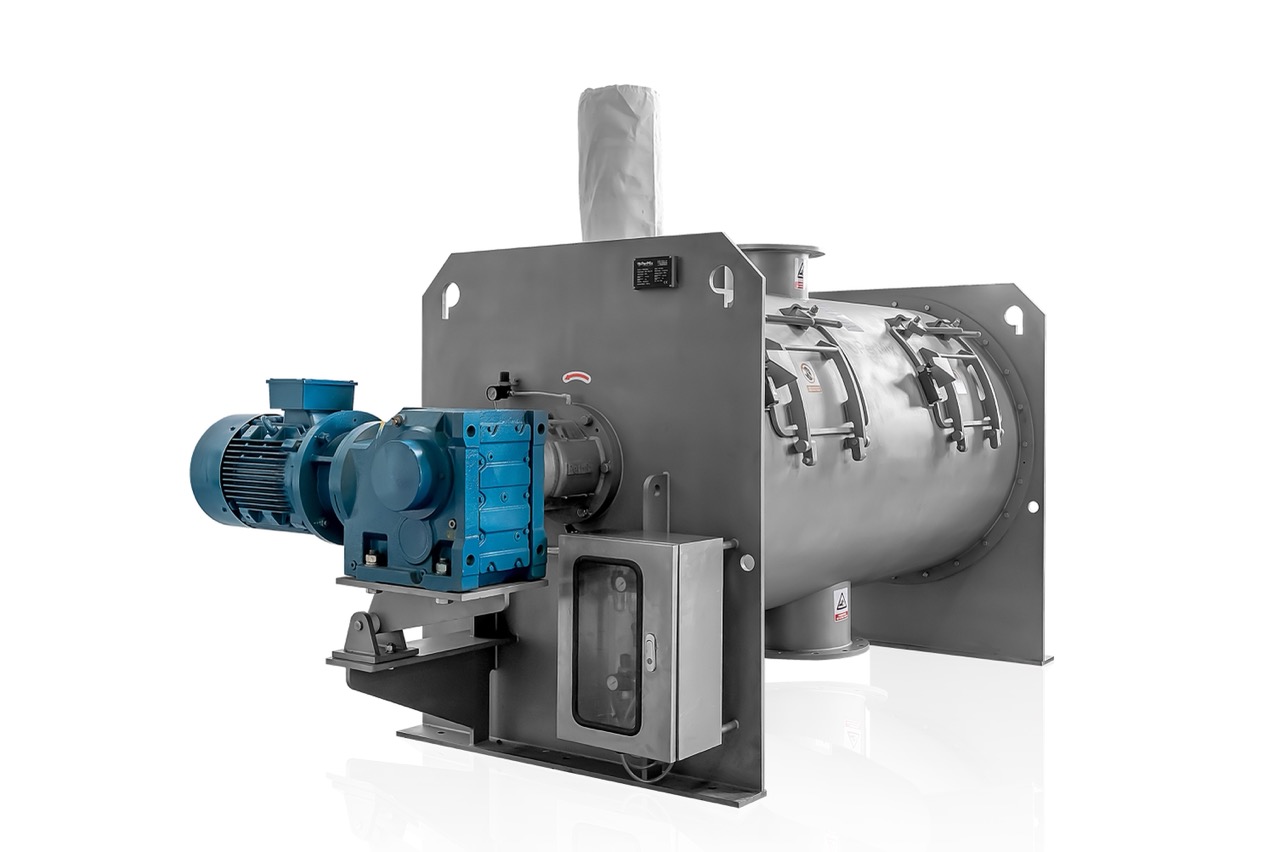
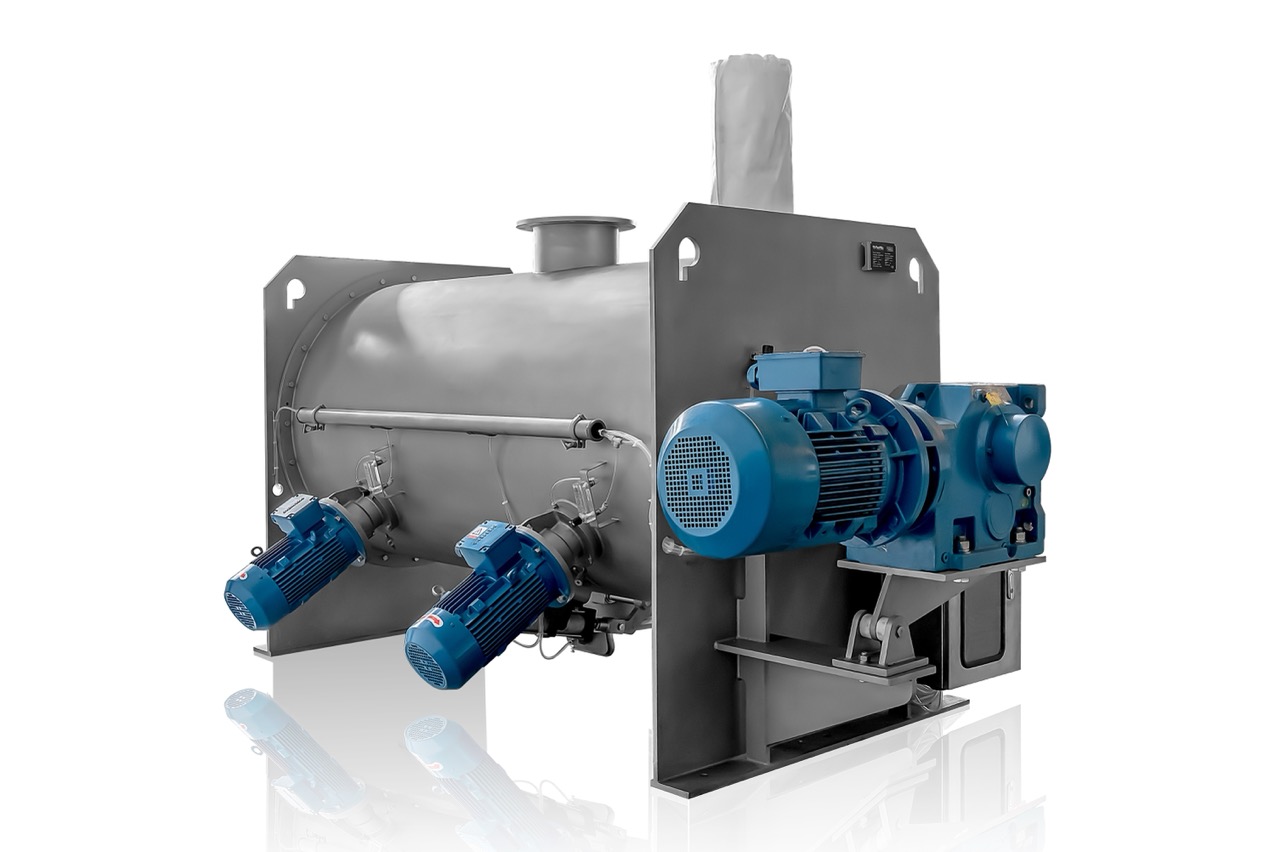
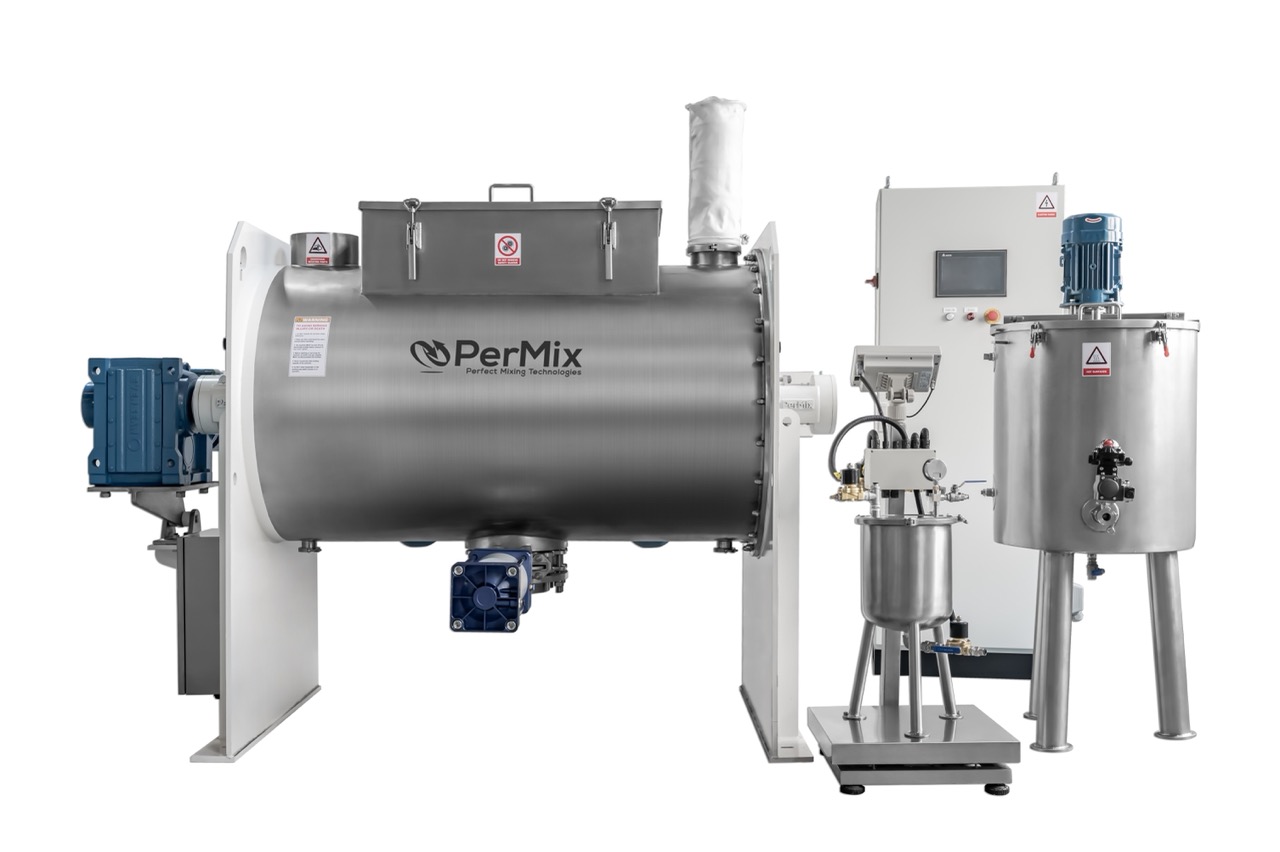
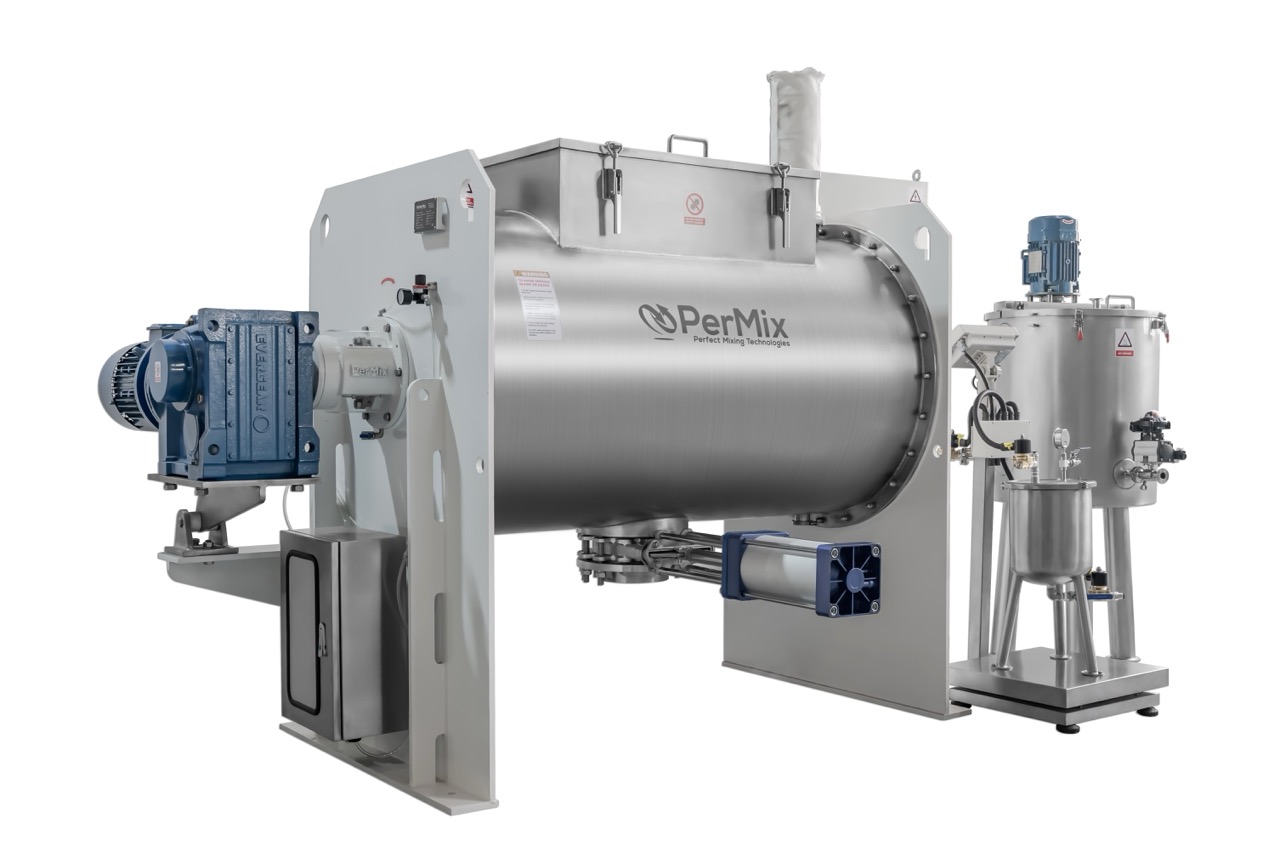
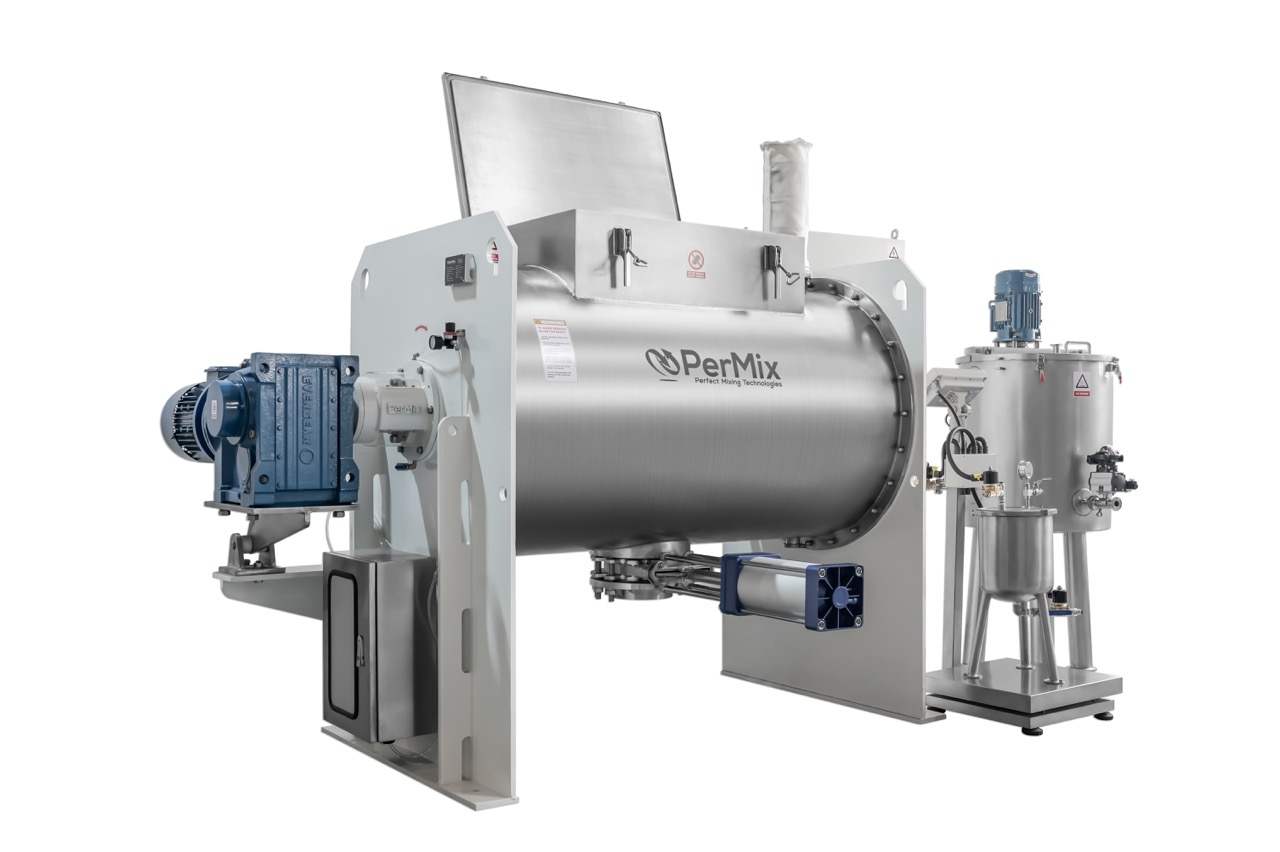
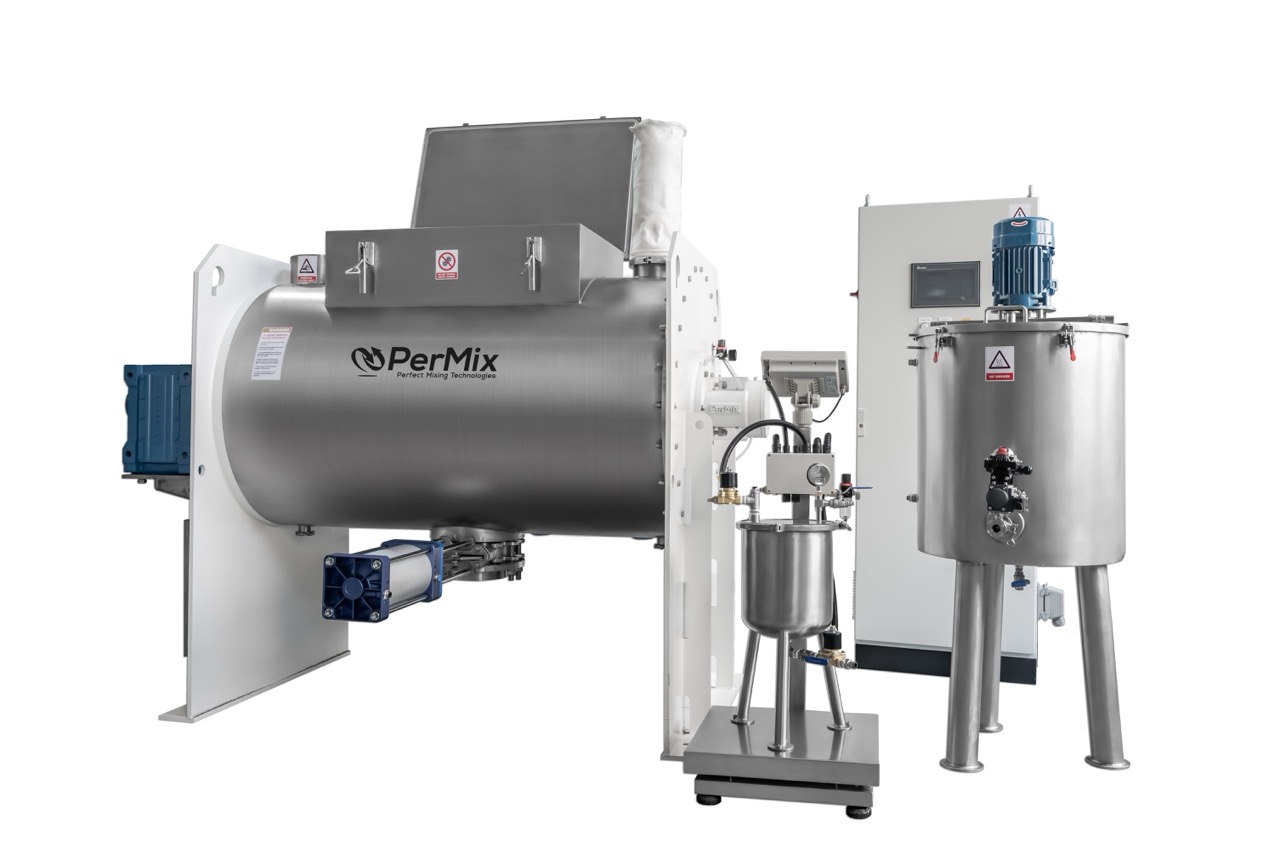
Real PerMix Paddle Mixers
Explore horizontal and vertical paddle mixers engineered for sanitary, industrial, abrasive, thermal and specialty applications.
No two applications create exactly the same machine. Explore real PerMix paddle mixers and see how paddle geometry, vessel construction, materials, discharge, access, controls and integration change according to the process.
Representative equipment
How We Engineer the Right Paddle Mixer
To select and configure the proper paddle mixer, our engineers review:
Tell us what you are mixing, the batch weight, material characteristics and what the current process is failing to achieve.
We will evaluate:
REQUEST A PADDLE MIXER RECOMMENDATION
Upload your material data sheet, formulation, current equipment details, facility layout or process objectives. The more process data you provide, the more useful our preliminary engineering recommendation will be.
| Catalog-based selection | PerMix application engineering |
|---|---|
| Selected mainly by vessel volume | Selected by batch mass, density, fill range and product behavior |
| Standard paddle arrangement | Paddle width, angle, number and spacing evaluated for the application |
| Generic motor sizing | Drive evaluated for startup and worst-case load |
| Limited consideration of particle fragility | Agitator geometry and speed reviewed to reduce degradation |
| Standard carbon or stainless construction | Materials, liners and finishes selected for corrosion, abrasion and purity |
| Basic discharge | Discharge designed around flow, residual hold-up and downstream integration |
| Basic jacket option | Thermal duty reviewed with wall renewal and product circulation |
| Atmospheric service only | Clear pathway to QuantumX vacuum, pressure, ASME, PED and ATEX systems |
| Simple contact form | Engineering RFQ captures product, process and compliance data |
| Little scale-up consideration | Scale-up based on geometry, tip speed, power input, fill and circulation |
The terms are generally interchangeable. Both describe a mixer using shaft-mounted paddle elements to lift, fold and redistribute powders, granules or selected damp materials.
A ribbon mixer uses continuous helical flights to create opposing axial circulation. A paddle mixer uses discrete paddle elements to lift and fold material through multiple active zones. Paddle mixers are often preferred for fragile particles, variable-density materials and products requiring a more open agitator.
Paddle width determines how much product is engaged. Paddle angle influences the direction and strength of product movement. Both affect circulation, torque, shear, mixing time and product integrity.
No. Insufficient area may cause weak circulation, while excessive area can increase torque, power, heat and product damage. The paddle area must suit the product and process.
Yes. Horizontal mixers offer broad process flexibility, while vertical paddle mixers can reduce floor-space requirements and support gravity-assisted discharge.
Yes. Paddle mixers are often selected for products where gentle lifting and folding are preferred over high-intensity mixing. Final geometry and speed must reflect the fragility limit.
Yes. The active lifting and redistribution created by the paddles can support mixing of variable-density ingredients. The specific geometry and process time should be validated for the formulation.
Yes. Spray systems can add oils, flavors, binders or coatings. Nozzle selection, addition rate, liquid viscosity and paddle circulation must be evaluated.
Yes. Choppers can support deagglomeration, coating and distribution of difficult liquid additions when the process requires localized high shear.
Yes. Standard PerMix models can include low-pressure, non-ASME jackets. Advanced thermal, vacuum, pressure, ASME or solvent-service applications are engineered under QuantumX.
Yes. QuantumX vacuum paddle mixers and mixer-dryers combine agitation, thermal transfer, vacuum and vapor handling for drying, conditioning and controlled-atmosphere processing.
Pressure-rated systems can be engineered under QuantumX. Vessel design, seals, agitation, jacket, nozzles, instrumentation and applicable codes are evaluated together.
Options can include carbon steel, 304 stainless, 316/316L stainless, duplex grades, abrasion-resistant steel, selected Hastelloy and nickel alloys, titanium, ceramic liners and application-specific coatings.
Yes, for suitable applications. The liner thickness, attachment system, clearances, impact exposure and thermal conditions must be incorporated into the original design.
The mixer is selected using batch mass, bulk density, working fill range, product movement and process requirements—not nominal vessel volume alone.
QuantumX is appropriate when the process requires vacuum, internal pressure, ASME, PED, ATEX, inerting, solvent service, advanced drying, containment, specialty alloys or validated controls.
GENTLE WITH THE PRODUCT. SERIOUS ABOUT PERFORMANCE.
The correct paddle mixer begins with an understanding of how your ingredients lift, fold, segregate, compact, discharge and respond to mechanical energy.
PerMix evaluates the paddles, vessel, shaft, drive, discharge, materials, seals and controls as one complete process system.
Whether you need:
—we will engineer the platform around your production requirements.