
1. Geometry Selected for the Material
Ribbon width, pitch, diameter, clearances and speed are reviewed against your material properties and batch requirements.
INDUSTRIAL RIBBON MIXERS | ENGINEERED FLOW, NOT CATALOG GEOMETRY
PerMix designs horizontal and vertical ribbon mixers around the movement your material actually requires—not simply around vessel volume.
Ribbon width, ribbon pitch, active surface area, inner-to-outer flow balance, agitator clearance, fill level, bulk density and startup torque are engineered as one process system. The result is repeatable blending, controlled product handling, reliable discharge and a mixer designed for the realities of your production line.
Mix
Solve
Create
A Brighter
Tomorrow
Any fabricator can build a trough and wrap steel around a shaft.
The difference between a mixer that merely rotates and a mixer that consistently produces a uniform batch is found in the relationship between the product and the agitator geometry.
A properly engineered ribbon mixer must create balanced axial movement, radial exchange and controlled turnover throughout the working volume. The inner and outer ribbons must move material through opposing circulation paths without creating excessive shear, uncontrolled power demand, slow-moving regions or unnecessary product hold-up.
That is why PerMix does not treat the agitator as a standard catalog component.
We engineer the complete flow field.
Horizontal ribbon mixers typically use opposing inner and outer helices to circulate material through the vessel, while vertical ribbon designs generate helical circulation within a smaller footprint. Jacketed and vacuum-capable ribbon systems are established configurations when thermal processing, drying or atmosphere control is required.
The Geometry That Determines Ribbon Mixer Performance
Two ribbon mixers can have the same vessel volume, motor power and nominal batch capacity—and perform very differently.
The agitator geometry determines how much material is engaged during each revolution, how quickly the batch circulates, how much torque is required and how effectively minor ingredients are distributed.
| Engineering variable | What it influences | Why it matters |
|---|---|---|
| Ribbon width | Product capture, axial conveying capacity, active contact area and power demand | A ribbon that is too narrow may under-circulate the batch. A ribbon that is unnecessarily wide may increase drag, shear and startup torque. |
| Ribbon pitch | Axial travel per revolution, circulation rate and residence pattern | A tighter pitch can increase interaction and dwell, while a more open pitch can increase axial movement. The correct pitch depends on the product and process objective. |
| Total active ribbon surface area | The amount of material influenced by the agitator during each revolution | Surface area must be sufficient to move the batch efficiently without creating unnecessary resistance or overworking fragile material. |
| Inner-to-outer ribbon relationship | Balance between opposing material streams | The two flow circuits must exchange material at a controlled rate. Poor balance can cause uneven circulation or extended blending time. |
| Ribbon-to-trough clearance | Bottom turnover, residual hold-up and cleanability | Excessive clearance can leave slow-moving material. Clearance that is too tight can increase mechanical risk or become incompatible with liners and thermal expansion. |
| Tip speed | Shear environment, particle handling and heat generation | Mixer speed cannot be selected by RPM alone because ribbon diameter changes the distance traveled per revolution. |
| Fill level | Full engagement of the inner and outer ribbons | Too little or too much product can prevent the intended circulation pattern from developing. |
| Shaft and support-arm design | Agitator stability, deflection, cleanability and obstruction | The agitator must remain mechanically stable under startup and operating loads without adding unnecessary product traps. |
The outer ribbon operates at a larger radius than the inner ribbon. It therefore travels a longer circumferential path during every shaft revolution and experiences a different tip speed.
That means identical ribbon widths or pitches do not automatically produce balanced mass flow.
PerMix evaluates the relationship between:
The objective is not to maximize movement in one direction. It is to create a controlled exchange between both circulation paths so the entire batch repeatedly passes through active mixing zones.
A large amount of ribbon surface area may appear impressive, but surface area must be considered together with orientation, pitch, speed and product behavior.
Too little active area can result in slow circulation and prolonged blend times.
Too much area can:
PerMix engineers the ribbon area required to achieve productive movement without turning the mixer into an energy-consuming brake.
The goal is not the most steel inside the vessel. The goal is the correct movement of the product.
Why PerMix Ribbon Mixers Are Different
Ribbon width, pitch, diameter, clearances and speed are reviewed against your material properties and batch requirements.
We do not size a mixer by liters alone. Batch weight, bulk density, fill level and expected density variation determine the working volume required.
The drive system is evaluated for startup under load, high-density products, cohesive batches, liquid additions and potential process upsets—not merely normal running amperage.
Center discharge, flush valves, extended outlets, bomb-bay discharge and other configurations can be considered based on flowability, residual hold-up and downstream integration.
Contact materials, liners, coatings, seals and finishes are chosen around corrosion, abrasion, contamination risk, sanitation and cleaning chemistry.
Standard PerMix ribbon mixers cover atmospheric blending and optional low-pressure, non-ASME thermal jackets. Vacuum, pressure, ASME, ATEX and advanced thermal duties move into the QuantumX platform.
Horizontal Ribbon Mixers
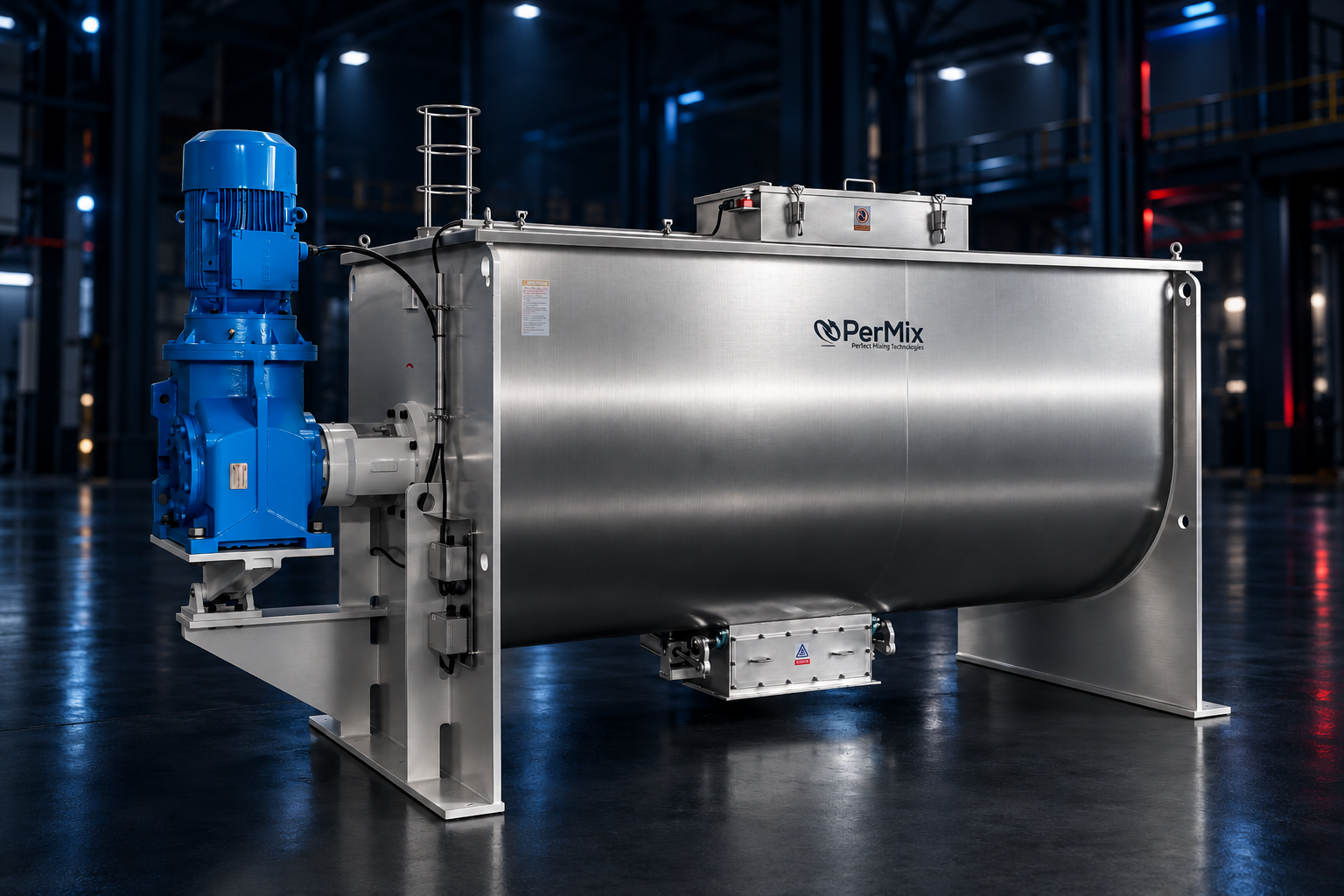
Horizontal ribbon mixers use an elongated trough and a horizontal ribbon agitator to generate opposing axial flow along the length of the vessel.
They are often an excellent choice for:
Horizontal models provide flexibility for:
Vertical Ribbon Mixers
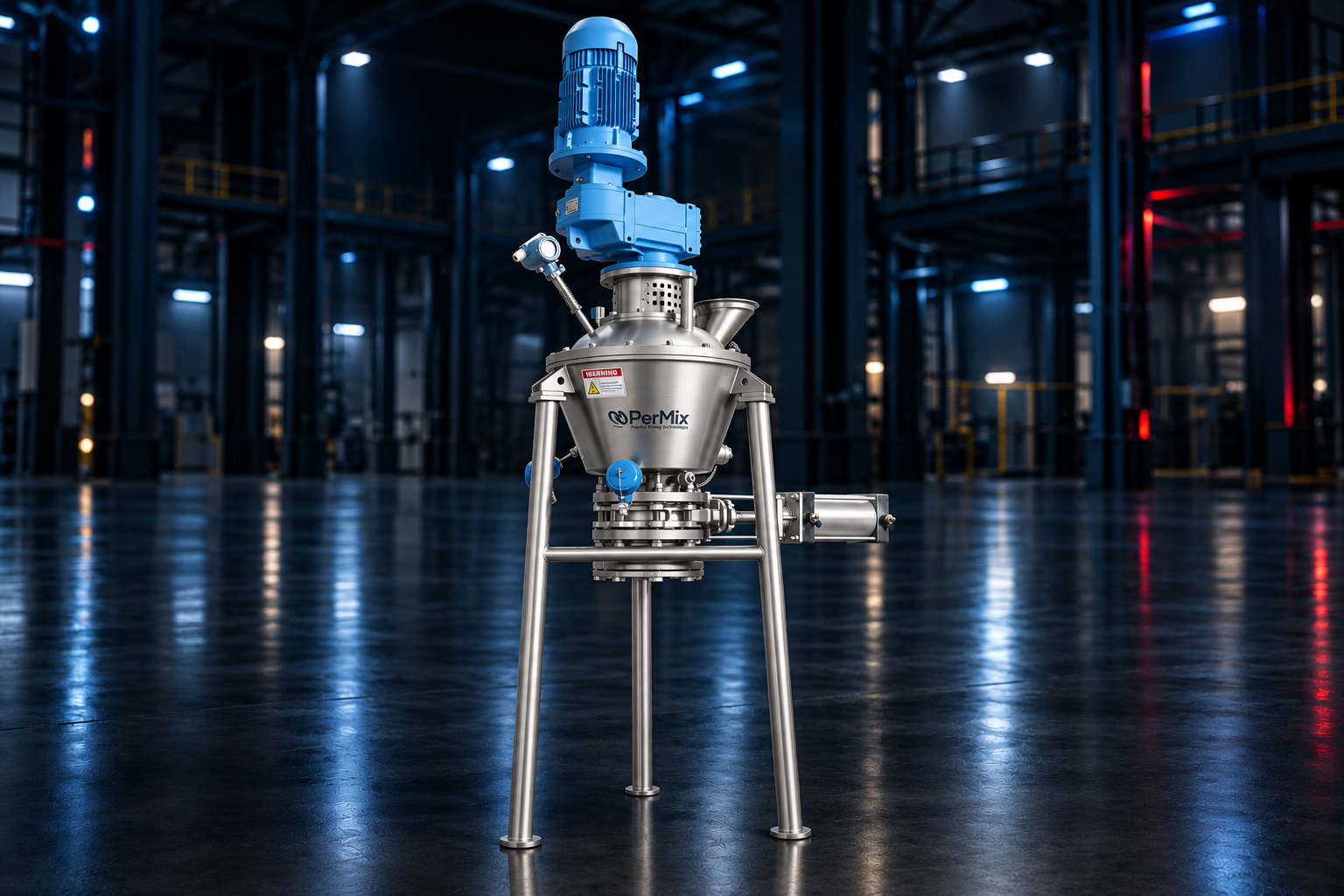
Vertical ribbon mixers use a top-driven helical agitator inside a vertical cylindrical or conical vessel.
They can be advantageous where:
Vertical ribbon systems can be engineered for dry, damp and selected viscous products, with application-specific agitators, discharge arrangements and cleaning access.
The helical action of a vertical ribbon mixer establishes upward movement near the vessel perimeter and downward circulation toward the center, creating a three-dimensional material flow.
Standard PerMix or QuantumX?
| Standard PerMix Ribbon Mixer | QuantumX Ribbon System |
|---|---|
| Atmospheric powder and granule blending | Vacuum mixing and vacuum drying |
| Horizontal or vertical configuration | Vacuum-rated, pressure-rated or combined duty |
| Carbon steel, 304 or 316L construction | ASME and specialty pressure-vessel construction |
| Industrial or sanitary execution | ATEX, inerted and hazardous-area configurations |
| Optional low-pressure, non-ASME jackets | Engineered thermal systems for advanced duty |
| Standard liquid-addition systems | Solvent removal, condensation and recovery |
| General process controls | Advanced automation, validation and data management |
| Standard seals and dust control | High-integrity sealing, containment and gas-purge systems |
QuantumX Vacuum Ribbon Mixers and Dryers
When the process requires more than atmospheric blending, the application moves into the QuantumX platform.
QuantumX vacuum ribbon mixers and vacuum ribbon mixer-dryers combine controlled agitation, thermal transfer and vapor removal within one closed process vessel.
The ribbon continuously renews the material exposed to the heated vessel wall and redistributes wetter and drier regions throughout the batch. Applying vacuum can support moisture or solvent removal at reduced product temperatures while minimizing atmospheric exposure.
Vacuum and jacketed ribbon systems are widely used where drying, oxygen control, solvent management or lower-temperature processing is required.
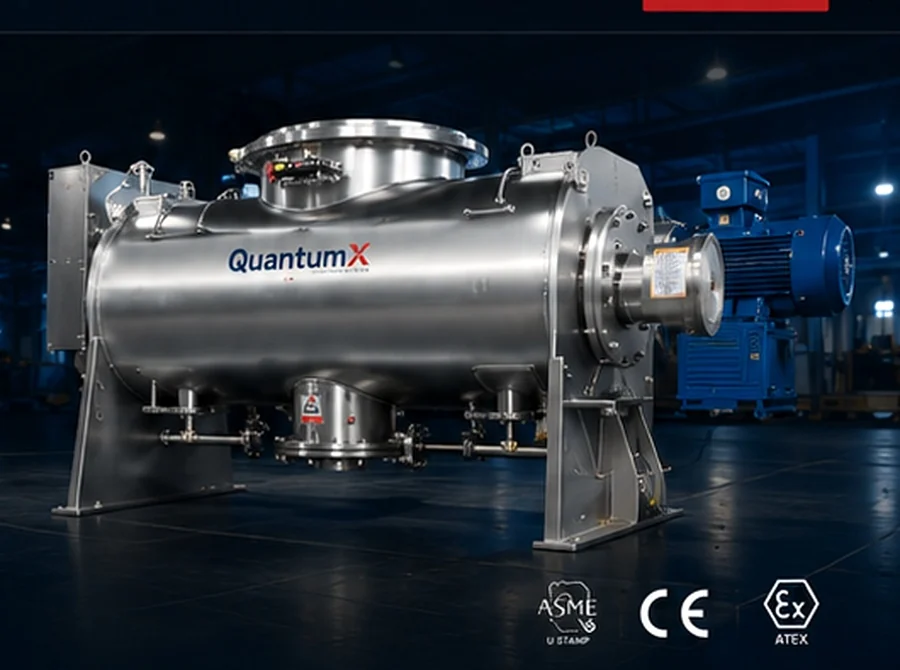
Depending on the process, a complete QuantumX system may include:
Vacuum and Pressure-Rated Ribbon Mixers
A vacuum or pressure-rated mixer is not a standard mixer with a heavier cover.
The vessel, head geometry, nozzles, supports, seals, agitation system and jacket must be evaluated as one mechanical and process system.
Design conditions must be clearly separated from normal operating conditions. Final vessel ratings, code requirements and safety systems are established during engineering review.
QuantumX ribbon mixers can be engineered for:
Heating and Cooling Jackets
A jacket alone does not guarantee effective heating or cooling.
Thermal performance depends on:
The ribbon agitator must continuously move product away from and back toward the heat-transfer surface. Without effective wall renewal, temperature gradients can develop even when the jacket is correctly sized.
Standard PerMix ribbon mixers may include:
Applications requiring vacuum, positive pressure, ASME construction, higher thermal duty, solvent service, reactive chemistry or advanced process control are engineered under QuantumX.
Materials of Construction
PerMix and QuantumX ribbon systems can be engineered using a broad range of contact materials, liners and surface treatments.
Material selection is based on:
A cost-effective choice for many non-corrosive industrial applications, including selected minerals, construction materials, dry chemicals and general powder processing.
Options may include:
Commonly selected for food, ingredient and general sanitary applications where corrosion requirements are moderate.
Available with application-specific:
Used for applications requiring increased corrosion resistance, sanitary fabrication or tighter contamination control.
Typical considerations include:
Selected duplex or specialty stainless grades may be considered for applications where standard stainless steel does not provide the required combination of corrosion resistance and mechanical performance.
Selected Hastelloy or nickel-alloy construction may be specified for highly corrosive process environments.
The engineering review considers more than alloy compatibility. It also evaluates:
Titanium may be considered for selected corrosive or high-purity applications where its compatibility and contamination profile are advantageous.
Because titanium behaves differently from stainless steel during fabrication and service, the complete design must account for:
Abrasive powders can rapidly wear standard stainless or carbon-steel contact surfaces.
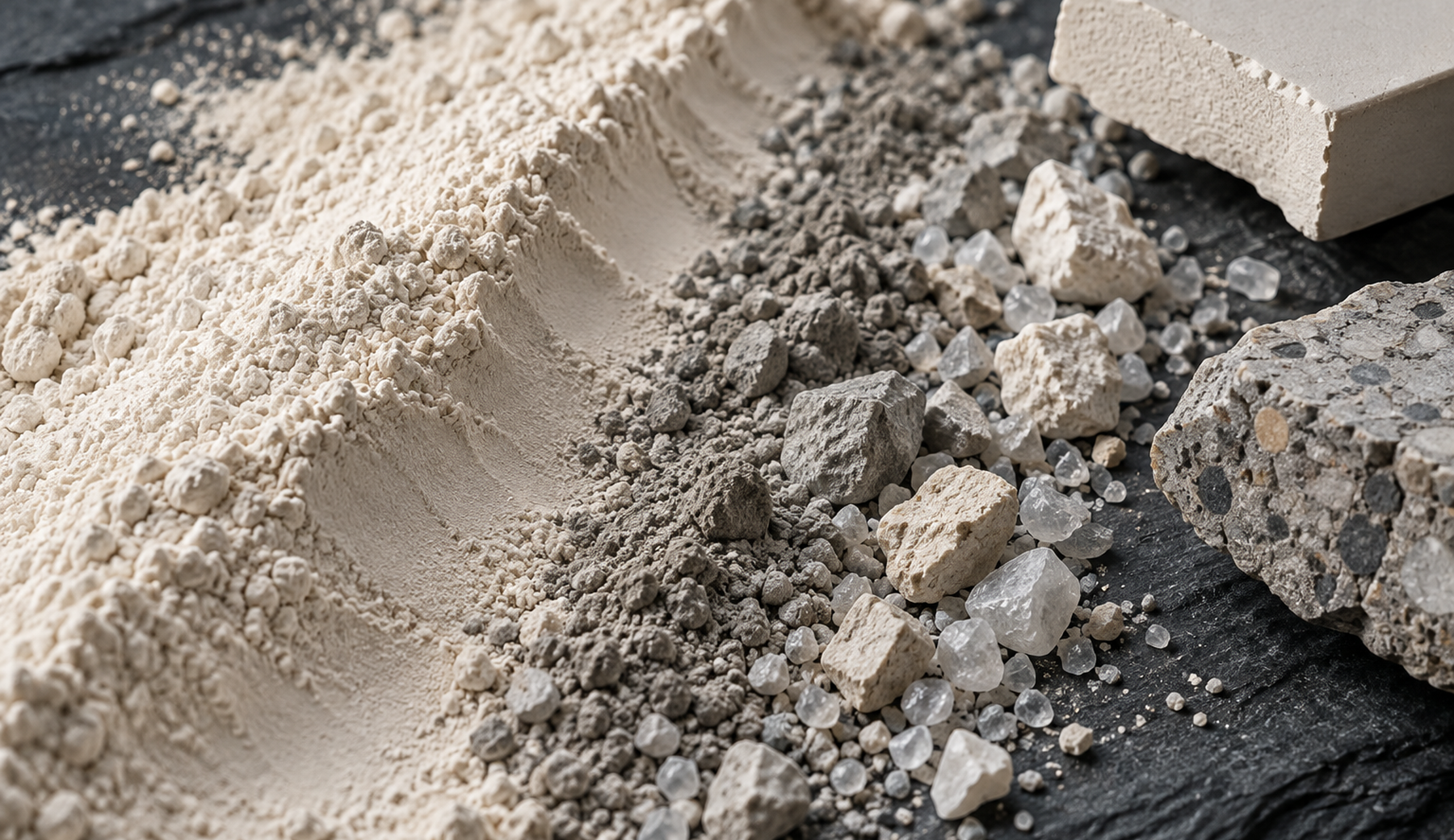
For minerals, ceramics, refractories, silica, fly ash, cementitious materials and similar products, PerMix can evaluate:
PerMix has publicly positioned Hardox and wear-resistant construction for abrasive ribbon-mixing duties.
For highly abrasive products or applications where metallic contamination must be minimized, PerMix can engineer ribbon mixers with application-specific ceramic liner systems.
A ceramic-lined mixer cannot be created successfully by simply adding tile to a standard trough.
The engineering must account for:
The agitator diameter and ribbon profile must be designed around the final lined vessel dimensions. Otherwise, the liner may reduce the intended operating clearance and compromise mechanical reliability.
Sanitary and Easy-Clean Ribbon Mixers
For food, pharmaceutical, nutraceutical and high-purity applications, cleanability is not an accessory.
PerMix sanitary ribbon mixers can be engineered with:
The correct sanitary design depends on whether the mixer will be dry cleaned, wet washed, pressure washed or cleaned in place.
Ribbon mixers can process more than dry powders.
Small or controlled liquid additions can be introduced through spray systems designed around:
Optional choppers or intensifiers can be used when the application requires:
A chopper does not compensate for poor ribbon geometry. It should be used only when the product and process require localized high-shear input.
PerMix ribbon mixers can be supplied as stand-alone machines or integrated production systems.
Available engineering options can include:





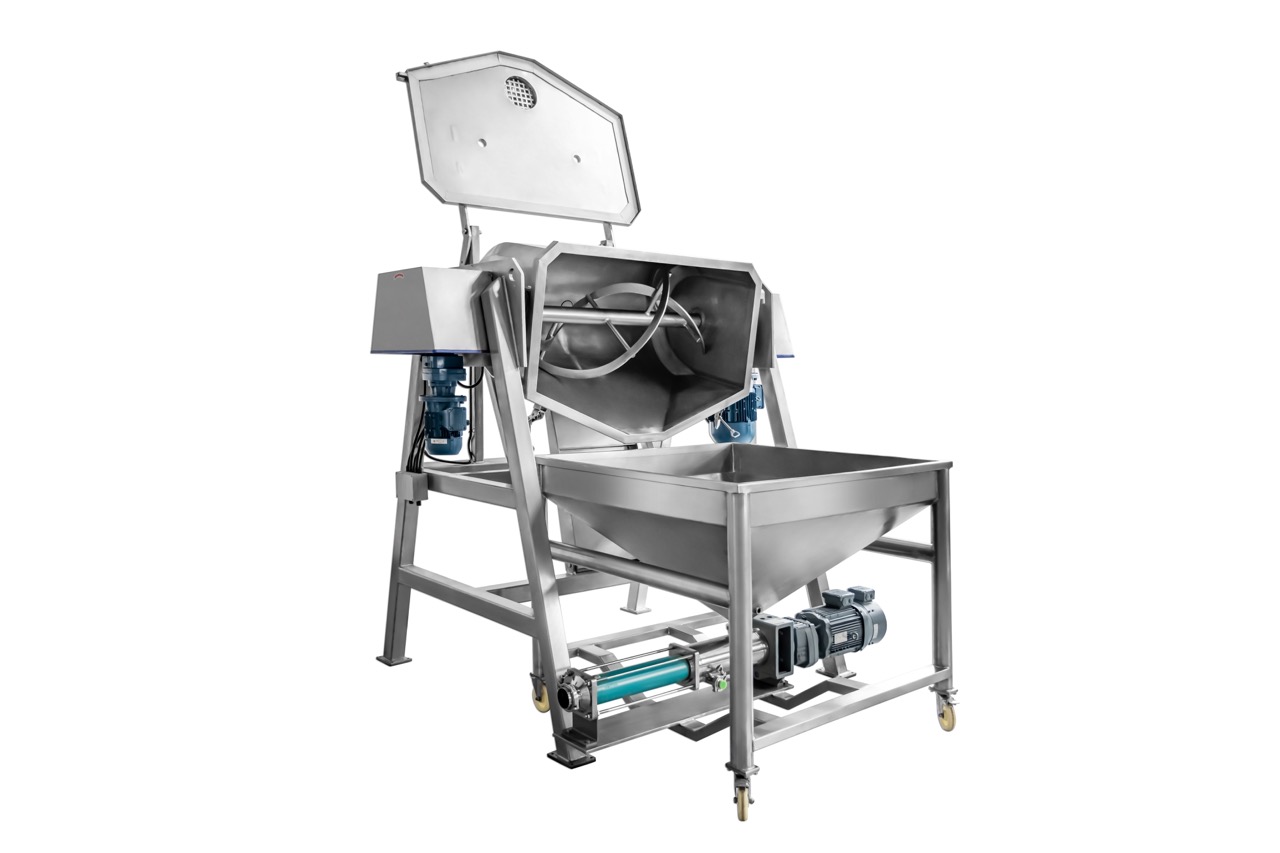
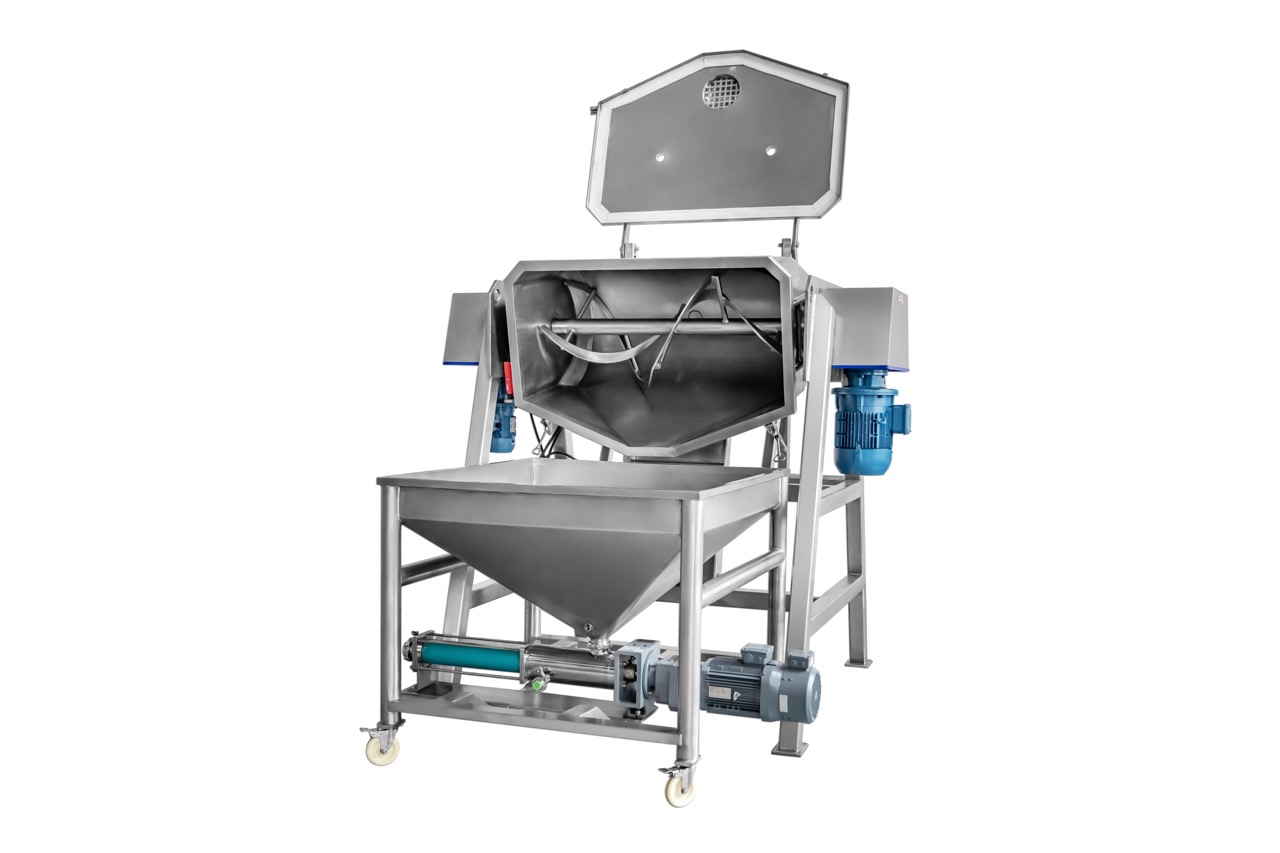
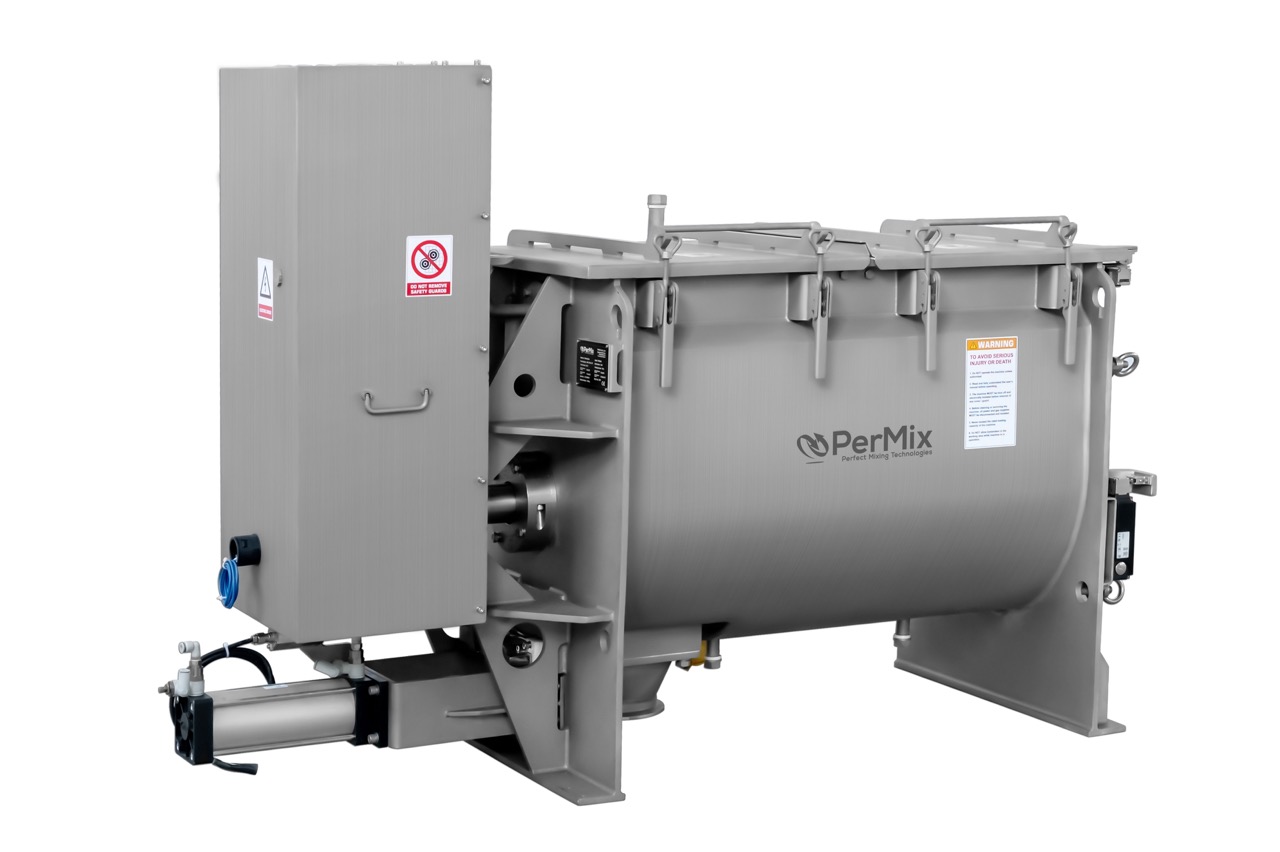
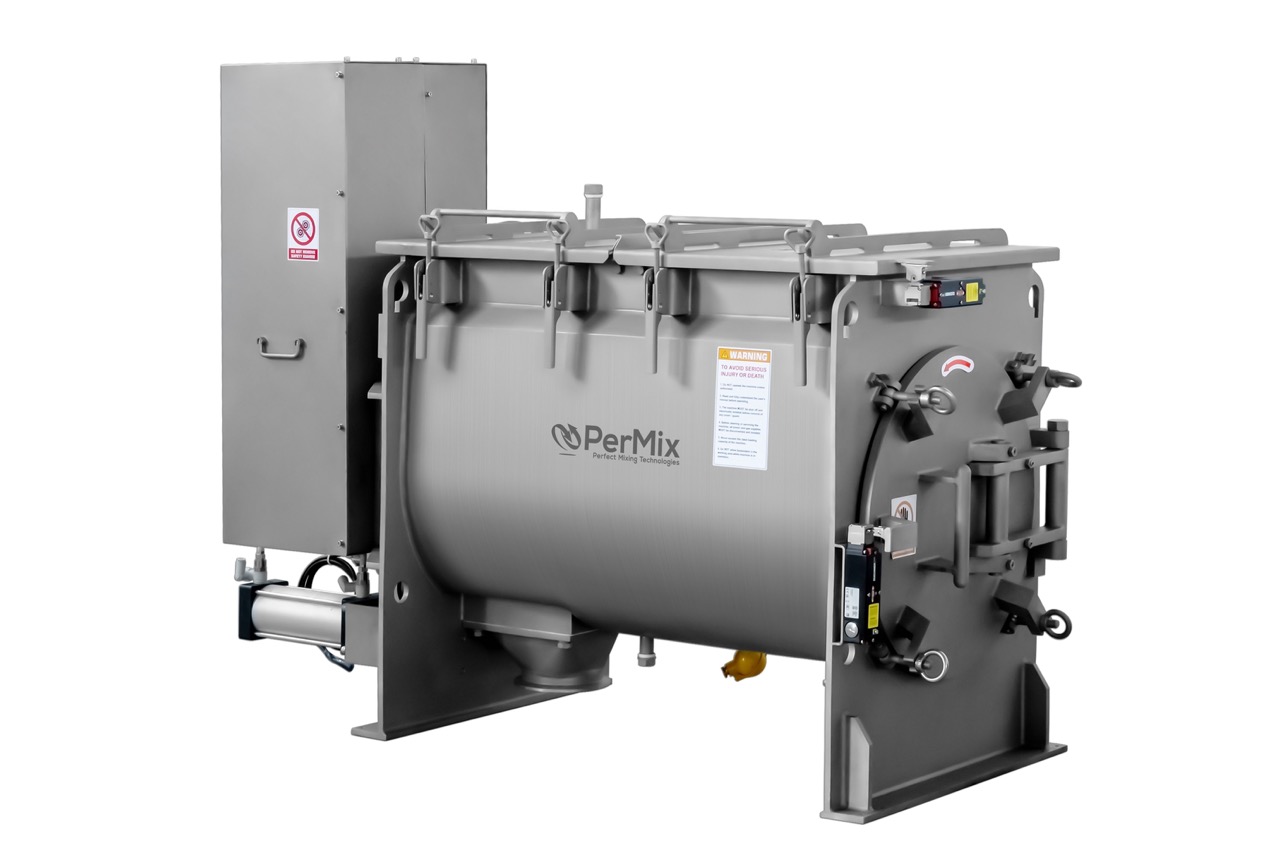
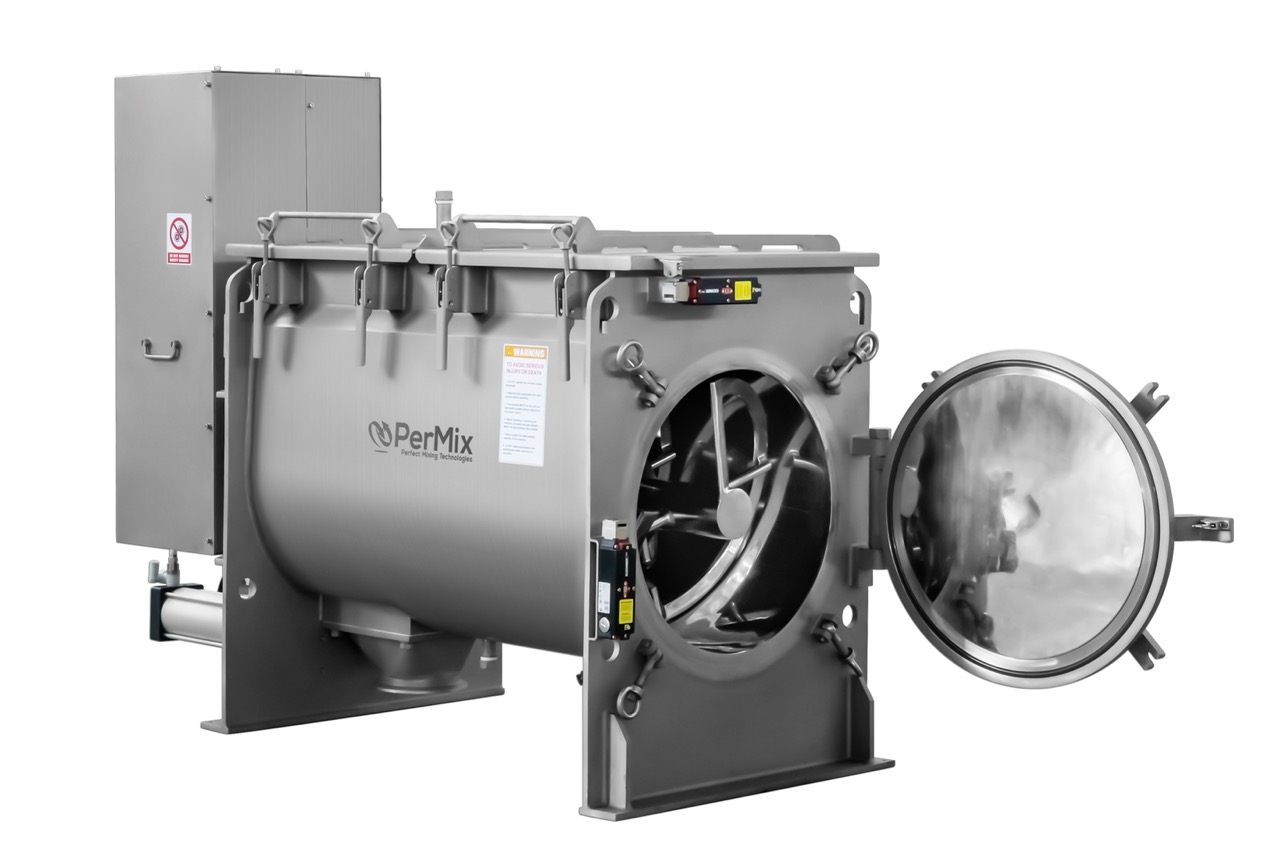
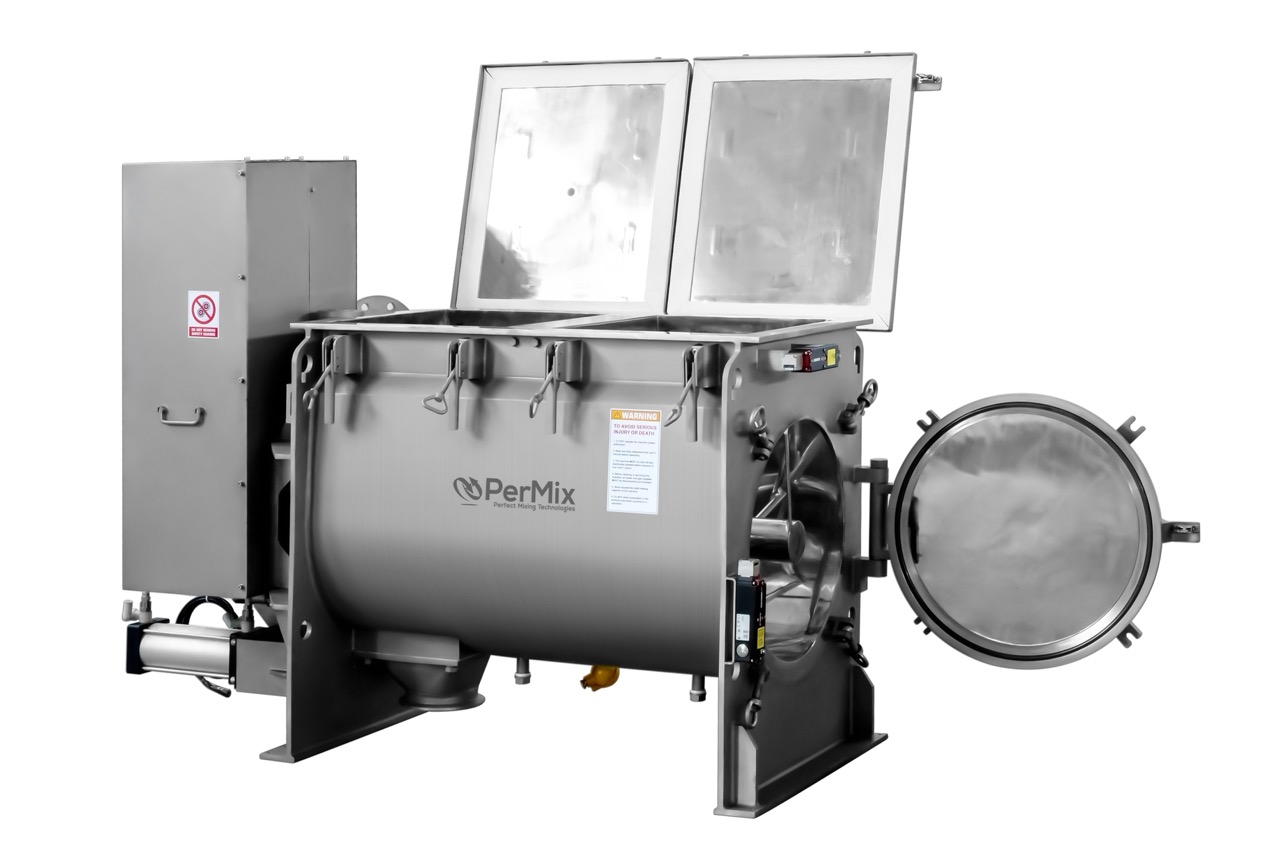
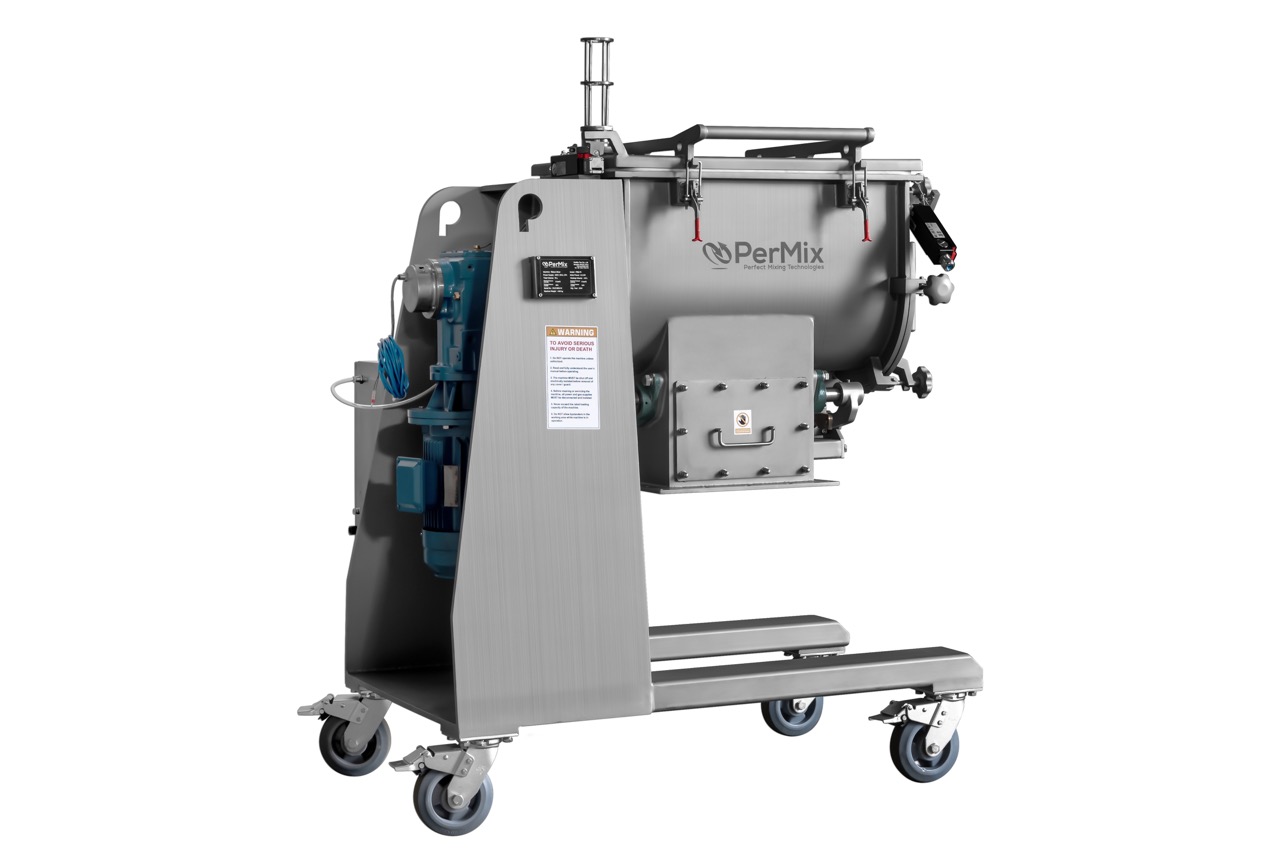
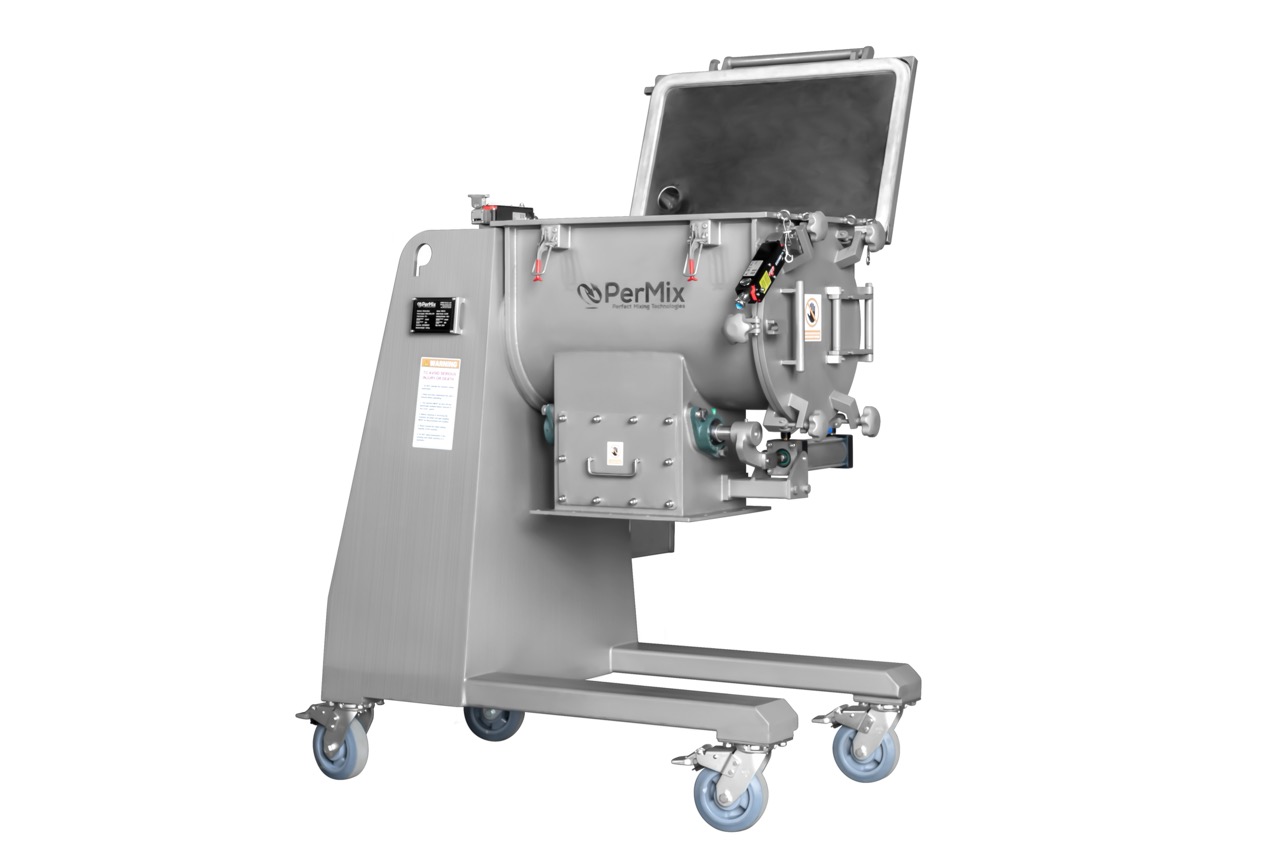
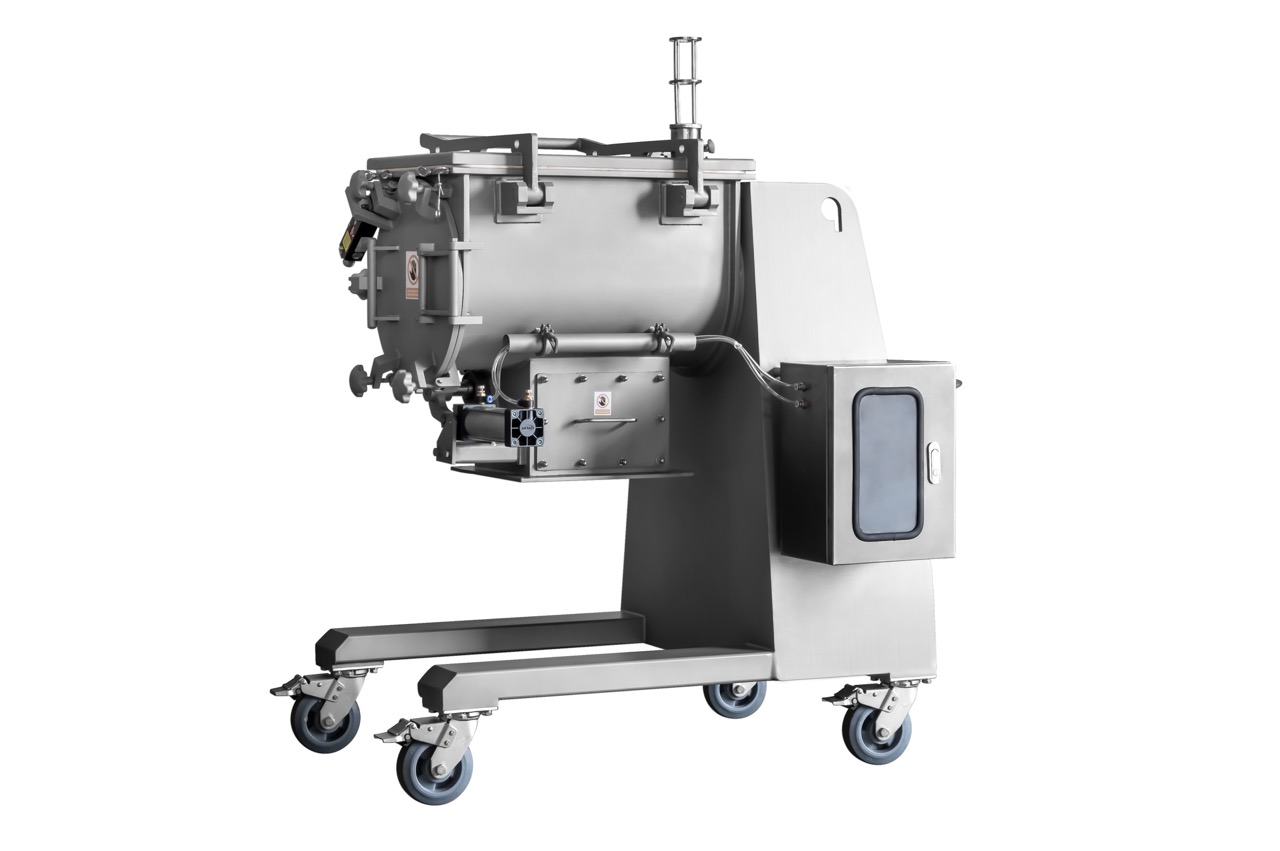
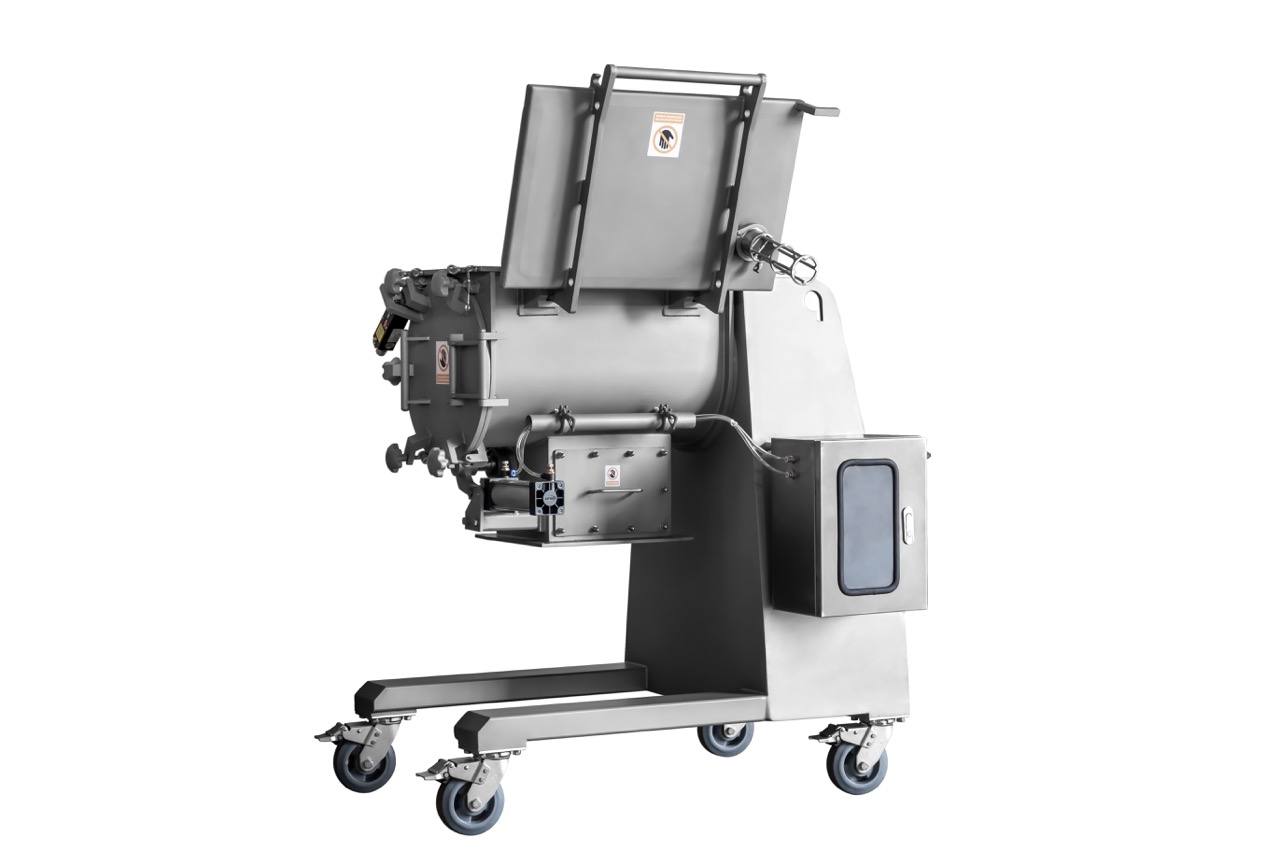
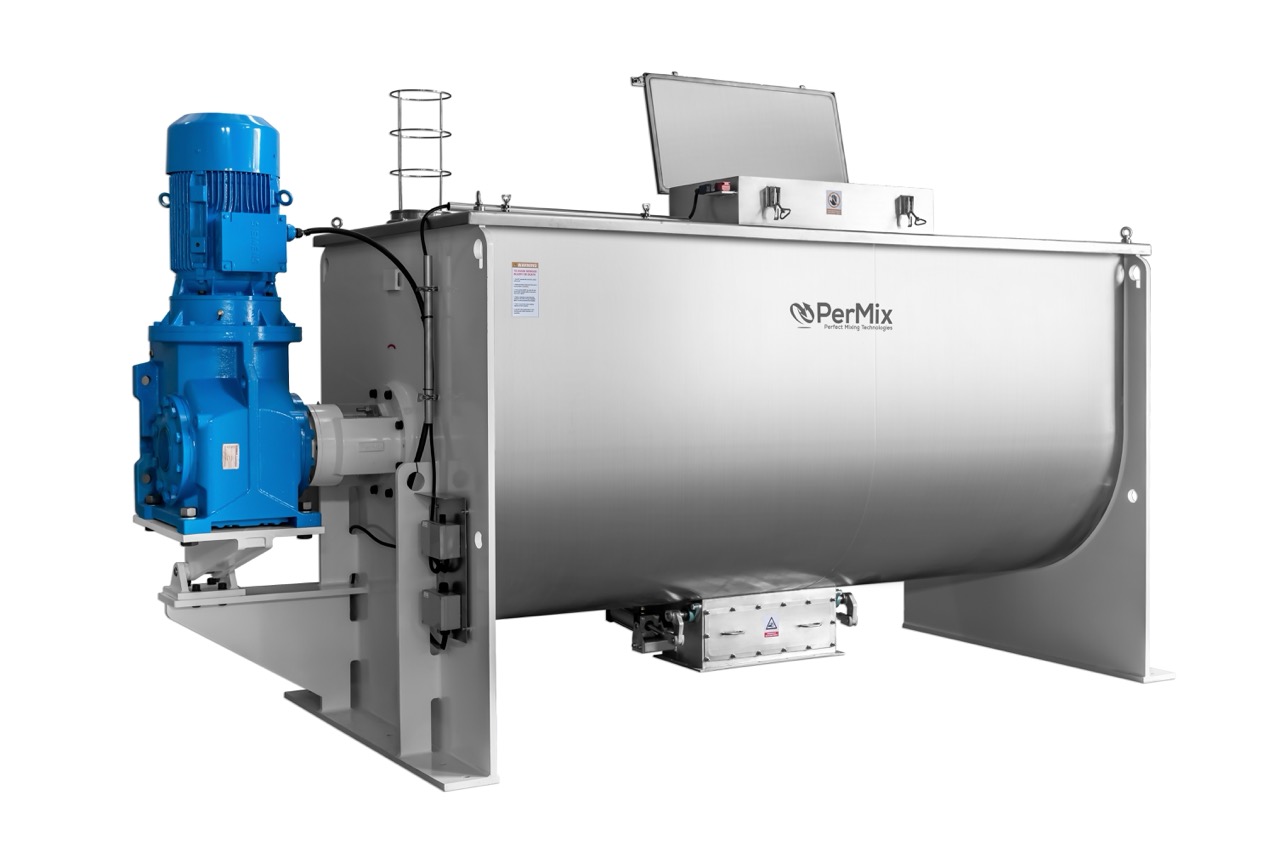
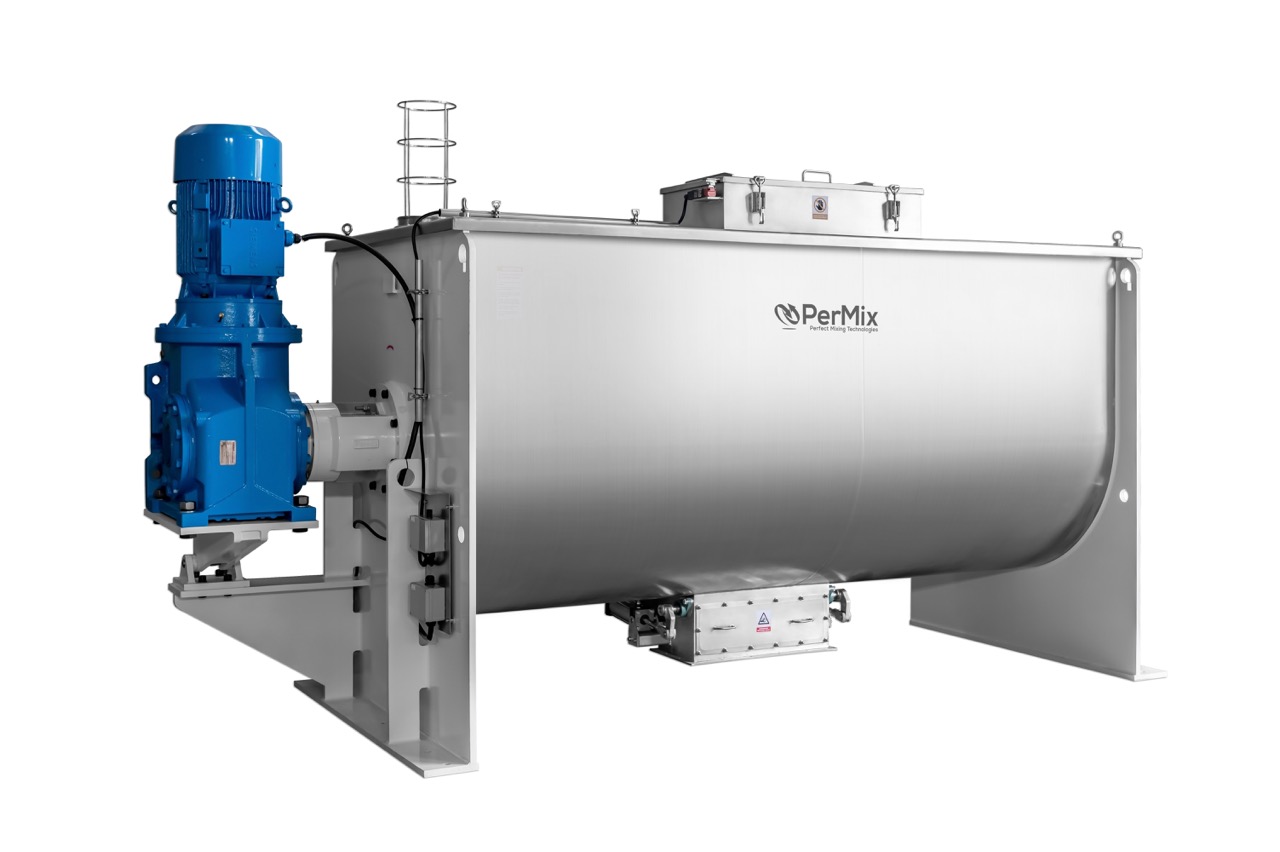
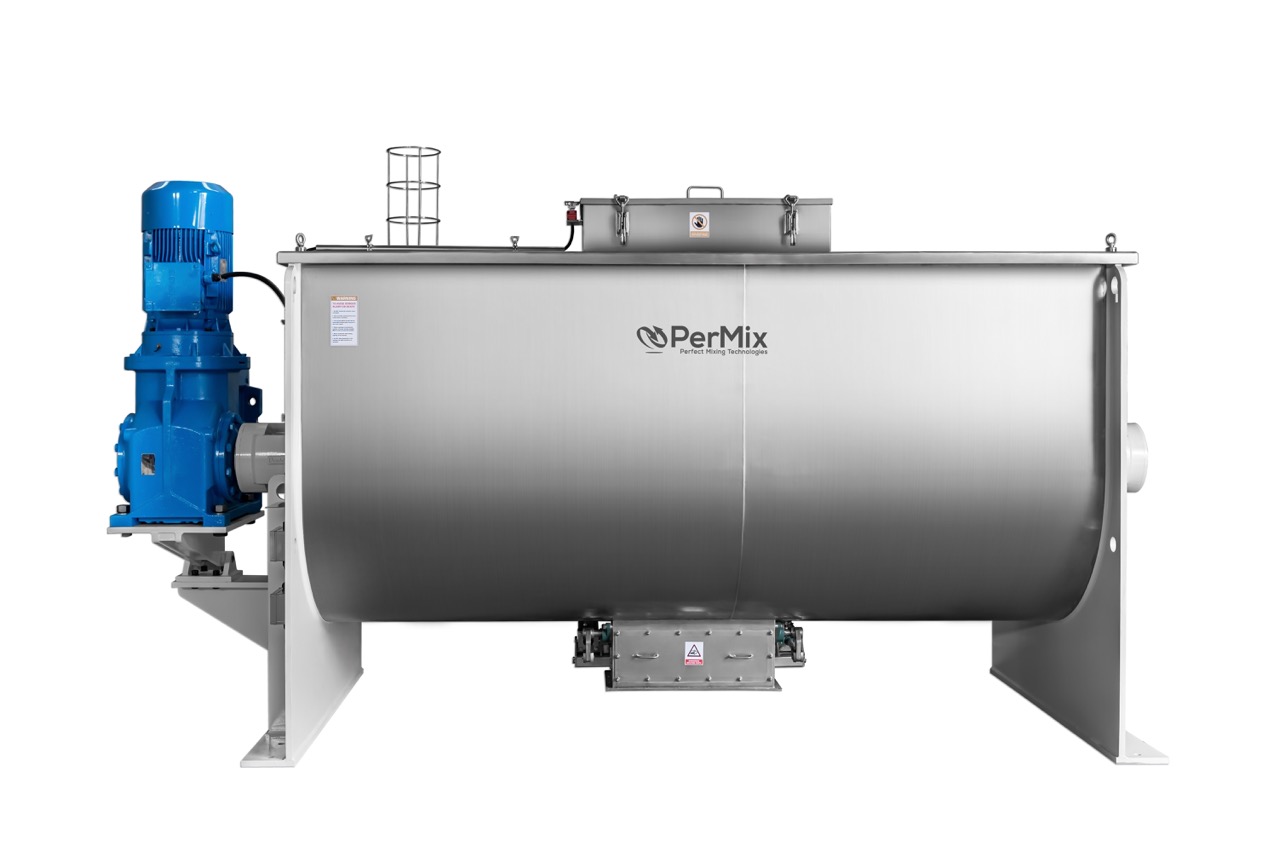
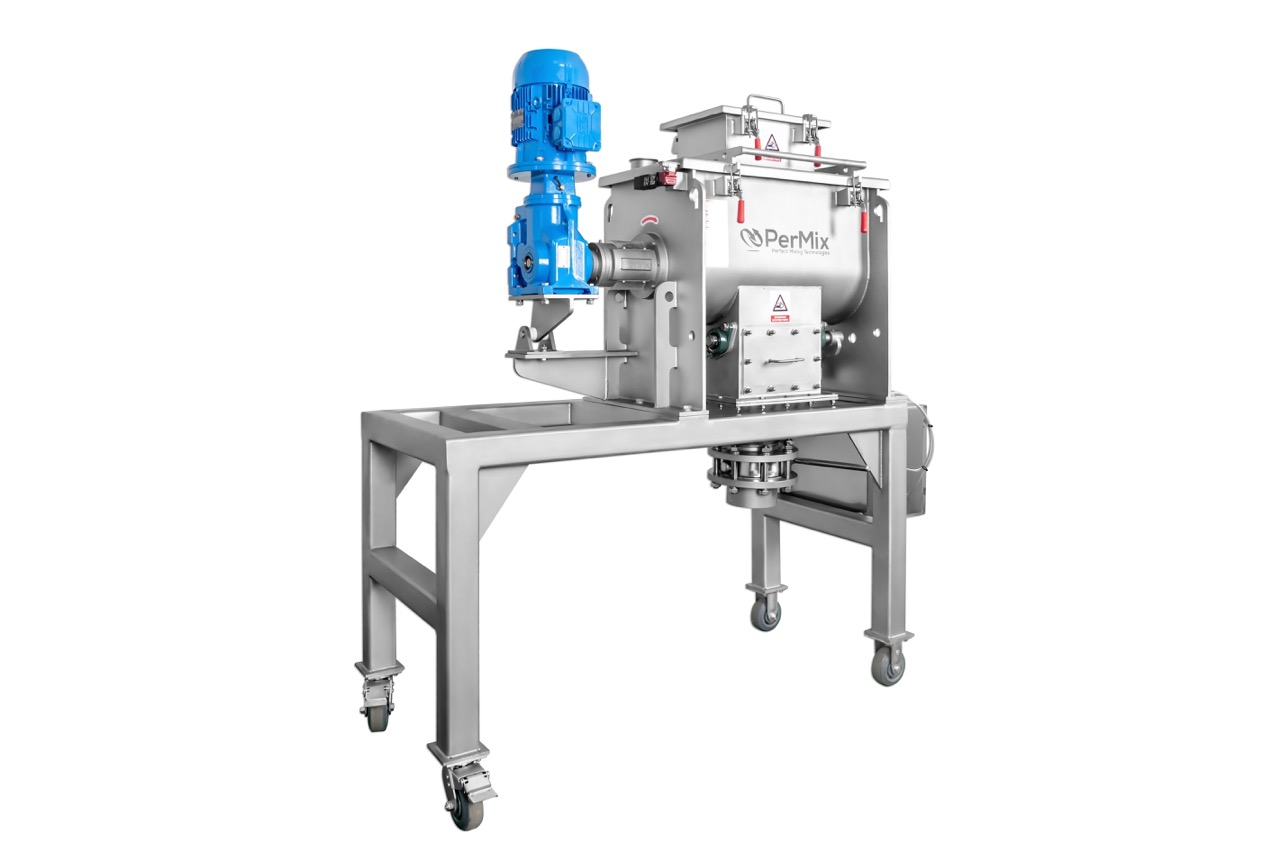
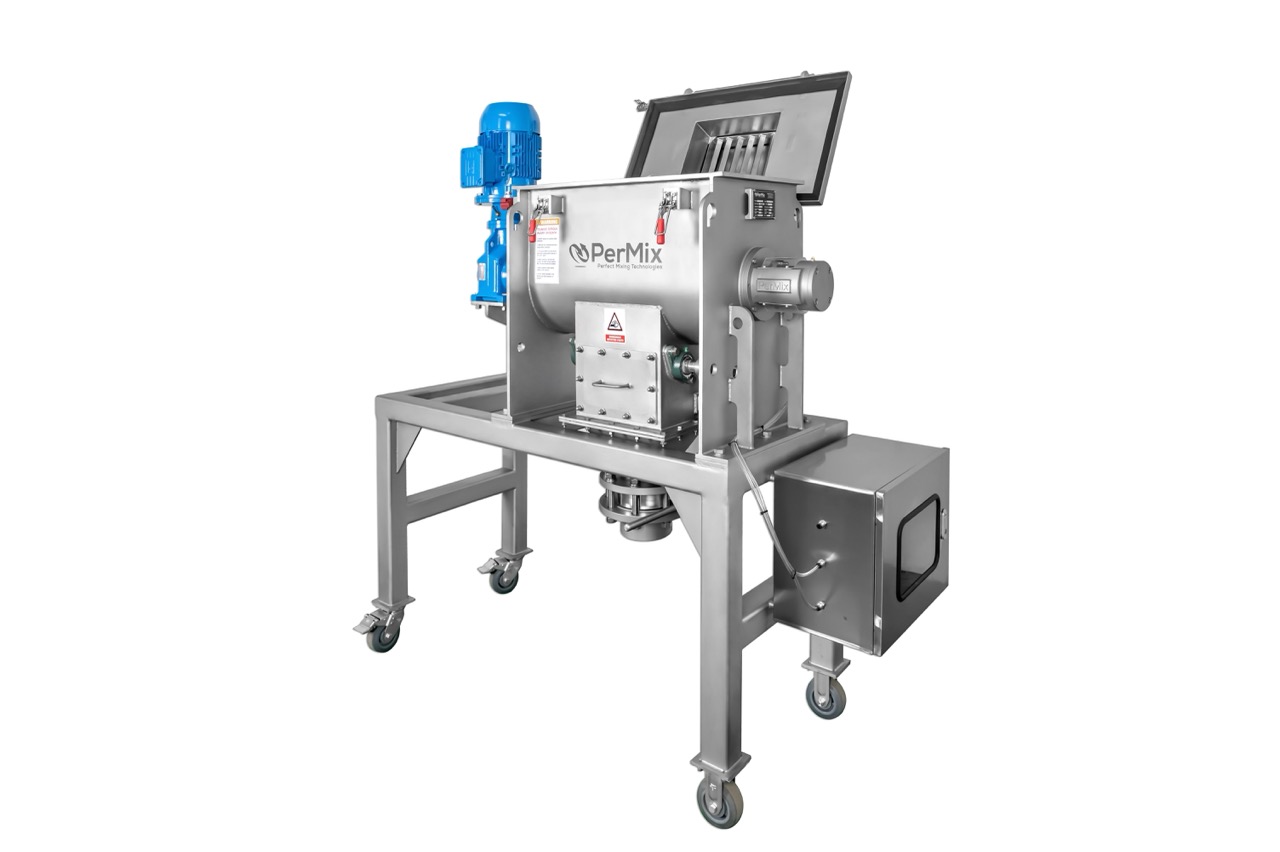
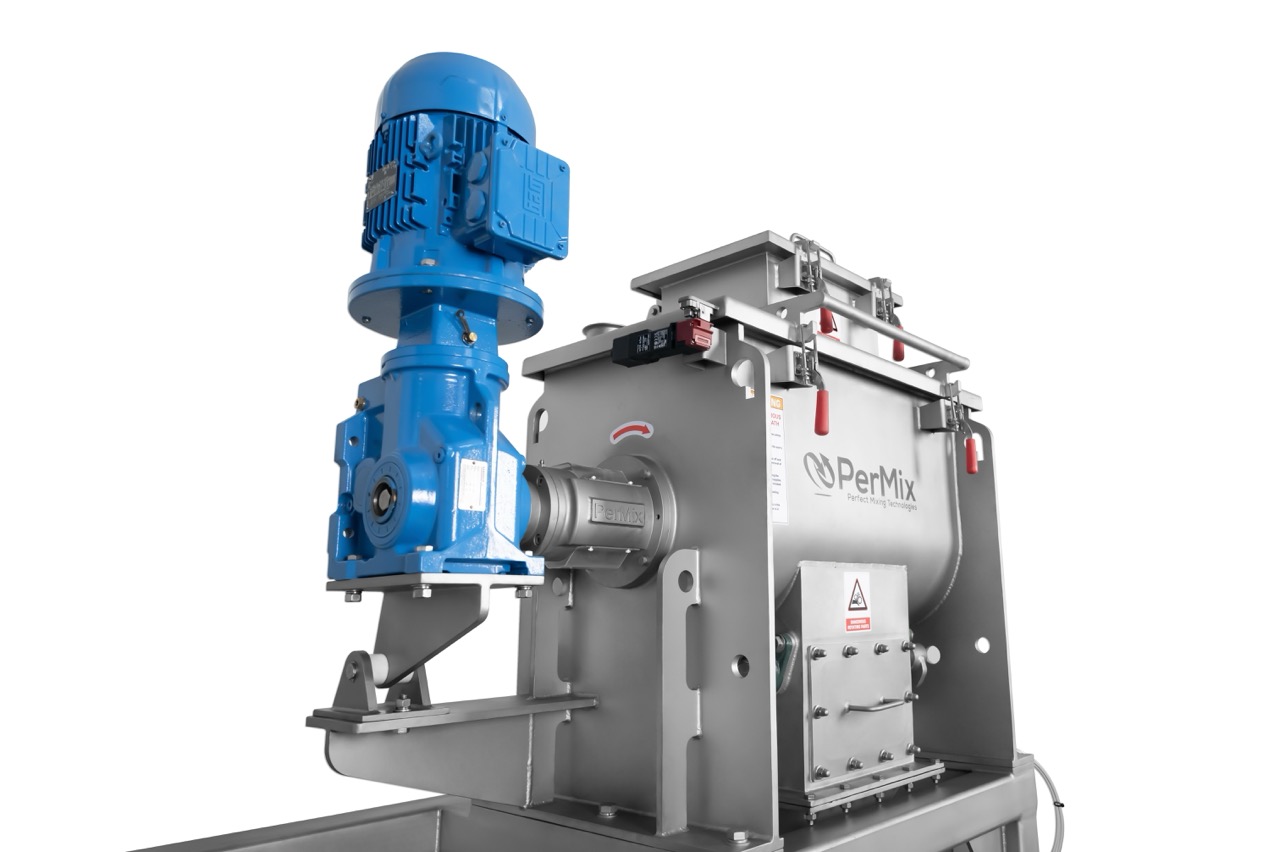
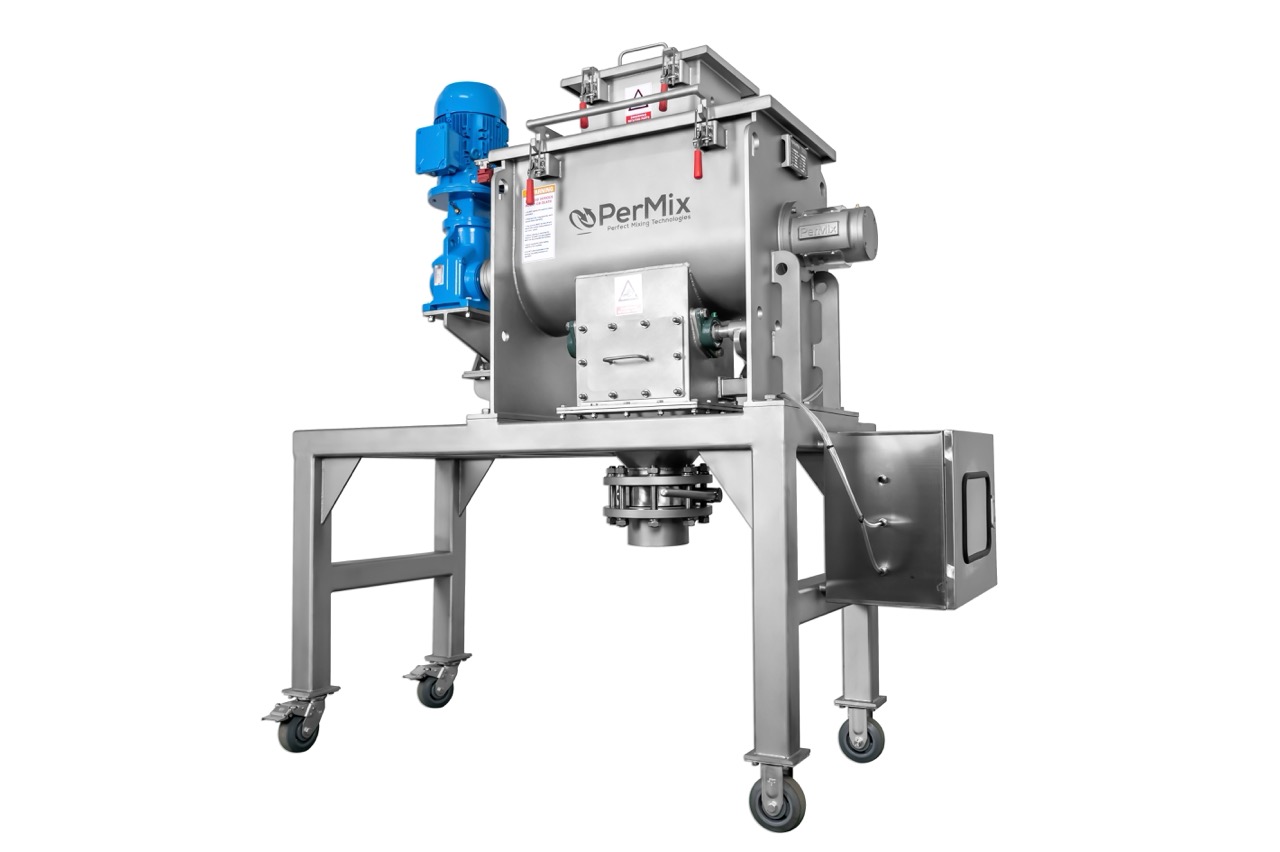
Real PerMix Ribbon Mixers
See horizontal and vertical ribbon mixers built for sanitary, industrial, abrasive, thermal and specialty applications.
Every application creates a different machine. Explore real PerMix ribbon mixers and see how vessel geometry, agitator design, materials, access, discharge, controls and process integration change with the product and production requirement.
Representative equipment
How We Engineer the Right Ribbon Mixer
To recommend the correct ribbon mixer, our engineers review:
Tell us what you are mixing, how much you need per batch and what problem the current process is creating.
We will evaluate the appropriate mixer platform, working volume, ribbon geometry, construction material, drive basis, discharge arrangement and process options.
REQUEST A RIBBON MIXER RECOMMENDATION
Upload your material data sheet, current process description, batch formula, facility drawing or existing equipment information. The more process information you provide, the more useful our preliminary recommendation will be.
| Catalog-based selection | PerMix application engineering |
|---|---|
| Selected mainly by nominal vessel volume | Selected by batch mass, bulk density and working fill |
| Standard ribbon width and pitch | Geometry evaluated for material movement and process objective |
| Generic motor selection | Drive evaluated for startup and worst-case load |
| Standard contact material | Material, liner and finish selected for product compatibility |
| Limited discharge choices | Discharge engineered around flow and residual hold-up |
| Basic atmospheric vessel | Clear pathway to QuantumX vacuum, pressure and ASME systems |
| Generic jacket option | Thermal duty evaluated with product circulation and wall renewal |
| Basic contact form | Engineering RFQ captures product and process data |
| One machine configuration | Horizontal, vertical, sanitary, abrasive and specialty variants |
| Little consideration of scale-up | Scale-up based on geometry, tip speed, power, fill and circulation |
The terms are generally interchangeable. Both refer to a mixer using helical ribbon elements to create axial and radial movement through a batch of powders, granules or selected light pastes.
Ribbon width affects how much material is engaged and transported during each revolution. Pitch affects how far and how rapidly material moves axially through the vessel. Both must be balanced with diameter, speed, bulk density, fill level and product behavior.
No. Insufficient surface area can produce weak circulation, but excessive area can increase drag, torque, power consumption, shear and product heating. The correct amount depends on the application.
Yes. Horizontal mixers provide flexible batch blending and integration, while vertical models can reduce floor-space requirements and support gravity-assisted discharge.
Yes. Standard models can include low-pressure, non-ASME heating or cooling jackets. More demanding thermal, vacuum, pressure, ASME or solvent-service applications are engineered under QuantumX.
Yes. QuantumX vacuum ribbon mixers and mixer-dryers can combine agitation, heating, vacuum and vapor handling for controlled drying, conditioning and atmosphere-sensitive processing.
Pressure-rated ribbon systems can be engineered under QuantumX. Vessel rating, code requirements, seals, agitation, nozzles and safety systems are evaluated for the defined operating and design conditions.
Options can include carbon steel, 304 stainless steel, 316/316L stainless steel, duplex grades, abrasion-resistant steel, selected Hastelloy and nickel alloys, titanium, ceramic liners and other application-specific materials.
Yes, for appropriate applications. The liner thickness, attachment method, impact exposure, thermal conditions and operating clearances must be incorporated into the original mechanical design.
Yes, within process-specific limits. Spray nozzles, addition rate, viscosity, droplet size and batch circulation must be evaluated to avoid localized wetting or uncontrolled agglomeration.
Yes. Choppers or intensifiers can support deagglomeration, liquid distribution and coating when the process requires localized higher shear.
The mixer should be sized using batch mass, bulk density, required fill range and process behavior—not vessel volume alone.
Yes. Systems can include load cells, ingredient feeders, conveying, screening, metal detection, filling, packaging and automated controls.
Use QuantumX when the process requires vacuum, positive pressure, ASME construction, ATEX, inerting, solvent handling, advanced drying, high containment or other specialty engineering.
ENGINEERED FOR THE PRODUCT. BUILT FOR THE PROCESS.
The right ribbon mixer begins with an understanding of how your product moves, compacts, heats, discharges and responds to shear.
PerMix evaluates the ribbon, vessel, drive, materials, seals, discharge and controls as one system.
Whether you need a straightforward atmospheric powder blender, a corrosion-resistant alloy mixer, a ceramic-lined unit or a QuantumX vacuum ribbon mixer-dryer, we will engineer the platform around your production requirements.