What mixer is best for battery powders?
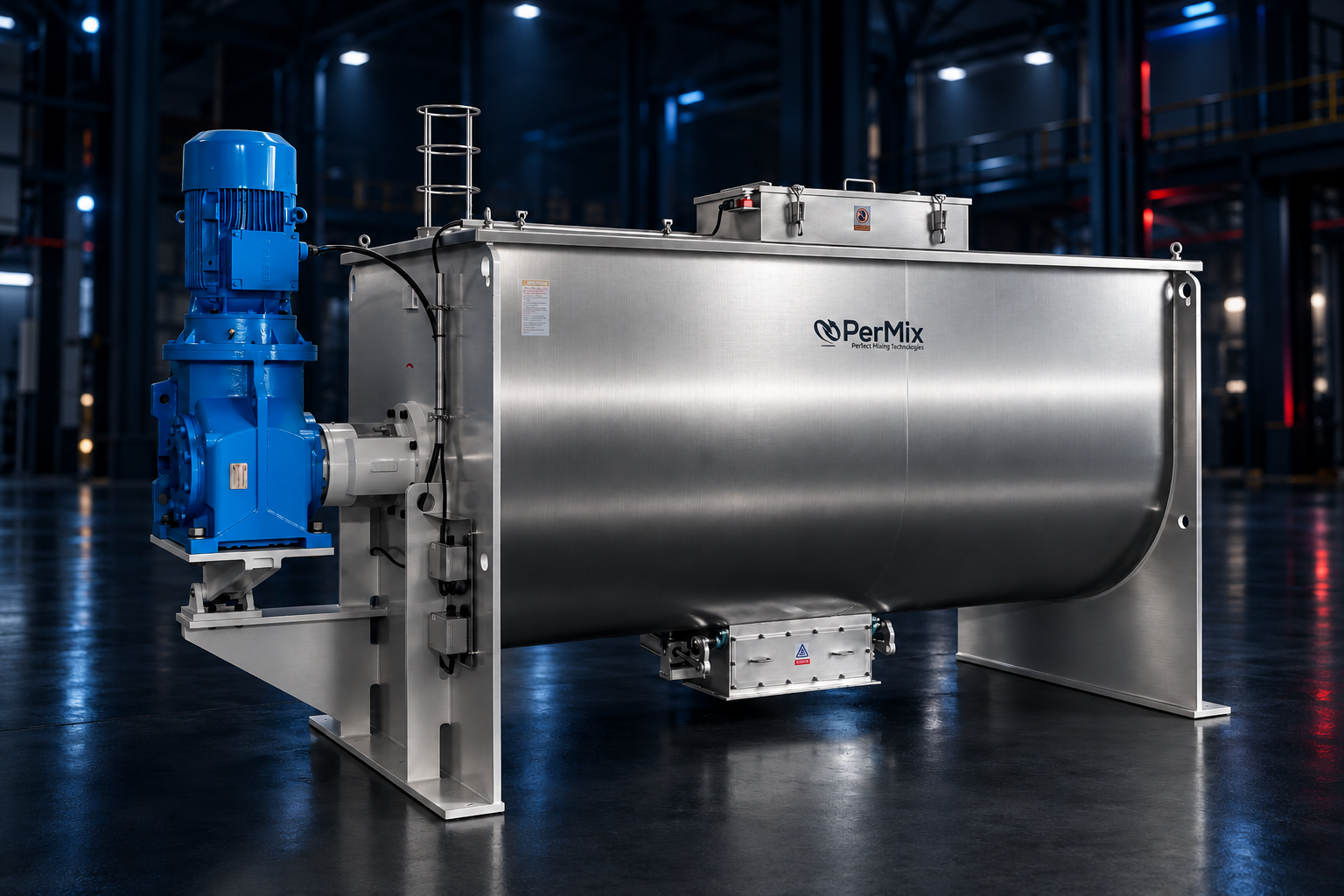
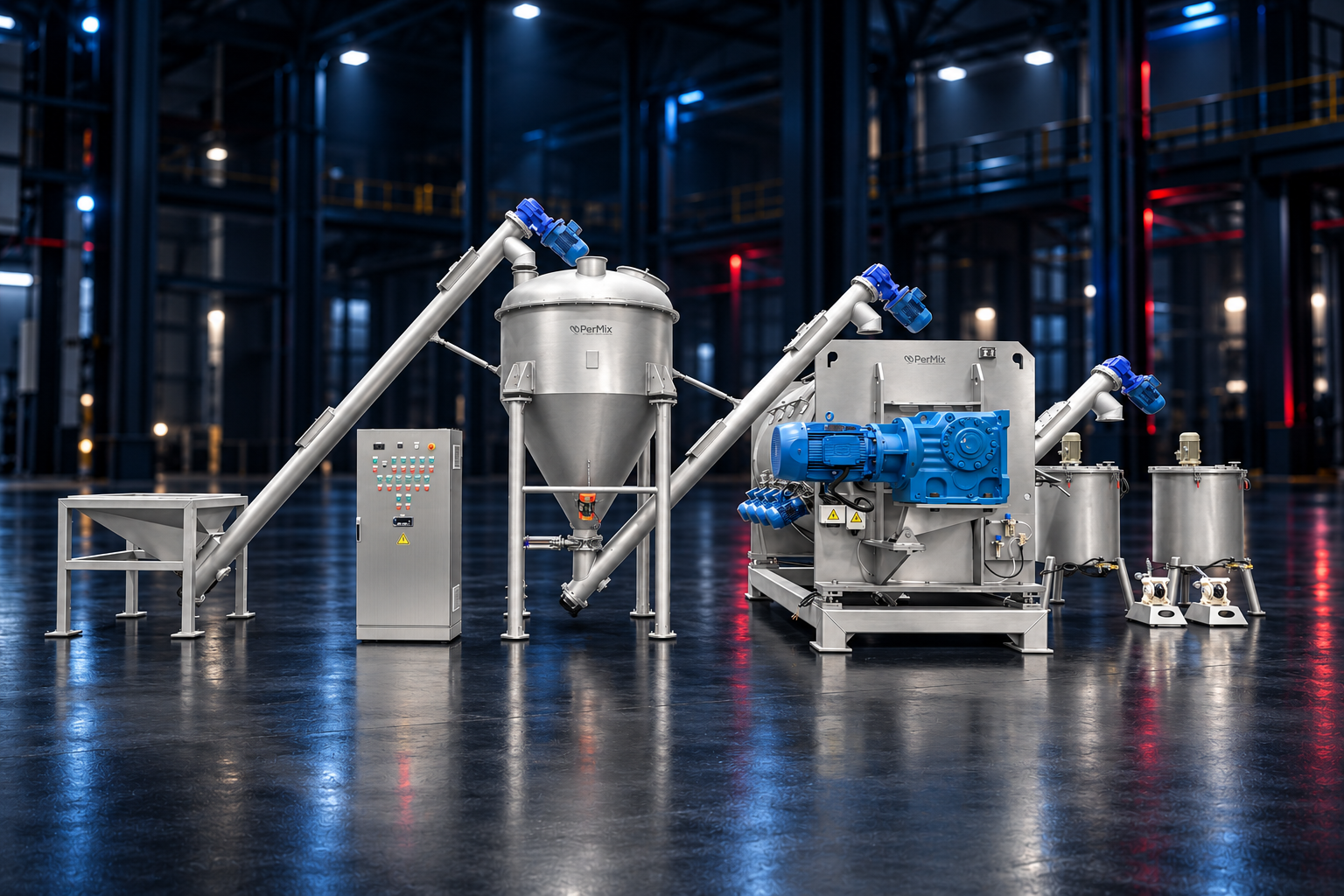
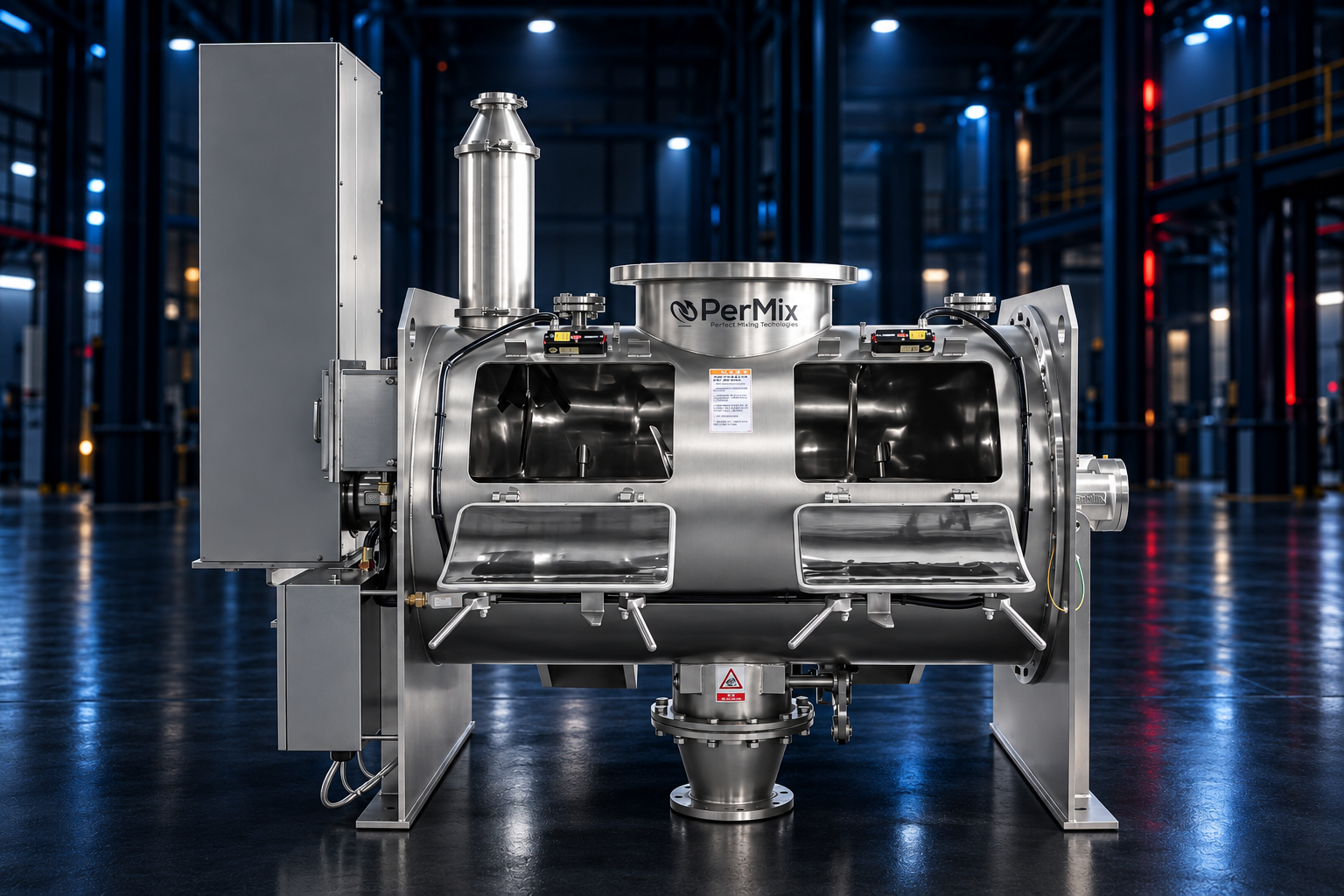
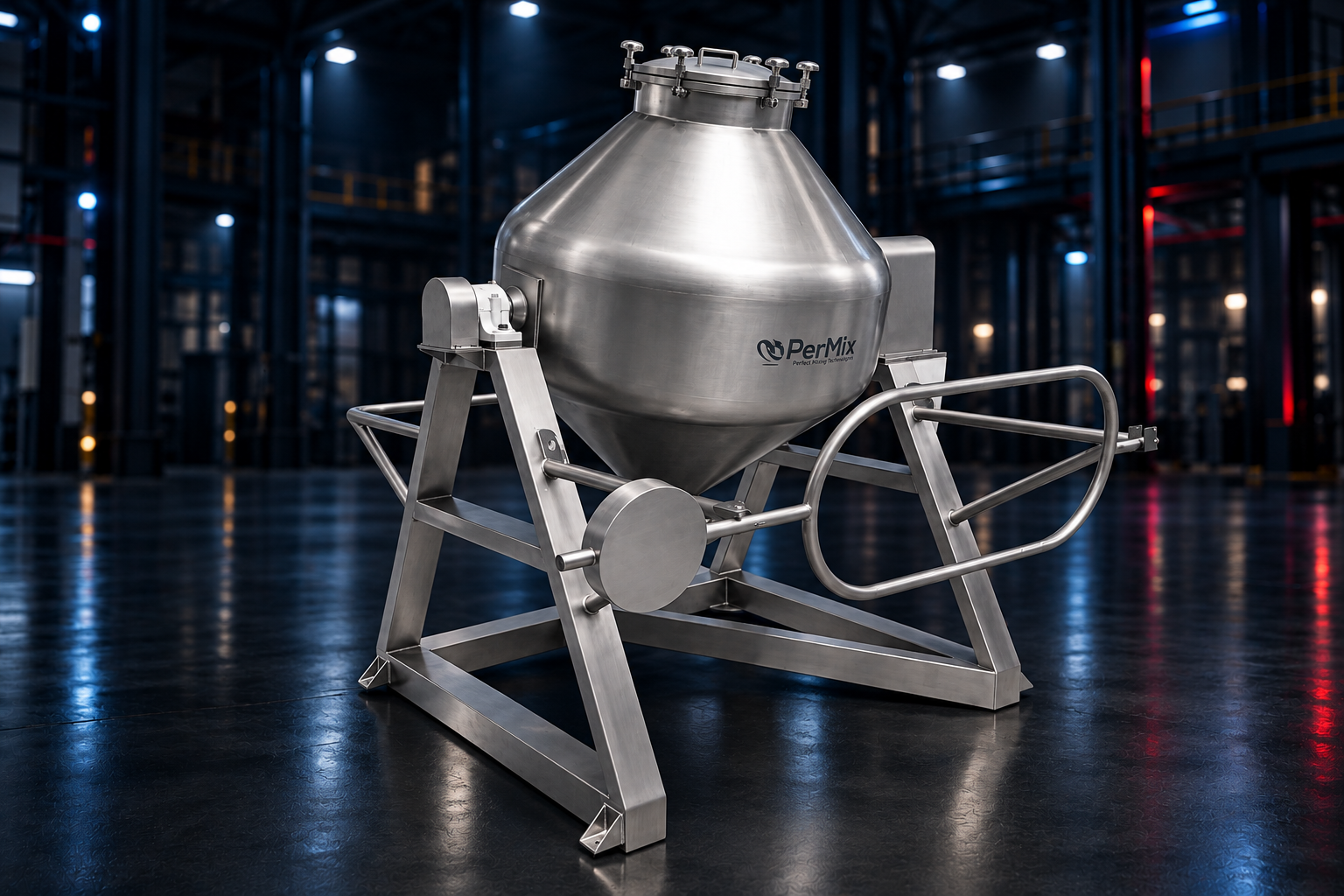
The correct mixer depends on flowability, cohesion, particle fragility, additive percentage, contamination limits, moisture sensitivity, inerting and the required process intensity. Ribbon, paddle, ploughshare and double cone mixers create different material movement.
What is the best mixer for cathode active materials?
There is no single universal selection. Ribbon mixers can support controlled convective blending, paddles can protect fragile particles, plough mixers can disperse cohesive additives, and double cone mixers can gently blend suitable free-flowing powders.
What mixer is used for graphite and anode materials?
Ribbon, paddle, ploughshare or double cone systems may be appropriate depending on graphite type, silicon content, density variation, cohesion, abrasion and particle-fragility requirements.
Can PerMix mix carbon black or conductive additives?
Yes, subject to application review. Low bulk density, cohesion, agglomeration, dust, static, containment and hazardous-area requirements must be evaluated.
Can PerMix process graphene or carbon nanotubes?
Yes, suitable contained dry-mixing or EmulXion liquid-dispersion systems can be evaluated. Exposure control, agglomeration, static and material loss are important design factors.
Can PerMix support dry-electrode manufacturing?
PerMix can evaluate dry blending of active materials, conductive additives, binders and processing aids. The correct mixer and energy input should be established through formulation-specific testing.
Does PerMix manufacture battery-slurry mixers?
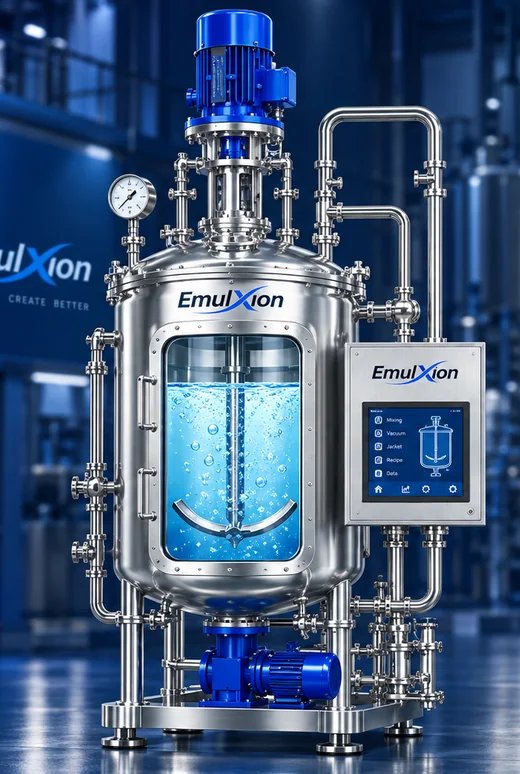
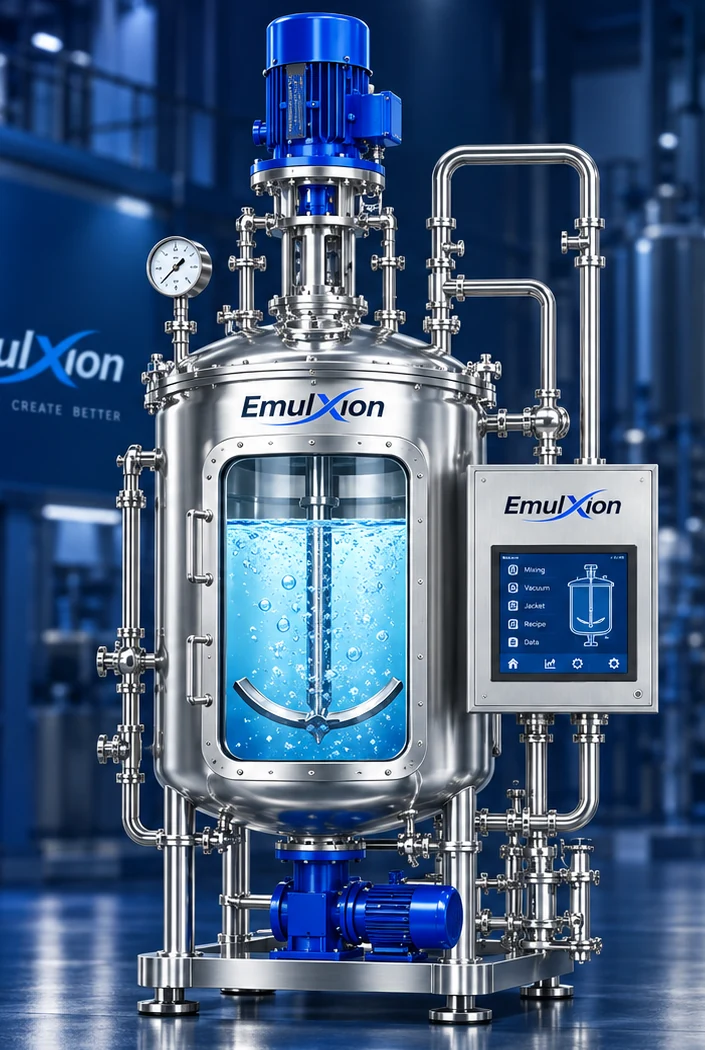
Liquid electrode-slurry processing is handled through EmulXion, including powder induction, high-shear dispersion, high-viscosity agitation, temperature control and vacuum deaeration.
Can the mixer operate under nitrogen or argon?
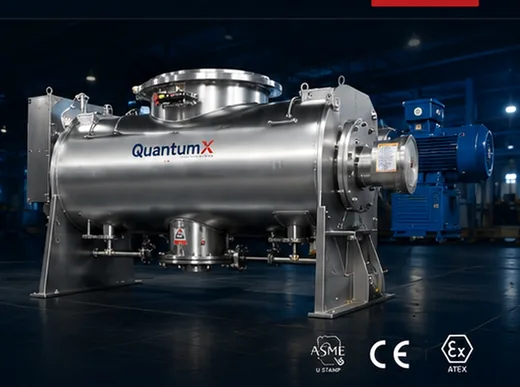
QuantumX systems can include nitrogen or argon purge, evacuation and backfill, oxygen monitoring and controlled inert-atmosphere processing.
Can the mixer operate in a dry room?
Yes, the equipment can be engineered for dry-room integration. The required dew point, leakage control, purge strategy and maintenance access must be defined.
Can PerMix provide vacuum battery-material mixers?
Yes. QuantumX can provide vacuum mixers and mixer-dryers for application-specific moisture removal, atmosphere control and closed processing.
Are high-containment systems available?
Yes. QuantumX systems can include contained charging, glovebox connections, high-integrity seals, closed sampling and contained discharge.
Are ATEX systems available?
QuantumX systems can be engineered around a defined ATEX or hazardous-area basis supplied by the customer.
Can PerMix reduce metallic contamination?
Potential strategies include ceramic liners, specialty alloys, protected wear surfaces, nonmetallic components and contamination-controlled fabrication. The required limit and test method must be defined.
Can PerMix provide ceramic-lined mixers?
Yes, for suitable applications. Ceramic type, liner thickness, attachment, impact, thermal conditions and agitator clearances must be engineered into the original design.
Are Hastelloy and titanium available?
Selected Hastelloy, nickel-alloy and titanium constructions can be evaluated where required by corrosion, purity or process compatibility.
Can the mixer handle abrasive battery powders?
Yes, but the wear basis must be established. Options can include ceramic lining, Hardox, replaceable liners, tungsten-carbide protection and hardened components.
How are low-percentage additives distributed?
Uniform distribution depends on additive concentration, particle properties, loading sequence, preblending, mixer fill, agitator geometry, mixing time, sampling and discharge.
Can the system control oxygen and moisture?
QuantumX systems can integrate oxygen monitoring, dew-point monitoring, purge gas, vacuum evacuation, backfill and closed transfer where required.
Can the system integrate with gloveboxes?
Yes. Charging, sampling, discharge and transfer connections can be engineered for glovebox or isolator integration.
How is scale-up performed?
Scale-up considers geometry, tip speed, power input, working fill, material circulation, temperature, additive distribution, gas environment and discharge behavior—not vessel volume alone.
Can PerMix conduct material trials?
Trials can be included when material quantity, confidentiality, hazard controls, sampling, analytical methods and acceptance criteria are agreed.
What information is needed for a quotation?
Provide material type, batch mass, bulk density, particle characteristics, contamination limits, additive percentages, oxygen and moisture requirements, vacuum or pressure, hazardous-area data, construction materials, cleaning and utilities.