What mixer is best for chemical powders?
The correct mixer depends on flowability, cohesion, abrasion, corrosion, particle fragility, liquid addition, required shear, thermal duty and hazard classification. Ribbon, paddle, ploughshare and double cone mixers each produce different material movement.
When should I use a ribbon mixer?
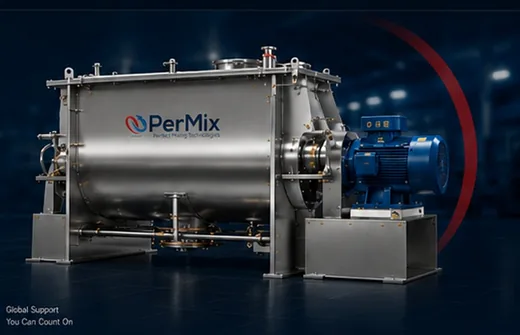
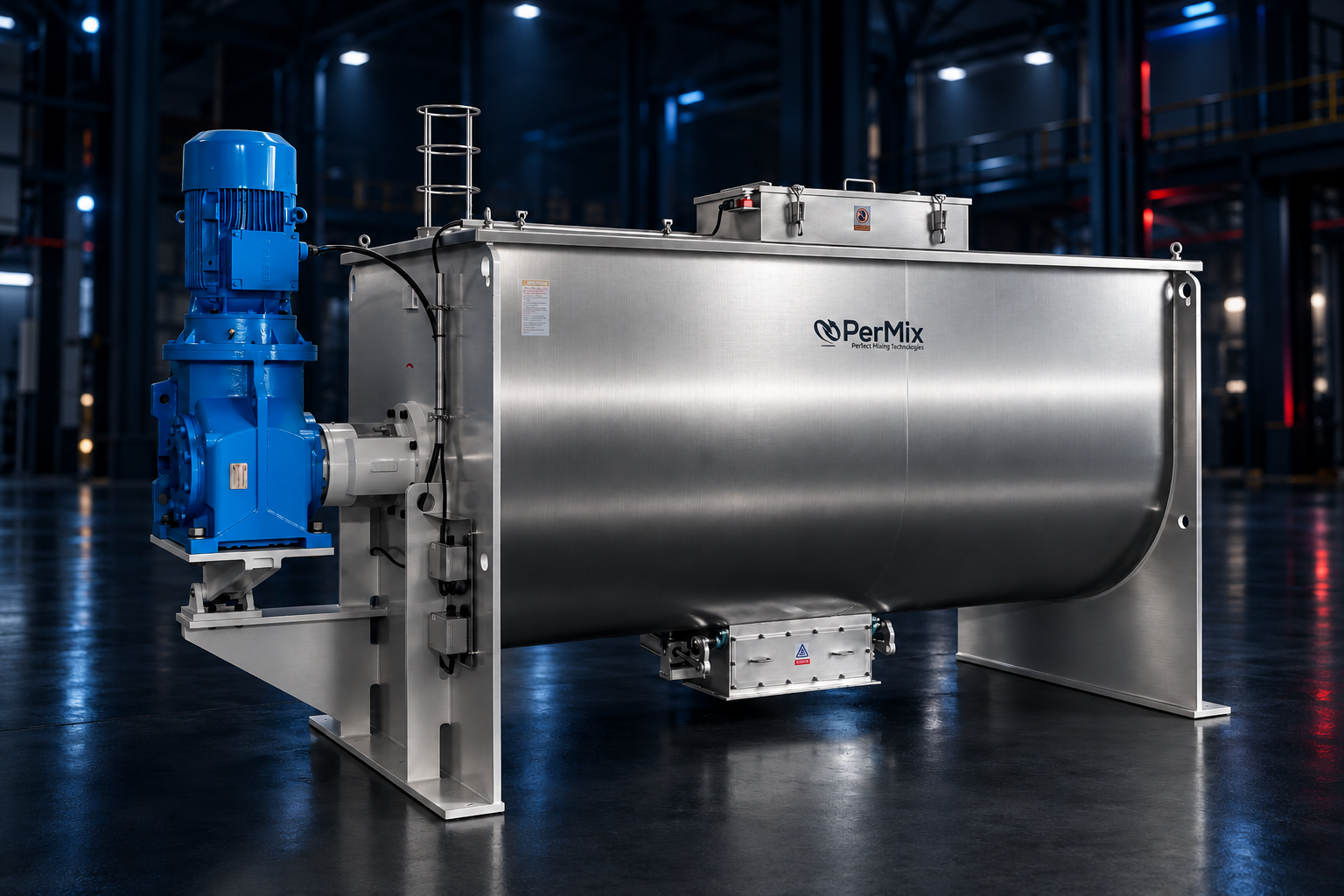
Ribbon mixers are often appropriate for general dry chemical blends, premixes, detergents and powders requiring controlled axial and radial circulation.
When is a paddle mixer preferred?
Paddle mixers are often selected for fragile granules, variable-density ingredients, coated particles and products requiring gentler lifting and folding.
When should I use a ploughshare mixer?
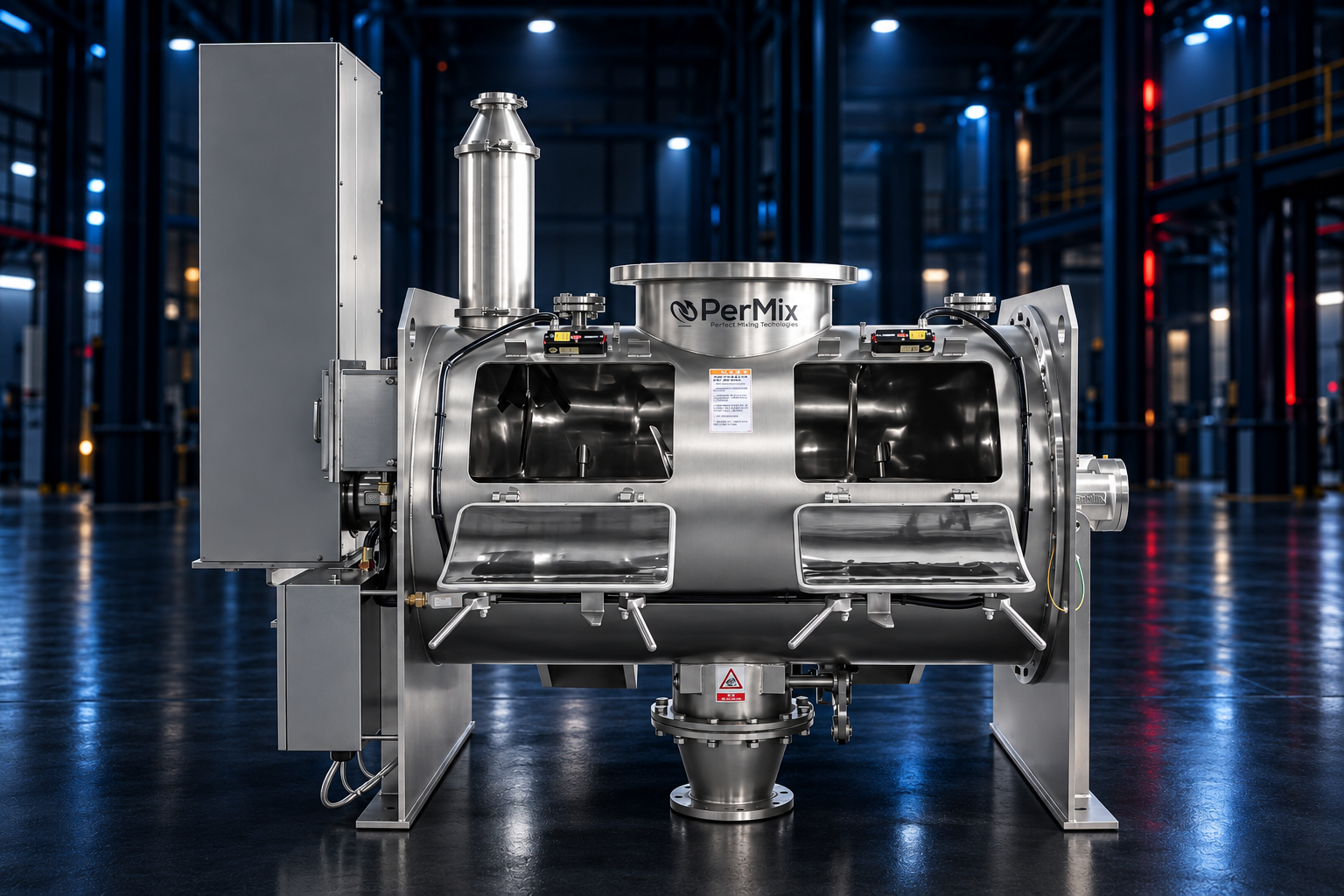
Ploughshare mixers are often appropriate for cohesive powders, pigments, intensive liquid addition, coating, deagglomeration and granulation.
When is a double cone mixer appropriate?
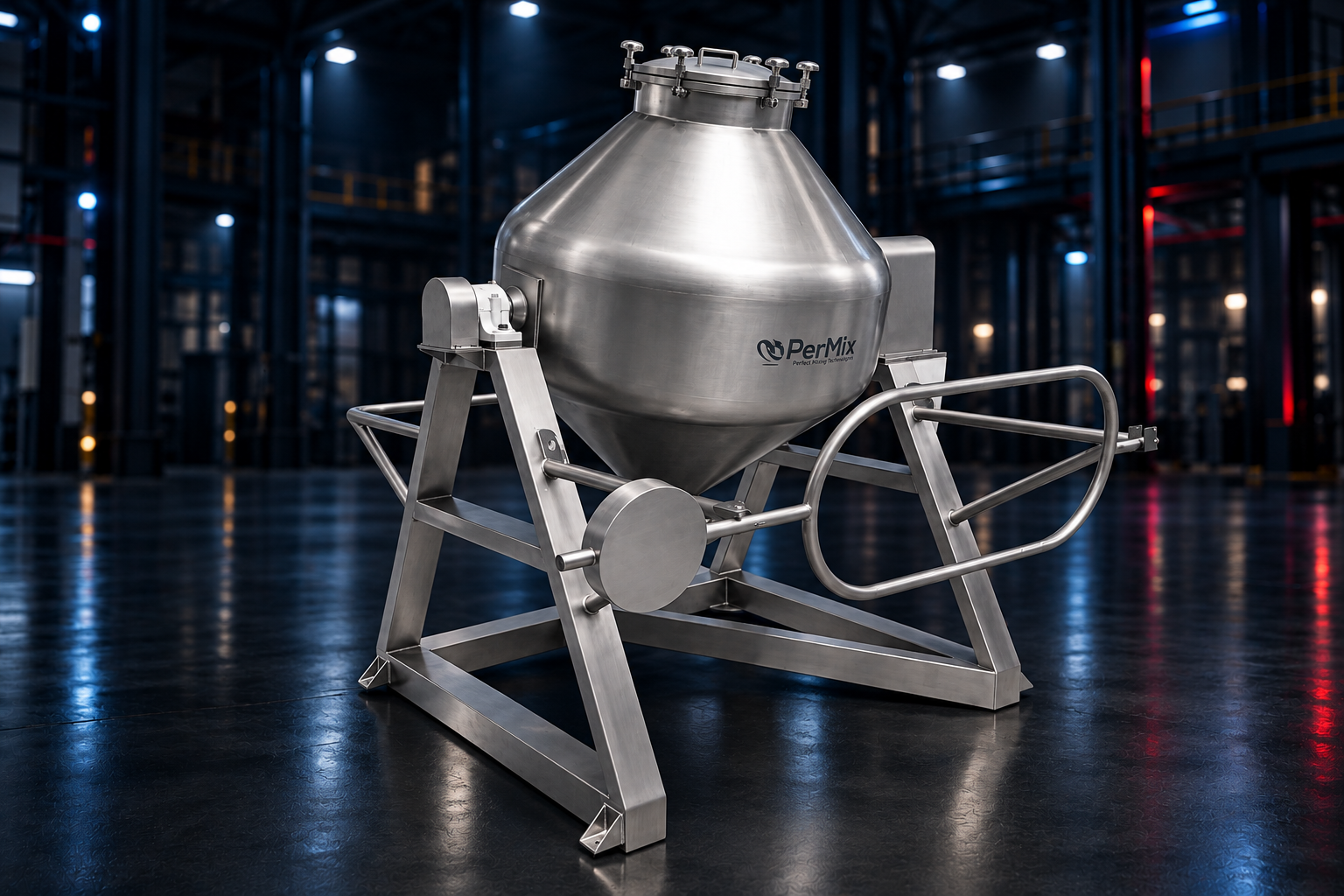
Double cone mixers are strongest with free-flowing powders, crystals, catalyst carriers and fragile particles requiring gentle tumble blending.
Can PerMix add liquids to chemical powders?
Yes. The liquid viscosity, addition percentage, spray location, nozzle type, powder movement and agglomeration risk must be evaluated together.
Can the mixer be heated or cooled?
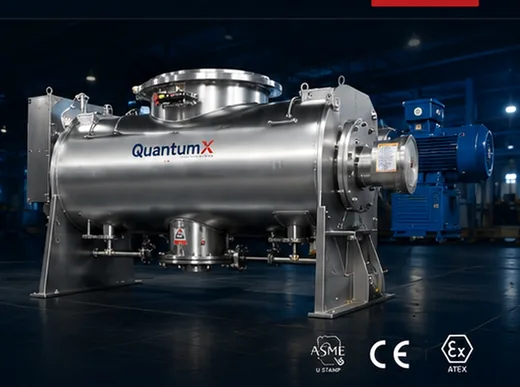
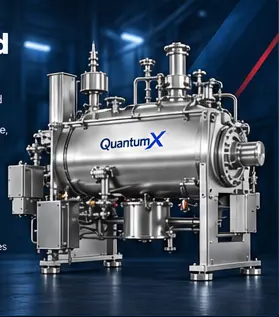
Yes. Standard PerMix models can include low-pressure, non-ASME jackets. More demanding thermal, vacuum, pressure or code-rated duties move into QuantumX.
Does PerMix offer vacuum chemical mixers and dryers?
Yes. QuantumX can provide vacuum ribbon, paddle, plough and double cone mixer-dryer systems for application-specific moisture or solvent removal.
Can the equipment operate under pressure?
Selected pressure-rated systems can be engineered under QuantumX. The vessel, agitator, shaft seals, nozzles, jacket, supports and safeguards must be evaluated as one system.
Are ASME and PED systems available?
QuantumX systems can be engineered for applicable ASME or PED requirements when identified in the project design basis.
Are ATEX systems available?
QuantumX can engineer equipment for defined ATEX requirements. The customer must provide the zone, gas or dust group, temperature class and other classification data.
Can the mixer be nitrogen inerted?
Yes. QuantumX systems can include nitrogen purge, inerting sequences, oxygen monitoring and pressure control when required by the process basis.
What construction materials are available?
Options can include carbon steel, 304, 316/316L, duplex stainless, Hastelloy, nickel alloys, titanium, Hardox, ceramic liners, glass lining and application-specific coatings.
Can PerMix build ceramic-lined mixers?
Yes, for suitable applications. The ceramic type, thickness, attachment, impact exposure, thermal conditions and agitator clearances must be incorporated into the design.
Can the equipment control metallic contamination?
Potential options include ceramic or glass lining, titanium, specialty alloys, protected wear surfaces and contamination-controlled fabrication.
Can PerMix process solvent-wet powders?
QuantumX systems can be evaluated for solvent-wet products using appropriate vacuum, thermal, condensation, inerting and vapor-handling systems.
Can the system support high containment?
QuantumX can integrate closed charging, contained sampling, high-integrity seals, filtered venting and contained discharge according to the project’s containment basis.
Does PerMix provide process-safety engineering?
PerMix provides equipment and controls engineering within the agreed project scope. The facility owner remains responsible for the complete process hazard analysis, operating procedures, relief strategy and site safety program.
Can a mixer be integrated with milling and screening?
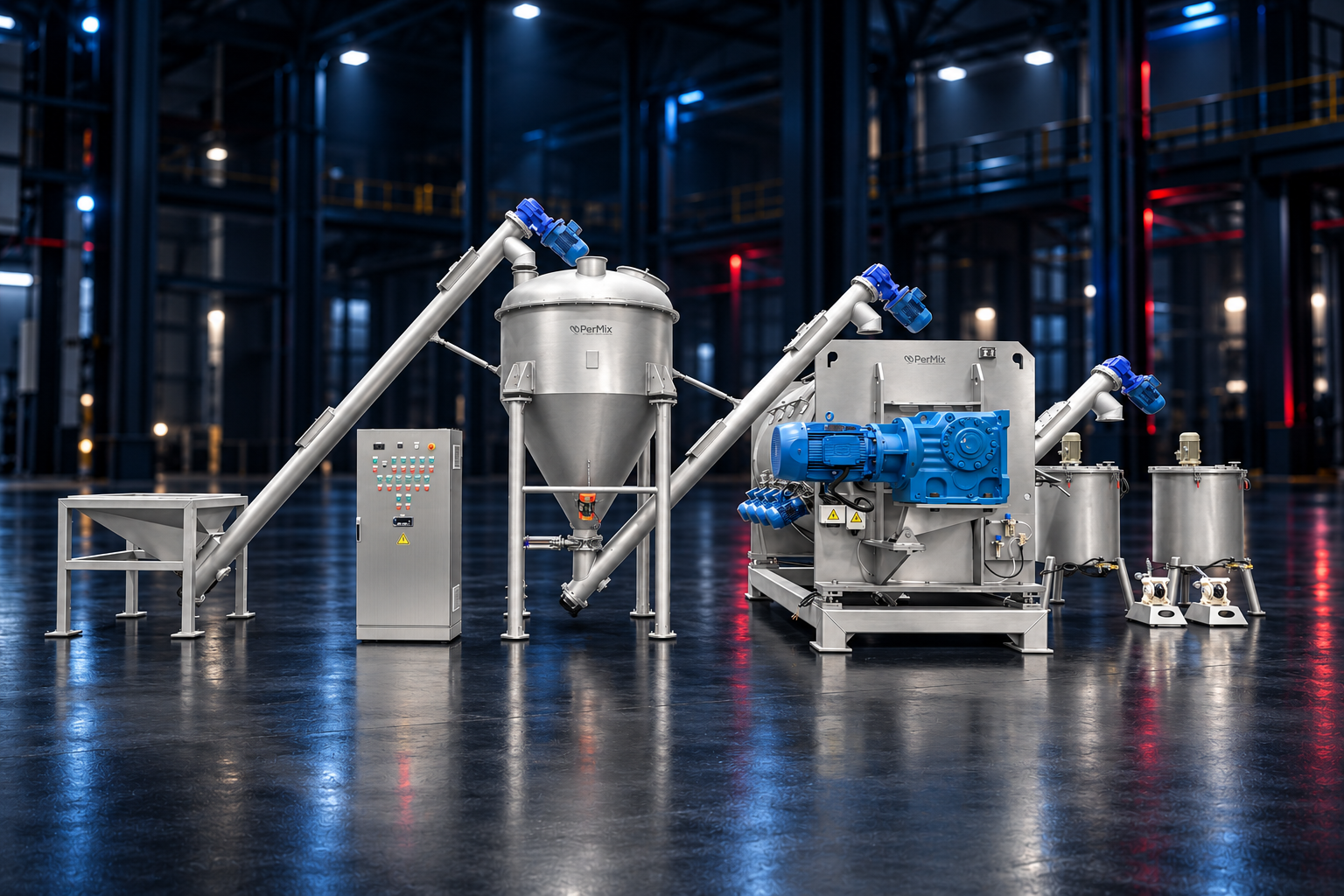
Yes. Systems can integrate feeders, mills, classifiers, screeners, conveyors, dust collection, metal detection and packaging.
Can PerMix conduct product testing?
Product trials or FAT testing can be included when agreed in the project scope and when test quantity, analytical method, acceptance criteria and material-handling requirements are defined.
What information is required for a quotation?
Provide the product, batch size, bulk density, flow behavior, abrasion and corrosion data, liquid additions, temperature, vacuum or pressure, construction materials, hazardous-area requirements and available utilities.