Skip to content
PerMix — Perfect Mixing Technologies Request a Quote
Call Request Quote

FOOD & BEVERAGE MIXING SYSTEMS

Industrial Mixers Engineered for Food Safety, Product Quality and Repeatable Production

From seasonings, bakery premixes and proteins to beverage powders, fragile inclusions, sauces and alternative milks, food manufacturing demands more than nominal mixer capacity.

PerMix engineers dry mixing systems around the way your ingredients flow, segregate, absorb liquid, respond to shear, retain heat and release from the vessel.

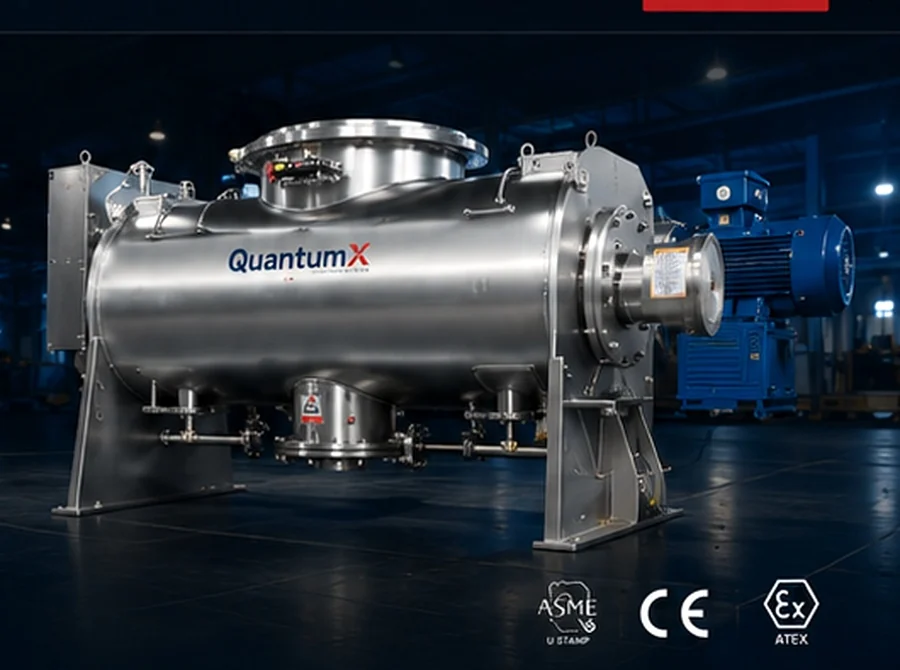
When the process requires vacuum, pressure, advanced thermal treatment, ASME construction, hazardous-area execution or controlled drying, the application moves into QuantumX.

When the product is a liquid, suspension, emulsion or high-shear formulation, the application moves into EmulXion.

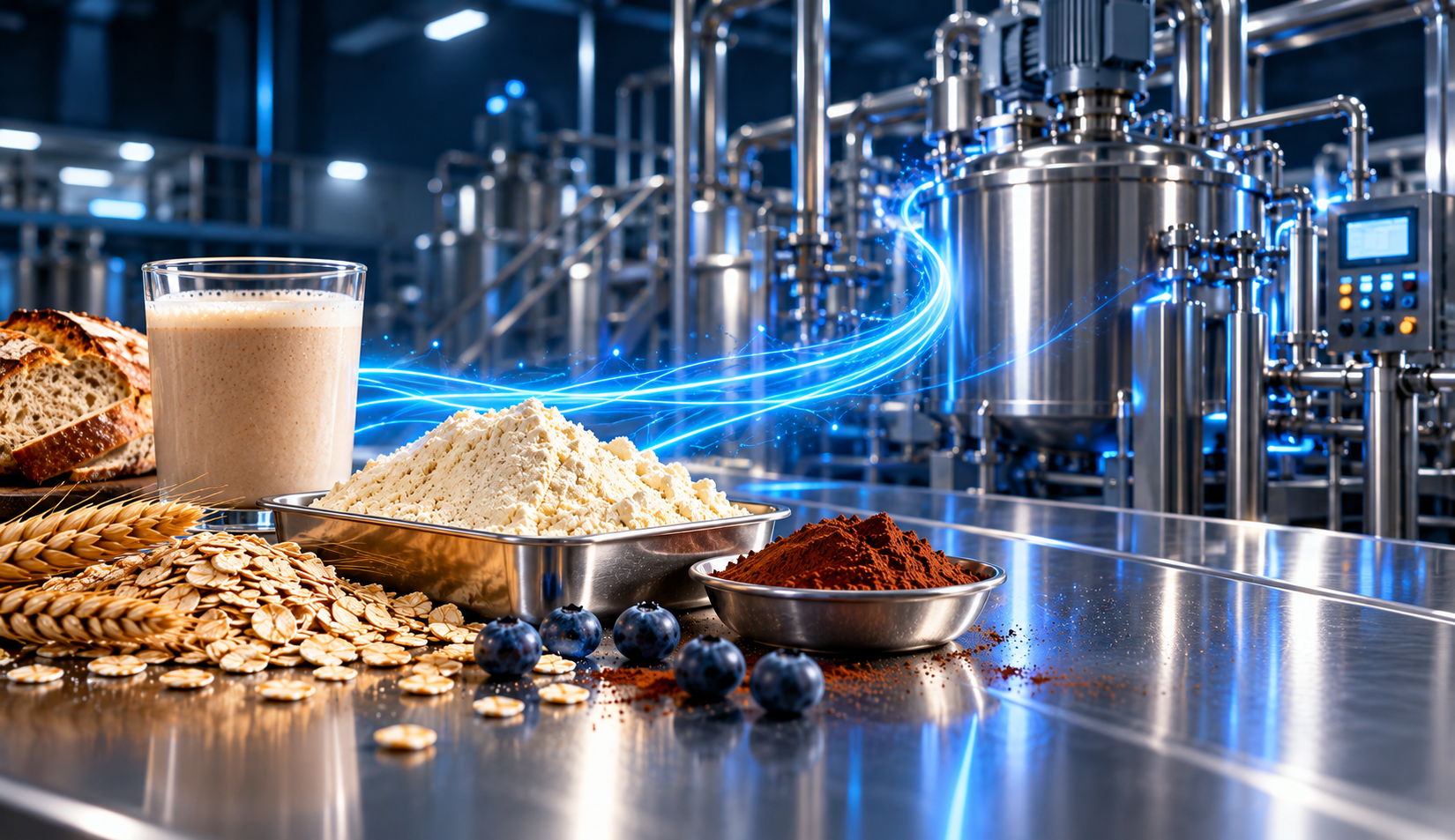
Stainless steel food processing line with bowls of flour and spice powders

Mix
Solve
Create
A Brighter
Tomorrow

Your Recipe Is Not Just a Volume

One Industry. Thousands of Different Mixing Behaviors.

A 1,000-liter batch of flour does not behave like a 1,000-liter batch of protein powder.

A seasoning containing salt, sugar, starch, oil and herbs does not behave like a free-flowing beverage premix.

A granola blend containing fragile inclusions cannot be processed like an agglomerated dairy powder.

A food mixer must be selected around the physical behavior of the formulation—not simply the gross size of the vessel.

PerMix evaluates:

  • Batch mass
  • Loose and operating bulk density
  • Minimum and maximum batch size
  • Particle size and distribution
  • Ingredient density differences
  • Flowability
  • Cohesiveness
  • Hygroscopicity
  • Fat and oil content
  • Fragility
  • Abrasiveness
  • Electrostatic behavior
  • Minor-ingredient ratio
  • Liquid addition
  • Product temperature
  • Required blend uniformity
  • Cleaning method
  • Allergen-changeover requirements
  • Available cycle time
  • Discharge and downstream transfer

The goal is not merely to make the product move.

The goal is to create the required blend while protecting the ingredients, sanitation process and production schedule.

  • Sanitary and industrial construction
  • Four standard dry-mixer families
  • Vacuum, thermal and pressure systems
  • Liquid mixing through EmulXion
  • Ingredient handling and packaging integration
  • North American engineering support

Three Processing Platforms

The Correct Brand Depends on the Process Duty

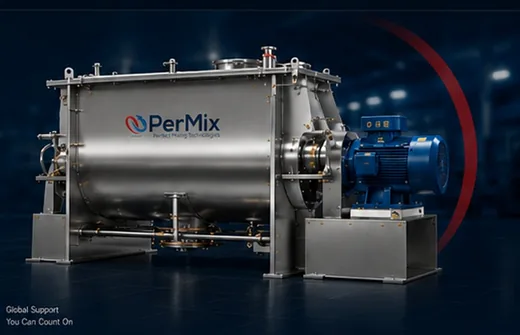
PerMix standard ribbon mixer

PerMix Standard Mixers

For atmospheric blending of food powders, granules and selected damp products.

The four principal PerMix mixer families are:

Standard systems may include:

  • Carbon steel for appropriate non-contact structures
  • 304 or 316L stainless-steel product-contact construction
  • Industrial or sanitary fabrication
  • Defined internal surface finish
  • Liquid-addition systems
  • Choppers or intensifiers where appropriate
  • Load cells
  • PLC/HMI controls
  • Ingredient-handling integration
  • Low-pressure, non-ASME heating and cooling jackets
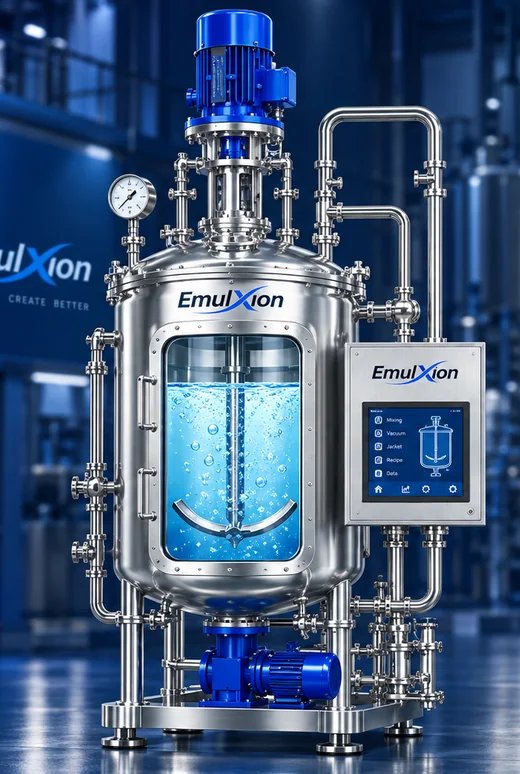
EmulXion liquid mixing and emulsifying system

EmulXion Liquid Processing

For:

  • Sauces
  • Dressings
  • Condiments
  • Soups
  • Syrups
  • Beverages
  • Dairy products
  • Alternative milks
  • Emulsions
  • Suspensions
  • High-shear dispersion
  • Powder induction
  • Homogenization
  • Vacuum deaeration
  • Inline processing

Selecting the Right Food Mixer

PlatformStrongest food applicationsMixing characterKey engineering questions
Ribbon MixerSeasonings, bakery premixes, proteins, beverage powders, starches, sweeteners and general dry blendsBalanced axial and radial circulationBulk density, ribbon width, pitch, active surface area, fill level and minor-ingredient ratio
Paddle MixerFragile inclusions, granola, cereals, dried vegetables, flakes, coated particles and variable-density blendsGentle lifting and foldingParticle fragility, paddle width, angle, spacing, sweep and discharge
Ploughshare MixerCohesive powders, seasoning coatings, oil addition, agglomeration, instantization and deagglomerationIntensive mechanical fluidizationPlough profile, tip speed, liquid addition, choppers, shear and temperature
Double Cone MixerFree-flowing flavor premixes, crystals, delicate granules and low-shear specialty blendsGentle tumble blendingFlowability, fill level, density differences, rotational speed and segregation risk
QuantumXVacuum drying, atmosphere-sensitive ingredients, advanced thermal processing and pressure-rated systemsApplication-specificVacuum, pressure, thermal duty, moisture endpoint, inerting and code requirements
EmulXionSauces, dressings, beverages, dairy, alternative milks and liquid concentratesAgitation, high shear, emulsification and homogenizationViscosity, droplet size, powder wet-out, temperature, recirculation and sanitation

Food Manufacturing Challenges We Engineer Around

1. Blend Uniformity and Minor Ingredients

Many food formulations include low-percentage components such as:

  • Flavors
  • Colors
  • Vitamins
  • Minerals
  • Salt
  • Sweeteners
  • Enzymes
  • Cultures
  • Stabilizers
  • Anti-caking agents
  • Functional additives

Uniformity depends on more than mixing time.

The mixer must account for:

  • Ingredient concentration
  • Particle size
  • Bulk-density differences
  • Electrostatic behavior
  • Loading sequence
  • Mixer fill
  • Agitator geometry
  • Sampling method
  • Discharge
  • Downstream conveying

PerMix engineers the mixer and operating sequence to distribute minor ingredients without assuming that a longer cycle automatically creates a better blend.

2. Segregation Before and After Mixing

A batch can leave the mixer uniform and still segregate during:

  • Discharge
  • Pneumatic conveying
  • Screw conveying
  • Free fall
  • Surge storage
  • Vibration
  • Packaging
  • Transportation

Segregation risk increases when ingredients differ significantly in:

  • Particle size
  • Particle density
  • Shape
  • Surface texture
  • Flowability

PerMix evaluates the complete path from ingredient loading through final discharge.

This may affect:

  • Mixer selection
  • Discharge-valve size
  • Emptying rate
  • Outlet geometry
  • Downstream equipment
  • Surge-hopper design
  • Packaging sequence

The mixer is only one part of blend integrity.

3. Fragile Inclusions and Product Integrity

Food formulations may contain ingredients that must remain recognizable and intact, including:

  • Dried fruit
  • Freeze-dried pieces
  • Nuts
  • Chocolate pieces
  • Granola
  • Cereal shapes
  • Flakes
  • Coated particles
  • Agglomerated powders
  • Dehydrated vegetables
  • Sugar crystals

For these applications, the engineering review considers:

  • Particle breakage
  • Smearing
  • Compression
  • Agitator contact
  • Tip speed
  • Drop height
  • Loading method
  • Discharge method
  • Cycle time

Paddle or double cone mixing may provide a better pathway than high-intensity processing when particle integrity is critical.

4. Liquid Addition Without Wet Lumps

Food powders are frequently coated or conditioned with:

  • Oils
  • Fats
  • Flavors
  • Syrups
  • Water
  • Lecithin
  • Extracts
  • Binder solutions
  • Color solutions
  • Functional liquids

Successful liquid addition depends on the relationship between:

  • Liquid viscosity
  • Addition percentage
  • Addition rate
  • Droplet size
  • Nozzle type
  • Spray angle
  • Spray location
  • Powder circulation
  • Wetting tendency
  • Batch temperature
  • Available mixing energy

Adding liquid faster than the powder can distribute it creates localized wet zones, lumps and inconsistent coating.

PerMix engineers the spray system and mixer together.

Applications requiring intensive coating or deagglomeration may move toward a ploughshare mixer. Applications requiring a liquid continuous phase move toward EmulXion.

5. Heat-Sensitive, Hygroscopic and Fat-Containing Powders

Some food powders change behavior during processing because of:

  • Frictional heating
  • Ambient humidity
  • Product temperature
  • Fat softening
  • Sugar stickiness
  • Moisture absorption
  • Protein denaturation
  • Aroma loss
  • Agglomeration

PerMix evaluates:

  • Agitator speed
  • Expected power input
  • Batch time
  • Product temperature
  • Jacket requirements
  • Insulation
  • Air exposure
  • Humidity control
  • Vacuum or inerting needs

Where the process requires controlled heating, cooling, drying or atmosphere management, the application can be engineered through QuantumX.

6. Complete Discharge and Residual Hold-Up

Residual product affects:

  • Yield
  • Batch accuracy
  • Allergen changeover
  • Cleaning time
  • Cross-contact risk
  • Labor
  • Waste
  • Product traceability

Discharge performance depends on:

  • Vessel geometry
  • Agitator clearance
  • Product flowability
  • Valve design
  • Outlet size
  • Discharge location
  • Surface finish
  • Product moisture
  • Downstream backpressure

PerMix evaluates the mixer and discharge system together rather than treating the outlet as a standard accessory.

7. Fast Changeovers and Sanitation

A highly polished surface does not automatically create a cleanable mixer.

Sanitary performance also depends on:

  • Product-contact geometry
  • Weld transitions
  • Access
  • Seal arrangement
  • Discharge design
  • Drainability
  • Internal supports
  • Spray coverage
  • Removable components
  • Product traps
  • Cleaning method
  • Inspection method
  • Validation requirements

The correct design begins by defining how the customer intends to clean the machine.

8. Dust Control and Explosion Risk

Finely divided food materials can present combustible-dust hazards. OSHA identifies food materials such as sugar, spice, starch, flour, feed, grain and candy among the materials that may become explosible when suspended in air under suitable conditions. Equipment selection must therefore follow the facility’s documented dust-hazard and area-classification basis rather than assuming that every food powder is non-hazardous.

Depending on the project, the system review may include:

  • Dust-tight construction
  • Grounding and bonding
  • Classified electrical components
  • Explosion protection
  • Isolation
  • Venting or suppression
  • Inerting
  • Nitrogen purging
  • Oxygen monitoring
  • ATEX execution
  • NFPA-oriented design requirements
  • Dust collection and housekeeping interfaces

Applications requiring hazardous-area or specialty protection move into QuantumX.

Hygienic Design Is a Complete Equipment Strategy

Cleanability Must Be Engineered Into the Machine

Many U.S. food facilities are subject to current good manufacturing practice and risk-based preventive-control requirements under 21 CFR Part 117, unless an exemption applies. The mixer must therefore fit within the manufacturer’s broader hazard analysis, sanitation procedures and preventive-control system.

PerMix sanitary mixer options can include:

  • 304, 316 or 316L product-contact construction
  • Continuous product-contact welds
  • Ground and polished transitions
  • Defined internal surface finish
  • Radiused corners
  • Reduced product traps
  • Sanitary inlet and outlet connections
  • Large access doors
  • Removable or serviceable components
  • Drainable geometry
  • Food-contact-compatible seals and elastomers
  • Air-purged shaft seals
  • Gas-purged shaft seals
  • Stub-shaft or cantilever arrangements
  • Spray devices
  • Wash-in-place provisions
  • Clean-in-place concepts
  • Stainless-steel exterior cladding
  • Washdown-compatible controls
  • Batch and recipe traceability

3-A Sanitary Standards and EHEDG both emphasize hygienic materials, construction and cleanability as foundational design considerations for food-processing equipment. A project requiring a particular hygienic standard, certification or validation basis must identify that requirement before final design; it should not be assumed from the word “sanitary” alone.

Define the Cleaning Method Before Designing the Mixer

The appropriate mixer configuration depends on whether the plant uses:

  • Dry manual cleaning
  • Vacuum cleaning
  • Wipe-down cleaning
  • Wet manual washing
  • Pressure washing
  • Wash-in-place
  • Clean-in-place
  • Automated spray cleaning
  • Validated allergen cleaning
  • Dedicated-product operation

Questions to resolve include:

  1. What product remains after discharge?
  2. Is water acceptable in the process area?
  3. Must the mixer drain completely?
  4. Which components require removal?
  5. How will shaft seals be cleaned?
  6. How will cleaning effectiveness be verified?
  7. Is visual inspection sufficient?
  8. Are swab or rinse samples required?
  9. How frequently will the formulation change?
  10. Are allergen and non-allergen products processed on the same equipment?

These answers determine the value of:

  • Access-door size
  • Agitator removability
  • Seal type
  • Spray-device location
  • Drain points
  • Internal finish
  • Valve design
  • Control recipe
  • Cleaning documentation

Allergen Cross-Contact and Changeover

Equipment Design Can Support Allergen Control—but Cannot Replace the Plant Program

The United States recognizes nine major food allergens: milk, egg, fish, crustacean shellfish, tree nuts, peanuts, wheat, soybeans and sesame. FDA also notes that allergen cross-contact can occur when shared processing equipment transfers allergenic material into a product not intended to contain it.

Mixer features that can support an allergen-control strategy include:

  • Reduced residual hold-up
  • Full access to product-contact areas
  • Smooth weld transitions
  • Removable spray nozzles
  • Accessible shaft seals
  • Flush discharge valves
  • Fewer internal ledges
  • Dedicated contact components
  • Recipe-controlled cleaning cycles
  • Batch identification
  • Ingredient verification
  • Documented inspection points

The final allergen-control program remains the responsibility of the food manufacturer and should include validated cleaning, production scheduling, ingredient control, labeling and verification procedures.

Food-Contact Materials and Surface Finishes

Construction Must Match the Product and Cleaning Chemistry

304 Stainless Steel

Often suitable for general food ingredients and moderate cleaning environments.

Potential uses include:

  • Bakery premixes
  • Dry seasonings
  • Beverage powders
  • Starches
  • Sweeteners
  • General food ingredients
316 and 316L Stainless Steel

Can be selected where increased corrosion resistance, sanitation or cleaning compatibility is required.

Potential uses include:

  • Salt-containing formulations
  • Acidic ingredients
  • Dairy powders
  • High-purity ingredients
  • Aggressive cleaning environments
  • Specialty formulations
Specialty Alloys

Hastelloy, nickel alloys, titanium or specialty stainless grades may be evaluated for unusually corrosive products, cleaning chemicals or thermal duties.

Wear-Resistant Construction

Abrasive food ingredients such as certain spices, salt crystals, sugar, mineral fortificants and hard particulates may require:

  • Replaceable wear liners
  • Hardened edges
  • Wear-resistant discharge components
  • Application-specific coatings
  • Selective ceramic protection

Material selection should account for:

  • Food-contact suitability
  • Corrosion
  • Wear
  • cleaning chemistry
  • fabrication
  • repairability
  • contamination limits
  • lifecycle cost

PerMix Mixer Applications by Food Segment

Spices, Seasonings and Dry Flavor Systems

Common process requirements include:

  • Minor-ingredient distribution
  • Salt and sugar blending
  • Oil addition
  • Flavor coating
  • Color distribution
  • Deagglomeration
  • Dust control
  • Allergen changeover
  • Abrasion resistance

Likely equipment pathways:

  • Ribbon Mixer for general dry blending
  • Paddle Mixer for fragile herbs and inclusions
  • Ploughshare Mixer for oil addition, coating and agglomerate control
  • QuantumX for vacuum, thermal or hazardous-area requirements

Bakery Premixes and Functional Dry Blends

Applications include:

  • Flour blends
  • Cake mixes
  • Bread premixes
  • Dough conditioners
  • Leavening systems
  • Starches
  • Sweeteners
  • Enzyme premixes
  • Gluten-free blends
  • Functional ingredients

Engineering priorities can include:

  • Minor-ingredient distribution
  • Density differences
  • dust containment
  • sanitation
  • complete discharge
  • short changeovers
  • accurate batch weighing

Likely equipment pathways:

  • Ribbon Mixer
  • Paddle Mixer
  • Ploughshare Mixer for cohesive or liquid-conditioned formulations

Protein and Nutritional Food Powders

Applications include:

  • Plant proteins
  • Dairy proteins
  • Meal-replacement powders
  • Sports nutrition foods
  • Fortified beverages
  • Fiber blends
  • Functional-food powders

Potential process challenges include:

  • Cohesiveness
  • dusting
  • static
  • heat sensitivity
  • minor vitamins and minerals
  • flavor distribution
  • liquid lecithin or oil addition
  • segregation after discharge

Likely equipment pathways:

  • Ribbon Mixer
  • Paddle Mixer
  • Ploughshare Mixer
  • QuantumX for vacuum drying, thermal treatment or controlled atmosphere

Dairy and Beverage Powders

Applications include:

  • Milk powders
  • whey powders
  • creamers
  • cocoa beverage mixes
  • coffee preparations
  • powdered drink systems
  • functional beverage powders
  • electrolyte blends

Engineering considerations include:

  • Hygroscopicity
  • agglomerate preservation
  • fat content
  • aroma
  • moisture control
  • sanitation
  • dust hazards
  • minor-ingredient distribution

Likely equipment pathways:

  • Paddle Mixer
  • Ribbon Mixer
  • Double Cone Mixer for appropriate free-flowing and fragile formulations
  • QuantumX for vacuum or thermal processing
  • EmulXion for liquid beverage systems

Cereals, Granola, Snacks and Fragile Inclusions

Applications include:

  • Granola
  • cereal pieces
  • dried fruit
  • nuts
  • seeds
  • chocolate inclusions
  • snack components
  • coated clusters
  • dehydrated vegetables

Primary priorities include:

  • Low breakage
  • gentle handling
  • coating uniformity
  • controlled oil or flavor addition
  • rapid discharge
  • reduced smearing

Likely equipment pathways:

  • Paddle Mixer
  • Double Cone Mixer for suitable free-flowing products
  • Low-speed Ribbon Mixer where the formulation permits
  • Ploughshare Mixer only where higher coating intensity is justified

Soups, Sauces and Instant Foods

Dry applications may include:

  • Soup powders
  • sauce premixes
  • gravy blends
  • starch systems
  • bouillon
  • dehydrated meals
  • spice systems
  • hydrocolloid blends

Liquid applications may include:

  • Prepared sauces
  • dressings
  • condiments
  • soups
  • marinades
  • gravies
  • concentrated bases

Likely pathways:

  • PerMix Ribbon or Ploughshare Mixers for dry premixes
  • QuantumX for vacuum or thermal specialty processing
  • EmulXion for liquid mixing, high shear, emulsification and powder induction

Confectionery, Cocoa and Sweetener Systems

Applications include:

  • Cocoa powders
  • sugar blends
  • confectionery premixes
  • powdered flavors
  • coatings
  • crystals
  • fondant ingredients
  • functional sweetener systems

Engineering considerations include:

  • Dust hazard
  • abrasion
  • crystal damage
  • fat content
  • temperature
  • stickiness
  • cleanout
  • liquid addition

Likely equipment pathways:

  • Ribbon Mixer
  • Paddle Mixer
  • Double Cone Mixer
  • Ploughshare Mixer for intensive coating
  • EmulXion for liquid confectionery and emulsified systems

Alternative Milks and Beverages

Dry preparation may involve:

  • Protein blends
  • stabilizers
  • minerals
  • flavors
  • vitamins
  • sweeteners
  • hydrocolloids

Liquid processing may require:

  • Powder induction
  • hydration
  • high-shear dispersion
  • emulsification
  • homogenization
  • deaeration
  • temperature control
  • recirculation

Likely pathway:

  • PerMix for dry premixes
  • EmulXion for the liquid process
  • QuantumX where vacuum, pressure or specialty thermal requirements apply

Liquid Food Processing Through EmulXion

Dry Blending and Liquid Processing Require Different Engineering

PerMix focuses the standard equipment range on dry powders and granules.

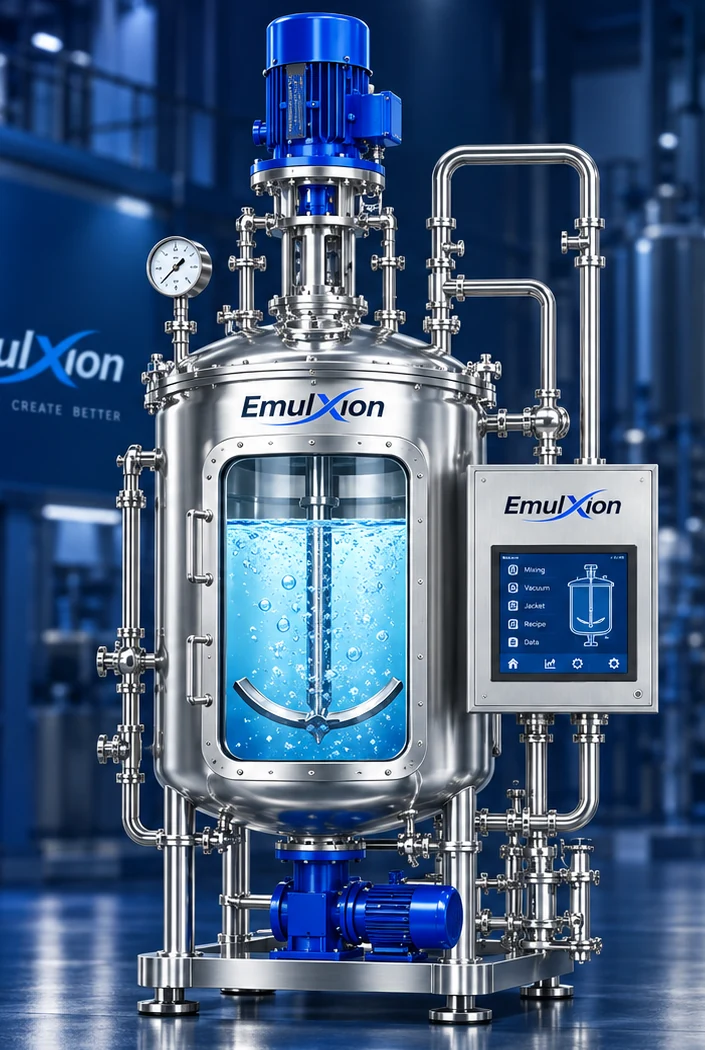
EmulXion liquid food processing system

EmulXion handles liquid applications such as:

  • Mayonnaise
  • salad dressings
  • sauces
  • ketchup
  • marinades
  • soups
  • beverage concentrates
  • dairy drinks
  • alternative milks
  • syrups
  • flavor emulsions
  • vitamin suspensions
  • hydrocolloid dispersions
  • protein beverages

EmulXion equipment pathways include:

  • Batch agitators
  • inline high-shear mixers
  • bottom-entry homogenizers
  • shear pumps
  • powder-induction systems
  • vacuum emulsifying systems
  • high-pressure homogenizers
  • inline deaerators
  • tanks, kettles and process vessels
  • complete liquid-process skids

QuantumX Food Processing Systems

When Atmospheric Blending Is Not Enough

A food application moves into QuantumX when it requires:

  • Vacuum
  • positive pressure
  • ASME
  • PED
  • advanced drying
  • controlled moisture removal
  • nitrogen inerting
  • oxygen control
  • hazardous-area execution
  • advanced heating or cooling
  • condensation
  • high containment
  • specialty alloys
  • integrated process automation
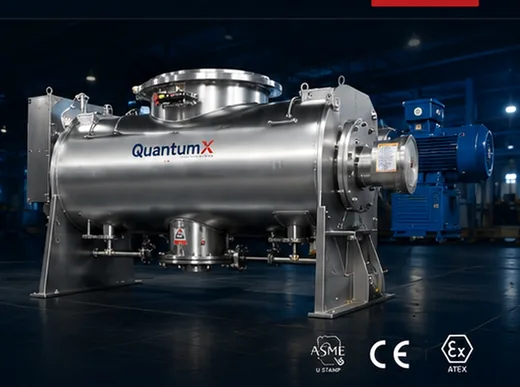
QuantumX vacuum mixer-dryer for food processing

QuantumX food-processing configurations can include:

  • Vacuum ribbon mixer-dryers
  • vacuum paddle mixer-dryers
  • vacuum plough mixer-dryers
  • double cone vacuum dryers
  • pressure-rated mixers
  • thermal conditioning systems
  • controlled-atmosphere systems
  • integrated condensers and receivers
  • automated loading and contained discharge

Applications can include:

  • Heat-sensitive powders
  • moisture-sensitive ingredients
  • ethanol-wet ingredients
  • oxygen-sensitive fats or flavors
  • specialty protein ingredients
  • high-value functional foods
  • controlled drying
  • validated thermal treatment

Controls, Traceability and Recipe Management

PerMix, QuantumX and EmulXion systems can be integrated with:

  • PLC and HMI controls
  • Siemens or Allen-Bradley platforms
  • Recipe management
  • Ingredient verification
  • Barcode scanning
  • Lot tracking
  • Load-cell weighing
  • Automatic ingredient sequencing
  • Liquid-addition control
  • Batch timers
  • Temperature control
  • Vacuum and pressure control
  • Alarm history
  • Batch reports
  • Data logging
  • User access levels
  • Packaging-line communication
  • Remote-support capability

The final control architecture should reflect the customer’s food-safety plan, production procedures, cybersecurity requirements and validation expectations.

Complete Process-Line Integration

From Ingredient Receiving to Packaged Product

The mixer can be integrated with:

  • Bag-dump stations
  • bulk-bag unloaders
  • silos
  • hoppers
  • pneumatic conveying
  • screw conveying
  • vacuum conveying
  • loss-in-weight feeders
  • minor-ingredient dosing
  • liquid dosing
  • sifting
  • screening
  • magnets
  • metal detection
  • surge hoppers
  • milling
  • cooling
  • filling
  • bagging
  • container handling
  • checkweighing
  • packaging

PerMix evaluates how upstream feeding and downstream handling can affect:

  • blend uniformity
  • cycle time
  • dust
  • segregation
  • residual hold-up
  • sanitation
  • operator exposure
  • packaging accuracy

Testing and Factory Acceptance

Define Success Before the Equipment Ships

Depending on project scope, testing can include:

  • Mechanical operation
  • controls and interlocks
  • agitator direction
  • speed range
  • loading and discharge sequence
  • load-cell verification
  • liquid-addition operation
  • temperature control
  • vacuum performance
  • pressure testing where applicable
  • cleaning access
  • safety circuits
  • product trials when agreed
  • blend-uniformity sampling
  • cycle-time measurement
  • discharge residual review

When customer product testing is included, the protocol should define:

  1. Test quantity
  2. ingredient loading order
  3. sampling locations
  4. analytical method
  5. acceptance criteria
  6. liquid-addition sequence
  7. batch time
  8. discharge sequence
  9. cleaning procedure

Why Food Manufacturers Choose PerMix

Process-First Mixer Selection

We begin with the ingredients and production objective, not a predetermined mixer.

Four Clear Dry-Mixer Families

Ribbon, paddle, ploughshare and double cone mixers provide distinct processing pathways rather than one machine being presented as suitable for every product.

Clear Specialty-System Pathway

Vacuum, pressure, ASME, ATEX, drying and advanced thermal duties move into QuantumX.

Dedicated Liquid-Mixing Platform

Liquid mixing, emulsification, homogenization and powder induction move into EmulXion.

Agitator Engineering

Ribbon width and pitch, paddle area and angle, plough geometry and double cone tumble conditions are evaluated around the product.

Sanitary Design Options

Construction, finish, access, seals, discharge and cleaning provisions are selected around the sanitation method and changeover requirements.

Materials Expertise

Available engineering pathways include 304, 316L, specialty alloys, wear protection, ceramic lining and application-specific coatings.

Process Integration

Mixing systems can be connected with weighing, feeding, conveying, screening, metal detection and packaging.

Documentation and FAT

Project-specific drawings, P&IDs, controls documentation, FAT protocols and operating manuals can be included.

Lifecycle Support

Service, spare parts, troubleshooting, retrofits and preventive-maintenance support remain available after delivery.

FOOD PROCESS APPLICATION REVIEW

Tell Us What You Are Making—and What the Current Process Must Improve

To recommend a food-processing mixer, our engineers review:

  1. Product or formulation
  2. Batch mass
  3. Loose and packed bulk density
  4. Minimum and maximum batch size
  5. Particle size and shape
  6. Ingredient-density differences
  7. Fragile ingredients
  8. Cohesiveness
  9. Fat or oil content
  10. Moisture
  11. Hygroscopicity
  12. Minor-ingredient ratio
  13. Liquid-addition percentage
  14. Required blend uniformity
  15. Current mixing time
  16. Desired cycle time
  17. Cleaning method
  18. Allergen requirements
  19. Surface-finish requirements
  20. Heating or cooling
  21. Vacuum or pressure
  22. Hazardous-area classification
  23. Loading method
  24. Discharge method
  25. Packaging equipment
  26. Available plant footprint
  27. Utilities and voltage

Upload your material data sheets, batch formula, current process description, allergen matrix, cleaning requirements or facility drawing. Do not submit confidential formulation details until an approved communication channel has been confirmed.

Frequently Asked Questions

What mixer is best for food powders?

The correct mixer depends on flowability, particle size, bulk density, fragility, liquid addition and required mixing intensity. Ribbon mixers suit many general dry blends, paddles protect fragile ingredients, plough mixers handle cohesive or coated products and double cone mixers provide gentle tumble blending.

What is the difference between a food ribbon mixer and paddle mixer?

A ribbon mixer uses continuous helical flights to create axial and radial circulation. A paddle mixer uses discrete paddles to lift and fold the batch and is often preferred for fragile or variable-density ingredients.

When should a food manufacturer use a ploughshare mixer?

Ploughshare mixers are often selected for cohesive powders, rapid liquid addition, coating, deagglomeration, agglomeration and other higher-intensity processes.

When is a double cone mixer appropriate?

Double cone mixers are appropriate for free-flowing powders, crystals and fragile granules requiring gentle tumble blending.

Can food mixers add oils and flavors?

Yes. Spray nozzles, liquid viscosity, droplet size, addition rate and powder circulation must be engineered together to avoid localized wet spots and lumps.

Can the equipment be heated or cooled?

Yes. Standard PerMix mixers can include low-pressure, non-ASME heating or cooling jackets. More demanding thermal, vacuum, pressure or code-rated systems move into QuantumX.

Does PerMix offer vacuum food mixers and dryers?

Yes. QuantumX systems can include vacuum ribbon, paddle, plough and double cone mixer-dryers for application-specific moisture removal, solvent recovery and controlled-atmosphere processing.

Does PerMix manufacture liquid food mixers?

Liquid processing is handled through EmulXion, including high-shear mixers, powder-induction systems, emulsifiers, homogenizers, deaerators and process vessels.

Can the mixer support allergen changeovers?

The equipment can be designed to improve access, reduce residual hold-up and support the intended cleaning method. The food manufacturer remains responsible for validating its complete allergen-control and cleaning program.

Are CIP systems available?

CIP or wash-in-place concepts can be evaluated based on mixer type, soil type, cleaning chemistry, drainage, spray coverage and validation requirements.

What stainless-steel grades are available?

304 and 316L stainless steel are common food-contact options. Specialty stainless steels, Hastelloy, titanium and wear-resistant systems may be evaluated for demanding products or cleaning environments.

Can the mixer handle abrasive spices or salt?

Yes, but the wear characteristics must be evaluated. Options can include hardened edges, replaceable liners, wear-resistant valves, coatings or selective ceramic protection.

Can food mixers be supplied for hazardous dust areas?

QuantumX systems can be engineered for application-specific hazardous-area or ATEX requirements. The final design must follow the facility’s dust-hazard analysis and jurisdictional requirements.

How is mixer capacity calculated?

Capacity is determined from batch mass, operating bulk density and usable working fill—not gross vessel volume alone.

Can the mixer be integrated with packaging equipment?

Yes. Systems can include weighing, conveying, screening, metal detection, surge storage, filling, bagging and control integration.

Can PerMix conduct a product trial?

Product testing or FAT trials can be included when agreed in the project scope and when the required materials, quantities, analytical method and acceptance criteria are defined.

What information is needed for a quotation?

Provide the product, batch weight, bulk density, ingredient characteristics, required cycle, sanitation method, liquid addition, thermal requirements, available utilities and plant constraints.

FROM INGREDIENT BEHAVIOR TO PRODUCTION PERFORMANCE

Your Food Mixer Should Be Engineered Around the Recipe and the Process

The right food mixer must protect more than batch uniformity.

It must also support:

  • Product integrity
  • sanitation
  • allergen control
  • production speed
  • clean discharge
  • operator safety
  • traceability
  • downstream packaging
  • lifecycle reliability

Whether the application requires a standard PerMix dry mixer, a QuantumX vacuum or thermal system or an EmulXion liquid-processing line, we will evaluate the process before recommending the equipment.