
1. Honest Mixer Selection
A double cone mixer is not the right choice for every powder.
When the material is too cohesive, sticky, wet or difficult to disperse, PerMix may recommend a ribbon, paddle, plough or QuantumX specialty mixer instead.
INDUSTRIAL DOUBLE CONE MIXERS | GENTLE TUMBLING ENGINEERED WITH PRECISION
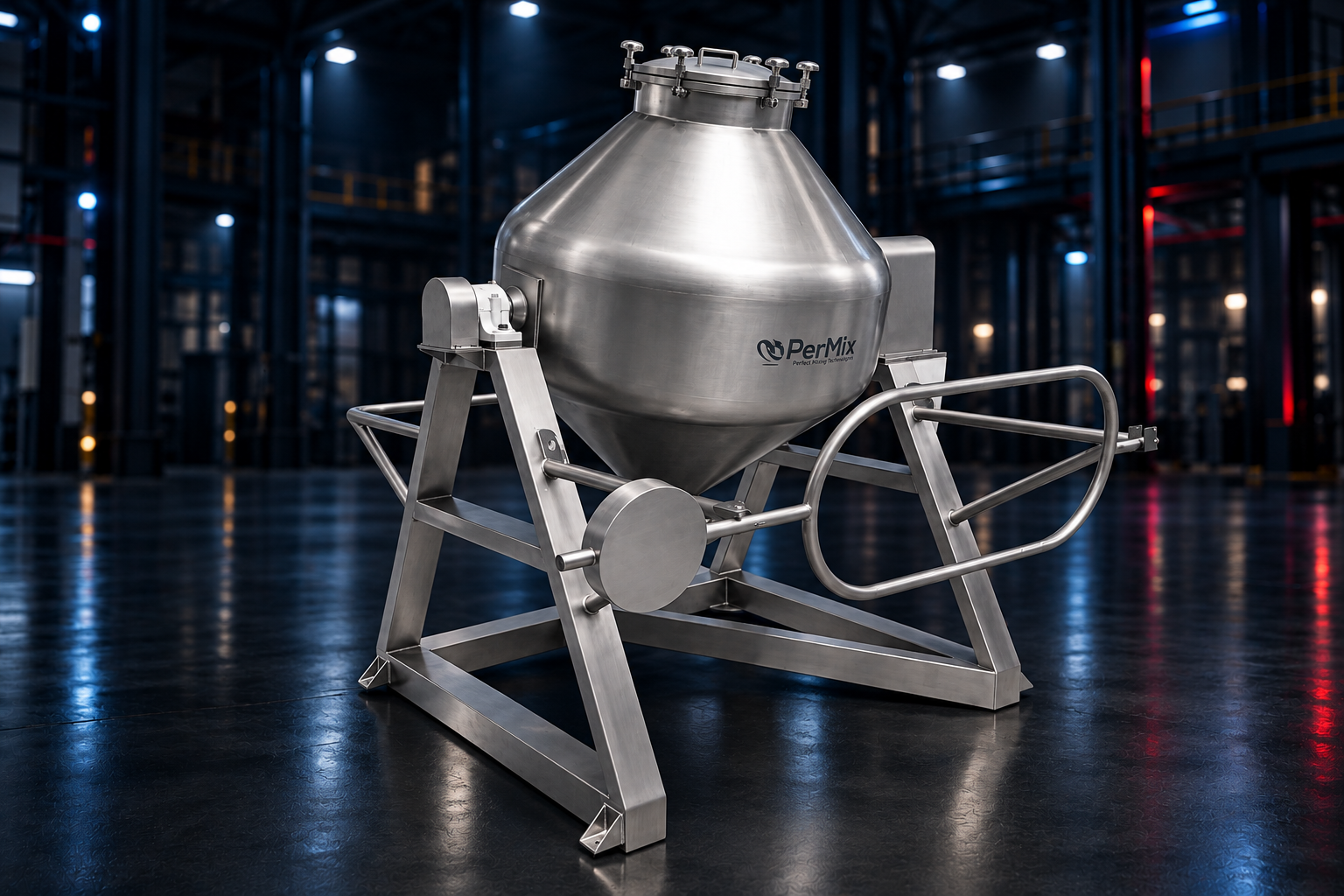
PerMix double cone mixers are engineered for applications where product integrity, low mechanical stress, clean geometry and repeatable tumble blending matter more than aggressive mixing intensity.
Cone angle, vessel symmetry, diameter, transition geometry, fill level, rotational speed, tumble path, internal surface finish, discharge position and dynamic balance are evaluated as one complete process system.
The result is controlled, low-shear redistribution of free-flowing powders, granules, crystals and fragile particles—without requiring a conventional internal shaft or continuously driven mixing tool.
Standard double cone mixers use the rotation of the vessel, gravity and vessel geometry to create repeated cascading and recombination of suitable powders and granules. They are strongest when the materials flow freely and have reasonably compatible particle-size and density characteristics.
Mix
Solve
Create
A Brighter
Tomorrow
A double cone mixer appears mechanically simple because the vessel itself rotates and the standard design contains no conventional internal agitator.
That apparent simplicity makes precision more—not less—important.
The vessel must be designed so the product repeatedly:
A vessel can rotate while producing poor mixing.
The performance difference is determined by the relationship between vessel geometry, material behavior, fill level and rotational speed.
PerMix engineers the tumble regime—not merely the rotating shell.
During rotation, gravity continually changes direction relative to the powder bed.
The product is carried upward by the vessel wall and then cascades, rolls or slides back through the available headspace. Repeated cone-to-cone movement separates and recombines particles throughout the batch.
Unlike a ribbon, paddle or plough mixer, the standard double cone mixer does not force the material through a continuously driven internal tool.
This can reduce:
The basic principle is particularly well suited to free-flowing powders, granules and fragile materials that do not require aggressive deagglomeration or high-shear dispersion.
The Geometry That Determines Double Cone Mixer Performance
Two double cone mixers can have the same nominal volume and motor power—and deliver very different results.
| Engineering Variable | What It Influences | Why It Matters |
|---|---|---|
| Cone angle | Tumble path, axial movement and discharge behavior | The cone angle influences how product travels between each end of the vessel and how effectively gravity directs material toward the outlet. |
| Vessel diameter | Circumferential travel, bed depth and required rotational speed | A larger diameter increases the distance traveled during each revolution and changes the speed required to maintain the desired tumble regime. |
| Straight-side or central-section length | Available mixing volume and cone-to-cone travel path | Excessive central length can alter the balance between rolling, cascading and axial transfer. |
| Cone-to-cylinder transition | Flow continuity and product release | Smooth transitions reduce hang-up and support predictable movement between the conical and central sections. |
| Vessel symmetry | Balanced movement, mechanical loading and repeatability | Dimensional asymmetry can produce vibration, uneven product distribution and inconsistent tumble behavior. |
| Fill level | Available free-fall space and frequency of particle redistribution | Too little material may reduce particle interaction. Too much material can eliminate the headspace needed for effective cascading. |
| Rotational speed | Tumble regime, particle acceleration and cascade behavior | A vessel that turns too slowly may produce weak rolling; excessive speed can pin material against the wall and reduce effective cascading. |
| Free-fall distance | Degree of particle separation and recombination | The available drop path affects how effectively material redistributes during each rotation. |
| Internal surface finish | Powder release, adhesion, cleaning and wall friction | A rough or poorly finished surface can change flow behavior and increase product retention. |
| Total internal surface area | Wall contact, thermal exposure and product release | Internal area becomes especially important in jacketed vacuum-drying applications. |
| Discharge geometry | Emptying time, residual hold-up and segregation risk | The outlet and valve must allow the blended product to leave without creating a new separation mechanism. |
| Dynamic balance | Bearing life, vibration and controlled rotation | The complete rotating assembly must remain balanced through loading, operation and discharge. |
| Trunnion alignment | Vessel stability and bearing loading | Misalignment can increase vibration, wear, seal loading and mechanical stress. |
The cone angle influences the way material moves from one end of the vessel toward the center and back again.
A poorly selected geometry can cause material to:
The correct geometry depends on:
The objective is to create a reliable tumble path while preserving clean discharge.
Rotational Speed Determines the Tumble Regime
The same rotational speed produces different particle behavior in vessels of different diameters.
The engineering review must consider the relationship between:
At very low speed, the product may primarily roll or slide with limited separation.
At an appropriate speed, material is lifted and cascades through the available headspace.
At excessive speed, centrifugal effects can hold material against the vessel wall and reduce the desired tumble action.
PerMix uses controlled vessel speed and application-specific geometry to maintain the movement required by the product.
Variable-speed drives can be especially valuable during:
Commercial tumble-blender platforms commonly use variable vessel speed, controlled positioning and optional intensifier systems to adjust the blending process while maintaining operator safety.
A double cone mixer requires both:
Overfilling can suppress the tumble mechanism.
Underfilling can reduce the frequency of particle exchange or create inconsistent material movement.
The correct working volume depends on:
PerMix sizes the mixer using batch mass and operating bulk density—not gross vessel volume alone.
Double cone mixers perform best when the components:
Large differences in particle size, density or shape can promote segregation during:
PerMix evaluates the complete process—not only the mixing stage.
A formulation that mixes well inside the vessel can still separate during discharge or transfer if the downstream system is not designed correctly.
Tumble blending is gentle, but excessive blending time can still be counterproductive.
For some formulations, prolonged tumbling can allow particles to reclassify according to:
That means the correct batch cycle should be determined by:
The goal is not the longest possible cycle.
The goal is to reach the required uniformity and discharge the batch before a new segregation mechanism develops.
Because the complete vessel rotates, fabrication accuracy directly affects both mechanical reliability and product movement.
PerMix evaluates:
Poor balance can cause:
The rotating assembly must be designed as one complete balanced system.
Why PerMix Double Cone Mixers Are Different
A double cone mixer is not the right choice for every powder.
When the material is too cohesive, sticky, wet or difficult to disperse, PerMix may recommend a ribbon, paddle, plough or QuantumX specialty mixer instead.
Cone angle, vessel diameter, central-section length, transitions and discharge are evaluated against the actual material.
Batch weight, bulk density and required headspace determine usable volume.
Drive speed, acceleration and deceleration are selected around the required cascade behavior and particle fragility.
The rotating vessel, valve, ports, jacket, liner and optional internals are treated as one balanced assembly.
Outlet geometry, valve selection, stopping position and downstream transfer are evaluated to reduce residual material and re-segregation.
Atmospheric tumble blending remains standard PerMix. Vacuum drying, internal pressure, ASME/PED, ATEX, solvent service and advanced thermal duty move into QuantumX.
Double Cone Mixers Are Often Preferred When:
A standard double cone mixer may not be the optimum platform when:
In those cases, PerMix may recommend:
| Mixer Type | Best Suited For | Mixing Character | Key Engineering Consideration |
|---|---|---|---|
| Double Cone Mixer | Free-flowing powders, granules, crystals and fragile particles | Symmetrical, gentle tumble blending | Cone geometry, fill level, speed, balance and discharge |
| V-Blender | Free-flowing powders requiring repeated split-and-recombine movement | Gentle tumble blending through two intersecting vessel legs | V-shell geometry, fill level, loading symmetry and discharge |
| Ribbon Mixer | General powder blending, premixes and selected cohesive products | Active axial and radial circulation | Ribbon width, pitch and inner-to-outer flow balance |
| Paddle Mixer | Fragile products, granules and variable-density materials | Gentle lifting and folding | Paddle width, angle, spacing and fill level |
| Plough Mixer | Cohesive powders, coating, liquid addition and deagglomeration | Intensive mechanical fluidization | Plough profile, tip speed, power input and chopper placement |
Standard PerMix or QuantumX?
| Standard PerMix Double Cone Mixer | QuantumX Double Cone System |
|---|---|
| Atmospheric tumble blending | Vacuum mixing and vacuum drying |
| Free-flowing powders and granules | Moist, solvent-wet or atmosphere-sensitive products |
| Carbon steel, 304 or 316L construction | ASME, PED and specialty pressure-vessel construction |
| Industrial or sanitary execution | ATEX, inerted and hazardous-area configurations |
| Optional low-pressure, non-ASME jacket | Engineered thermal and vacuum systems |
| Standard charging and discharge | Closed charging, contained discharge and solvent recovery |
| General controls and variable speed | Recipe management, endpoint control and data logging |
| Standard seals and dust control | Vacuum-rated seals, rotary unions and containment systems |
| Basic intensifier or spray option | Engineered drying, reaction and specialty process internals |
| General production environments | Regulated, reactive, high-purity or controlled-atmosphere processes |
QuantumX Vacuum Double Cone Mixers and Dryers
When the process requires moisture removal, solvent recovery, lower-temperature drying or controlled atmosphere, the application moves into the QuantumX platform.
A QuantumX vacuum double cone mixer-dryer combines:
The rotating vessel continually changes the orientation of the batch relative to the heated wall. This renews product contact with the heat-transfer surface while maintaining a comparatively gentle tumble action.
Double-conical vacuum dryers are established for gentle drying and mixing of fragile, free-flowing products. Glass-lined versions are also used where corrosion resistance, non-stick behavior or protection from metallic contamination is required.
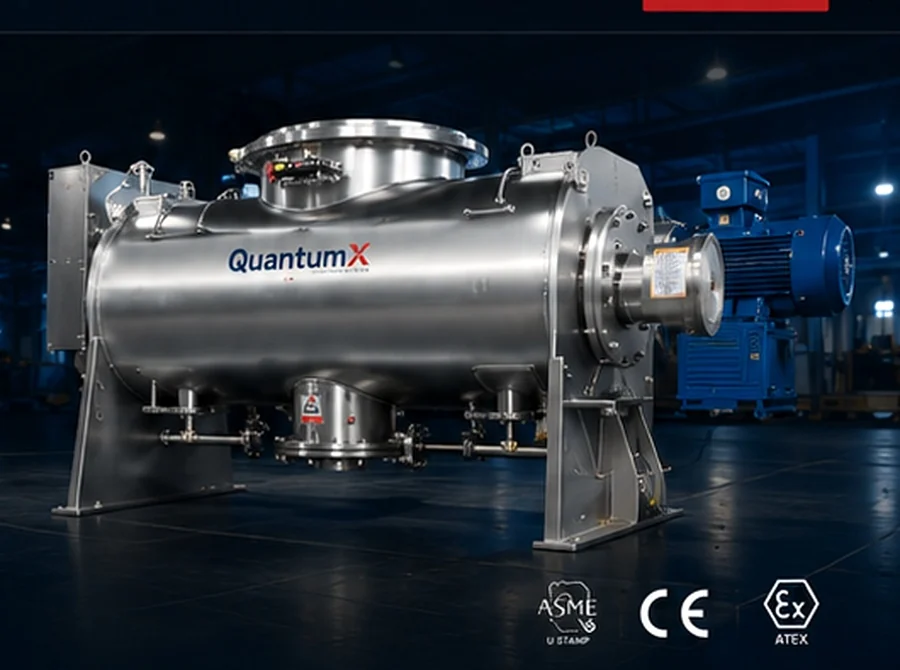
A complete QuantumX system may include:
PerMix has previously supplied a double cone vacuum mixer-dryer with gas-purge capability for a pharmaceutical nanotechnology application, illustrating the platform’s suitability for sensitive, high-value powders.
Vacuum reduces the pressure above the material and can reduce the temperature required to remove moisture or solvent.
This can support processing of products that are:
The drying result depends on:
A vacuum dryer must be engineered as a complete thermal and vapor-handling system—not merely as a sealed blender connected to a pump.
Vacuum and Pressure-Rated Double Cone Systems
A vacuum or positive-pressure double cone system requires evaluation of:
QuantumX systems can be engineered for:
Positive-pressure operation is application-specific. Final allowable pressure, temperature, code requirements and safeguards are established during engineering review.
Heating and Cooling Jackets
A jacket transfers heat through the vessel wall.
In a rotating double cone, the tumble action continually presents different portions of the batch to the heat-transfer surface.
Thermal performance depends on:
Standard PerMix double cone mixers may include:
Move to QuantumX when the process requires:
Intensifier Bars
A standard double cone mixer relies on gravity and vessel rotation.
When the product contains soft agglomerates or requires limited liquid addition, an independently driven intensifier bar may be evaluated.
Potential uses include:
Commercial tumble-blender systems commonly offer independently driven intensifier bars alongside variable vessel speed and controlled positioning.
The intensifier system must be engineered around:
An intensifier changes the process.
It introduces localized shear and should not be added automatically to every double cone mixer.
Double cone mixers are not intended for heavy wet mixing, paste processing or aggressive granulation.
Small, controlled liquid additions may be possible when:
The system should be evaluated around:
Applications requiring substantial liquid addition, wet granulation or strong deagglomeration are usually better suited to a paddle, plough or QuantumX specialty mixer.
Materials of Construction
PerMix and QuantumX double cone systems can be engineered using a broad range of contact materials, liners and surface finishes.
Material selection considers:
A practical choice for selected non-corrosive industrial applications.
Potential uses include:
Options may include:
Commonly used for food ingredients, general sanitary processing and applications requiring moderate corrosion resistance.
Available with:
Selected for pharmaceutical, nutraceutical, specialty chemical and high-purity applications requiring increased corrosion resistance or sanitary fabrication.
Options may include:
Duplex and specialty stainless grades may be considered where standard 304 or 316L does not provide the required balance of corrosion resistance, strength and lifecycle performance.
Selected Hastelloy or nickel-alloy construction may be appropriate for corrosive products, solvents or cleaning environments.
Engineering must consider:
Titanium may be considered for selected chloride-sensitive, corrosive or high-purity applications.
The design must account for:
Ceramic lining can be considered for abrasive or metallic-contamination-sensitive products.
Because the entire vessel rotates, liner engineering must account for:
A lined double cone mixer must be balanced after the liner system is included in the final rotating assembly.
Potential applications include:
Glass-lined double conical dryers are an established option for applications requiring strong corrosion resistance, low adhesion and protection from metallic contamination.
A glass-lined QuantumX system may be considered for:
Glass-lined construction requires careful engineering around:
Double cone mixers generally subject particles to less aggressive mechanical contact than high-intensity mixers, but abrasive materials can still wear:
PerMix can evaluate:
The best solution depends on the balance between:
Sanitary and cGMP-Oriented Double Cone Mixers
The absence of a conventional internal shaft can reduce the number of product-contact components in the standard design.
Sanitary PerMix double cone mixers can include:
The cleaning method should be defined before final design:
Loading, Positioning and Discharge
Available loading methods can include:
Available discharge arrangements can include:
The control system can automatically stop the vessel at:
Pilot and production tumble-blender systems commonly use automatic home-position stopping, variable speed and interlocked guarding to improve safe loading and discharge.
A rotating vessel requires a defined safety strategy.
Available systems can include:
The mixer should not be capable of rotation while personnel have access to the operating envelope.
PerMix double cone mixers can be supplied as stand-alone machines or integrated systems.
Available options include:


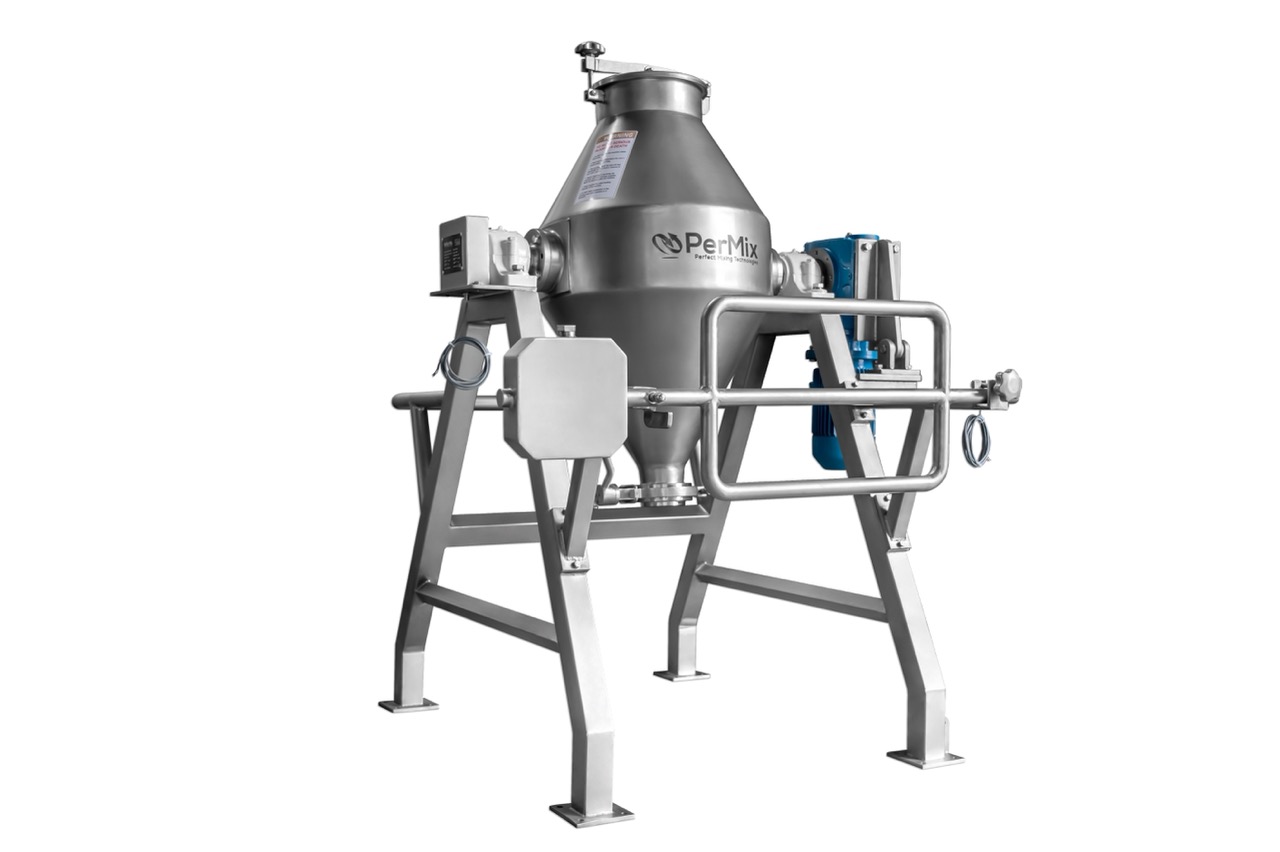
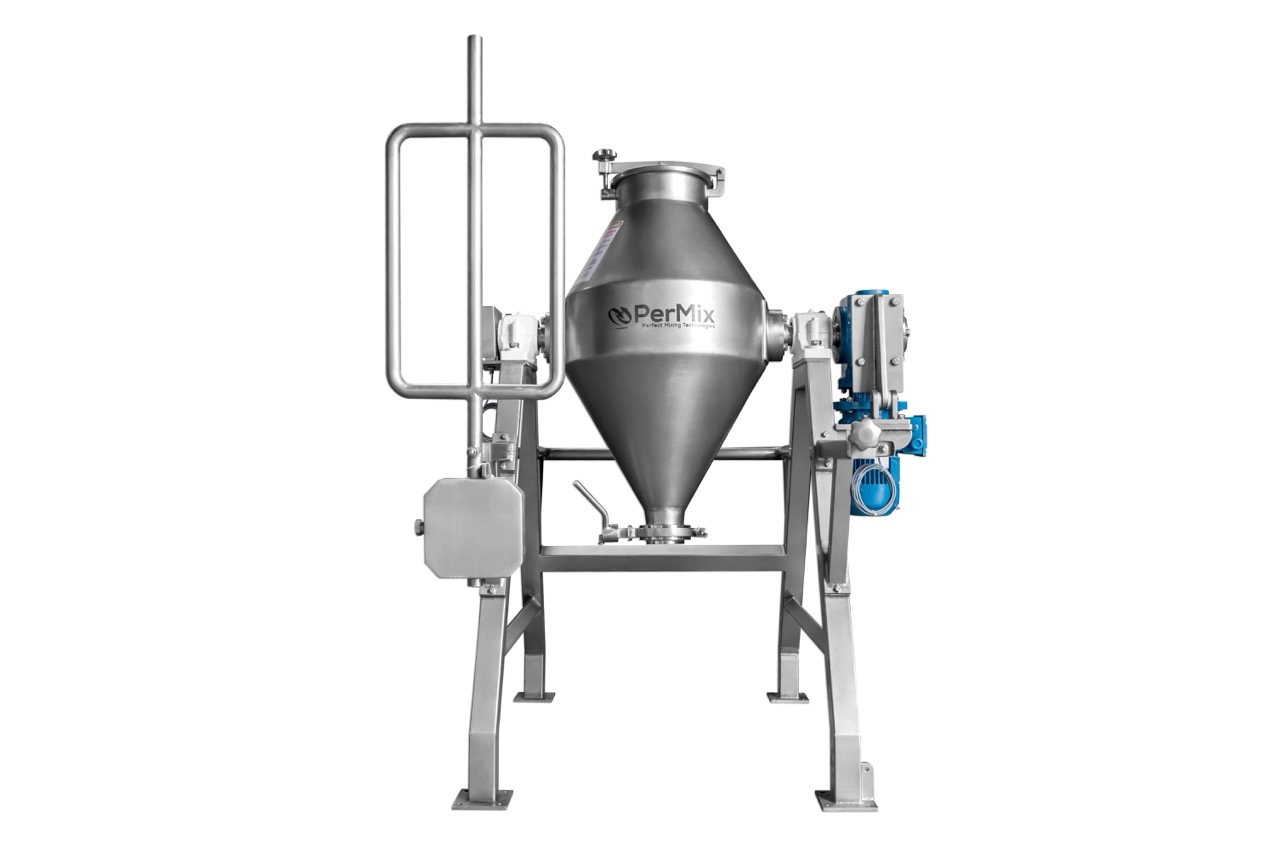
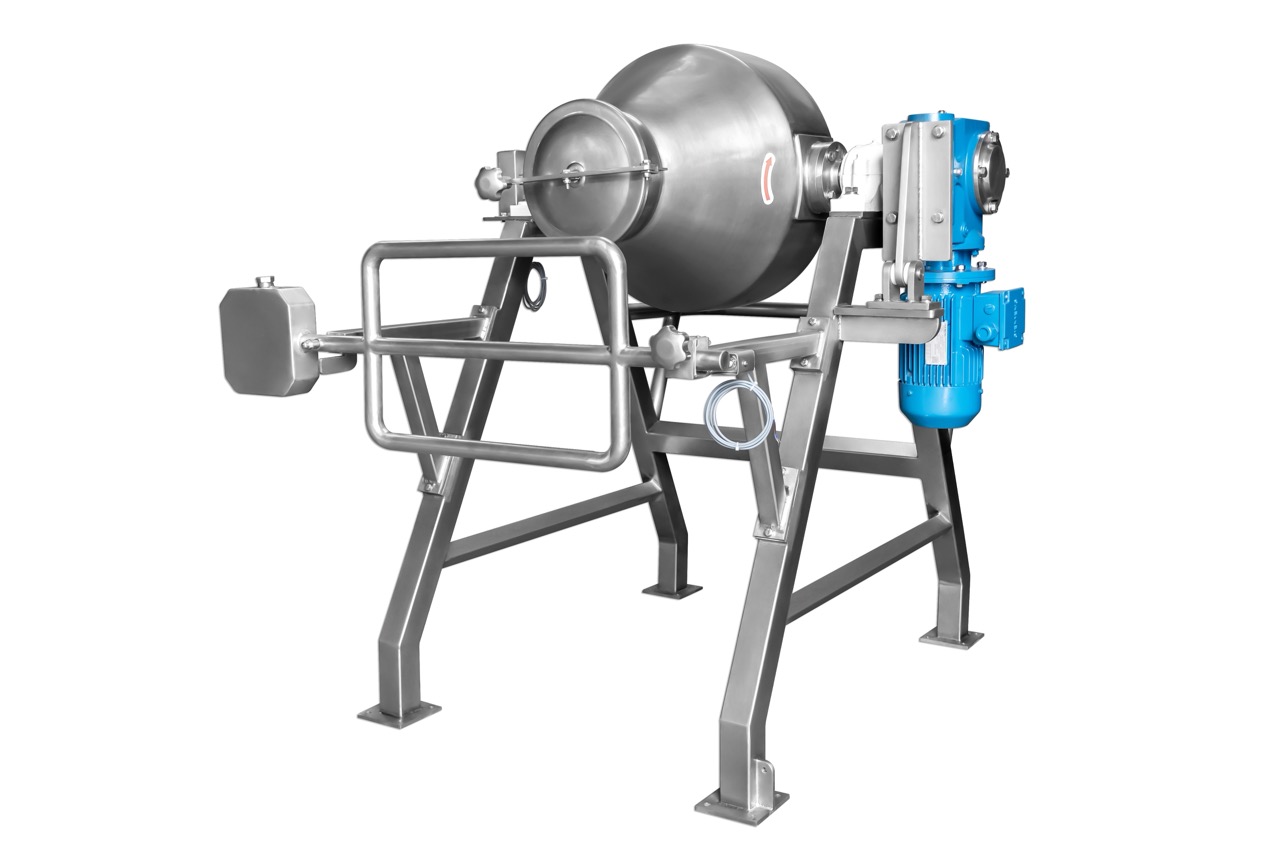
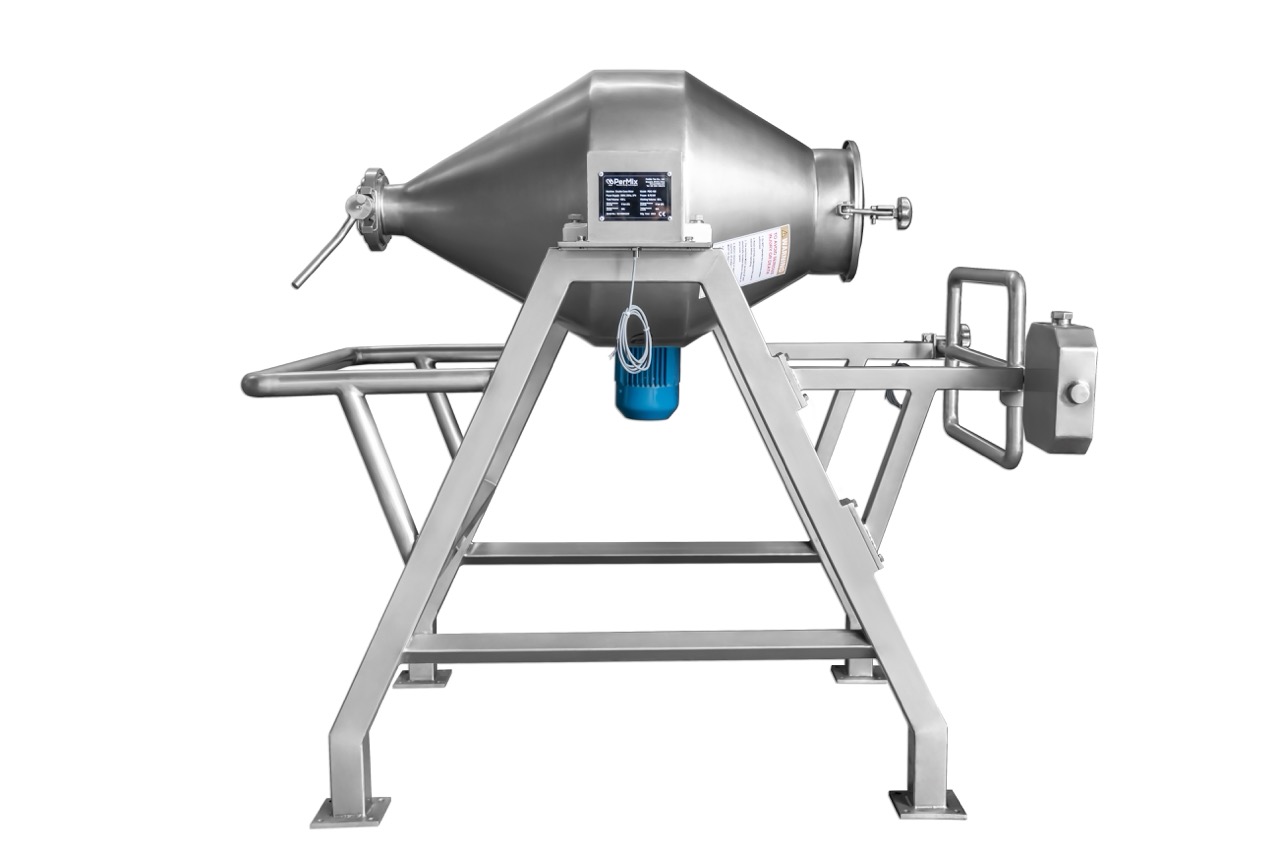
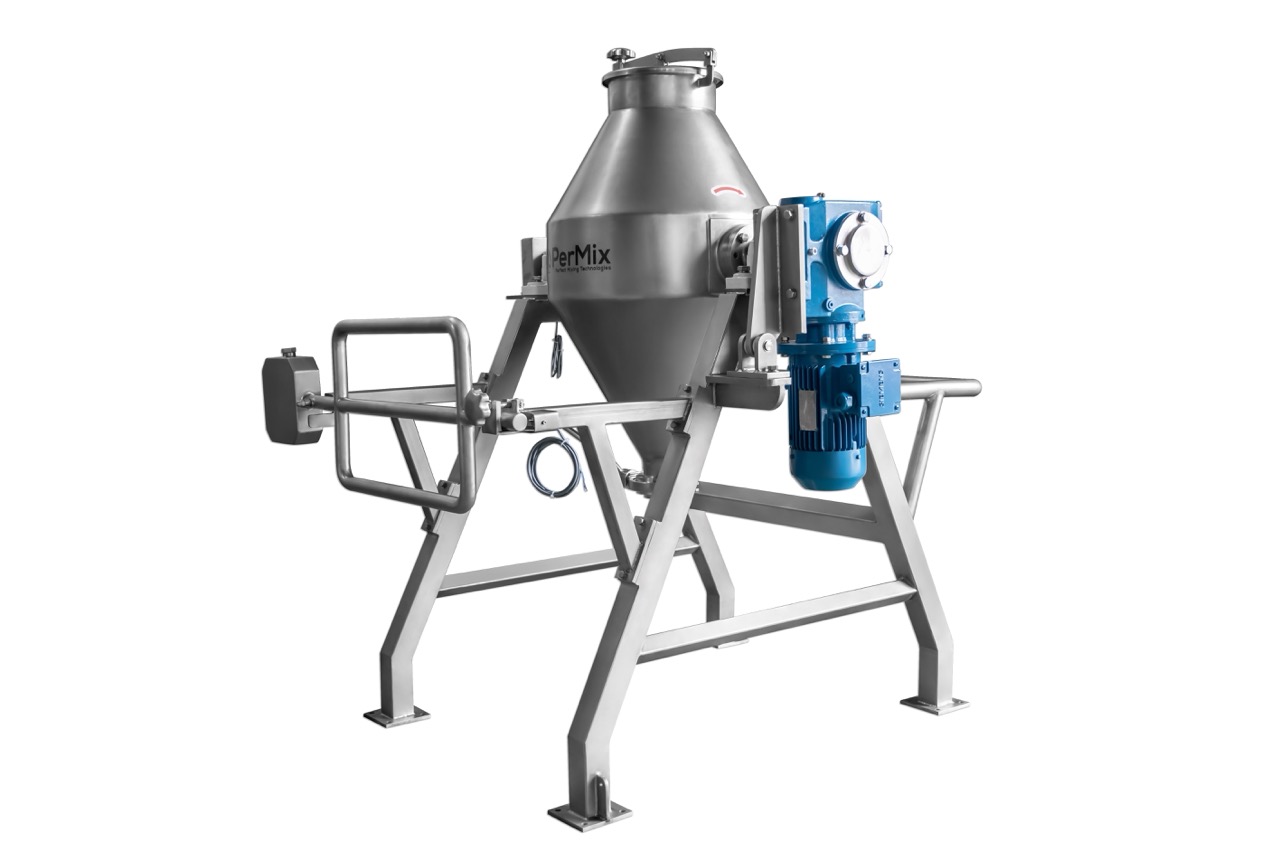
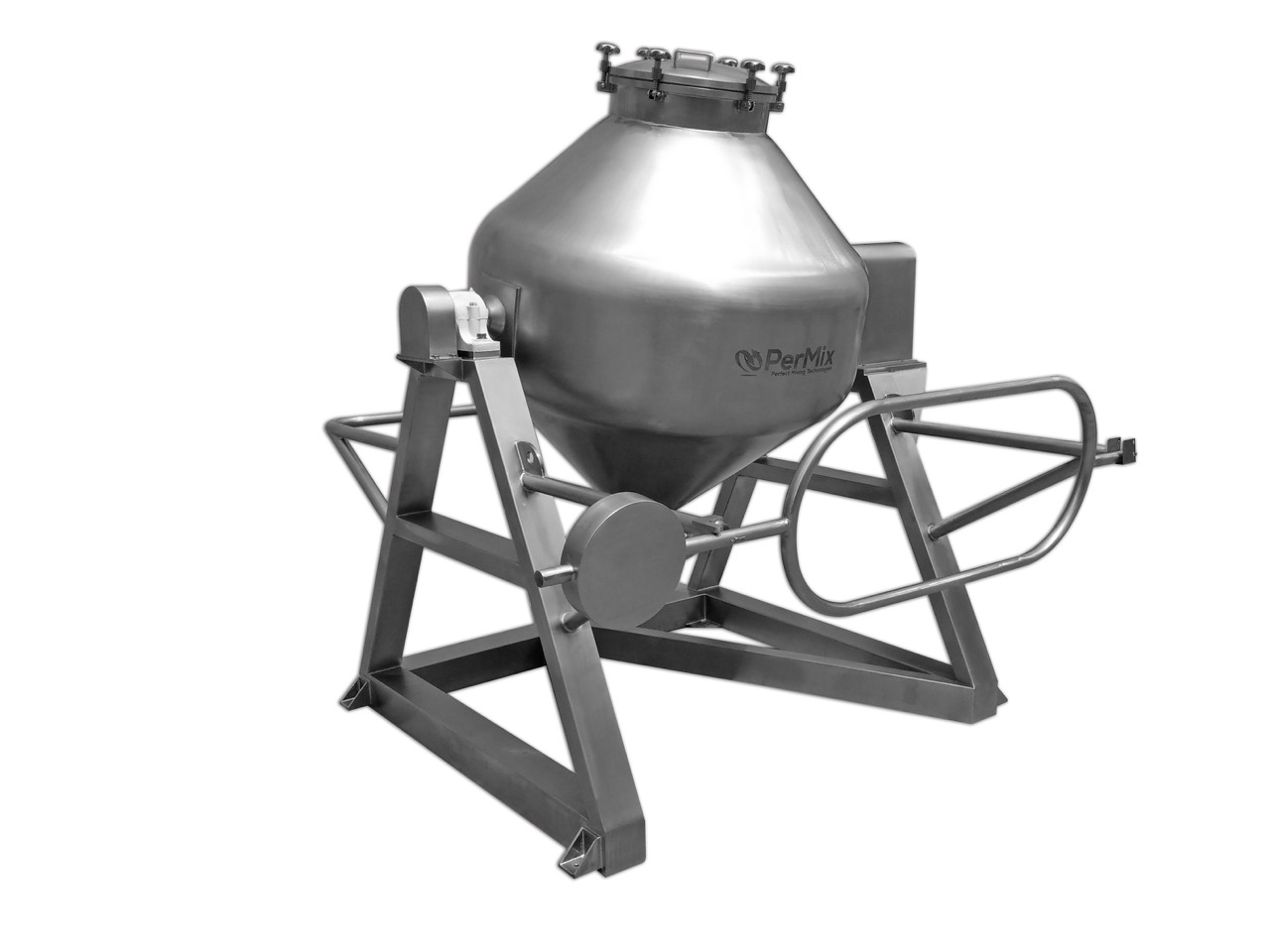
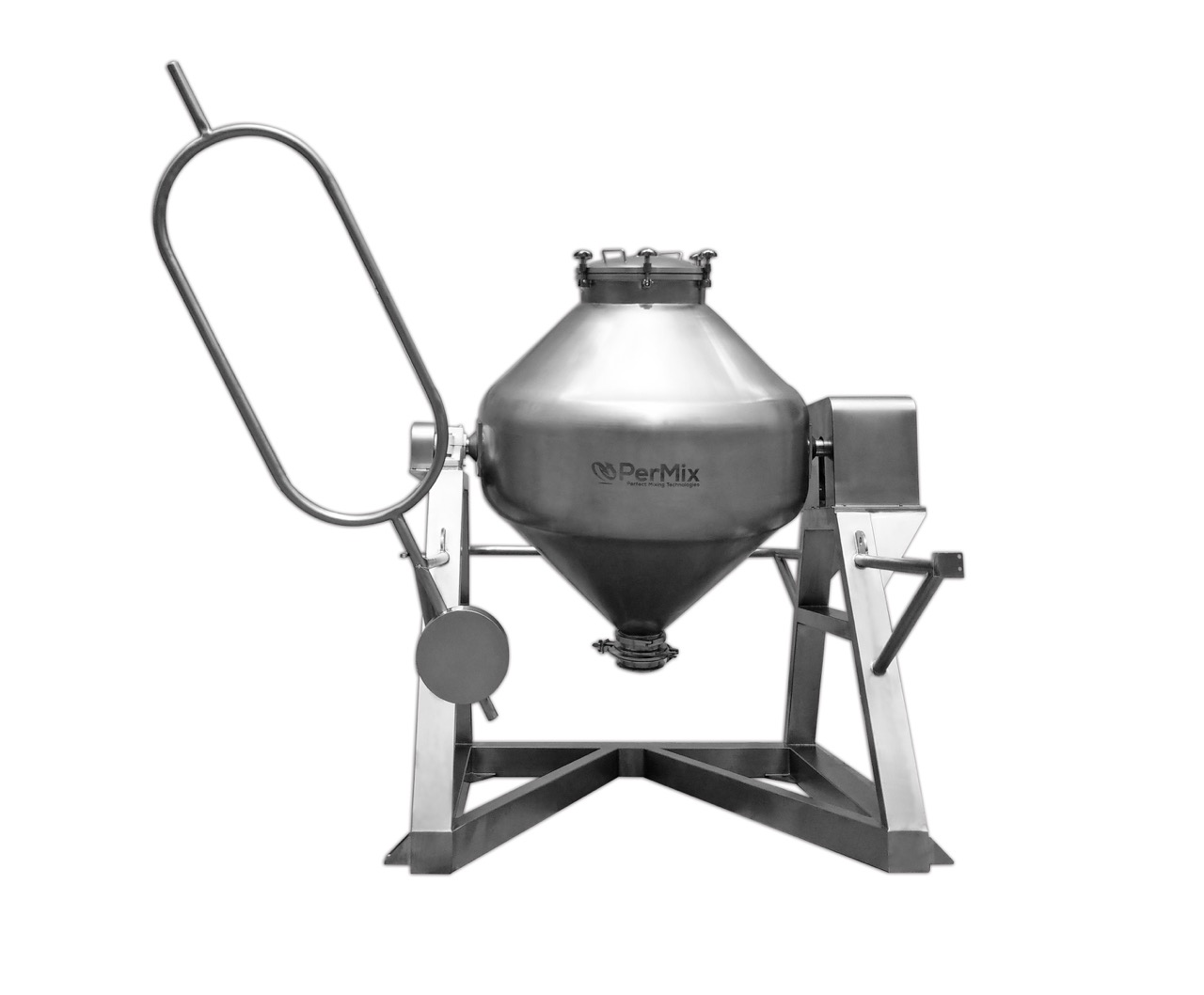
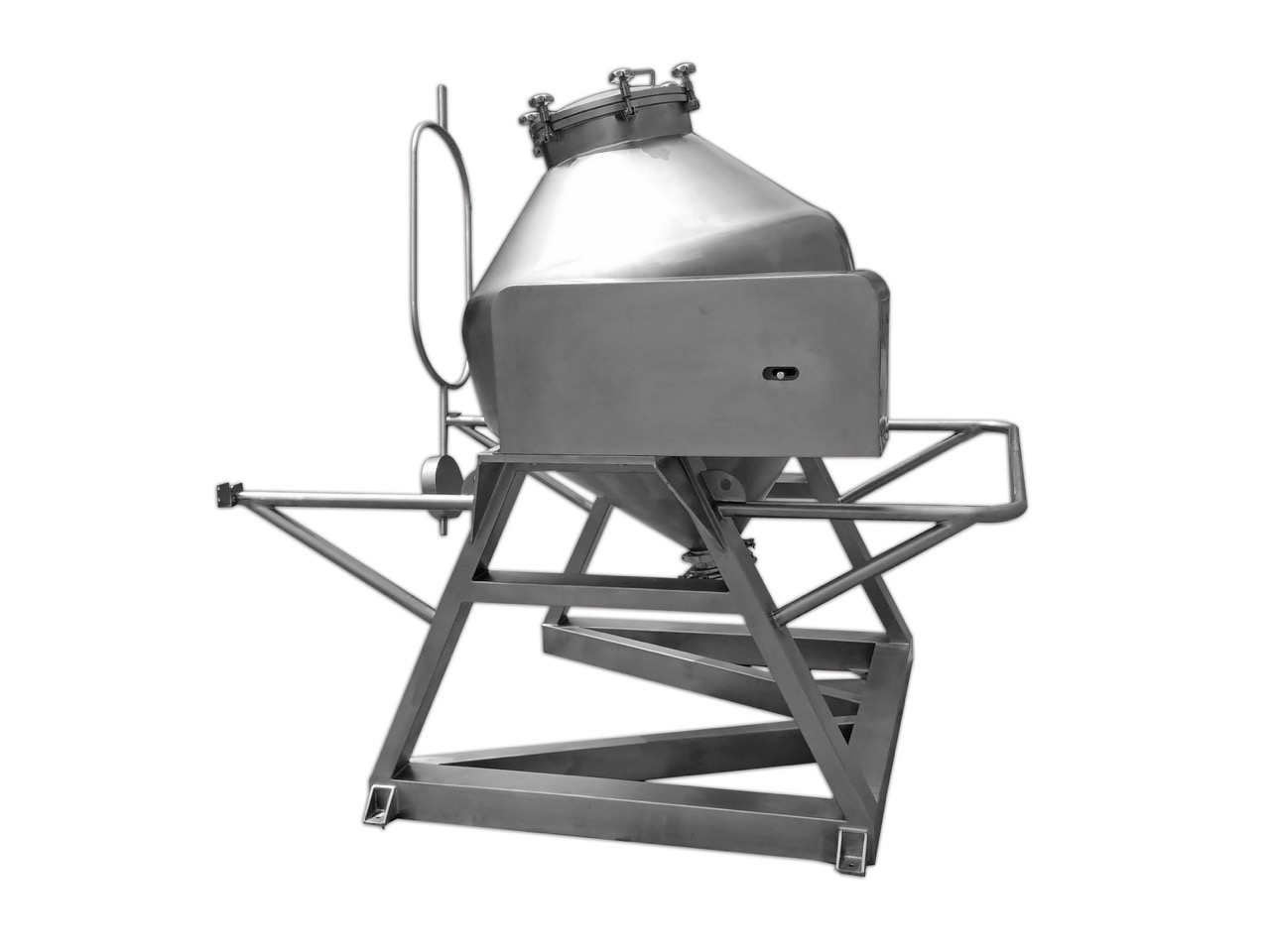
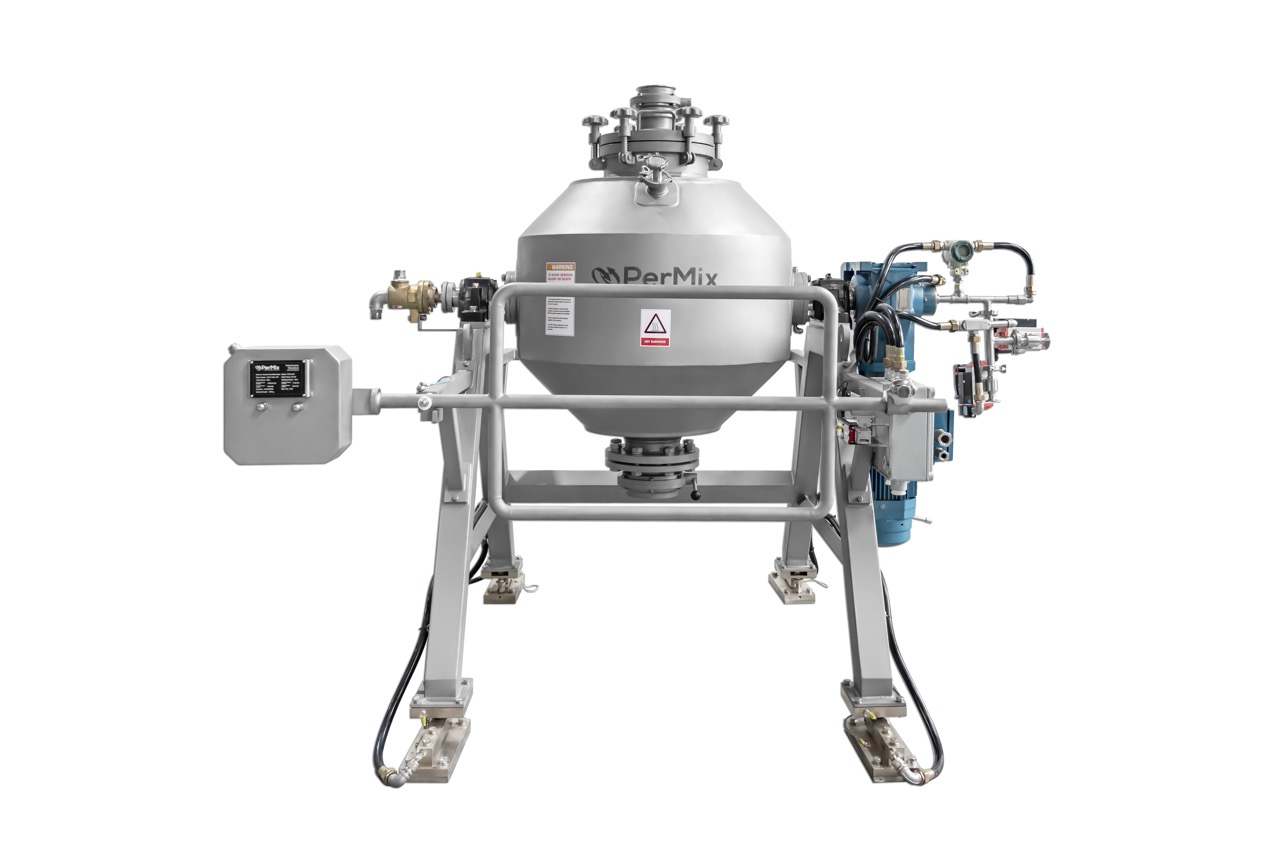
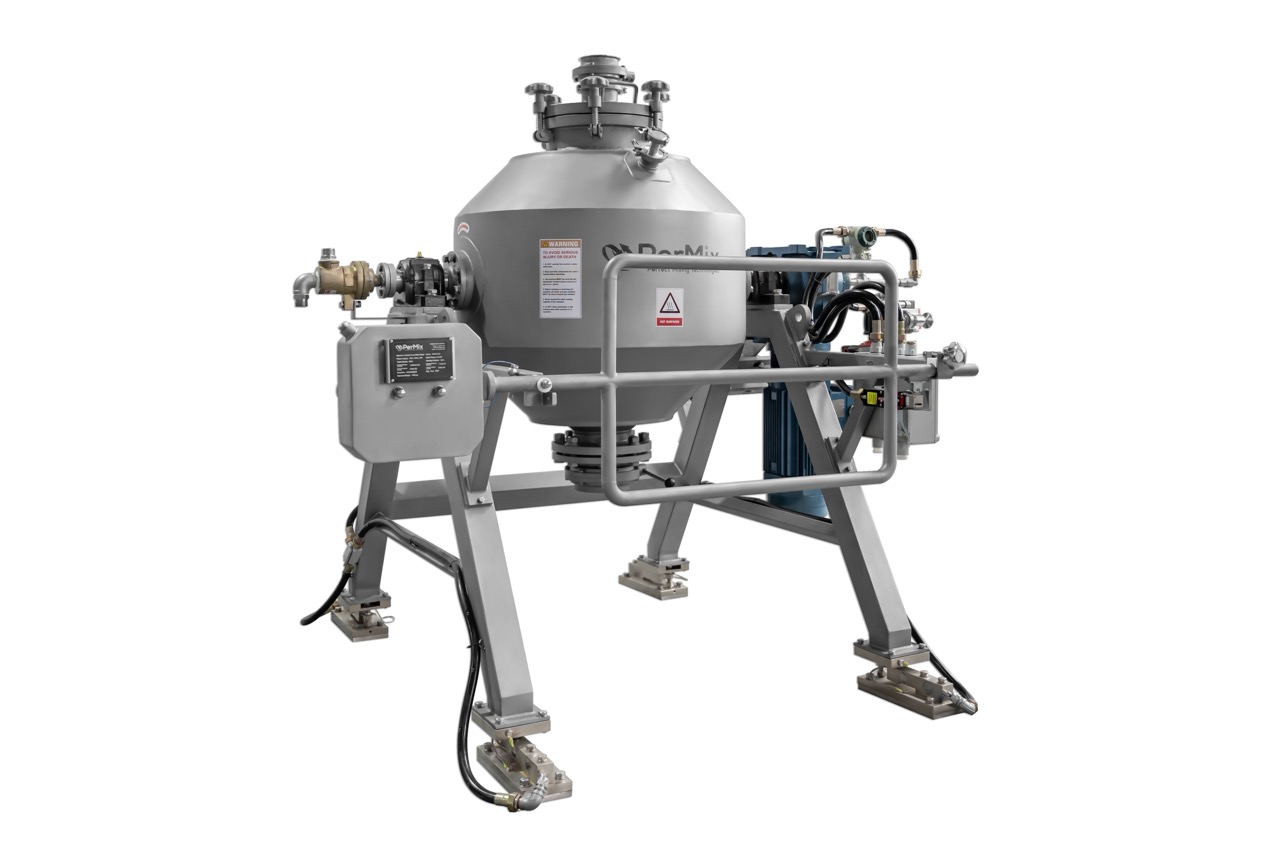
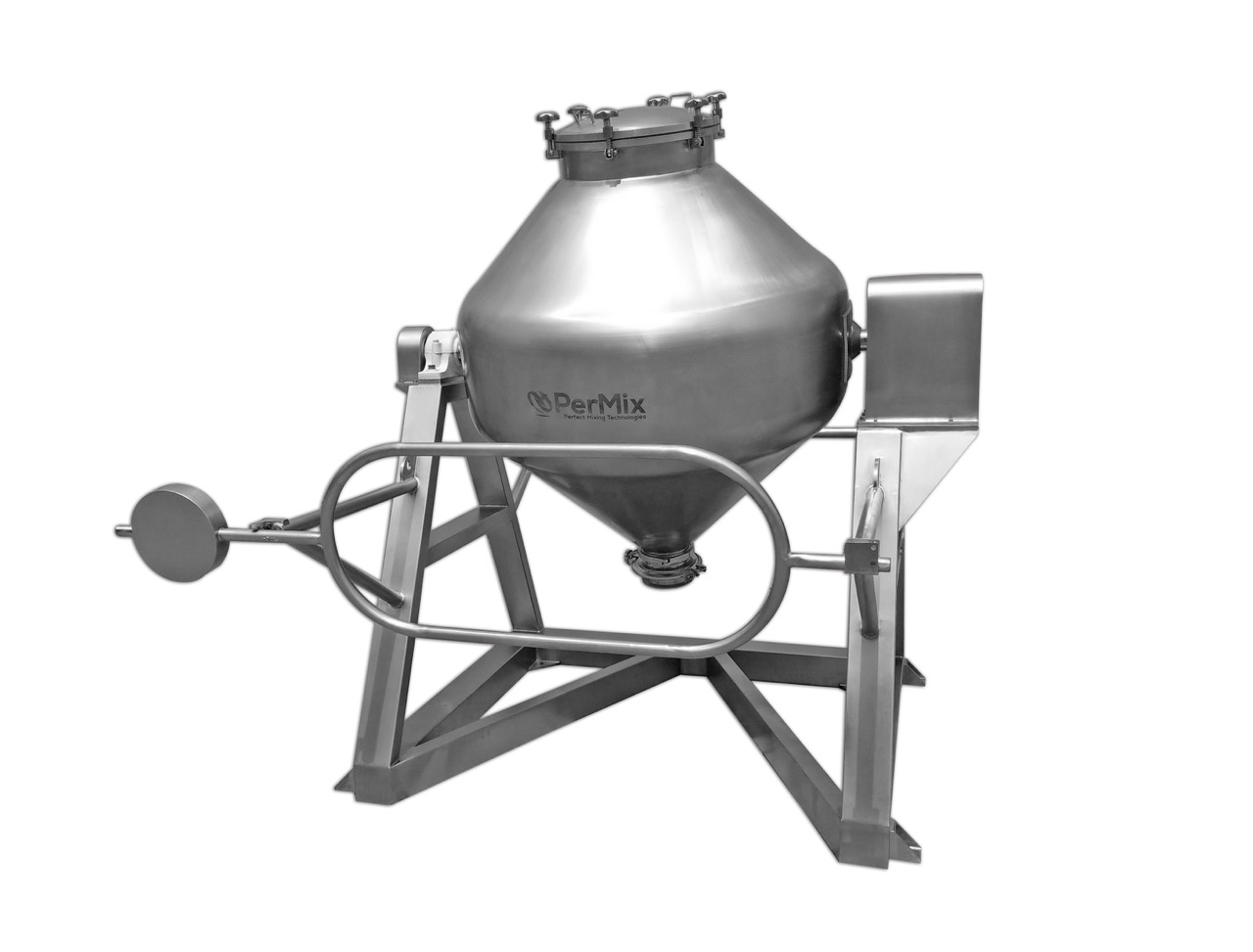
Real PerMix Double Cone Mixers
Explore PerMix double cone mixers and QuantumX double cone vacuum mixer-dryers engineered for pharmaceutical, food, chemical, battery, ceramic and specialty-material applications.
Explore real PerMix double cone mixers and QuantumX vacuum mixer-dryers. See how vessel geometry, loading, discharge, materials, thermal systems, vacuum equipment, controls and containment change according to the product and process duty.
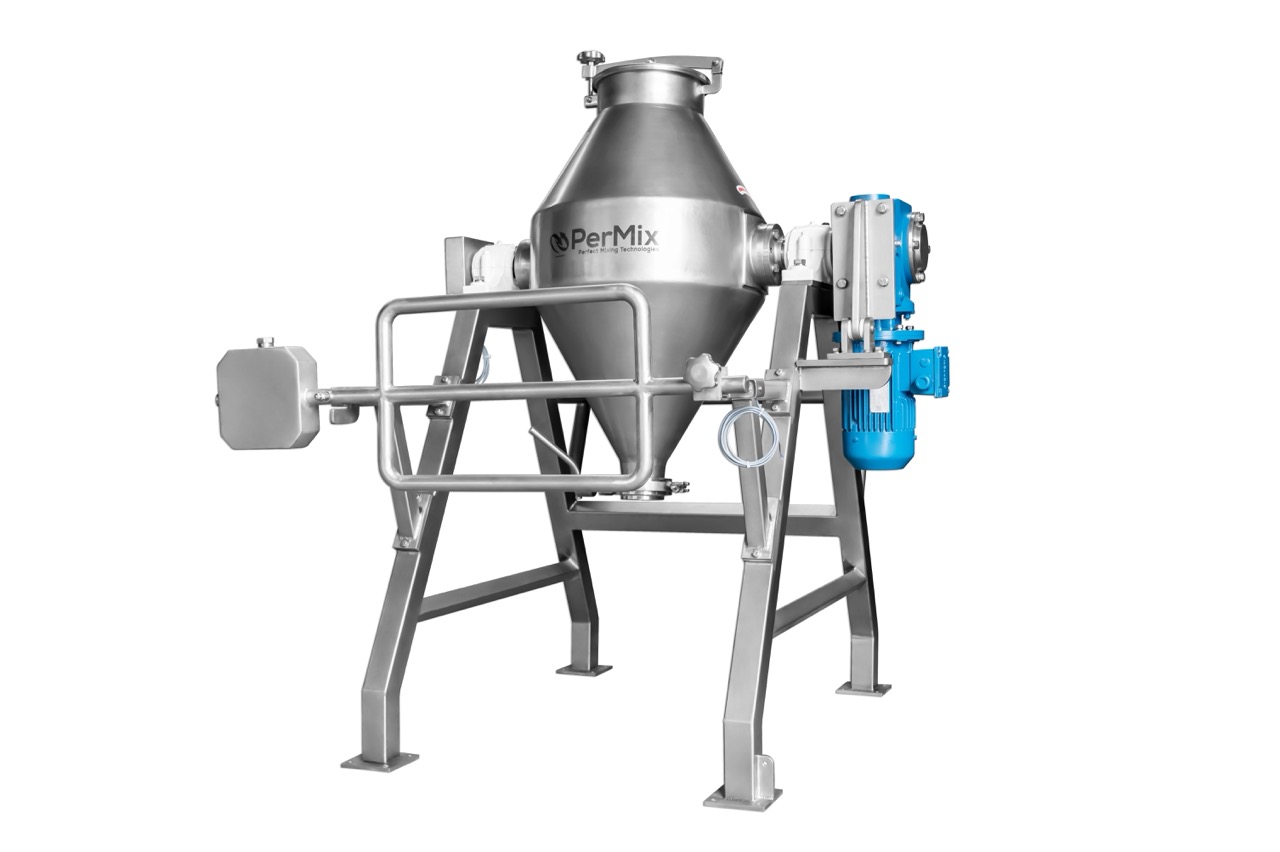
Representative equipment
How We Engineer the Right Double Cone Mixer
To determine whether a double cone mixer is the correct platform, our engineers review:
Tell us what you are mixing, how the ingredients differ and what must be protected during the process.
We will evaluate:
REQUEST A DOUBLE CONE MIXER RECOMMENDATION
Upload your material data sheet, particle-size data, density information, formulation, current process description, drying requirements or facility layout. The more process data you provide, the more useful our preliminary recommendation will be.
| Catalog-Based Selection | PerMix Application Engineering |
|---|---|
| Selected mainly by nominal vessel volume | Selected by batch mass, bulk density and required tumble headspace |
| Standard cone geometry | Cone angle, diameter, transitions and discharge evaluated for the product |
| Fixed speed | Speed reviewed around vessel diameter, cascade behavior and fragility |
| Generic fill recommendation | Working fill evaluated for the actual formulation |
| Limited evaluation of segregation | Particle size, density and discharge segregation reviewed |
| Basic fabrication | Vessel symmetry, trunnion alignment and dynamic balance treated as process requirements |
| Standard discharge valve | Outlet and stopping position selected around clean discharge and blend protection |
| Standard stainless construction | Carbon steel, stainless, Hastelloy, titanium, ceramic and glass-lined options evaluated |
| Basic jacket option | Thermal surface, vacuum, condensation and endpoint engineered as a complete system |
| Atmospheric blender only | Clear pathway to QuantumX vacuum dryers, ASME/PED, ATEX and inerted systems |
| Simple contact form | Engineering RFQ captures powder, thermal, vacuum, containment and discharge data |
| Little scale-up guidance | Scale-up evaluates geometry, fill, tumble regime, blend time and material behavior |
A double cone mixer is a rotating tumble blender consisting of two conical sections joined around a central axis. The vessel rotates so powders and granules repeatedly cascade, separate and recombine.
Free-flowing powders, granules, crystals and fragile particles are typically the strongest candidates. Materials with similar or compatible particle sizes and densities generally perform better than highly segregating formulations.
Usually, yes. A standard double cone mixer rotates the vessel rather than forcing product through a continuously driven internal agitator, resulting in relatively low mechanical shear.
Highly cohesive powders may not cascade effectively. An intensifier bar may assist with soft agglomerates, but strongly cohesive products are often better suited to a ribbon, paddle or plough mixer.
Cone angle influences the tumble path, axial movement, transition into the central section and gravity-assisted discharge.
The mixer needs sufficient product for particle interaction and sufficient free space for cascading. Overfilling can suppress the tumble mechanism, while underfilling can reduce exchange.
Some formulations can re-segregate during excessive tumbling, particularly when ingredients differ significantly in size, density or shape. Blend time should be validated.
Yes. Gentle tumble mixing is often selected specifically to protect fragile particles and limit attrition.
Small, controlled liquid additions may be possible through spray devices and an optional intensifier bar. Heavy wet mixing and granulation generally require another mixer type.
An intensifier bar is an independently driven high-speed tool used intermittently for soft deagglomeration or limited liquid distribution.
Yes. Standard models can include low-pressure, non-ASME jackets. Advanced thermal, vacuum, pressure or code-rated systems are engineered under QuantumX.
Yes. QuantumX vacuum double cone mixer-dryers combine gentle vessel rotation, jacketed thermal transfer, vacuum and vapor handling.
A QuantumX system can include a condenser, receiver, vacuum pump, heated vapor piping and controls for suitable solvent-recovery duties.
Selected pressure-rated systems can be engineered under QuantumX. The vessel, trunnions, rotary unions, seals, jacket and operating cycles must be reviewed together.
Yes, when required and technically appropriate, QuantumX systems can be engineered for applicable pressure-vessel codes.
QuantumX systems can be engineered for suitable ATEX or hazardous-area requirements, including grounding, rated components, inerting and process monitoring.
Options can include carbon steel, 304 stainless, 316/316L stainless, duplex grades, Hastelloy or nickel alloys, titanium, ceramic liners, glass lining and application-specific wear systems.
Yes, for suitable applications. Liner weight, attachment, impact, thermal cycling and dynamic balance must be incorporated into the original design.
Glass-lined double-conical dryers are used in corrosive, high-purity and metal-sensitive applications. Final suitability depends on the process chemistry, impact, temperature and pressure duty.
CIP or automated spray-cleaning provisions can be engineered, but the cleaning method, spray coverage, drainage and validation requirements should be defined before final design.
Yes. The system can include automatic positioning, interlocks, pneumatic valves, load cells, vacuum transfer, contained transfer and packaging integration.
Sizing is based on batch mass, operating bulk density, required fill level, product flowability and process requirements—not gross vessel volume alone.
Choose QuantumX when the process requires vacuum drying, internal pressure, ASME, PED, ATEX, inerting, solvent recovery, high containment, advanced thermal control or specialty materials.
GENTLE WITH THE PRODUCT. PRECISE IN THE ENGINEERING.
The right double cone mixer begins with an understanding of how the product flows, cascades, segregates, discharges, heats and responds to repeated tumbling.
PerMix evaluates the vessel geometry, fill level, speed, drive, balance, materials, valve, loading method, discharge system and controls as one complete process platform.
Whether you need:
—we will engineer the equipment around your product and process requirements.