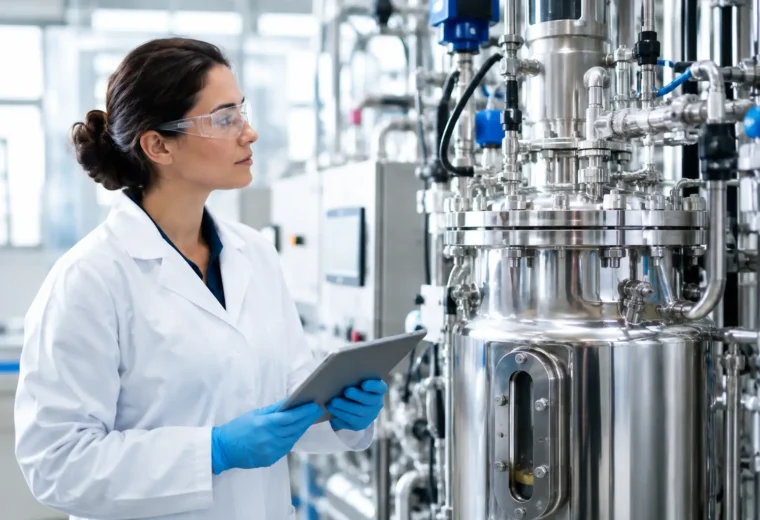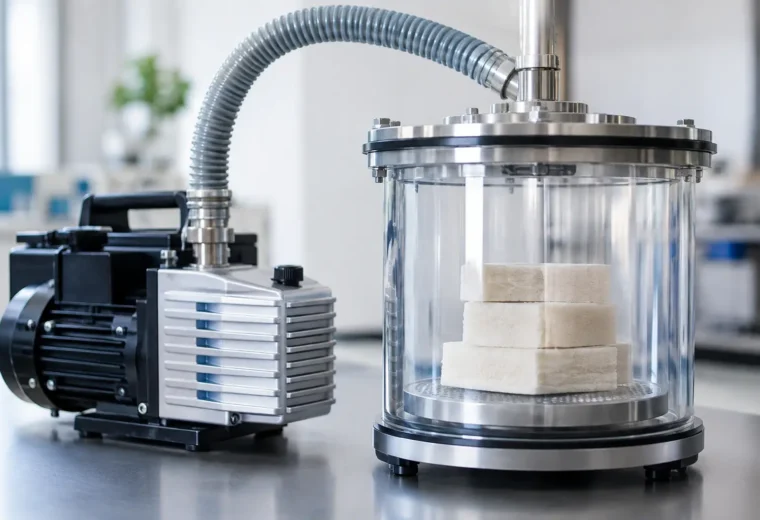
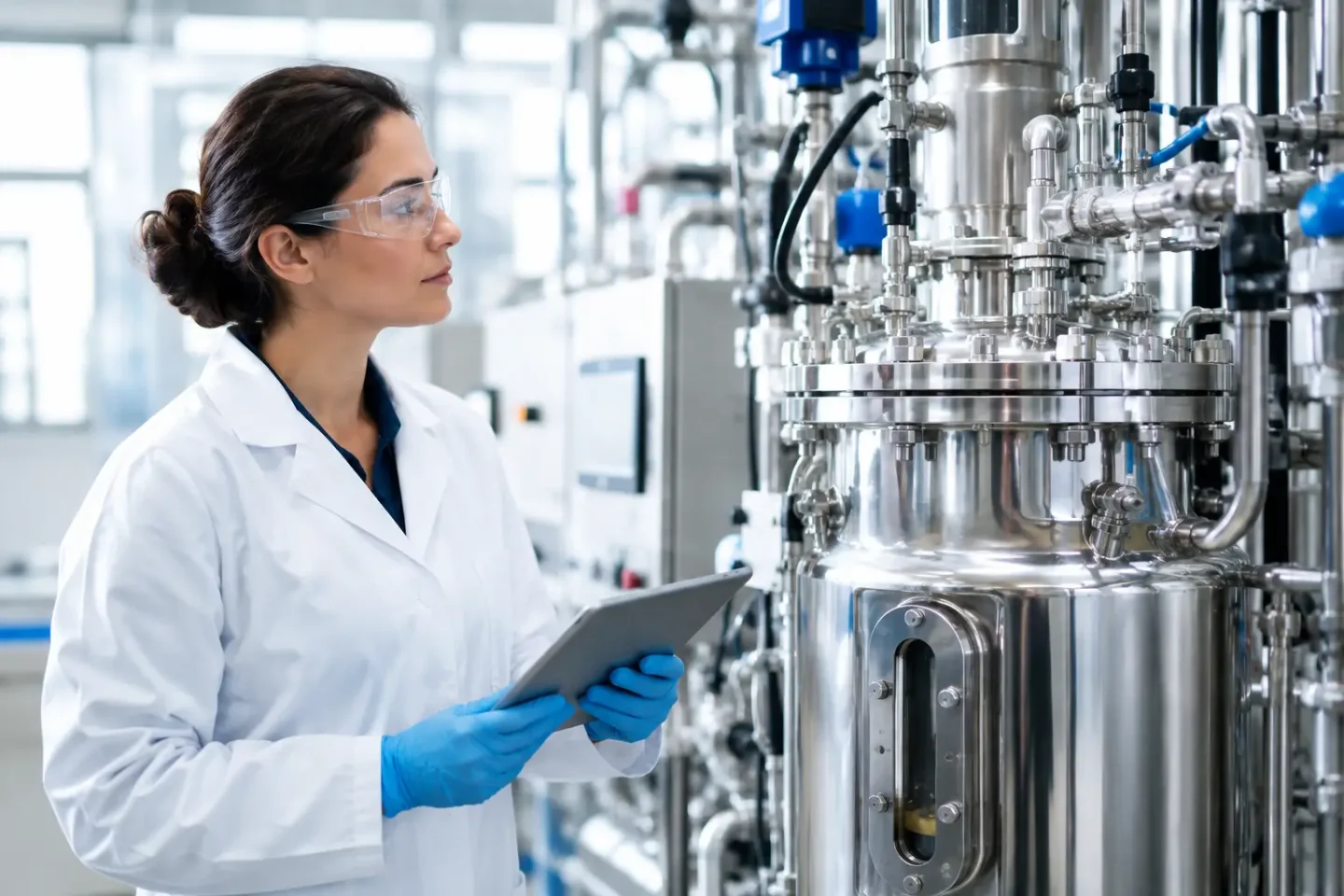
A reactor can show acceptable conversion in development and still lose margin in production through poor selectivity, incomplete heat removal, inconsistent feeding, or difficult downstream recovery. To improve reactor yield, manufacturers must treat the vessel as a complete process system rather than a tank with an agitator. The result that matters is not merely how much reaction occurs, but how consistently the desired product is produced at commercial scale.
For most chemical, pharmaceutical, food, polymer, and specialty-material applications, yield is governed by the interaction between reaction kinetics, mass transfer, heat transfer, mixing, feed strategy, and operating discipline. A change that improves one variable can create a new limitation elsewhere. Increasing temperature may accelerate conversion, for example, while also increasing byproduct formation or creating an unsafe thermal load. The right solution depends on the chemistry, material properties, batch size, and required product specifications.
Start With the Actual Cause of Yield Loss
Yield losses are often assigned to the reaction itself before the process has been properly diagnosed. In practice, the source may be uneven reactant concentration, delayed dispersion of a catalyst, localized overheating at the vessel wall, material hold-up, or variability in the raw materials.
A useful evaluation separates yield into three questions: Is the limiting reactant converting as expected? Is the desired product being formed selectively? And is the product being recovered without avoidable loss? These questions distinguish a kinetic problem from a reactor-performance or downstream-handling problem.
Process data should be reviewed batch by batch, not only as batch averages. Compare feed time, agitator speed, torque, jacket temperature, internal temperature, pressure, vacuum level where applicable, and sampling results against final yield. Trends frequently reveal a process window that is too sensitive to normal operating variation. If a small change in feed rate or starting viscosity produces a large yield shift, the process needs more control or more suitable equipment.
Conversion Is Not the Same as Yield
High conversion can conceal poor yield. A reactant may be nearly consumed while a significant portion becomes unwanted side products, oligomers, degradation compounds, or off-spec material. In other cases, the desired product is formed but remains on vessel surfaces, in transfer lines, or in a filter cake.
This distinction matters when setting improvement priorities. Higher temperature, more catalyst, or longer residence time may increase conversion, yet reduce selectivity. A process engineering review should identify the operating conditions that maximize desired-product formation and recovery, not simply reactant disappearance.
Improve Reactor Yield Through Mixing and Mass Transfer
Mixing quality determines whether reactants meet under the intended conditions. This becomes critical when adding a minor liquid into a high-viscosity batch, dispersing solids, emulsifying immiscible phases, handling gas-liquid reactions, or initiating a fast exothermic reaction.
An undersized or poorly selected agitator can create dead zones, surface vortexing, stratification, and long blending times. The average vessel temperature may appear correct while local regions experience different concentrations or temperatures. Those local conditions can drive side reactions, incomplete conversion, or inconsistent molecular properties.
Impeller selection must match the material and reaction stage. Axial-flow impellers can be effective for bulk circulation in lower-viscosity liquids. Radial-flow designs can provide high shear and gas dispersion. Anchor, gate, helical, multi-shaft, and planetary configurations are often better suited to viscous products where wall sweeping and complete turnover are necessary. Baffles, impeller diameter, vessel geometry, liquid level, and shaft speed also affect the result.
There is no universal rule that faster agitation will improve performance. Excessive shear can damage crystals, alter particle distributions, entrain air, or create unwanted emulsions. The objective is controlled energy input and complete material circulation at the point where the reaction requires it.
Feed Location and Addition Rate Matter
A reagent introduced into a poorly mixed region may encounter a temporary high local concentration before it is dispersed. In a fast reaction, that is enough to change selectivity. The same risk applies when adding acid, base, catalyst, oxidizer, monomer, or temperature-sensitive ingredients.
A well-engineered feed system considers injection location, nozzle orientation, dip-pipe depth, addition rate, and metering accuracy. Adding near the high-energy mixing zone often improves dispersion, but the best location depends on the impeller arrangement and fluid behavior. For difficult applications, staged feeds or multiple injection points may provide better control than one high-rate addition.
Control Temperature at the Point of Reaction
Heat transfer is among the most common constraints on reactor productivity and yield. Heat generated by the reaction must be removed at a rate that prevents temperature excursions. At the same time, heat supplied through the jacket, coils, or external loop must reach the batch uniformly enough to maintain the intended reaction profile.
The jacket setpoint is not the reaction temperature. Product temperature can lag behind the jacket, especially in viscous materials or larger vessels. A sensor placed in a low-circulation zone can also misrepresent the true bulk condition. Multiple temperature measurements, backed by a sound understanding of mixing patterns, give operators a more dependable view of the batch.
When heat transfer is limiting, increasing agitation may help by renewing product at the heat-transfer surface. It may not be sufficient when viscosity rises substantially, fouling builds on the wall, or the available heat-transfer area is too small for the reaction duty. In those cases, internal coils, external recirculation loops, improved jacket design, or a different reactor configuration may be justified.
Thermal control must be evaluated alongside safety. A faster feed may shorten cycle time, but if it exceeds the reactor’s heat-removal capability, the cost can be reduced yield, longer corrective processing, or a serious operating risk. The practical target is the fastest stable rate within the proven thermal operating envelope.
Design the Reaction Profile, Not Just the Batch Time
Many yield improvements come from shaping the process sequence rather than changing the chemistry. Controlled ramp rates, programmed feed additions, defined hold periods, and cooling profiles can reduce side reactions and improve repeatability.
For example, a reaction may benefit from a slow initial addition while reactive intermediates are most concentrated, followed by a higher rate once the heat load decreases. Another process may require a lower-temperature hold to complete a selective reaction before a final temperature increase removes residual starting material. These profiles should be built from kinetics, calorimetry, sampling data, and commercial equipment capabilities.
Residence time also deserves careful attention in continuous reactors and semi-batch systems. Too little time can leave unreacted material. Too much time can expose the product to thermal degradation, hydrolysis, oxidation, or polymer growth. Residence-time distribution is especially important when feed fluctuations or poor mixing allow some material to leave the reactor earlier than intended.
Scale-Up Requires More Than Maintaining RPM
A reactor that performs well in a pilot vessel does not automatically perform well at production scale. Maintaining the same agitator speed does not preserve tip speed, power per unit volume, pumping capacity, Reynolds number, or heat-transfer behavior. One or more of these may be the controlling factor, depending on the application.
Scale-up should begin with a clear statement of the process constraint. If the reaction is mixing-limited, maintain the appropriate circulation and dispersion performance. If it is heat-transfer-limited, model the heat-generation and removal balance. If solids suspension or gas dispersion is essential, verify those conditions directly rather than relying on a single scale-up ratio.
Physical properties must be measured across the full batch cycle. Viscosity, density, particle loading, vapor pressure, and thermal conductivity can change significantly as the reaction proceeds. Equipment selected for the starting material alone may not perform when the batch reaches its highest viscosity or greatest heat release.
Protect Yield After the Reaction Ends
A completed reaction can still lose value during discharge, transfer, washing, filtration, stripping, or drying. Product retained in the vessel, caught beneath an agitator, left in a bottom outlet, or degraded during an extended hot hold reduces realized yield.
Reactor design should support clean, complete discharge. This may require a flush-bottom outlet, proper vessel slope, wall-sweeping agitation, heated discharge components, or a transfer method suited to the product’s viscosity and solids content. Cleaning strategy matters as well. Residual material can contaminate subsequent batches or create variability that appears to be a reaction problem.
Automation strengthens repeatability when it controls the variables that actually affect performance. Recipe management, load cells, mass-flow measurement, temperature cascades, torque monitoring, and interlocks can reduce operator-dependent variation. Automation is most valuable when it is based on a validated process model, not when it simply adds instruments to an unstable process.
For manufacturers seeking a measurable yield increase, the best starting point is a disciplined review of reaction chemistry, mixing, thermal duty, feed control, and recovery as one connected system. PerMix approaches reactor projects from that process-first perspective, because the right vessel and agitation design should improve not only yield, but also batch consistency, safety, cycle time, and long-term operating reliability.