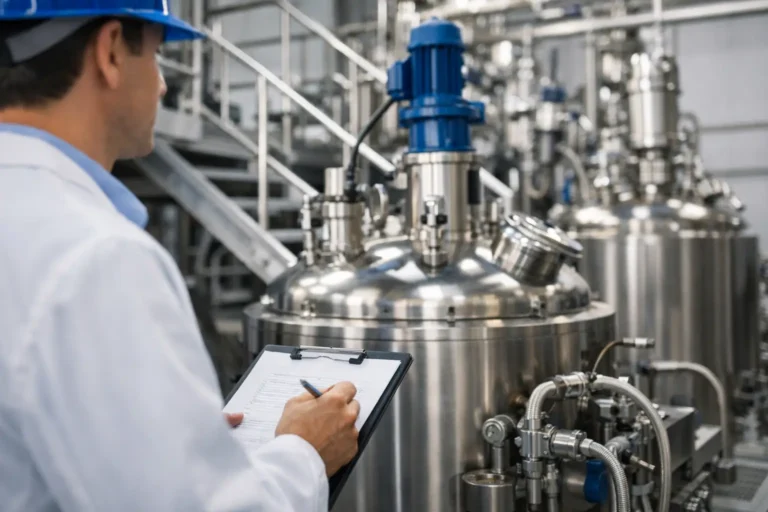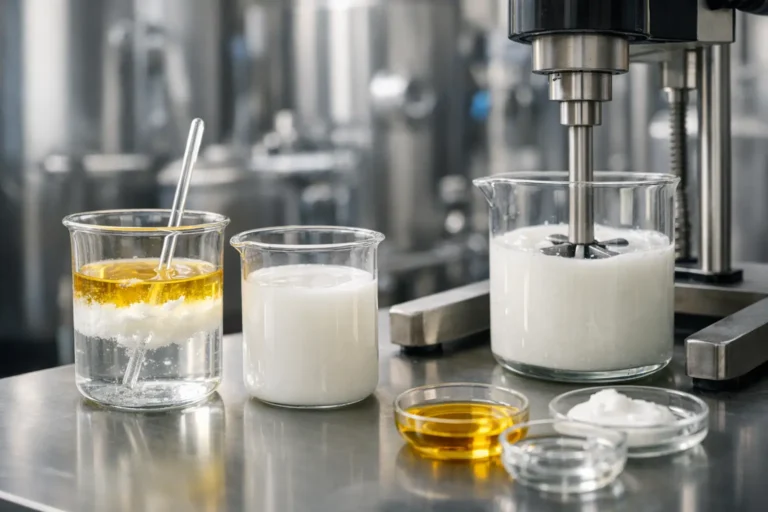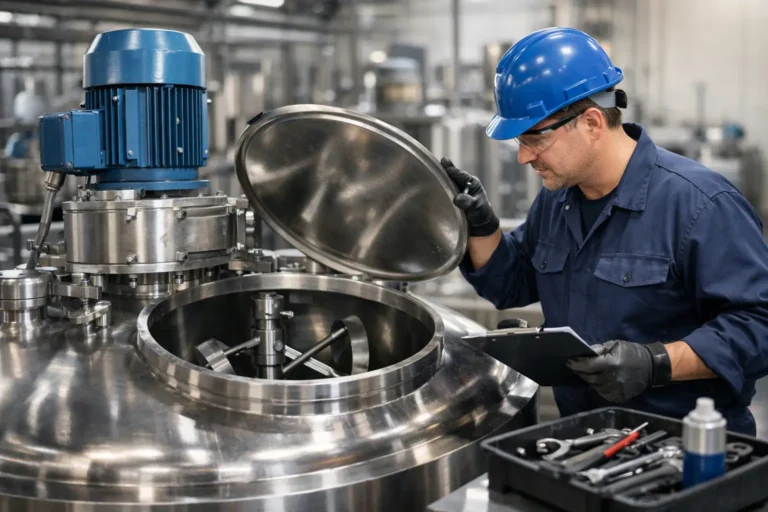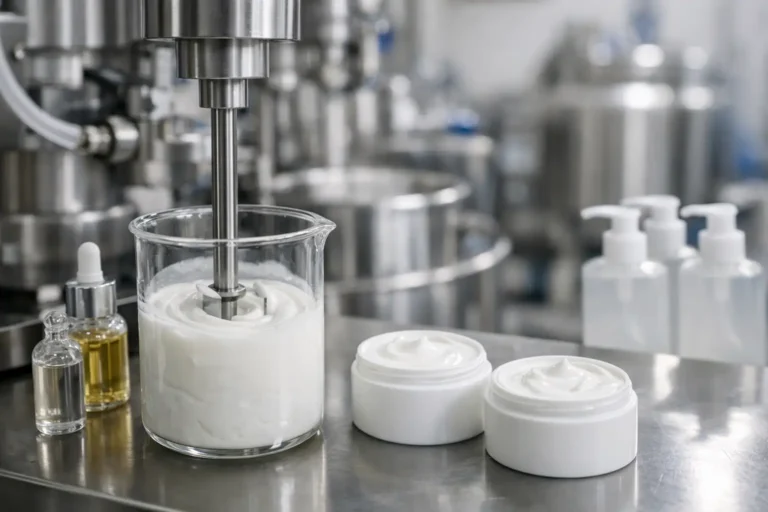
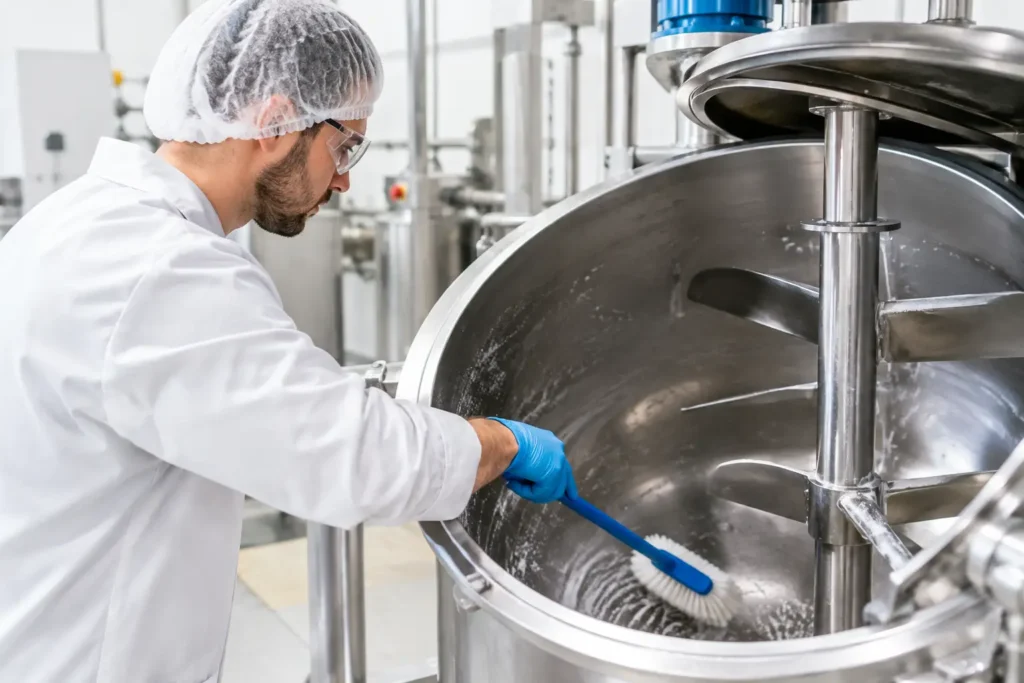
A mixer that produces a uniform batch but cannot be cleaned effectively is not delivering full production performance. Product residue can carry allergens, active ingredients, moisture, microorganisms, color, flavors, or incompatible chemicals into the next batch. It can also lengthen changeovers, create validation risk, and turn a planned production schedule into an avoidable downtime event.
Mixer cleaning is therefore a process engineering requirement, not a housekeeping task. The right approach depends on the material being processed, the required level of hygiene, the batch sequence, the mixer geometry, and whether dry, wet, or fully automated cleaning is appropriate. A cleaning method that works well for a free-flowing food powder may be inadequate for a sticky polymer compound, a high-potency pharmaceutical blend, or a viscous cosmetic emulsion.
Start Mixer Cleaning With the Product Risk
The first question is not which cleaning method to use. It is what must be removed, from where, and to what acceptance standard. That assessment should consider the product’s physical behavior as well as its safety and quality requirements.
Dry powders can lodge in shaft seals, discharge valves, agitator hubs, cover gaskets, and dead zones near end walls. Hygroscopic materials may harden after exposure to humidity. Fat-based, adhesive, or high-viscosity products can form a continuous film on vessel walls and mixing tools. Liquid formulations may drain readily from the main vessel yet remain trapped in transfer piping, spray devices, sampling ports, or valve cavities.
The consequences also vary by application. Food and beverage manufacturers may be managing allergen separation and microbiological control. Pharmaceutical producers may require validated cleaning limits tied to active ingredient carryover. Chemical and specialty materials manufacturers may need to prevent formula contamination, color transfer, hazardous reactions, or incompatible residue between campaigns.
A practical cleaning strategy begins by documenting the worst-case product. This is typically the hardest material to remove, not necessarily the product produced most often. Its behavior establishes the cleaning cycle, inspection points, chemicals, temperatures, rinse requirements, and verification method needed to protect subsequent production.
Equipment Design Determines Cleaning Efficiency
Cleaning performance is strongly influenced by the mixer before the first batch is produced. An underspecified cleaning arrangement can force operators to spend hours disassembling components, entering vessels, or repeating wash cycles that do not reach critical surfaces.
For industrial mixers, design details matter. Smooth internal finishes reduce product adhesion and make visual inspection more reliable. Properly designed agitator-to-vessel clearances limit material buildup without compromising mixing action. Flush-mounted ports, cleanable seals, accessible discharge valves, and hygienic gasket arrangements reduce the number of locations where residue can accumulate.
The Challenge of Mixing Geometry
Every mixer type presents different cleaning considerations. Ribbon mixers offer high capacity and efficient powder blending, but cleaning access must account for the outer ribbon, inner ribbon, shaft, end seals, and discharge assembly. Paddle and plough mixers can process a broad range of powders and wet materials, yet their high-intensity mixing elements create surfaces that need effective spray coverage or manual access.
Sigma mixers and double planetary mixers are designed for pastes, doughs, adhesives, and other high-viscosity products. These applications often require more than a simple rinse because material can cling to blades, trough walls, and cover surfaces. Vacuum mixers, emulsifiers, and multi-shaft systems add further considerations around vacuum ports, homogenizer heads, recirculation lines, and mechanical seals.
There is no universal claim that one mixer is easier to clean than every alternative. The correct design depends on the product and cleaning target. However, equipment should be evaluated with the same seriousness as mixing uniformity, throughput, and discharge efficiency. A mixer that saves ten minutes per batch but adds two hours to every changeover may reduce overall plant capacity.
Choose the Right Cleaning Method
Industrial cleaning methods generally fall into dry cleaning, wet cleaning, clean-in-place systems, and manual or semi-manual cleaning. The best choice is application-specific, and many facilities use more than one method depending on the product campaign.
Dry cleaning is often effective for non-hygroscopic powders where water would create caking, microbial concerns, or a lengthy drying requirement. Vacuum removal, brushing, controlled wipe-down procedures, and compressed air used with proper containment can remove loose residue. Compressed air should be applied carefully, since it can disperse dust into seals, nearby equipment, or the wider production environment. In combustible dust applications, cleaning practices must align with the facility’s dust hazard controls.
Wet cleaning is more appropriate when residues are oily, sticky, soluble, or microbiologically sensitive. It may involve a pre-rinse, detergent wash, intermediate rinse, final rinse, and drying step. Water temperature, detergent concentration, flow rate, contact time, and mechanical action all affect results. Raising chemical concentration does not automatically solve poor cleaning coverage. If a spray device cannot reach a shadowed area behind a mixing tool, the residue may remain regardless of detergent strength.
Clean-in-place, or CIP, systems improve repeatability where frequent wet cleaning is required. A properly engineered CIP system delivers controlled flow, temperature, chemical concentration, and cycle time to verified surfaces. It can reduce labor, improve operator safety, and support consistent documentation. It is not automatically the right investment for every operation. Low-volume production, highly variable equipment, or materials requiring scraping may still benefit from accessible manual cleaning supported by well-defined procedures.
Build a Cleaning Procedure Operators Can Execute
A cleaning procedure should be specific enough to eliminate interpretation. Instructions such as “clean thoroughly” do not define a repeatable process. The procedure should identify isolation requirements, disassembly points, cleaning sequence, detergent or solvent specifications, exposure time, rinse criteria, inspection locations, and release requirements before the mixer returns to service.
For complex equipment, include photographs or diagrams that show seals, valve seats, cover interfaces, agitator hubs, and other known residue locations. Operators should not need to rely on memory to identify critical surfaces. Maintenance teams also need clear requirements for reassembly, gasket condition, torque settings where applicable, and verification that guards and safety devices are restored.
The process should account for worker safety. Lockout/tagout, confined-space controls, chemical handling, hot surfaces, and access platforms require planning before cleaning starts. A vessel that appears empty can still present hazards from rotating equipment, residual pressure, vacuum, cleaning chemicals, or difficult entry and exit conditions.
Verify Results Instead of Assuming Them
Visual inspection remains valuable because it is fast and can reveal obvious residue, damaged gaskets, pooling liquid, or inaccessible areas. But visual inspection alone may not be sufficient for applications with strict carryover or hygiene requirements.
Verification can include rinse conductivity, pH checks, swab sampling, total organic carbon testing, microbial testing, allergen testing, or analytical methods specific to an active ingredient or chemical. The method should match the risk. Over-testing a low-risk dry blend can add cost without improving control, while under-testing a validated pharmaceutical process can create significant compliance exposure.
Trend cleaning data over time. If a rinse cycle requires longer duration, residue appears repeatedly near a seal, or swab results drift toward an action limit, the issue may be mechanical rather than procedural. Worn seals, damaged finishes, failing spray devices, poor drainage, or changes in raw material properties can all reduce cleaning performance.
Treat Changeover Time as Production Capacity
Manufacturers frequently focus on mixer speed, batch size, and motor power while overlooking cleaning time in capacity calculations. Yet changeovers determine how many products a plant can produce in a shift, particularly in facilities with short runs and frequent formulation changes.
Improving cleaning efficiency may involve selecting a mixer with better access, adding spray coverage, redesigning a discharge valve, improving drainability, separating high-risk product campaigns, or automating chemical dosing and cycle control. The right improvement is the one that reduces total cost and risk without compromising the mixing process.
PerMix evaluates cleaning requirements alongside material behavior, mixing performance, automation objectives, and production economics. This engineering perspective helps manufacturers avoid treating cleanability as an afterthought after equipment installation.
A well-engineered cleaning strategy gives operators a clear standard, gives quality teams defensible evidence, and gives production teams more usable hours from every mixer. When the next batch starts with a clean, verified process surface, consistency is no longer left to assumption.