A mixer can produce an excellent batch in the hands of an experienced operator, then produce a different result on the next shift when timing, addition sequence, or material condition changes. Mixing automation is the discipline of removing that variability without removing the process knowledge that makes the operation work. For manufacturers processing powders, slurries, emulsions, pastes, and high-viscosity compounds, the objective is not simply automatic start and stop. It is controlled, repeatable production.
The right automation strategy connects material handling, ingredient addition, mixing energy, temperature, vacuum, discharge, cleaning, and batch records into one engineered process. The result can be tighter product uniformity, higher throughput, fewer operator-dependent decisions, and better evidence that every batch met its intended process conditions.
What Mixing Automation Should Control
A basic automated mixer may use a timer, variable frequency drive, and simple interlocks. That approach can be appropriate for a stable, low-risk product. It becomes inadequate when formulation accuracy, rheology, particle dispersion, thermal exposure, or regulatory traceability directly affect product quality.
Effective mixing automation begins with the critical process variables. In a powder blending operation, these may include ingredient identity, weighment accuracy, fill level, mixer speed, blend time, and discharge confirmation. In a liquid or slurry process, the control strategy may also require liquid addition rate, recirculation flow, jacket temperature, pH, viscosity indication, and high-shear head speed.
For vacuum mixing, deaeration, reaction, and drying applications, pressure control and temperature profiles are often central to the process. A system should not proceed to the next step simply because a timer has expired. It should confirm that the required operating conditions have been achieved and maintained.
This distinction matters. Time is an input, not proof of a successful batch.
Recipe management creates repeatability
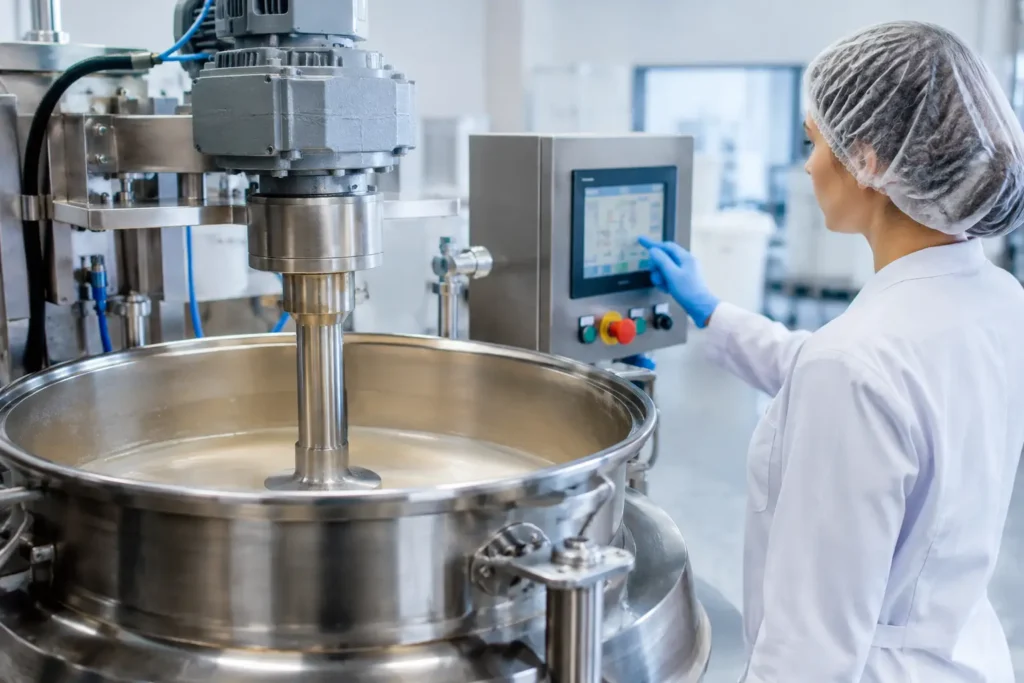
Recipe-driven control is the foundation of most industrial mixing automation projects. A recipe defines the sequence and allowable limits for each batch: which materials are added, the target quantity, mixer speed, mixing duration, temperature setpoints, vacuum level, agitation profile, and discharge conditions.
A well-designed recipe also accounts for process stages. A typical batch may require a low-speed preblend, controlled addition of liquid through a spray system, a high-intensity dispersion phase, vacuum deaeration, and a final slow-speed conditioning stage before discharge. Treating this as one generic mixing cycle limits the value of the equipment and increases the risk of variation.
Recipe control allows authorized personnel to make changes through documented procedures rather than informal adjustments at the operator panel. That supports quality systems while preserving practical flexibility for approved formulations, production sizes, and product grades.
Material additions require verification
Many batch failures begin before the mixer starts. Incorrect raw materials, out-of-sequence additions, inaccurate quantities, or premature liquid charging can create a problem that additional mixing cannot correct.
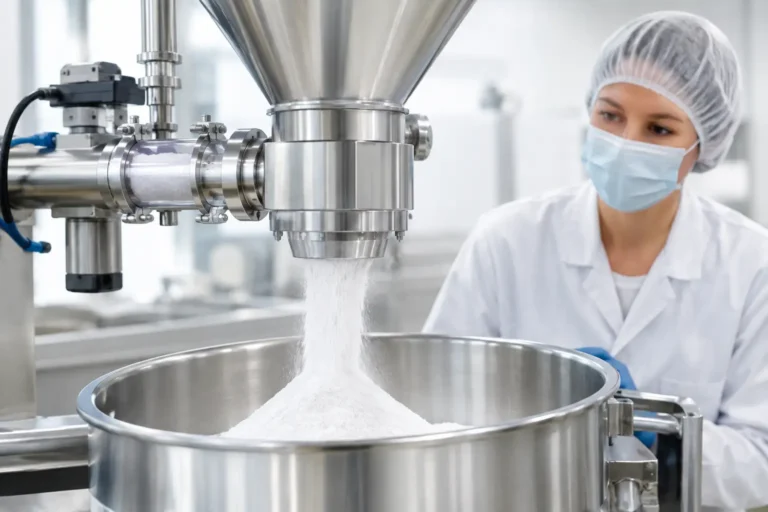
Automation should verify material identity and quantity at the point of use. Depending on the operation, this can include barcode or RFID confirmation, loss-in-weight feeding, load cell-based batching, metered liquid dosing, and interlocked manual additions. The appropriate method depends on the material and required accuracy. Fine powders may need enclosed screw feeding or vacuum conveying, while viscous liquids may require heated transfer lines and positive-displacement metering.
The control system should also manage practical exceptions. A feeder may run empty, a transfer line may not clear, or a material may bridge in a hopper. Alarms should tell the operator what happened, where it occurred, and what condition must be corrected before the batch can continue. A vague fault message does not improve uptime.
Mixing Automation Is Not a PLC Added to a Mixer
Controls cannot compensate for a mixer that is poorly matched to the process. A ribbon mixer, paddle mixer, plough mixer, double planetary mixer, multi-shaft mixer, or high-shear emulsifier creates a different flow pattern and applies energy differently. The automation design must reflect those mechanical realities.
For example, torque monitoring can provide useful information in a high-viscosity paste process. It may indicate that the material has reached a target consistency, that a powder addition has overloaded the agitator, or that the batch is no longer moving as expected. In a free-flowing powder blend, motor current may be less meaningful as a direct quality indicator, but it can still help identify abnormal loading or mechanical issues.
Likewise, automation of a jacketed mixer should consider heat-transfer limitations. A temperature sensor in the vessel may not represent the temperature of every component during a rapid addition or highly viscous mixing stage. Sensor location, agitation rate, jacket design, and heating or cooling capacity all affect how the process should be controlled.
The engineering sequence is clear: define the material behavior and quality requirements, select the process equipment, then develop the automation architecture around the actual process. Reversing that sequence often produces a polished control screen attached to an unstable manufacturing operation.
Where Automation Delivers Measurable Value
The strongest business case for automation is usually found in recurring production problems, not in a desire to add technology. Manufacturers commonly invest when they need to reduce batch-to-batch variation, improve operator safety, increase available production time, reduce material loss, or meet traceability requirements.
Batch consistency improves when the system enforces the same approved sequence every time. This is especially valuable where minor changes in addition order, shear exposure, or mixing time affect color distribution, dispersion, moisture level, particle coating, or final texture.
Throughput can improve when ingredient preparation, charging, mixing, discharge, and cleaning are coordinated rather than handled as isolated manual tasks. The mixer itself may not run faster, but the total batch cycle can be shortened by reducing waiting time and eliminating avoidable rework.
Safety improves when operators are not required to manually lift bags, open vessels during operation, handle airborne powders, or intervene near rotating equipment. Automated powder induction, closed transfer, interlocks, and controlled cleaning sequences can reduce exposure while making procedures more repeatable.
Traceability becomes more reliable when the system records actual batch data rather than relying on handwritten entries. For regulated food, pharmaceutical, chemical, and specialty materials operations, records may need to show lot usage, quantities, alarms, operator actions, process values, and final disposition. The required level of documentation depends on the industry, but the design should support the quality system rather than create duplicate work.
Build the Right Level of Control
Not every process needs a fully integrated plant-wide control platform. Over-automation can add cost, complexity, training burden, and maintenance requirements without delivering a proportional improvement in performance.
A small operation producing a limited number of stable formulations may benefit most from controlled speed, timed sequences, load cells, and clear safety interlocks. A multi-product facility with frequent changeovers may require recipe management, automated ingredient verification, electronic batch records, and integration with upstream and downstream equipment. A high-value or hazardous process may justify redundant instrumentation, advanced alarm handling, remote diagnostics, and tighter data management.
The correct scope should be based on risk and return. Questions worth answering early include: What variation currently causes scrap or customer complaints? Which steps depend on individual operator judgment? What information is missing when a batch fails? Where does the mixer wait for materials, utilities, or downstream packaging? Which cleaning steps limit product changeover?
These answers identify where controls will create measurable value. They also prevent a common mistake: automating inefficient manual steps without improving the underlying process.
Design for operators and maintenance teams
The best control system is not the one with the most screens. It is the one that gives operators a clear view of the current process state and gives maintenance personnel practical access to troubleshoot equipment.
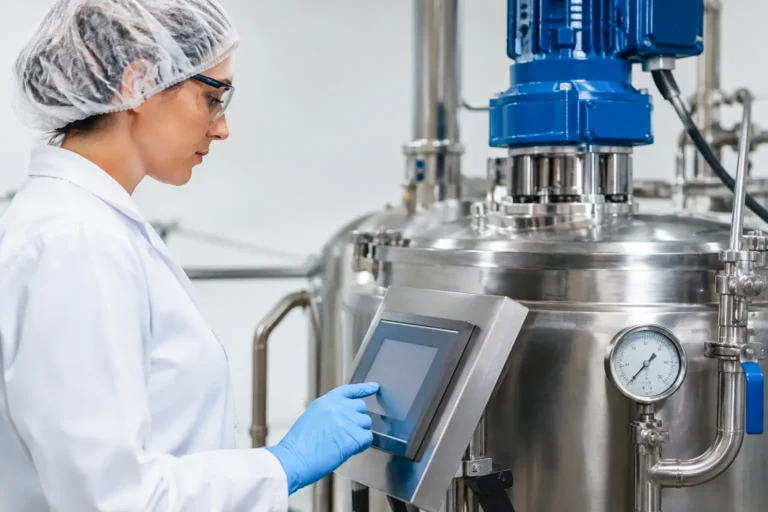
Human-machine interface design should show the active recipe step, actual versus target values, permissives preventing the next action, and alarm priorities. Operators should be able to understand whether the system is waiting for a material, a temperature condition, a vacuum level, or a safety confirmation. Maintenance teams need documented I/O, accessible instrumentation, sensible panel layouts, and components that can be supported over the expected service life of the system.
Cleaning also belongs in the automation discussion. If a mixer must be cleaned between products, the system can guide or automate portions of the procedure, verify valve positions, manage rinse cycles, and record completion. However, clean-in-place is not automatically the right answer. Dry powder applications, highly adhesive materials, and frequent mechanical inspections may need alternative cleaning approaches designed around the vessel geometry and product behavior.
A Practical Path to an Automated Mixing System
A successful project typically starts with process definition rather than a control specification. Document the formulation range, batch sizes, raw-material characteristics, product quality targets, production schedule, utilities, cleaning requirements, and safety considerations. Identify the process conditions that must be controlled, the conditions that should be monitored, and the conditions that only need an alarm.
Next, test or validate the mixing process where uncertainty exists. Automation cannot resolve unknowns about blend time, shear sensitivity, liquid distribution, heat transfer, or discharge behavior. Pilot trials and process testing provide the data needed to specify the mixer, feeding equipment, sensors, and control logic with confidence.
Finally, treat commissioning as a production readiness exercise, not just an equipment startup. Verify recipes, challenge interlocks, confirm alarm responses, train operators, establish maintenance procedures, and run representative batches. PerMix approaches integrated systems from this process-first perspective because the value of automation comes from how the entire operation performs, not from the controller alone.
A well-engineered automated mixing system should give your production team more than fewer buttons to press. It should give them a process they can trust when volumes increase, operators change, formulations expand, and customer expectations become less forgiving.